
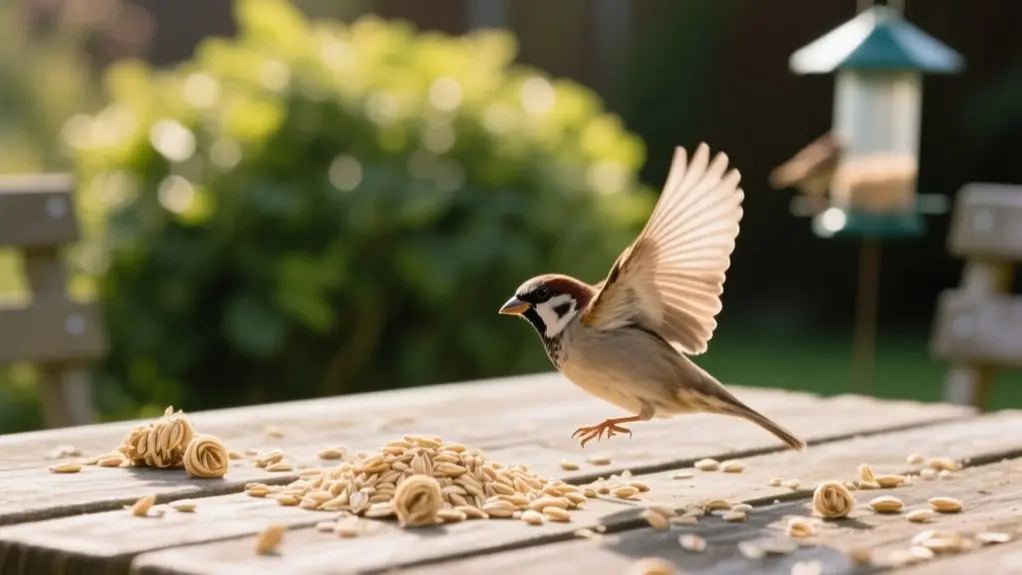
Yes, you can safely feed birds plain dry oatmeal in moderation. It provides them with energy, fiber, and protein, supporting their digestion and feather health.
Many common garden birds like sparrows and finches enjoy oats, especially in colder months. Avoid instant or flavored oatmeal, as additives can harm birds.
Be mindful not to overfeed to prevent digestive issues. If you want to understand which oats are best and how to offer them safely, there’s more useful info ahead.
Are Dry Oats Safe for Wild Birds to Eat?
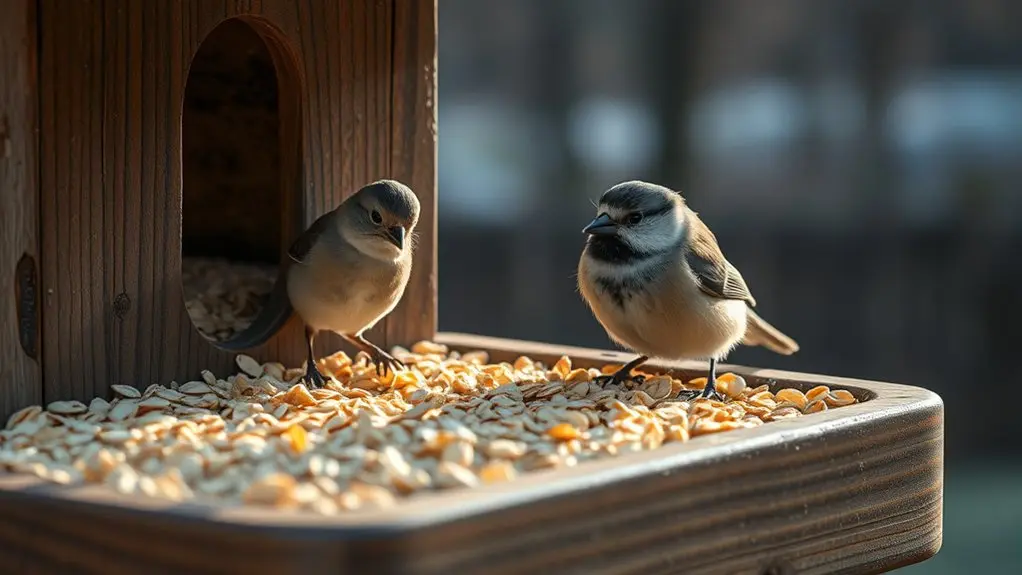
Although some might worry about feeding dry oats to wild birds, plain rolled oats and uncooked porridge oats are safe treats when offered in moderation. You don’t have to fear that these dry oats will swell in birds’ stomachs, as uncooked oats pose no such risk.
Birds like doves, sparrows, and chickadees are especially drawn to dry oats, making them a popular food choice. Just be sure to avoid flavored or instant oatmeal since additives in those can harm birds.
Offering dry oats about 1–3 times a week, especially during colder months, helps provide wild birds with extra energy and nutrition they need.
Why Are Oats Good for Birds?
Feeding oats to birds does more than just satisfy their hunger. It supports their overall health and energy needs. Oats provide a rich source of carbohydrates, giving birds quick energy, especially during colder months when they need extra fuel.
You’ll also find oats packed with fiber, which helps maintain healthy digestion. Plus, the essential proteins in oats play a key role in feather upkeep and tissue repair, keeping birds strong and vibrant.
When you offer plain rolled or uncooked porridge oats, you provide a safe and nutritious treat that won’t swell dangerously in their stomachs.
Which Bird Species Commonly Eat Oats?
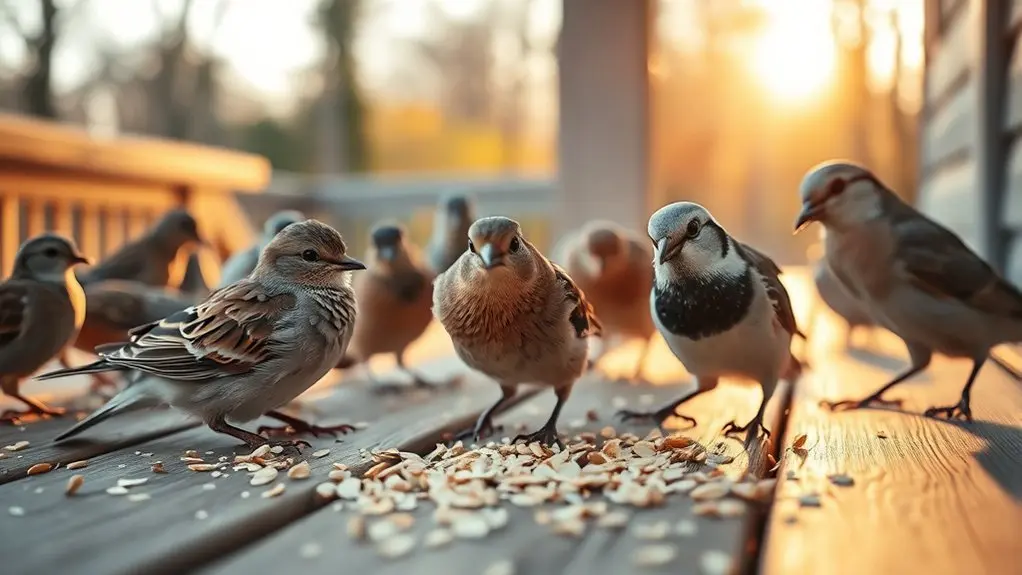
When you scatter oats in your backyard, you’ll often see a variety of birds enthusiastically gathering around. Many common garden birds, like doves and sparrows, enjoy oats as part of their diet, making them frequent visitors.
Chickadees and titmice also enjoy nibbling on oats, which makes your yard a hotspot for birdwatching. Quail actively seek oats, especially during colder months when food is scarce.
You might also spot finches and woodpeckers sampling oats, particularly if they’re mixed with seeds or other tasty ingredients. Offering oats attracts diverse bird species, so you’ll enjoy watching a lively, varied group of feathered friends visit your outdoor space.
It’s a simple way to connect with nature and support your local birds.
What Types of Oatmeal Should You Avoid for Birds?
Since birds have sensitive digestive systems, you should avoid giving them instant or flavored oatmeal varieties that contain added sugars, artificial ingredients, or preservatives.
These additives can harm birds and disrupt their digestion.
To keep your feathered friends safe, steer clear of:
- Instant oatmeal – often packed with sugars and flavorings harmful to birds.
- Flavored oatmeal – contains artificial ingredients that might negatively affect bird health.
- Oatmeal with preservatives – these chemicals can be unsafe for birds over time.
Always choose plain, uncooked rolled oats or porridge oats when offering oatmeal to birds.
This guarantees they get a natural, nutritious treat without unnecessary risks.
Avoiding these harmful oatmeal types helps maintain your birds’ health and well-being.
How Do You Prepare Dry Oatmeal Treats for Birds?
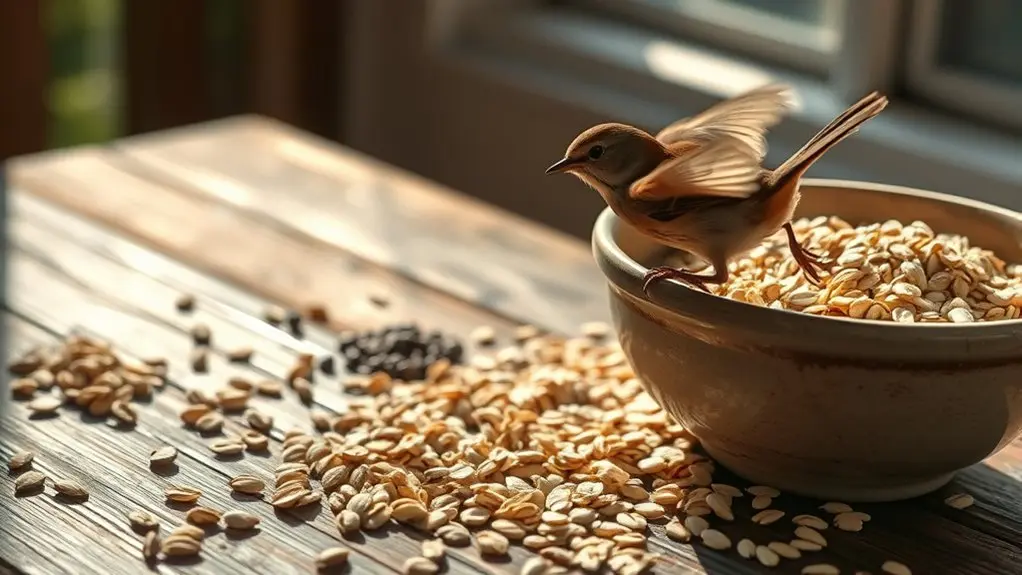
Choosing the right type of oatmeal is just the first step; preparing it properly guarantees your bird treats are both safe and appealing.
To make dry oatmeal treats, mix rolled oats with natural peanut butter until sticky enough to shape into small balls or fun forms.
You can boost their nutritional value by adding honey or molasses, providing extra energy for the birds. For an added attraction, incorporate birdseed into your mixture, which also offers more nutrients.
When serving, place the dry oatmeal treats on platform or hanging feeders rather than on the ground. This helps keep pests away and maintain cleanliness.
Remember to check the feeding area regularly to confirm the treats stay fresh and don’t invite unwanted animals.
What Are the Best Ways to Offer Dry Oatmeal to Backyard Birds?
You can offer dry oatmeal in a few different ways to attract a variety of backyard birds. For example, using platform feeders works really well because it gives the birds easy access to the oats.
Another tasty option is mixing the oats with peanut butter—birds seem to love that!
Just remember to switch up your feeding methods depending on the season.
And it’s super important to keep your feeders clean so the birds stay healthy and keep coming back for more.
Feeding Methods For Oats
When offering dry oatmeal to backyard birds, placing it in platform feeders or hoppers works best to keep it accessible, especially for species like doves and sparrows.
To optimize your feeding methods for oats, consider these tips:
- Mix oatmeal with seeds or natural sweeteners like honey to attract a wider range of garden birds.
- Avoid scattering dry oatmeal on the ground to prevent pests and maintain cleanliness around your bird feeder.
- Regularly clean feeders and monitor bird activity to adjust oatmeal quantities, ensuring fresh food and minimizing waste.
Ideal Feeder Types
Although many feeder types can hold dry oatmeal, platform and hopper feeders work best to keep the food accessible and dry.
Platform feeders provide an open space where birds can easily spot and eat the oatmeal without competition from ground animals.
Hopper feeders protect the oats from moisture while offering a comfortable perch for birds. These two are the ideal feeder types to attract a variety of backyard birds.
You can also scatter small amounts of dry oatmeal on the ground to entice smaller birds like chickadees and sparrows.
To keep squirrels and larger animals from stealing the food, consider using squirrel-proof feeders.
Placing feeders in open areas near bushes or trees helps birds feel safe and encourages more visits, making your backyard a lively spot for feeding.
Seasonal Feeding Tips
Since natural food sources dwindle in colder months, offering dry oatmeal can give backyard birds an essential energy boost.
To make the most of this bird food, follow these seasonal feeding tips to support a balanced bird’s diet:
- Use platform feeders or hoppers to serve dry oatmeal, making it easy for birds like doves and sparrows to access.
- Mix oatmeal with seeds or nuts to increase its nutritional value and attract a variety of birds.
- Keep the feeding area clean and dry to prevent spoilage and refill during peak times, morning and late afternoon, when birds are most active.
How Much Dry Oatmeal Should You Feed Birds?
If you want to feed birds dry oatmeal, keep the portions moderate. About 1 to 2 tablespoons per session works well to avoid overfeeding. Offering dry oatmeal 1 to 3 times a week is ideal, especially in colder months when birds need extra energy.
Smaller birds like sparrows and chickadees usually prefer less oatmeal, while larger species such as doves and quails can handle slightly bigger amounts. You can mix dry oatmeal with seeds or fruits to make it more appealing and nutritious for a broader range of birds.
Remember to provide the oatmeal in a safe spot where birds feel comfortable visiting regularly.
How Can You Protect Oatmeal Bird Treats From Squirrels and Pests?
Feeding birds oatmeal treats can attract more than just your feathered friends. To keep squirrels and pests at bay, you need effective strategies.
First, use squirrel-proof feeders designed to block squirrels while letting birds eat comfortably.
Start with squirrel-proof feeders that keep squirrels out but let birds enjoy their meal easily.
Second, install baffles on poles or hanging feeders to create physical barriers that prevent unwanted visitors from reaching the oatmeal.
Third, place your oatmeal treats in elevated spots like high feeders or hanging platforms, minimizing access for ground-dwelling pests.
Moreover, regularly clean up spilled oatmeal to avoid attracting more critters.
You might also add a spicy touch, like cayenne pepper, to your oatmeal mix. Birds won’t mind, but squirrels will steer clear.
These steps guarantee your feathered friends enjoy their treats without competition.
What Are the Risks of Overfeeding Oatmeal to Birds?
If you feed birds too much oatmeal, they can end up with digestive problems like diarrhea.
It’s not just that—giving them too much oatmeal can throw off their nutrition because it doesn’t have enough fats and proteins they need.
On top of that, birds might start to change their eating habits and lose interest in the healthier foods that are important for them.
Digestive Issues From Excess
While oats provide beneficial nutrients, giving birds too much dry oatmeal can cause digestive problems. Overfeeding can lead to several digestive issues that you need to watch for to keep your birds healthy.
- Excessive carbohydrates in oatmeal may cause gastrointestinal upset, leading to discomfort and irregular digestion.
- Dry oatmeal can expand in the bird’s stomach, potentially causing blockages or severe digestive distress.
- Large quantities promote weight gain and obesity, disrupting natural foraging behavior and overall gut health.
To avoid these digestive issues, feed oatmeal in moderation, ideally 1 to 3 times a week. This guarantees your birds benefit from oats without risking their digestive system or overall well-being.
Nutritional Imbalance Concerns
Because oatmeal lacks certain essential vitamins and minerals, overfeeding it can create nutritional imbalances that harm your bird’s health.
If your bird eats too much oatmeal, it might miss out on important nutrients like protein, which is essential for feather growth and overall development.
Oatmeal is also low in fiber compared to other natural foods, which can upset your bird’s digestion.
Plus, its high carbohydrate content can lead to obesity if given in large amounts.
To avoid these nutritional imbalances, you should offer oatmeal only as a supplement, not the main meal.
Make sure your bird’s diet stays varied and balanced by including seeds, fruits, and vegetables to meet all its nutritional needs.
Behavioral Changes In Birds
Although oatmeal can be a convenient treat, overfeeding it can cause significant behavioral changes in birds. When birds consume too much oatmeal, they may develop unhealthy habits that affect their natural behaviors and overall well-being.
Here are three key risks of overfeeding oatmeal as part of bird foods:
- Reduced foraging activity. Birds may rely on easy oatmeal access and stop searching for diverse, nutrient-rich foods.
- Altered feeding patterns. Dependence on oatmeal can disrupt normal eating routines, leading to imbalanced diets.
- Nutrient neglect. Birds might avoid other essential foods, causing deficiencies and health problems.
How Does Dry Oatmeal Compare Nutritionally to Other Bird Foods?
When you compare dry oatmeal to other bird foods, you’ll find it offers a strong source of carbohydrates that fuels birds’ energy needs, especially in colder months.
Unlike many commercial seeds, oatmeal is lower in fat, helping wild birds maintain a healthy weight without overloading the bird’s stomach.
It also contains dietary fiber, which supports digestion and keeps the bird’s stomach functioning smoothly, much like grains such as millet and barley.
While oatmeal isn’t as rich in protein as nuts or some seeds, you can mix it with these to create a balanced diet.
This versatility makes dry oatmeal a nutritious, energy-packed option that complements other bird foods well, ensuring your feathered visitors get essential nutrients without taxing their digestive systems.
Can Dry Oatmeal Help Attract More Birds to Your Garden?
Dry oatmeal not only provides valuable nutrients but can also draw a wider variety of birds to your garden. When you offer plain rolled oats in a bird feeder, you’ll notice more doves, sparrows, and chickadees visiting your space.
To maximize this effect, consider these tips:
- Use platform feeders or hoppers to make dry oatmeal easily accessible.
- Mix dry oatmeal with other birdseed to attract birds that prefer a varied diet.
- Offer oatmeal especially during colder months when birds seek high-energy foods.
Common Mistakes to Avoid When Feeding Oats to Birds
If you want to keep birds healthy and your garden clean, avoid feeding them flavored or instant oatmeal. These contain additives and sugars that can harm them.
One common mistake to avoid when feeding oats to birds is offering too much porridge oats. Moderation is key to prevent dietary imbalances.
Also, don’t scatter oatmeal directly on the ground. It attracts pests and creates unsanitary conditions. Always check local wildlife guidelines to confirm that the bird species in your area can safely eat oats.
Finally, use squirrel-proof feeders to protect the oats from larger animals that might steal them.
Frequently Asked Questions
Can Baby Birds Safely Eat Dry Oatmeal?
Yes, baby birds can safely eat small amounts of plain, dry oatmeal.
You’ll find it offers great nutritional benefits, providing energy and essential nutrients important for their growth.
However, you should feed it in moderation and avoid flavored or additive-filled oatmeal.
Mixing it with water helps digestion, too.
Always watch how the birds respond, and if they seem uncomfortable, stop feeding it immediately to keep them safe and healthy.
Is Dry Oatmeal Good for Birds Year-Round?
Yes, dry oatmeal is good for birds year-round because it offers excellent nutritional benefits like carbohydrates, fiber, and protein that boost their energy and health.
You can feed them plain rolled or uncooked oats regularly, especially during colder months when they need extra fuel.
Just avoid flavored or instant varieties to keep them safe.
Feeding dry oatmeal 1–3 times a week supports birds like sparrows and chickadees while enhancing your birdwatching experience.
Can Dry Oatmeal Cause Allergies in Birds?
Yes, dry oatmeal can cause allergic reactions in birds, though it’s pretty uncommon. You should watch for signs like feather plucking, skin irritation, or digestive issues when you introduce oatmeal to their diet.
Since birds vary, it’s smart to offer oatmeal in moderation and monitor their response closely.
If you notice any problems, consult a vet to get personalized advice and keep your feathered friend healthy and happy.
How Long Can Dry Oatmeal Stay Fresh Outdoors?
Think of dry oatmeal as a ticking clock when it comes to outdoor storage. You can expect it to stay fresh for about 3 to 6 months if you keep it in a cool, dry place away from moisture and pests.
Make sure to store it in airtight containers to protect it from humidity and sunlight.
Regularly check for spoilage so you don’t accidentally offer your feathered friends stale or contaminated food.
Should Dry Oatmeal Be Mixed With Water Before Feeding?
Yes, you should mix dry oatmeal with water before feeding it to birds.
Moisture absorption makes the oatmeal softer and easier for birds to digest. When you add water, the oats swell and become more palatable, attracting a wider variety of birds.
Just remember to keep the oatmeal moist but not overly wet so it doesn’t spoil quickly.
This simple step helps guarantee the birds get the most benefit from their meal.
Conclusion
Yes, you can feed dry oatmeal to birds, but like any treat, it’s best in moderation. Oats provide a hearty boost, like a warm hug on a chilly day, helping your feathered friends stay energized.
Just avoid sugary or flavored varieties and prepare it thoughtfully. By doing so, you’ll create a safe, inviting haven that keeps birds fluttering back to your garden, filling your days with life and song.