
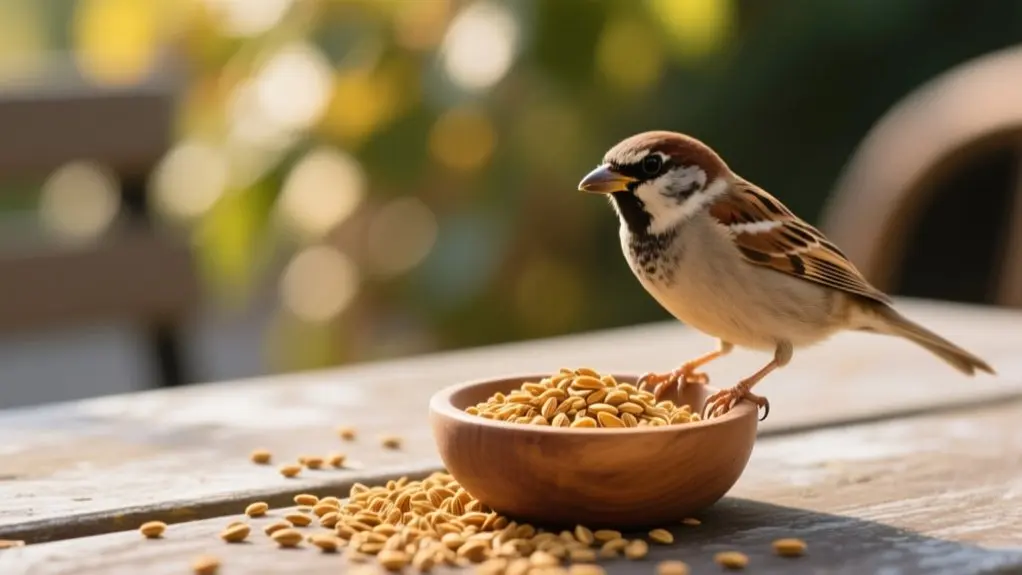
Yes, you can safely feed fenugreek seeds to many bird species like parrots, canaries, and finches. These tiny seeds boost appetite, improve digestion, and support overall health with their nutrients and antibacterial properties.
Just start slowly and wash the seeds well to avoid digestive upset. Keep an eye on how your bird reacts to the new addition.
If you want to know the best ways to prepare fenugreek and which birds benefit most, there’s plenty more to explore.
What Are Fenugreek Seeds And Why Are They Popular?
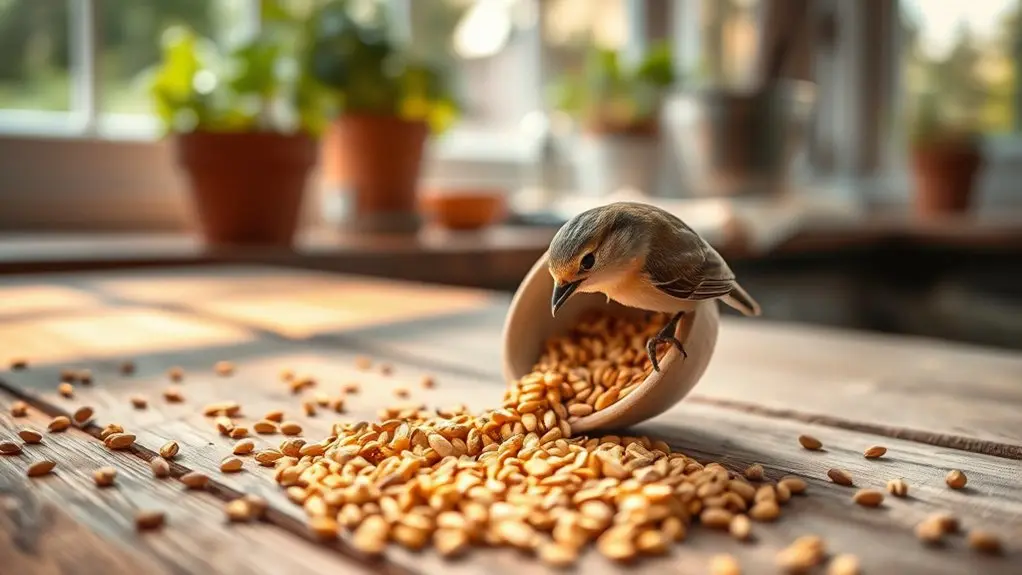
Fenugreek seeds are tiny powerhouses packed with proteins, carbohydrates, vitamins, and minerals that boost nutrition. Known scientifically as Trigonella foenum-graecum, fenugreek seeds have gained popularity due to their impressive nutritional properties and medicinal benefits.
You’ll find fenugreek seeds often included in broiler diets as a natural growth promoter, especially since antibiotics were banned for this purpose in many regions. When added to a broiler diet, these seeds enhance feed efficiency, helping birds grow healthier and faster.
Their combination of hypoglycemic, antibacterial, and anti-inflammatory effects makes them a valuable ingredient in animal nutrition.
If you’re looking to improve poultry growth naturally, incorporating fenugreek seeds into the feed is a smart, effective option.
Can Birds Safely Eat Fenugreek Seeds?
You can safely offer fenugreek seeds to many bird species. They provide proteins, vitamins, and minerals that support their health.
That said, it’s important to introduce these seeds gradually and in moderation to avoid any digestive issues.
It’s always a good idea to check with an avian vet before adding fenugreek to your bird’s diet.
This way, you can make sure it’s appropriate for their specific needs.
Nutritional Benefits For Birds
Many birds can benefit from the nutritional boost that fenugreek seeds provide, as they’re packed with proteins, carbohydrates, vitamins, and minerals essential for their health.
Fenugreek’s nutritional benefits extend to supporting gut health by promoting better digestion and nutrient absorption.
When you include fenugreek as dietary supplementation, it can also stimulate your bird’s appetite thanks to compounds like galactomannan, encouraging picky eaters to consume more.
Furthermore, fenugreek seeds possess antibacterial properties that may help protect your bird from infections, boosting their immune system.
These combined effects make fenugreek a valuable addition to your bird’s diet, helping maintain overall well-being and metabolic balance.
Just remember to introduce it gradually to monitor your bird’s response.
Potential Risks And Precautions
While fenugreek seeds offer several health benefits for birds, it’s important to be aware of potential risks when adding them to your bird’s diet. Feeding fenugreek seeds in moderation is key, as too many can cause digestive issues due to their high fiber content.
Some birds might also have allergic reactions, so introduce the seeds gradually and watch for any signs of discomfort or unusual behavior.
To reduce risks, crush or soak fenugreek seeds before offering them. This helps with digestibility and prevents choking.
Always take precautions by consulting your veterinarian before making fenugreek a regular part of your bird’s diet. This guarantees the seeds fit well with your bird’s specific dietary needs and keeps them safe and healthy.
Nutritional Benefits Of Fenugreek For Birds
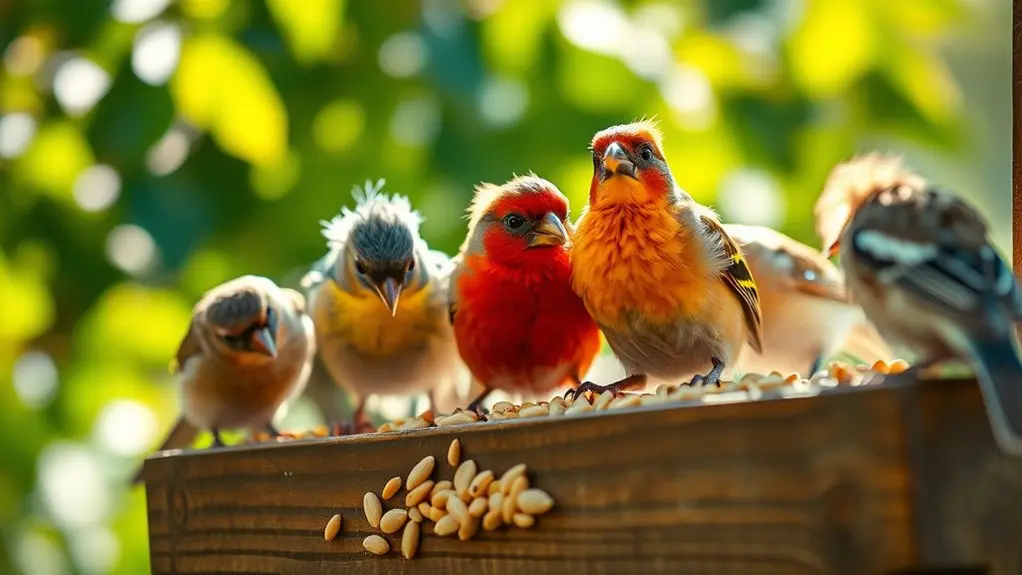
Because fenugreek seeds pack essential nutrients like proteins, carbohydrates, vitamins, and minerals, they can greatly boost your bird’s health.
These nutritional benefits make fenugreek seeds a valuable addition to your bird’s diet. They support growth performance by enhancing weight gain and overall wellness.
Moreover, fenugreek seeds promote gut health, which is fundamental for nutrient absorption and digestion.
Here’s what fenugreek seeds offer your bird:
- Appetite stimulation that encourages increased food intake
- Improved growth performance through better nutrient supply
- Enhanced gut health due to high fiber content
- Support for healthy weight gain and overall well-being
Incorporating fenugreek seeds thoughtfully can help maintain your bird’s health and well-being.
How Fenugreek Affects Digestion And Appetite
You’ll find that fenugreek seeds can boost your bird’s appetite because they contain compounds that naturally stimulate hunger.
Plus, the high fiber content helps keep digestion running smoothly and supports regular bowel movements.
Adding fenugreek to their diet might also improve how well your bird absorbs nutrients, which can help them thrive.
Appetite Stimulation Effects
If you want to boost your bird’s appetite and digestion, fenugreek seeds offer a natural solution. These seeds contain galactomannan, a fiber that enhances appetite stimulation and supports digestive health.
You’ll notice improved feed efficiency and nutrient absorption, which are essential for your bird’s growth performance. Fenugreek’s compounds like neurin and biotin directly influence the nervous system, encouraging your bird to eat more.
Including fenugreek seeds in your bird’s diet can help by:
- Increasing feed efficiency for better nutrient use
- Supporting growth performance, especially in young or recovering birds
- Stimulating appetite naturally without harmful additives
- Enhancing overall digestive health for smoother digestion
Digestive Health Benefits
When you add fenugreek seeds to your bird’s diet, you support its digestive health in several significant ways. The soluble fiber in fenugreek seeds promotes gastrointestinal health by regulating bowel movements.
Its galactomannan boosts appetite and improves nutrient absorption. Fenugreek’s anti-inflammatory effects soothe digestive tract irritation, enhancing feed efficiency. Plus, the seeds help balance gut flora, which is essential for ideal digestion and nutrient utilization.
| Benefit | Effect on Birds | Key Component |
|---|---|---|
| Improved Digestion | Regulates bowel movements | Soluble fiber |
| Appetite Stimulation | Encourages higher food intake | Galactomannan |
| Reduced Inflammation | Soothes digestive tract | Anti-inflammatory |
| Enhanced Nutrient Use | Better nutrient absorption | Vitamins & minerals |
| Balanced Gut Flora | Supports gut health | Prebiotic properties |
Recommended Dosage Of Fenugreek For Birds
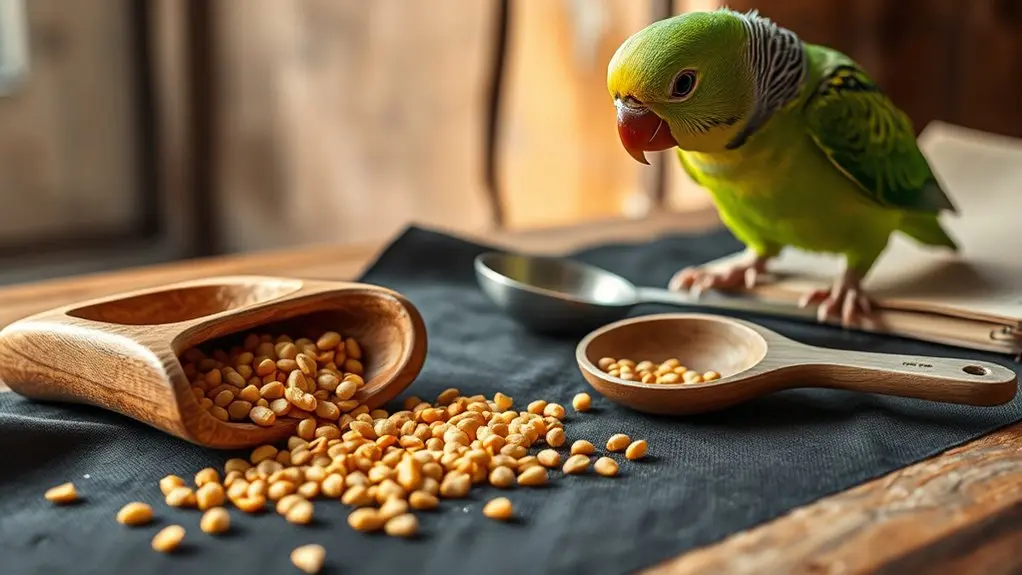
Incorporating 1-2 teaspoons of fenugreek seeds per pound of bird feed can provide valuable nutrients without overwhelming your feathered friend’s digestive system.
When considering fenugreek seeds for dietary supplementation, it’s crucial to get the dosage right to support your bird’s health. Here are key points to keep in mind:
Proper fenugreek dosage is essential to safely support your bird’s health and well-being.
Start with a small amount and gradually increase to monitor tolerance.
Stick to the recommended dosage to prevent digestive upset.
Consult a veterinarian before adding fenugreek to verify it fits your bird’s specific dietary needs.
Use fenugreek seeds as part of a balanced diet, not a sole supplement.
Following these guidelines helps you safely enhance your birds’ nutrition with fenugreek seeds.
Potential Side Effects Of Too Much Fenugreek
Although fenugreek seeds offer health benefits, consuming too much can cause several side effects in birds. Overfeeding fenugreek seeds may lead to gastrointestinal disturbances like diarrhea and bloating due to their high fiber content.
You should also watch for hypoglycemic effects, as fenugreek can lower blood sugar levels, potentially making your bird lethargic or weak. Excessive intake can interfere with digestive enzyme activity, reducing nutrient absorption and harming overall health.
Moreover, fenugreek contains compounds that act as anticoagulants, so too much could increase bleeding risks. Feeding large amounts may create a diet imbalance, causing essential nutrient deficiencies if fenugreek isn’t properly balanced with other feed components.
To keep your bird healthy, moderate fenugreek seeds and monitor their diet carefully.
Signs Your Bird Is Reacting Well To Fenugreek
You’ll start to notice your bird’s appetite and digestion getting better as the fenugreek seeds do their magic.
Their feathers might even look healthier and more vibrant, which is a great sign they’re getting good nutrition.
On top of that, you’ll probably see them becoming more active and energetic throughout the day.
Improved Appetite And Digestion
When your bird starts eating fenugreek seeds, you might notice a boost in its appetite and digestion. This feed additive contains galactomannan, neurin, and trimethylamine, which stimulate appetite and support gastrointestinal health.
Improved digestion means your bird can better absorb nutrients, leading to increased vigor.
You’ll likely spot these positive changes:
- More consistent droppings, signaling healthy digestion
- Increased foraging behavior and activity levels
- Reduced gastrointestinal discomfort or bloating
- Enhanced nutrient absorption from its diet
Enhanced Feather Condition
Improved digestion from fenugreek sets the stage for healthier feathers by ensuring your bird absorbs the nutrients it needs. Fenugreek seeds, rich in vitamins and minerals, support feather condition by boosting nutrient utilization.
Appetite stimulation from fenugreek encourages your bird to eat well, promoting feather resilience and overall health. You might notice shinier, stronger feathers and less feather plucking, clear signs your bird is benefiting.
| Sign | What You See | What It Means |
|---|---|---|
| Feather Shine | Glossy, smooth feathers | Good nutrient absorption |
| Reduced Plucking | Less feather damage | Improved feather resilience |
| Healthy Molting | Even, on-schedule molting | Balanced overall health |
| Strong Feathers | Less breakage | Enhanced feather condition |
| Increased Appetite | Enthusiastic food intake | Effective appetite stimulation |
Active And Energetic Behavior
Notice your bird becoming livelier and more playful after adding fenugreek seeds to its diet. This change often signals improved energy levels and overall health.
Fenugreek seeds provide essential nutrients that boost vigor and promote active behavior.
You might observe these signs that your bird is reacting well:
- Increased vocalizations and social interactions, showing a happier mood
- Appetite-stimulating effects leading to more frequent foraging and exploration
- Enhanced digestion reducing lethargy and encouraging movement
- Brighter feathers and a more vibrant appearance
How To Safely Introduce Fenugreek Into Bird Diets
Although fenugreek seeds offer nutritional benefits, you should introduce them gradually into your bird’s diet to avoid digestive upset. Start by offering a small amount of fresh, clean fenugreek seeds.
Make certain to wash and dry them thoroughly before feeding. Mix the seeds with your bird’s regular diet to help them accept the new flavor easily.
Monitor your bird closely for any signs of adverse reactions, such as changes in digestion or behavior, to guarantee they tolerate fenugreek well.
Remember to keep fenugreek seeds to a small percentage of the overall diet, as too much can cause nutritional imbalances, particularly affecting calcium and phosphorus levels.
Bird Species That Benefit Most From Fenugreek And Why
Once you’ve introduced fenugreek seeds carefully into your bird’s diet, it’s helpful to know which species benefit the most from their nutritional properties.
Fenugreek seeds support various bird species by enhancing appetite, reducing inflammation, and promoting digestive health. Here’s who gains the most:
Parrots like African Greys and Amazons benefit from fenugreek’s appetite-stimulating properties, helping maintain steady feeding habits.
Canaries and finches enjoy fenugreek’s anti-inflammatory effects, which strengthen their immune systems.
Budgerigars appreciate the sweet taste, encouraging dietary variety and improved palatability.
Active foragers benefit from fenugreek’s rich nutrients, supporting growth and energy needs while aiding digestive health.
How Fenugreek Stacks Up Against Other Herbal Supplements
When comparing fenugreek seeds to other herbal supplements like peppermint or chamomile, you’ll find that fenugreek offers a broader range of nutritional benefits.
Fenugreek seeds are rich in proteins, carbohydrates, and essential vitamins, making them a superior choice for dietary supplementation in birds.
Unlike herbs that mainly soothe digestion, fenugreek acts as a growth promoter and improves feed efficiency, especially in poultry. Its galactomannan content stimulates appetite and enhances nutrient absorption, boosting overall health.
Furthermore, fenugreek’s hypoglycemic and anti-inflammatory properties provide extra advantages not commonly found in other herbs.
From an economic viability standpoint, fenugreek is cost-effective, delivering measurable improvements in poultry growth and productivity.
This makes it a practical and valuable addition to bird diets compared to pricier, less impactful herbal options.
Tips For Preparing Fenugreek Seeds Safely For Birds
To prepare fenugreek seeds safely for your birds, start by soaking them in water for several hours to soften the seeds and reduce their natural bitterness. This step improves digestibility, making it easier for your birds to benefit from the seeds.
Always crush or grind the soaked fenugreek seeds before serving, as smaller particles help your birds consume and digest them more efficiently. Remember to use only fresh seeds, avoiding any that show signs of mold or contamination.
Introduce fenugreek seeds gradually into your bird’s diet, monitoring for any adverse reactions. Finally, offer fenugreek seeds in moderation to prevent digestive upset caused by their high fiber content.
Following these tips guarantees a safe and healthy addition to your bird’s nutrition.
- Soak fenugreek seeds for better digestibility
- Crush or grind seeds before feeding
- Use fresh seeds free of mold
- Introduce seeds gradually and in moderation
When To Consult A Veterinarian About Feeding Fenugreek
How do you know if fenugreek is safe for your bird? Always consult a veterinarian before adding fenugreek, especially if your bird has health conditions or takes medication.
Monitor behavior and appetite closely after feeding fenugreek. Sudden changes or signs like diarrhea mean you should get immediate vet advice.
If your bird is pregnant or nesting, talk to your vet since fenugreek’s effects aren’t well-studied in these cases. Also, consult a veterinarian before making significant dietary changes to guarantee your bird’s safety.
| Situation | What to Watch For | Action Needed |
|---|---|---|
| New to fenugreek | Appetite, behavior | Consult a veterinarian |
| Signs of distress | Diarrhea, vomiting | Seek immediate vet advice |
| Pregnant/nesting bird | Reproductive health risks | Consult a veterinarian |
Frequently Asked Questions
Can Fenugreek Seeds Help Improve a Bird’s Feather Condition?
Yes, fenugreek seeds can improve your bird’s feather health by providing essential nutritional benefits like amino acids and proteins that promote feather growth.
The seeds support seed digestion with their high fiber content, ensuring your bird absorbs crucial nutrients efficiently.
Fenugreek acts as a natural herbal remedy, reducing inflammation and boosting natural oils that keep feathers shiny and strong.
Including fenugreek regularly helps maintain vibrant, healthy plumage in your feathered friend.
Are Fenugreek Seeds Safe for Baby Birds or Chicks?
You’ll be glad to know that fenugreek seeds, rich in proteins and vitamins, can boost baby bird nutrition and support growth development when fed properly.
Their natural supplements offer fenugreek benefits like improved immunity, but you must follow feeding guidelines carefully to avoid seed toxicity risks.
Always grind seeds for better digestibility and introduce them in moderation.
Don’t forget to consult your vet first to verify these seeds suit your chick’s specific needs.
How Should Fenugreek Seeds Be Stored to Maintain Freshness?
To maintain fenugreek seeds’ freshness, store them in airtight containers like glass jars to control humidity.
Keep them in a cool, dry place with an ideal temperature below 70°F, away from direct sunlight.
Label containers with purchase dates to track shelf life. Whole seeds last up to three years.
For longer storage, consider freezing methods but avoid moisture during defrosting.
These freshness tips help preserve flavor and potency effectively.
Can Fenugreek Seeds Interact With Medications My Bird Is Taking?
Yes, fenugreek seeds can interact with your bird’s medications, so you need to prioritize medication safety.
While fenugreek benefits include supporting bird health through its nutritional content, its compounds might interfere with blood sugar or blood-thinning drugs.
Always follow dosage guidelines carefully and seek veterinary advice before adding fenugreek to your bird’s diet.
This helps guarantee your feathered friend stays healthy without risking adverse reactions.
Is It Okay to Mix Fenugreek Seeds With Other Bird Treats?
Yes, it’s great to mix fenugreek seeds with other bird treats to boost benefits like protein and vitamins.
When mixing bird treats, keep seed nutrition balance in mind to make sure your bird gets a varied diet without overdoing any ingredient.
Use quality fenugreek seed sources and follow feeding frequency guidelines to avoid digestive upset.
This approach supports bird dietary diversity and keeps your feathered friend happy and healthy.
Conclusion
You can safely add fenugreek seeds to your bird’s diet in moderation, as they offer valuable nutrients like fiber and antioxidants. Notably, fenugreek contains about 50% dietary fiber, which can aid your bird’s digestion and appetite.
Just remember to prepare the seeds properly and keep the dosage low. If you notice any unusual reactions, don’t hesitate to consult your vet to guarantee your feathered friend stays healthy and happy.