
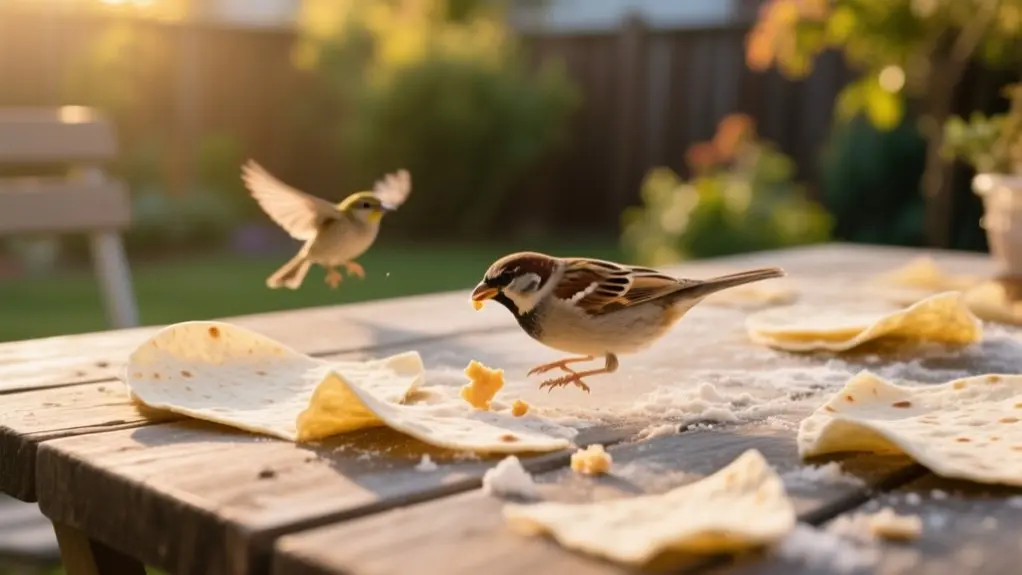
You can feed birds flour tortillas occasionally, but they offer little nutritional value since they’re mostly carbs with low protein and fiber. Make sure the tortillas don’t contain harmful preservatives or additives, and cut them into small pieces to avoid choking.
Avoid overfeeding, as too much can cause health issues like obesity or digestive upset. If you want to support birds with better options and understand safe feeding habits, there’s more helpful information ahead.
What’s Inside Flour Tortillas?
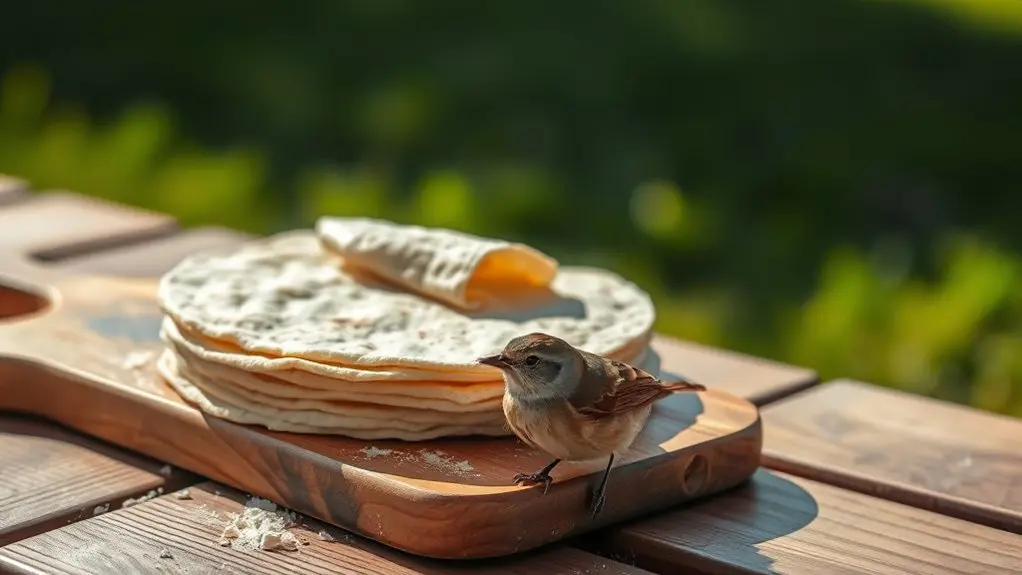
Flour tortillas are made from simple ingredients like flour, water, salt, and fat, usually lard or oil, giving them a soft, flexible texture.
When you look at the tortilla ingredients, you’ll notice they primarily offer carbohydrates from the flour but lack much protein or fiber.
Many commercial brands also add nutritional additives such as calcium and iron to boost their value.
However, these tortillas often contain preservatives and other additives to extend shelf life, which can vary depending on the manufacturer.
While tortillas are versatile and convenient, their processed nature means they don’t pack a strong nutritional punch.
Understanding what’s inside flour tortillas helps you make informed choices about including them in your diet or sharing them responsibly.
Are Flour Tortillas Safe for Birds to Eat?
Wondering if it’s safe to share your tortilla with the birds outside? Generally, flour tortillas are safe for birds to eat in moderation since they don’t contain harmful ingredients.
When considering bird feeding, remember tortillas shouldn’t replace their natural, nutrient-rich diet. Stale or dry tortillas often attract birds like crows because their size and texture make them easy snacks.
However, during tortilla preparation, avoid additives or preservatives, as these can negatively affect birds’ health. Offering plain, simple flour tortillas occasionally is fine, but relying on them as a primary food source isn’t advisable.
Nutritional Content of Flour Tortillas for Birds
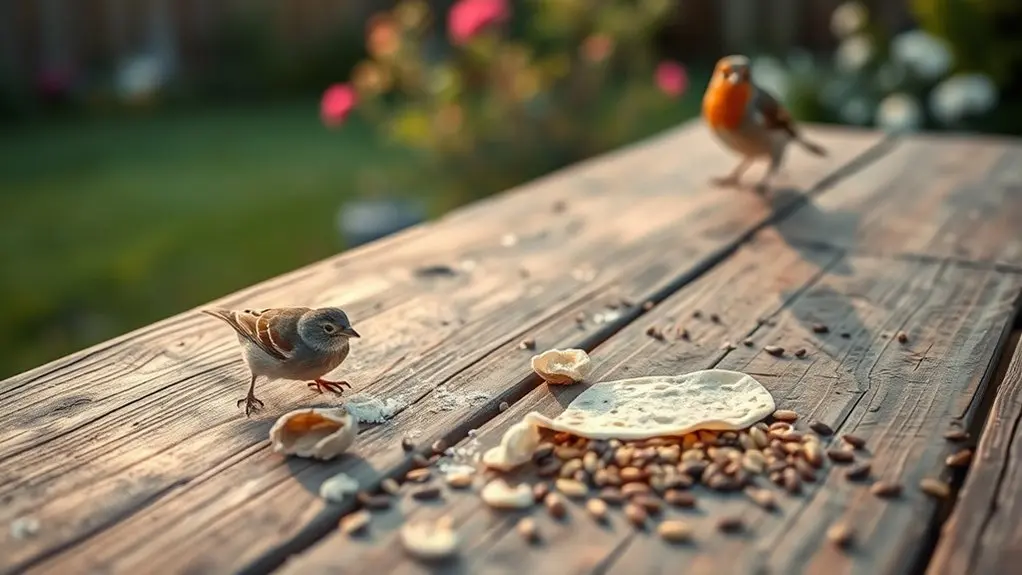
You might think flour tortillas are a harmless snack for birds, but actually, they don’t offer much nutritional value.
Since they’re low in protein and fiber, feeding them too often can be bad for your bird’s health.
Nutritional Value Overview
Although birds might find flour tortillas soft and easy to eat, these treats primarily provide carbohydrates without the essential vitamins and minerals they need.
Flour tortillas are made from refined wheat flour, water, and fat, lacking the balanced nutrients found in seeds, fruits, or vegetables.
When you’re considering bird feeding, it’s important to remember that tortillas shouldn’t replace more nutritious options.
While some birds enjoy the texture, you should offer flour tortillas only occasionally and make certain they’re free from additives, preservatives, and excess salt.
For healthier choices, explore tortilla alternatives like unsalted nuts, fresh fruits, or specialized bird feed, which better support your feathered friends’ dietary needs and overall well-being.
Potential Health Impacts
Since flour tortillas are mainly composed of refined carbohydrates, they offer little nutritional benefit to birds and can contribute to health problems like obesity if fed too often. You should be aware of these health concerns when considering flour tortillas for your bird’s diet.
Although not toxic, they lack essential nutrients such as proteins, vitamins, and minerals that birds need for overall well-being. Feeding guidelines recommend offering flour tortillas only as an occasional treat, not a staple food.
Instead, focus on providing a balanced variety of natural foods like fruits, vegetables, and seeds to meet your bird’s nutritional needs.
Sticking to these feeding guidelines helps prevent obesity and other health issues linked to excessive starch intake from processed foods.
What Risks Do Flour Tortillas Pose to Birds?
You should be careful when feeding flour tortillas to birds. They don’t have the essential nutrients birds need, and the high gluten content can cause digestive issues.
Also, store-bought tortillas often contain salt and preservatives, which mightn’t be good for birds’ health.
And if the tortillas are stale or moldy, they can actually be toxic. So, it’s really best to avoid giving them to birds altogether.
Nutritional Deficiencies Impact
When birds eat flour tortillas regularly, they miss out on crucial vitamins and minerals needed for a healthy diet. Flour tortillas are mostly made from refined flour, which lacks the nutrients required to maintain a proper nutritional balance for birds.
This deficiency can weaken their immune support, making them more prone to illnesses. Relying on tortillas means birds aren’t getting the diverse nutrients found in seeds, fruits, and vegetables that help keep them strong.
Over time, this poor diet can lead to health problems, reducing their vigor and lifespan.
To protect birds’ well-being, it’s best to limit flour tortilla feeding and focus on offering a variety of nutrient-rich foods that promote a balanced diet and robust immune function.
Digestive System Challenges
Although flour tortillas might seem harmless, they pose significant digestive risks to birds because of their high carbohydrate content and lack of essential nutrients. Birds rely on specific digestive enzymes to break down their natural diet. Flour tortillas can disrupt their gastrointestinal health.
The gluten and processed components may lead to blockages or discomfort. This affects digestion and can cause long-term issues.
| Digestive Factor | Impact on Birds |
|---|---|
| High Carbohydrates | Can cause obesity |
| Lack of Nutrients | Leads to nutritional imbalance |
| Gluten | Difficult to digest |
| Processed Ingredients | Harm gastrointestinal health |
| Frequent Consumption | Risk of chronic digestive issues |
You should avoid giving birds flour tortillas to protect their digestive enzyme function and overall health.
Potential Toxic Ingredient Risks
Flour tortillas can contain ingredients that pose specific risks to birds beyond digestive challenges. You need to be cautious because some flour tortillas include toxic additives like preservatives or flavor enhancers that aren’t safe for birds.
These substances can cause health problems if ingested frequently or in large amounts. Furthermore, high sodium levels in some tortillas can be harmful, leading to dehydration or kidney stress in birds.
While occasional small bites mightn’t cause immediate harm, regularly feeding your bird flour tortillas risks exposing them to these toxic additives and excessive sodium.
To protect your feathered friend, avoid making flour tortillas a regular part of their diet and opt for safer, bird-friendly treats instead.
How Often Can Birds Eat Flour Tortillas?
Birds can occasionally enjoy flour tortillas, but you should offer them sparingly to keep their diet balanced.
The treat frequency is vital because tortillas are high in carbs but low in essential nutrients. Feeding them too often risks obesity and other health problems, so limiting intake to once or twice a week is best.
Moderation importance can’t be overstated; flour tortillas should remain an occasional treat rather than a diet staple.
Also, verify the tortillas are free from additives or preservatives, which could harm birds.
Remember, stale tortillas might be more appealing, but even then, keep treats rare.
How to Offer Flour Tortillas Safely to Birds
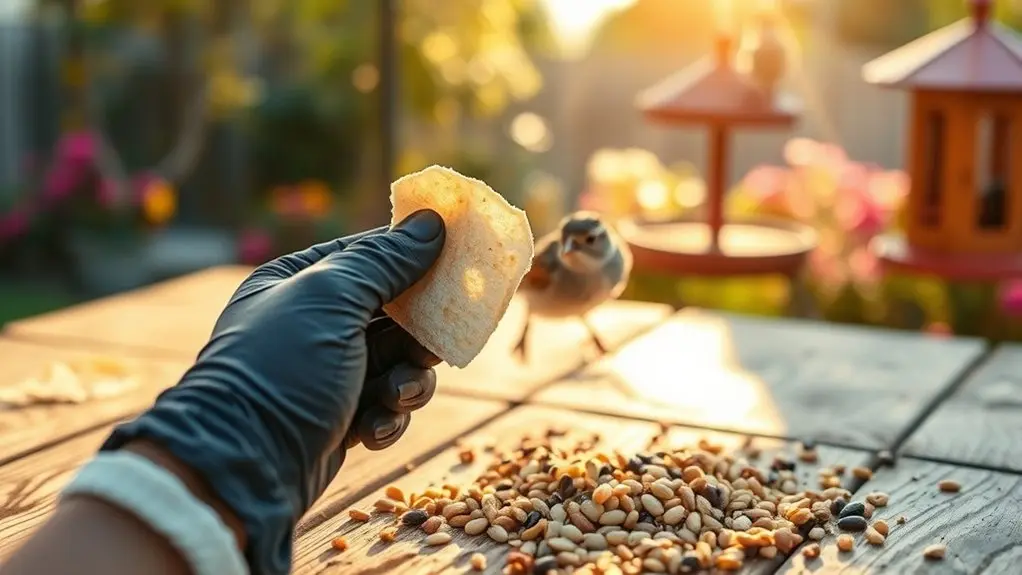
When you’re offering flour tortillas to birds, it’s best to make sure they’re stale first.
Then, cut them into small, easy-to-handle pieces so the birds can manage them without any trouble. Also, you’ll want to avoid adding any seasonings or oils—these can be harmful and aren’t good for the birds’ health.
It’s a good idea to keep an eye on the portion size too. Offering just a little at a time helps prevent overfeeding and keeps the birds feeling comfortable and safe.
That way, you’re helping them enjoy a treat without any risk.
Preparing Tortillas Properly
Although tortillas might seem like a simple treat, you’ll want to prepare them carefully to keep your feathered friends safe. Start by choosing plain flour tortillas without salt, sugar, or preservatives. Cut them into small pieces to reduce choking risks and make eating easier.
Birds often prefer a slightly stale tortilla texture, so avoid fresh, soft tortillas. Never fry or toast them, as added fats can harm birds.
When offering tortillas, keep feeding frequency low to prevent dietary imbalance. Always watch the birds while they eat to guarantee they handle the pieces safely.
Portion Size Considerations
Offering just a few small pieces of flour tortilla at a time helps prevent choking and guarantees your feathered friends can easily eat without feeling overwhelmed. Portion control is key since birds have small stomachs and can’t handle large amounts.
You should also monitor feeding frequency to avoid an imbalanced diet. Tortillas should be a treat, not a staple. Always verify the tortillas are fresh or stale but never moldy, as mold poses health risks.
Remember, different bird species may prefer certain textures or flavors, so adjust portions accordingly.
| Aspect | Recommendation |
|---|---|
| Portion Size | A few small pieces |
| Feeding Frequency | Occasional, not daily |
| Tortilla Quality | Fresh or stale, no mold |
How to Spot if Tortillas Don’T Agree With Birds
How can you tell if flour tortillas aren’t sitting well with your bird? Watch closely for tortilla symptoms that indicate bird distress. Here’s what to look for:
- Lethargy or unusual tiredness soon after eating tortillas.
- Diarrhea or vomiting, signaling digestive upset.
- Refusal to eat or any change in behavior after tortilla consumption.
- Altered droppings with noticeable changes in color or consistency.
These signs often point to difficulty processing gluten or other ingredients in flour tortillas. If you observe any of these symptoms, it’s best to stop offering tortillas immediately.
Always consult an avian veterinarian if your bird shows ongoing distress or digestive issues. Being attentive helps guarantee your feathered friend stays healthy and comfortable.
Which Birds Commonly Eat Flour Tortillas?
If you’ve noticed your bird’s reaction to flour tortillas, you might wonder which species actually eat them. Crows feeding on flour tortillas is quite common, especially when the tortillas are stale. These birds prefer food that’s easy to manage.
Urban birds like sparrows and pigeons also frequently consume flour tortillas, particularly in city environments where human food is accessible.
Occasionally, wild parrots and other foraging birds might include flour tortillas in their diet if they come across them.
Birds generally enjoy soft, pliable foods like flour tortillas because they’re easy to break down.
While not natural staples, flour tortillas can serve as a supplemental food source for urban birds accustomed to snacking on human-provided treats.
How Do Flour Tortillas Compare to Other Bird Treats?
Why do crows often choose stale flour tortillas over other snacks like seeds or Cheetos? It comes down to tortilla texture and bird preferences. Crows find stale tortillas easier to handle and more satisfying than crumbly seeds or overly salty junk food.
Here’s how flour tortillas compare to other treats:
- Manageable Size: Tortillas are easy for birds to pick up and manipulate.
- Texture Appeal: Their softness, especially when stale, suits crows’ feeding habits better than hard seeds or crunchy snacks.
- Nutritional Value: Unlike fruits or grains, tortillas lack essential vitamins and minerals, making them less beneficial overall.
- Behavioral Adaptation: Crows stack tortillas, showing intelligence in maximizing this food source.
While tortillas can be a fun treat, they shouldn’t replace healthier, nutrient-rich bird foods.
Can Feeding Flour Tortillas Affect Wild Bird Behavior?
What happens when you feed flour tortillas to wild birds? You may notice changes in their feeding behaviors, especially among species like crows that prefer easy, palatable food.
These birds often display complex foraging strategies, such as stacking and hoarding tortillas, which can alter their natural routines. Offering tortillas also impacts social dynamics, sometimes triggering feeding frenzies as multiple birds compete for the leftovers.
While this might seem harmless, you should be aware of potential dependency issues. Regularly providing flour tortillas can draw birds closer to human areas, making them reliant on these food sources and disrupting their instinctual foraging habits.
Alternatives to Flour Tortillas for Feeding Birds
Although flour tortillas aren’t toxic to birds, they don’t provide the nutrients your feathered visitors need for a healthy diet. Instead, you can offer alternatives that support their wellbeing better.
Consider these options:
- Vegan birdseed mixes rich in various seeds for essential fats and proteins.
- Fresh fruit blends, which supply vitamins and hydration.
- Nut mixtures, providing healthy fats and energy.
- Herbal treats made from safe herbs to add variety and potential health benefits.
These alternatives are more nutritious and free from additives or preservatives that could harm birds.
Avoid relying on flour tortillas as a main food source. Instead, use these options to attract and nourish birds in a healthier way.
Supporting a Healthy Bird Diet
When you feed birds, you should focus on providing a balanced diet that meets their nutritional needs. Bird feeding isn’t just about offering food; it’s about understanding their dietary preferences to support their health.
While flour tortillas can be given in moderation as a carbohydrate source, they lack essential nutrients, so don’t rely on them alone. Choose stale, plain tortillas without salt or preservatives to avoid harming birds.
To support a healthy bird diet, include a variety of seeds, fruits, and vegetables, which provide crucial vitamins and minerals.
Observing local birds helps you tailor food choices to their natural preferences, ensuring they get proper nutrition.
This careful approach to bird feeding promotes their well-being and longevity.
Frequently Asked Questions
Can Baby Birds Eat Flour Tortillas Safely?
Yes, baby birds can eat flour tortillas safely, but only in small amounts and as an occasional treat.
You’ll want to make sure the tortillas have safe ingredients, no additives or preservatives, and cut them into tiny pieces to avoid choking.
Do Flour Tortillas Cause Allergies in Birds?
Imagine your bird’s body as a finely tuned orchestra. Each ingredient either harmonizes or disrupts the melody.
Flour tortillas can cause allergic reactions in some birds because of certain ingredient concerns like wheat and gluten.
You might notice discomfort or feather plucking if your feathered friend reacts poorly. Always watch closely after feeding and consult an avian vet if you suspect allergies.
Protect your bird’s harmony by choosing foods carefully.
Should Flour Tortillas Be Moistened Before Feeding Birds?
Yes, you should moisten flour tortillas before feeding birds. Moisture absorption softens the tortilla texture, making it easier for birds to eat and digest.
Dry tortillas can be tough and pose choking risks, so adding a bit of water improves safety and appeal.
Can Flour Tortillas Help With Bird Training Treats?
Flour tortillas can be the secret ingredient that spices up your bird training like a well-tuned orchestra.
Their soft texture and treat variety make them perfect for boosting training effectiveness.
You’ll find your feathered friend enthusiastically breaking off pieces, reinforcing positive behavior with every bite.
Just keep portions small to maintain a balanced diet.
Using tortillas adds flavor to your sessions and strengthens the bond between you and your bird.
Are Homemade Tortillas Better Than Store-Bought for Birds?
Yes, homemade tortillas are better for birds because you control the ingredient safety and avoid additives that might harm them.
You can boost the nutritional value by using simple, bird-friendly ingredients without salt or preservatives.
Store-bought versions often contain unwanted chemicals, so making tortillas at home lets you tailor recipes to suit your bird’s preferences and health needs.
This way, you ensure they get a safer, more nutritious treat every time.
Conclusion
Feeding birds flour tortillas might seem like offering them a soft, warm blanket, but it’s important to remember this isn’t their natural feast. While an occasional small piece won’t harm, relying on tortillas can cloud their true nutritional path.
Think of it as a fleeting shadow—brief and harmless, yet not a source of lasting nourishment. To truly support their vibrant dance in the sky, choose treats that honor their wild, untamed spirit.