
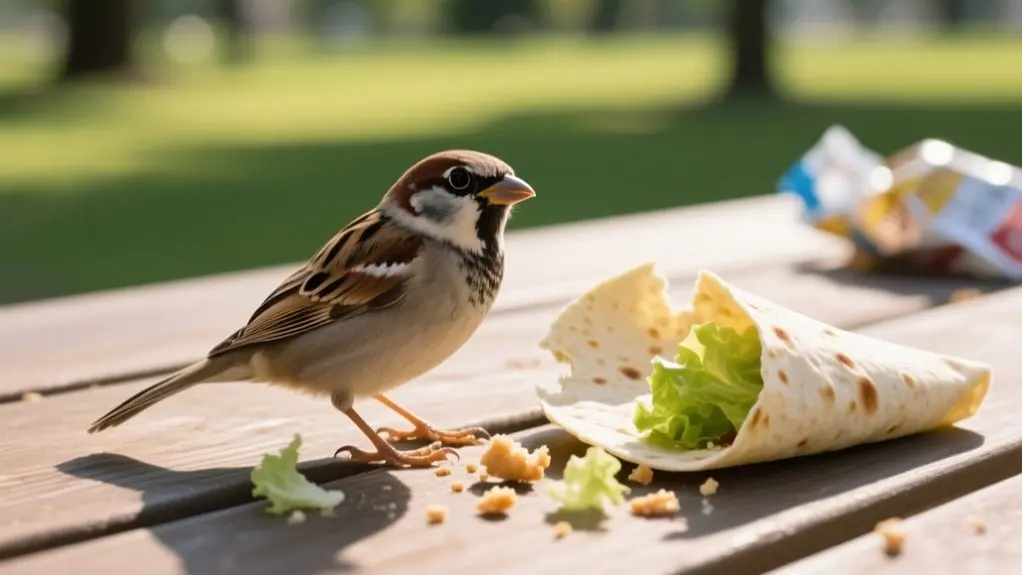
You can offer birds plain flour tortilla wraps occasionally, but don’t make them a regular part of their diet. Tortillas mainly contain refined flour and salt, which lack essential nutrients birds need, like protein, vitamins, and calcium.
Overfeeding can lead to health issues such as obesity and nutritional deficiencies. Moldy tortillas also pose risks. For healthier options and safe feeding tips, keep exploring how to support your birds’ nutrition the right way.
Ingredients in Flour Tortillas
Flour tortillas mainly consist of refined wheat flour, water, salt, and fat like vegetable oil or lard, which give them their soft texture.
When you consider whether to feed birds flour tortillas, it’s important to know these ingredients.
Refined wheat flour provides carbohydrates but lacks essential nutrients that many bird species need.
Salt adds flavor but can be harmful in excess, especially for birds sensitive to sodium.
Some flour tortillas also contain preservatives or additives that mightn’t be safe for birds.
While you can feed birds small amounts of flour tortillas occasionally, these wraps don’t offer the balanced nutrition required for their health.
Occasional small amounts of flour tortillas are okay, but they lack the balanced nutrition birds need.
Understanding the ingredients helps you make informed choices about what’s appropriate to share with wild or pet bird species.
Are Flour Tortillas Safe for Birds to Eat?
You can safely offer birds plain flour tortillas in small amounts since they contain simple ingredients and some carbohydrates.
That said, tortillas don’t have the key nutrients birds need, so feeding them too often might lead to health problems.
To keep your feathered friends safe, always pick fresh, unflavored tortillas and steer clear of any with additives or signs of spoilage.
Nutritional Value Overview
Although birds might occasionally nibble on flour tortillas, they shouldn’t rely on them as a regular food source because these tortillas offer little nutritional value and lack essential nutrients that support their health.
As a wild bird feeder, you’ll find cracked corn or birdseed far better for their diet. Flour tortillas are mostly carbohydrates with minimal protein, which doesn’t meet the dietary needs of birds.
While some birds might enjoy the texture, relying on tortillas can cause nutritional imbalances.
It’s best to avoid giving birds tortillas containing additives or seasonings. Instead, focus on providing seeds, fruits, and vegetables that truly nourish wild birds and keep them healthy, rather than human foods like flour tortillas that don’t offer the nutrients they need.
Potential Risks To Birds
When birds eat flour tortillas regularly, they risk missing out on crucial nutrients that keep them healthy and active. Flour tortillas lack the vitamins and minerals birds need, which can negatively affect bird health over time.
Moldy or stale tortillas pose even greater dangers, potentially causing fungal infections. To protect birds, it’s best to avoid feeding them human foods like tortillas altogether.
Instead, consider tortilla alternatives that better support their dietary needs, such as seeds, fruits, or specialized bird food. Sticking to proper feeding guidelines guarantees you won’t unintentionally harm their digestive system or overall well-being.
Safe Feeding Practices
Feeding birds flour tortillas requires careful consideration to avoid harming their health. While flour tortillas aren’t toxic, they lack essential nutrients and should only be offered as an occasional treat.
Pay attention to bird feeding habits and tortilla texture preferences to guarantee the pieces are small and manageable.
Follow these guidelines:
- Offer plain tortillas without preservatives or seasonings to avoid harmful additives.
- Use occasional treat guidelines, limiting servings to prevent reliance on processed foods.
- Always check tortillas for mold or spoilage to protect birds from health risks.
Why Flour Tortillas Shouldn’t Be a Bird’s Main Food
Because flour tortillas lack the essential nutrients and protein birds need, they shouldn’t make up the bulk of their diet. You might think feeding birds processed foods like flour tortillas is harmless, but their feeding habits are adapted to a natural diet of seeds, fruits, and insects.
Relying too much on flour tortillas can cause digestive issues and poor health.
| What Birds Need | What Tortillas Provide |
|---|---|
| Protein | Mostly carbohydrates |
| Essential nutrients | Minimal vitamins |
| Natural energy sources | Empty calories |
| Balanced diet | Imbalanced, processed food |
Stick to natural foods to support your feathered friends’ well-being and avoid disrupting their natural feeding habits with processed foods like flour tortillas.
Nutritional Gaps in Flour Tortillas for Birds
You might’ve noticed that flour tortillas don’t have the essential nutrients birds need, like protein, vitamins, and minerals. They’re mostly made up of carbohydrates, which doesn’t give birds the balanced diet they require.
In fact, feeding birds too many tortillas can even lead to weight problems.
Because tortillas lack key protein sources, they really shouldn’t replace the seeds, fruits, and insects that birds naturally eat.
Lack Of Essential Nutrients
Although flour tortillas might seem like a convenient snack to share with birds, they lack the essential nutrients your feathered friends need to thrive. Relying on tortillas can cause poor nutrient absorption and potential digestive issues.
To keep birds healthy, consider these points:
- Flour tortillas miss crucial proteins, vitamins, and minerals necessary for energy and immune function.
- Birds need calcium and omega-3 fatty acids, which tortillas don’t provide in meaningful amounts.
- Frequent feeding of tortillas can lead to nutritional deficiencies, harming overall health.
Because tortillas don’t meet these dietary needs, they should never replace a balanced diet tailored to birds. Use them only occasionally, if at all, to avoid compromising your birds’ long-term well-being.
High Carbohydrate Content
Flour tortillas pack a lot of carbohydrates but fall short when it comes to supplying the proteins, vitamins, and minerals birds need to stay healthy.
The tortilla texture, soft and dense, may appeal to some birds, but its high-carb content doesn’t provide the balanced nutrition they require.
If you feed flour tortillas frequently, you risk filling birds up with empty calories, which can disrupt their natural diet and lead to nutritional gaps.
Birds generally prefer foods rich in seeds, fruits, and insects, which offer the proteins and fats missing in tortillas.
While offering a small piece occasionally mightn’t harm them, it’s important to respect bird preferences and avoid making tortillas a regular part of their meals to maintain their overall health.
Missing Protein Sources
Because birds rely on protein for growth, feather health, and overall vigor, feeding them flour tortillas often leaves a critical nutritional gap.
Flour tortillas lack essential protein sources, providing mostly carbohydrates with minimal benefits for avian health.
To maintain nutritional balance, you need to guarantee birds get high-quality protein from natural sources.
Here’s what you should focus on:
- Provide insects and seeds rich in amino acids to support feather development and energy.
- Avoid relying on flour tortillas as a staple since they don’t meet birds’ protein needs.
- Supplement with specialized bird feeds designed to maintain avian health and nutritional balance.
Long-Term Effects of Processed Foods on Birds
When birds regularly eat processed foods like flour tortillas, you risk causing serious long-term health problems. These foods lack essential nutrients, disrupting their dietary preferences and leading to vitamin deficiencies.
High carbs promote obesity, which contributes to fatty liver disease. Additives may harm digestion and weaken immune systems, increasing disease risk.
Over time, processed foods displace nutritious options, so you must prioritize health monitoring and adjust feeding habits to protect birds.
| Effect | Impact on Birds |
|---|---|
| Nutrient Deficiency | Weakens overall health |
| Obesity | Leads to fatty liver disease |
| Additives | Causes digestive issues |
| Immune Suppression | Increases disease risk |
| Displaced Nutrition | Reduces vitamin intake |
Understanding these effects helps you make better feeding choices and support bird wellbeing.
How Often Can You Feed Birds Flour Tortillas?
You should only offer flour tortillas to birds occasionally, as treats rather than staples. Managing feeding frequency is key to keeping your feathered friends healthy.
Overfeeding tortillas can cause nutritional imbalances since they lack essential nutrients birds need.
Practice portion control by cutting tortillas into small, fresh pieces without additives or preservatives. Remember treat moderation to avoid digestive issues or distress.
Here are three tips to keep in mind:
- Limit feeding frequency to rare occasions, not daily or weekly.
- Serve small portions to prevent overconsumption.
- Prioritize bird-safe foods like seeds, fruits, and veggies over tortillas.
How to Safely Offer Flour Tortillas to Birds
Although flour tortillas aren’t a natural part of a bird’s diet, you can safely offer them by cutting the tortillas into small, plain pieces without any seasonings or additives.
Use fresh tortillas free from mold to avoid health risks.
Always choose fresh tortillas without mold to ensure the health and safety of visiting birds.
When applying tortilla preparation tips, make sure pieces are manageable for birds, typically small squares, to attract various species.
Follow bird feeding etiquette by offering tortillas only as an occasional treat, complementing their balanced diet of seeds and fruits.
Monitor how birds respond. If they ignore the tortillas, try different foods instead.
Incorporate seasonal feeding strategies by adjusting treats based on availability of natural food sources.
This careful approach keeps feeding safe and enjoyable for your feathered visitors without disrupting their natural diet.
Do Flour Tortillas Attract Pests or Predators?
When you leave flour tortillas out, they can attract pests like ants and rodents because they contain carbs and moisture.
Plus, this doesn’t just invite those little critters—it can also encourage predators like cats or larger birds that are on the lookout for an easy meal.
Tortilla Impact On Wildlife
Since flour tortillas contain high carbohydrates and additives, leaving them outdoors can attract pests like ants and rodents that disrupt local wildlife habitats. This can cause local wildlife disruption and affect ecological balance impacts negatively.
You should be aware of how tortilla fermentation effects might alter the environment around you. Consider these points:
- Flour tortillas can displace natural food sources, leading to nutritional imbalances in birds.
- Additives in tortillas may harm wildlife health when ingested repeatedly.
- Improper disposal encourages predators, threatening smaller species and disturbing habitat stability.
Pest Attraction Risks
How do flour tortillas affect the presence of pests or predators around your bird feeding areas? Flour tortillas can attract pests like ants, rodents, fruit flies, and beetles due to crumbs and leftover particles.
If left outside, they spoil or mold quickly, creating a breeding ground for pests and harmful bacteria. To protect your feeding area, implement pest control measures such as promptly removing tortilla remnants.
Use effective cleanup strategies by regularly cleaning feeding spots to eliminate food residues that lure unwanted insects.
Moreover, practice safe disposal methods by sealing and discarding leftover tortillas properly to prevent pest infestations.
Predator Presence Concerns
Although flour tortillas might seem like a harmless treat, they can actually attract more than just birds to your feeding area. The presence of these human foods can disrupt natural predator behavior and wildlife interactions, putting smaller birds at risk.
Here are three key concerns to keep in mind:
- Flour tortillas often attract pests like ants and rodents, which can interfere with your feeding environment.
- Leftover food scraps may draw larger predators such as raccoons or cats, increasing danger for smaller birds.
- Birds usually don’t favor flour tortillas, so leftovers often invite scavengers instead of intended species.
To maintain safe feeding environments, avoid offering flour tortillas and keep the area clean, minimizing predator presence concerns.
Common Foods to Avoid Feeding Birds
When you feed birds, it’s essential to avoid certain foods that can harm their health or attract unwanted species.
Using smart seed selection strategies helps you provide better bird health benefits by choosing high-quality seeds without fillers like wheat or milo, which often attract aggressive birds.
Moldy or clumped seed can cause fungal infections, so discard spoiled seed and practice regular feeder maintenance tips to keep feeders clean and safe.
Avoid feeding birds human food scraps like bread or chips, as they lack necessary nutrients and may harm birds.
Also, stay clear of pesticide-contaminated seeds and fermented nectar, which can be toxic or moldy.
Sticking to nutritious, bird-specific foods guarantees your feathered friends thrive in your yard.
How Birds React to Eating Flour Tortillas
Feeding birds requires more than just avoiding harmful foods; it also means understanding how they respond to different treats you offer.
When you provide flour tortillas, you’ll notice a few key reactions influenced by tortilla texture and bird preferences:
- Birds often appreciate the soft tortilla texture. It makes it easy for them to peck and swallow small pieces without difficulty.
- Feeding behavior varies. Some birds treat tortillas as a snack, especially when other food is scarce, while others may ignore them in favor of seeds or fruits.
- Your choice to serve plain tortillas without harmful additives encourages safer and more positive feeding responses.
Better Alternatives to Flour Tortillas for Bird Feeding
Many bird enthusiasts prefer offering a variety of healthier options instead of flour tortillas to better support birds’ nutritional needs.
You can provide nutritional variety by choosing natural snacks like fresh fruits, apple peels, potato peels, and asparagus ends, which many birds enjoy.
Feeding preferences vary among species, so including sunflower seeds and cracked corn from bird blocks or quail feeders offers high energy and balanced nutrients.
Different birds prefer varied foods; sunflower seeds and cracked corn provide energy and balanced nutrition.
Grapes from wild bird sanctuaries also attract a broader range of birds, making your feeding station more appealing.
These alternatives supply essential nutrients missing in processed foods like flour tortillas, promoting better health for your feathered visitors.
Tips for Creating a Balanced Bird Feeding Routine
Providing a variety of natural foods like sunflower seeds and apple peels sets a strong foundation for attracting different bird species.
To create a balanced bird feeding routine, focus on these key points:
- Seed selection strategies: Choose high-quality, bird-specific seeds. Avoid mixes with fillers that lack nutrients.
- Seasonal feeding adjustments: Offer year-round bird blocks and adjust food types based on seasonal bird feeding habits. This helps meet changing nutritional needs.
- Maintain cleanliness: Regularly clean feeders and remove spoiled seeds to prevent health risks.
Frequently Asked Questions
Can Flour Tortillas Cause Allergies in Birds?
Yes, flour tortillas can cause allergies in birds, especially if you don’t analyze the tortilla ingredients carefully.
Some preservatives or additives might trigger allergic reactions, affecting your bird’s digestive health.
You should watch for allergy symptoms like digestive upset, feather plucking, or lethargy.
Introducing tortillas gradually and observing your bird closely helps catch any adverse reactions early, keeping your feathered friend safe and healthy.
Are Whole Wheat Tortillas Better for Birds Than Flour Ones?
Yes, whole wheat tortillas are better for birds than regular flour ones because they offer more nutritional benefits like higher fiber and protein.
You’ll reduce ingredient concerns since whole wheat tortillas have fewer additives and preservatives.
When feeding, follow guidelines and offer them only in moderation to avoid overloading your bird’s diet.
This way, you provide a healthier option that supports your bird’s energy and digestion without unnecessary risks.
Can Baby Birds Eat Flour Tortilla Wraps?
Feeding a baby bird flour tortilla wraps is like offering a warm blanket, comforting but not nourishing. You shouldn’t rely on tortillas for baby bird nutrition since they lack essential nutrients.
Instead, stick to safe food options like insects or specially formulated feeds.
Always follow feeding guidelines carefully to support healthy growth.
If you’re unsure, consult avian experts to provide the best care for these delicate little creatures.
Do Different Bird Species React Differently to Flour Tortillas?
Yes, different bird species react differently to flour tortillas because of their unique preferences and feeding habits.
You’ll notice that seed-eaters or insectivores often avoid them due to low nutritional value, while scavengers like crows or pigeons may readily consume them.
Since flour tortillas lack essential nutrients, you should be cautious offering them.
Make sure they don’t replace natural, nutrient-rich foods that support birds’ health and well-being.
How Should Flour Tortillas Be Stored Before Feeding Birds?
You should use proper tortilla storage methods to keep them fresh before feeding birds.
Store tortillas in an airtight container or resealable bag to prevent moisture and pests. Keep them in a cool, dry place away from direct sunlight to preserve freshness.
If tortillas are near expiration, freeze them to extend shelf life.
Before serving, let them reach room temperature. That’s the ideal serving temperature for birds to enjoy them safely.
Conclusion
Just like you wouldn’t survive on just candy, birds can’t thrive on flour tortillas. While a little nibble might not hurt, these wraps lack the nutrients birds truly need and can lead to long-term health issues.
Instead of offering a quick fix, think of feeding birds like tending a garden. Choose wholesome, natural foods that help them flourish.
Your thoughtful care guarantees they’ll sing sweetly for seasons to come.