
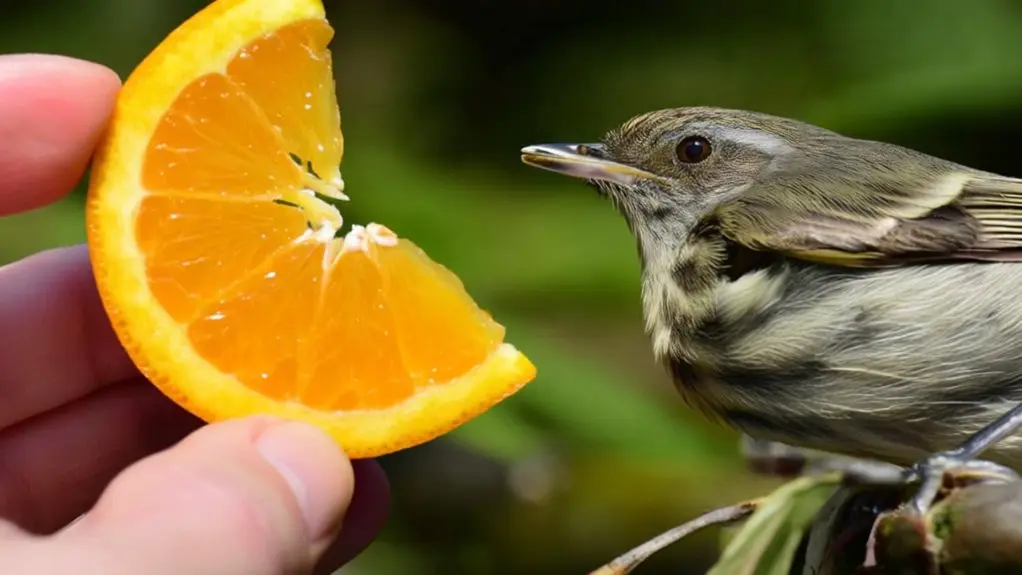
Yes, you can safely feed oranges to many bird species, especially during migration and nesting when they need quick energy from the fruit’s high sugar content. Birds use visual and scent cues to find ripe oranges, which provide essential nutrients.
However, make sure the fruit is fresh and clean to avoid health risks from spoilage or pests. Proper feeding and maintenance can support diverse bird populations. Understanding best practices will help you create an inviting, safe environment for your feathered visitors.
Why Do Birds Love Oranges?
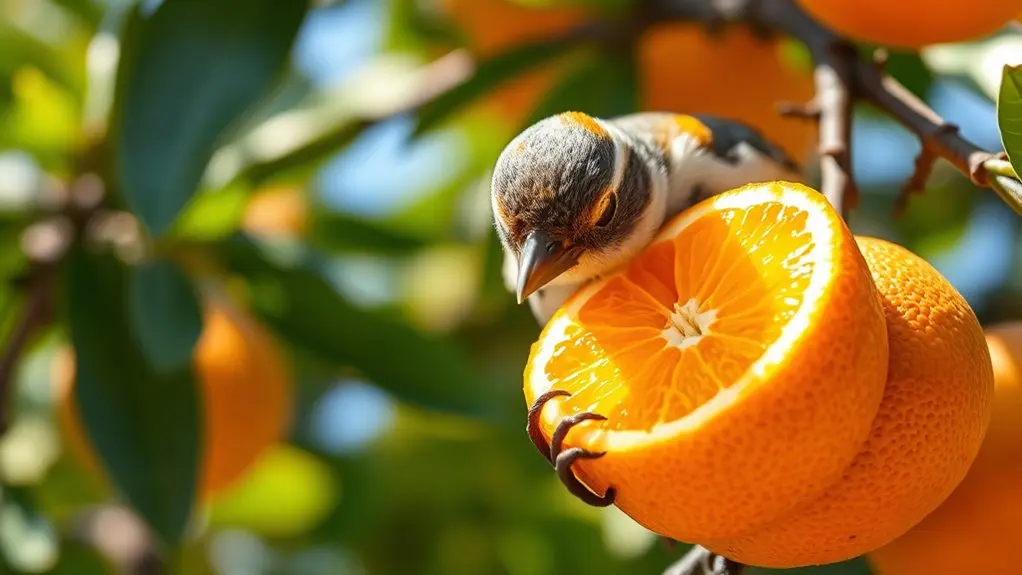
Because birds rely heavily on visual and olfactory cues to find food, they’re naturally drawn to oranges. The bright orange color serves as a visual signal indicating ripe, energy-rich fruit, making it easier for birds to locate.
Additionally, the sweet scent emitted by orange peels and flesh releases natural juices that attract various fruit-eating bird species. You’ll notice that the high sugar content in oranges provides quick energy, which is especially essential for migrating and nesting birds needing immediate fuel.
The aroma can even draw birds from a distance, particularly during migration seasons when they seek abundant food sources. Understanding these factors helps explain why oranges consistently appeal to numerous bird species in diverse environments.
How to Feed Oranges to Backyard Birds
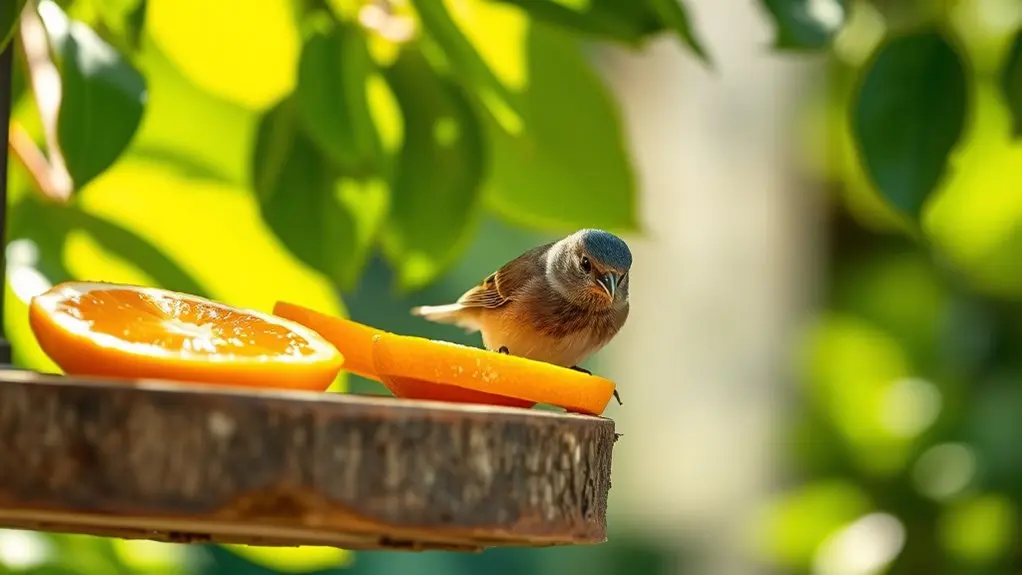
When you want to attract birds with oranges, preparing and presenting the fruit correctly is essential to guarantee accessibility and safety. Slice oranges in half or into wedges, then secure them on hooks, branches, or specially designed feeders to facilitate feeding.
Impaling halved oranges on nails or spikes mimics natural fruit placement, encouraging birds to perch and feed comfortably.
Impaling orange halves on nails or spikes replicates natural fruit positioning, inviting birds to perch and enjoy their snack.
Position orange pieces in visible locations such as deck railings, platform feeders, or DIY feeders made from scrap wood to increase bird attraction.
Replace the fruit every 1 to 2 days in summer and every 2 days in spring to maintain freshness and interest.
Make sure to regularly clean feeding areas and promptly remove moldy or spoiled fruit to prevent health risks and deter pests. This helps ensure a safe feeding environment for backyard birds.
Keeping things fresh and tidy really makes a difference!
When Is the Best Time to Feed Oranges?
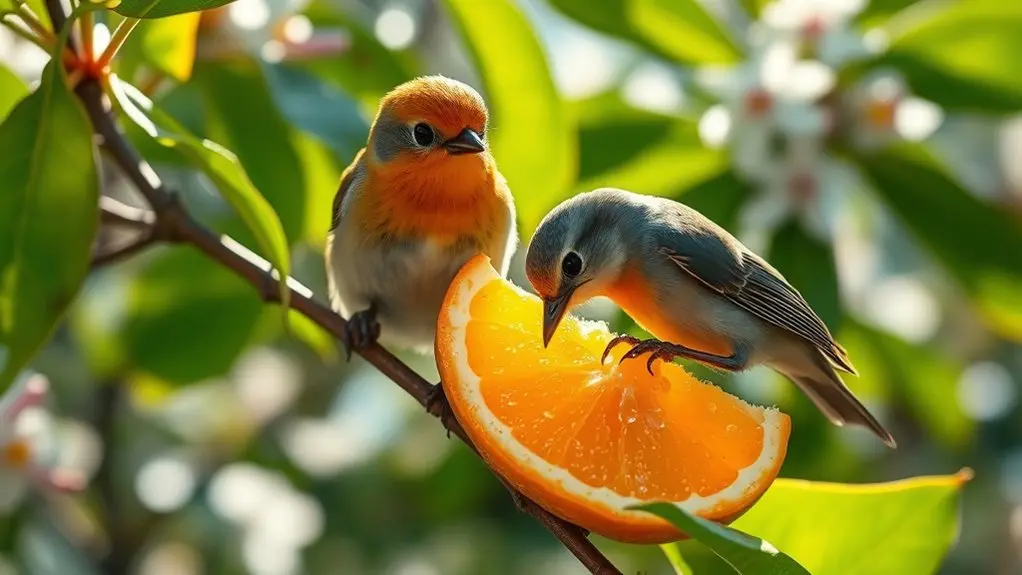
After preparing and positioning oranges correctly, choosing the ideal time to offer them greatly increases their effectiveness in attracting birds. The most suitable period is spring, which aligns with bird migration and nesting phases.
By placing oranges early in this season, you attract migratory species like orioles and tanagers as they arrive.
Maintaining a steady supply throughout the nesting season supports these birds in raising their young by providing consistent access to high-energy fruit.
Feeding oranges during spring compensates for the relative scarcity of natural food sources, enhancing nutritional support.
Also, timing feeding to match migration patterns increases the diversity of fruit-eating birds visiting your area. This improves your chances of observing various species.
Which Birds Are Attracted to Oranges?
You’ll notice that certain bird species, like Bullock’s Orioles and Western Tanagers, really love oranges, especially when they’re migrating. They’re drawn to the bright color and the sweet, sugary taste.
It’s pretty interesting how these factors influence their feeding habits. Knowing this helps us understand why migration patterns can change the way different birds eat fruit.
Orange-Loving Bird Species
Although many bird species consume a variety of fruits, certain birds show a marked preference for oranges because of their bright color and high juice content. You’ll find some species actively seek out oranges, especially during migration and nesting seasons. They rely on the nutritional benefits these fruits provide.
Key orange-loving bird species include Bullock’s Orioles, which prefer oranges over other fruits. Mockingbirds consume oranges mainly when other food is scarce. Cardinals are attracted to the fruit’s vibrant color and moisture.
Red-bellied woodpeckers feed on the flesh and pulp. Goldfinches are drawn to oranges placed on feeders or in gardens during migration.
Understanding these species helps you provide the right food sources to support their dietary needs effectively.
Fruit Preferences Among Birds
Which bird species are particularly attracted to oranges? Orioles, mockingbirds, and tanagers show a strong preference for this fruit. Bright orange-colored fruits like oranges effectively attract colorful birds such as orioles and goldfinches due to their vivid hue.
Additionally, species including bluebirds, catbirds, grosbeaks, and woodpeckers consume oranges, especially during summer months. Many fruit-eating birds favor oranges over other fruits because of their high sugar content, providing an energy-rich food source.
Some birds, like robins and thrashers, may feed on oranges occasionally, particularly when natural fruit availability is low. Understanding these preferences helps you recognize the role oranges play in supporting diverse bird species’ diets during various seasons.
Migration and Feeding Patterns
Birds that favor oranges throughout the year often rely on this fruit during their migratory journeys as well. You’ll notice that migratory species like Orioles and Western Tanagers are particularly attracted to oranges during spring and fall. These fruits provide essential energy to sustain long flights.
Orioles feed on oranges mainly from late May to July, aligning with their northward migration for nesting.
Western Tanagers often follow others to feeding stations offering oranges, highlighting the fruit’s role in supporting diverse species.
- Orioles consume oranges during migration to fuel nesting activities.
- Western Tanagers seek oranges at feeders on migration routes.
- Bright orange fruit signals a dependable food source.
- Feeding on oranges helps birds meet high energy demands.
- Multiple species converge on oranges during seasonal migration.
Are There Any Risks to Feeding Oranges?
You should be a bit cautious when feeding oranges to birds. Spoiled fruit can actually make them sick, and the high acidity might cause some digestive upset.
So, it’s important to make sure the oranges are fresh and washed well to keep any chemicals away.
Also, don’t overdo it—feeding too many oranges can throw off their natural diet and might even attract pests you don’t want around.
Potential Health Concerns
Although feeding oranges to wild birds is generally safe, you should be cautious about the quantity and condition of the fruit offered. Excessive consumption can upset their digestion due to high acidity and sugar. Some bird species may also react negatively to citrus essential oils if ingested in large amounts.
To minimize health risks, consider these points:
Avoid offering moldy or spoiled oranges to prevent bacterial and fungal infections. Limit orange portions to prevent nutritional imbalances, ensuring birds receive a varied diet. Regularly clean feeders to inhibit microbial growth.
Monitor bird reactions to citrus, as sensitivity varies among species. Use fresh, untreated oranges free from pesticides or chemicals. Taking these simple steps can help keep your feathered friends healthy and happy.
Fruit Spoilage Risks
Taking care to offer only fresh oranges helps prevent health complications linked to fruit spoilage. Spoiled or moldy oranges can cause infections and illnesses in birds, posing significant health risks.
Overripe or fermented fruit encourages mold growth and attracts pests, which not only harm birds but may also affect nearby humans.
Rotted oranges emit foul odors and facilitate disease spread among visiting birds, increasing the potential for outbreaks.
To minimize these risks, you should regularly replace oranges and clean feeders thoroughly to prevent bacterial and mold buildup.
Using fresh, unspoiled oranges is essential for safe feeding practices.
By maintaining strict hygiene and monitoring fruit quality, you ensure a healthy environment for your backyard birds while reducing the likelihood of fruit spoilage-related health issues.
It’s really about keeping things fresh and clean to protect the birds and everyone around.
How Should You Clean and Maintain Orange Feeders?
Because orange feeders provide a moist environment that can quickly harbor mold and bacteria, you should clean them thoroughly with soap and water at least every few days. This routine reduces health risks for birds and limits pest attraction.
When cleaning, focus on all surfaces, especially crevices where contaminants accumulate. After washing, rinse feeders well to remove soap residues, ensuring safety for bird consumption.
Also, make sure to inspect feeders regularly to catch any structural damage that could compromise hygiene or bird safety. It’s all about keeping things safe and clean for our feathered friends.
To maintain orange feeders properly, you should:
- Remove spoiled or moldy fruit immediately
- Scrub feeders with a brush or cloth, targeting hidden areas
- Rinse thoroughly to eliminate soap traces
- Clean feeders every few days to prevent microbial growth
- Inspect and repair or replace damaged feeders promptly
What Other Fruits Can You Feed Alongside Oranges?
When you offer oranges to birds, incorporating other fruits can enhance their diet and attract a broader range of species. Birds like robins, thrushes, and waxwings appreciate berries such as blackberries, blueberries, and raspberries alongside oranges.
Offering oranges with berries like blackberries and blueberries attracts robins, thrushes, and waxwings to your garden.
Including apples, cherries, and crabapples also draws various backyard birds. Small fruits like grapes, currants, and cranberries diversify diets, especially during migration periods.
You can soak dried fruits like raisins and cranberries to provide additional energy when served with fresh oranges.
Combining melons, plums, and a variety of berries with oranges encourages visitation from more bird species. This mixed-fruit approach supports nutritional balance and helps sustain birds through fluctuating seasonal food availability.
It’s a simple way to keep your feathered friends happy and healthy!
Frequently Asked Questions
Can Baby Birds Eat Oranges Safely?
You can safely offer baby birds small, soft orange pieces only after they’re fully fledged and chewing well. Make sure to give it in moderation to avoid acidity issues.
Always provide fresh, mold-free fruit to prevent digestive upset. It’s better to be cautious when introducing new foods. Just keep an eye on how they react and adjust accordingly.
Do Oranges Affect Bird Migration Patterns?
You might find it fascinating that some migratory birds travel over 3,000 miles. Oranges don’t considerably alter these patterns, but they do provide essential energy.
This helps birds rest and refuel during their long, demanding journeys. It’s pretty amazing how something as simple as a fruit can support such incredible travel. Birds really make the most of the resources they find along the way.
How Do Birds Digest Citrus Fruits?
Birds digest citrus fruits by using stomach enzymes to break down acids and sugars, allowing nutrient absorption. You should note they tolerate small amounts since excessive citric acid can irritate their digestive systems, impairing metabolism and health.
Can Orange Seeds Harm Birds if Ingested?
Imagine a bird swallowing orange seeds whole, passing them harmlessly. But cracking seeds risks releasing toxic compounds.
You should avoid feeding seeds to sensitive species. Cumulative ingestion can disrupt digestion and lead to toxicity over time.
Are Dried Oranges Safe for Bird Feeding?
Yes, you can safely feed birds dried oranges in moderation if they’re unsweetened and preservative-free. Just make sure to avoid mold and chemicals that could harm them.
It’s a good idea to soak the slices first to rehydrate them. This helps reduce the risk of dehydration and digestive issues for the birds.
Conclusion
You can definitely feed oranges to birds, as many species enjoy their sweet, juicy flavor. Studies show that fruit-eating birds like orioles increase their fruit intake by up to 30% during migration when given access to citrus.
Just remember to feed oranges in moderation. Clean feeders regularly to prevent mold, and avoid overfeeding to keep birds healthy. Pairing oranges with other fruits supports a balanced diet and attracts a variety of birds to your backyard.