
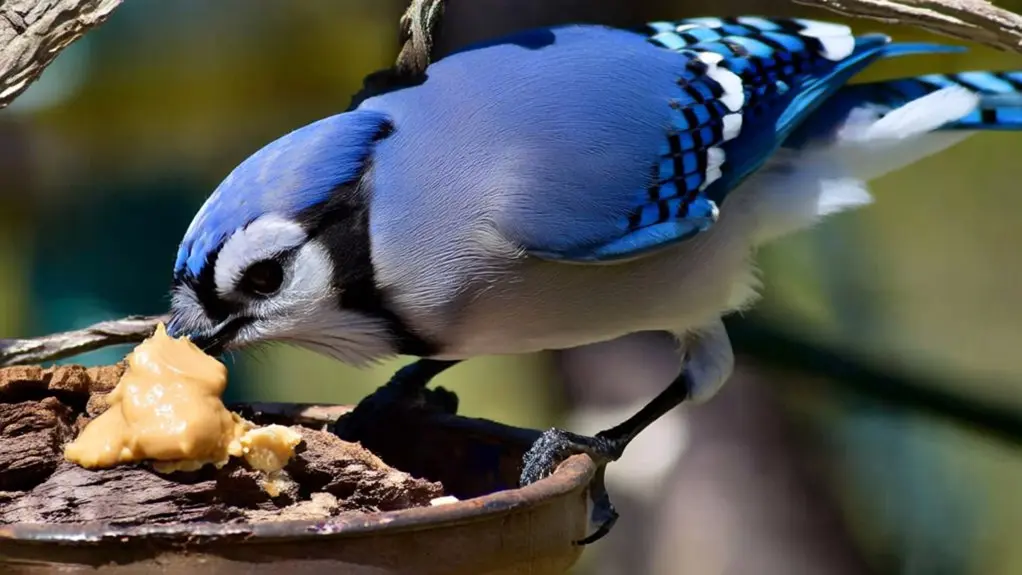
You can offer your bird peanut butter occasionally, but stick to small amounts of natural, additive-free varieties to avoid health risks like fatty liver disease and choking. Peanut butter’s high protein and fat content can benefit your bird, stimulating natural foraging instincts. However, avoid peanut butter from seed mixes due to potential aflatoxin contamination.
Always supervise feeding and watch for any adverse reactions. Understanding safe feeding practices and alternatives will help you keep your bird healthy and engaged. Just remember, moderation is key!
Is Peanut Butter Safe for Your Bird?
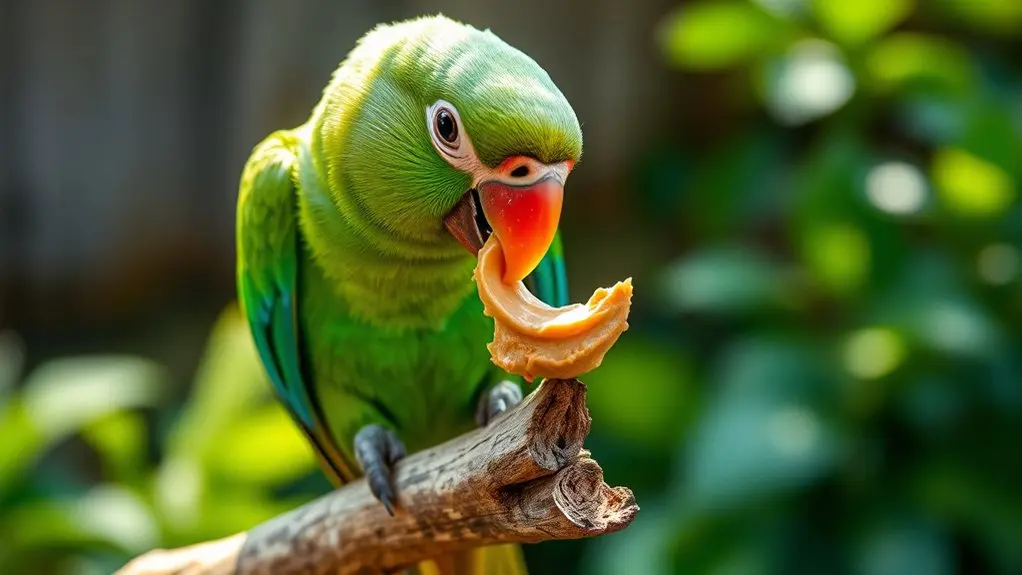
Although peanut butter can serve as an occasional treat for your bird, you should offer it in moderation because it has a lot of fat and sugar.
Choosing natural, human-grade peanut butter is really important since it lowers the risk of aflatoxin exposure. Aflatoxin is a toxic compound that’s sometimes found in peanuts.
Heat treatment can reduce aflatoxin levels, but it’s not always reliable, so you still need to be careful.
You can safely give small amounts by smearing peanut butter on bread or toast, especially if you’re medicating your bird. Just watch out for any choking hazards.
And remember, never make peanut butter a regular part of your bird’s diet. Offering it only sparingly helps keep your bird’s feeding balanced and nutritious.
That way, you support your bird’s overall health without risking safety.
How Does Peanut Butter Affect Bird Health?
When you feed peanut butter to your bird, you need to take into account its high fat and sugar content. Eating too much can lead to serious health issues like fatty liver disease. So, moderation is key to keeping your bird healthy.
Also, aflatoxins in improperly processed peanuts may cause poisoning, which is something to watch out for. The sticky texture of peanut butter can sometimes cause choking or digestive problems if your bird has too much.
Moldy peanuts can lead to fungal infections such as aspergillosis, so always make sure the peanut butter is fresh and safe. Serving peanut butter sparingly is the best way to protect your bird’s health.
| Health Concern | Effect on Birds |
|---|---|
| High Fat & Sugar | Fatty liver disease |
| Aflatoxins | Potential poisoning |
| Sticky Texture | Choking, digestive issues |
| Mold Growth | Fungal infections (aspergillosis) |
Why Avoid Peanuts and Peanut Butter From Bird Seed Mixes?
You should steer clear of peanuts found in bird seed mixes because they often contain aflatoxins. These are toxic compounds produced by fungi when conditions are warm and humid.
These toxins can lead to serious health problems in birds, like poisoning and fungal infections. So, it’s really best to avoid them.
Instead, go for natural, human-grade peanuts or peanut products. They carry a much lower risk and are safer for your feathered friends.
Aflatoxin Risks
Since peanuts in bird seed mixes can contain aflatoxins, which are harmful fungal toxins, you should avoid feeding these to birds. Aflatoxins are produced by certain molds that grow on improperly stored peanuts. These toxins pose serious health risks.
The level of aflatoxins can vary, and heat treatment mightn’t reliably get rid of them. When birds eat peanuts from seed mixes, they’ve a higher risk of aflatoxin exposure compared to eating fresh, human-grade peanuts.
Chronic ingestion of aflatoxins can cause liver damage, weaken the immune system, and lead to other serious health problems in birds. To keep birds safe, it’s better to avoid peanuts from seed mixes altogether.
Instead, offer fresh, roasted, or natural peanut products that reduce aflatoxin contamination and help promote bird health. This way, you’re making a safer choice for your feathered friends.
Avoid Seed Mixes
Given the health risks posed by aflatoxins in peanuts found in bird seed mixes, it’s important to reconsider offering these products to birds. Aflatoxins are toxic fungal metabolites that can contaminate peanuts, especially when storage is inadequate. While heat treatment in seed mixes may reduce these toxins, its effectiveness is inconsistent.
Feeding birds peanuts from seed mixes increases their exposure risk. Instead, provide natural, human-grade peanuts or peanut butter to guarantee safety.
| Factor | Seed Mix Peanuts | Human-Grade Peanuts |
|---|---|---|
| Aflatoxin Risk | High, due to contamination | Low, rigorously controlled |
| Storage Conditions | Often improper | Properly stored |
| Safety for Birds | Questionable | Recommended |
Avoid seed mixes to protect birds from harmful aflatoxins effectively. It’s a simple step that can make a big difference for their health.
Best Natural Peanut Alternatives for Birds
Although peanuts are a popular treat for birds, you can provide equally nutritious alternatives that reduce potential health risks. Choosing natural, unprocessed options guarantees your bird receives essential nutrients without harmful additives.
Consider these three alternatives:
- Roasted, human-grade peanuts without added salts or oils offer a safer, less processed option.
- Fresh, raw sunflower or safflower seeds provide essential fats and nutrients. They also avoid risks tied to processed peanut products.
- Unsalted nuts like almonds or cashews, along with dried fruits such as raisins or cranberries in moderation, supply variety and additional vitamins.
Always verify these foods are free from mold, pesticides, and preservatives to protect your bird’s health. These natural alternatives support a balanced diet while minimizing exposure to contaminants common in processed peanut products.
It’s a simple way to keep your feathered friend happy and healthy!
How to Safely Offer Peanut Butter to Your Bird
Providing your bird with natural peanut alternatives is a great way to maintain their health, but you might still want to offer peanut butter occasionally. To do this safely, choose natural, human-grade, roasted peanut butter without added sugars or salts.
Mix a small amount with flour or another safe binder to reduce stickiness and control portions.
Offer peanut butter sparingly, no more than once or twice weekly, to avoid health risks from excessive fat and sugar.
Smearing a tiny amount on bread or toast can also work, especially for medication delivery.
Always supervise your bird during feeding, watching closely for signs of choking or adverse reactions.
This careful approach guarantees peanut butter remains a safe, enjoyable treat for your feathered friend. Just keep an eye on them and don’t overdo it, and you’ll both be happy!
Using Peanut Butter for Medicating and Training Birds
When you need to give medication or reinforce training behaviors, peanut butter is a great tool because of its sticky texture and tasty flavor. You can spread small amounts on bread or toast to help birds take their medicine. It’s pretty handy for making sure they actually eat what they need.
To make it easier to handle, try mixing peanut butter with flour or other safe ingredients to make it less sticky. You can also use peanut butter as a treat to train birds to step up or target. Its texture really helps encourage the behaviors you want.
Just remember, don’t overdo it. Peanut butter is high in fat, and too much can harm your bird’s health. So, keep these tips in mind:
- Use small, controlled amounts mixed with safe additives when giving medication.
- Let peanut butter’s stickiness help with training.
- Limit how often you use it to avoid too much fat.
Why Do Birds Love Peanut Butter?
You’ll notice that birds are naturally drawn to peanut butter because it’s packed with fats and proteins they need. Plus, its sticky texture really gets their foraging instincts going. They love to peck and explore it.
Nutritional Appeal
Why do birds find peanut butter so irresistible? It’s primarily due to its exceptional nutritional value and sensory appeal. Peanut butter provides birds with essential nutrients and a texture that closely resembles their natural diet.
Here’s why peanut butter attracts birds:
- High Nutrient Content: It’s packed with protein and fat, vital for energy and maintaining health.
- Familiar Texture: The rich, oily consistency mimics nuts and seeds birds naturally consume.
- Flavor and Aroma: Its taste and smell stimulate birds’ curiosity and encourage feeding behavior.
All these factors come together to make peanut butter a highly appealing food source for many bird species, including parrots and budgies. It supports their dietary needs effectively, making it a favorite treat for our feathered friends.
Natural Foraging Instinct
Although you mightn’t realize it, birds rely heavily on their natural foraging instincts to identify and select nutrient-dense foods like peanut butter. This instinct drives them to seek out high-fat, high-protein sources essential for energy and growth.
Peanut butter’s sticky texture and strong aroma mimic natural food items such as nuts and seeds. This makes it especially attractive to species like parrots and finches, whose evolutionary diets favor nut-based treats.
When birds encounter peanut butter, their foraging behavior is stimulated. This provides both nutritional benefits and mental engagement.
The combination of sensory cues and nutrient content aligns perfectly with their dietary inclinations, explaining why peanut butter captivates birds and encourages natural feeding habits in various species.
When Should You Skip Peanut Butter and See a Vet?
If your bird shows signs of fatigue, breathing difficulty, or behavioral changes after eating peanut butter, skip it immediately and consult a veterinarian.
Certain conditions mean you should avoid peanut butter to prevent health risks.
Avoid peanut butter if your bird has specific health issues to prevent serious risks.
You need to be especially cautious if your bird exhibits symptoms of aspergillosis, like respiratory distress or nasal discharge. These symptoms can get worse with peanut butter consumption.
Also, if your bird has pre-existing liver problems or obesity, the high-fat content in peanut butter can make these conditions worse.
And watch out for allergic reactions such as swelling, abnormal droppings, or lethargy after your bird eats peanut butter. These signs could mean toxicity or intolerance.
Seeing a vet right away is important. It helps get the right diagnosis and treatment, keeping your bird healthy and happy.
Tips for Feeding Peanut Butter Treats in Moderation
Because peanut butter contains high levels of fat and sugar, you should offer it only sparingly as a treat rather than a regular part of your bird’s diet. Use small portions, such as a smear on bread, to reduce choking risks. Mixing peanut butter with flour or bird-safe ingredients improves texture and safety.
Always select natural, human-grade peanut butter to avoid aflatoxins and fungal infections. Limiting treats helps prevent fatty liver disease and other health issues.
| Tip | Reason | Recommendation |
|---|---|---|
| Small Portions | Prevent choking and overconsumption | Smear on bread or toast |
| Mix with Safe Ingredients | Reduce stickiness | Combine with flour |
| Use Natural Peanut Butter | Avoid toxins | Choose human-grade types |
| Limit Frequency | Prevent health problems | Offer occasionally |
Frequently Asked Questions
Can Wild Birds Safely Eat Peanut Butter From Feeders?
Yes, you can safely feed wild birds peanut butter if you use small amounts of natural, unsalted peanut butter mixed with seeds.
Always avoid additives, serve on platform feeders, and keep an eye out for spoilage. This helps prevent any health risks for the birds.
Just remember, a little goes a long way when it comes to peanut butter treats!
Does Peanut Butter Cause Allergies in Certain Bird Species?
Peanut butter doesn’t typically cause allergies in birds, but some individuals or species might react. You should introduce it gradually and watch for skin irritation or respiratory issues. If you notice any allergic signs, stop feeding it right away.
It’s always better to be cautious, especially when trying new foods with your feathered friends. Keep an eye on their behavior and health after giving them peanut butter. That way, you can make sure they stay happy and safe.
How Should Peanut Butter Be Stored for Bird Feeding?
Think of peanut butter as a treasure chest: you should store it tightly sealed in a cool, dry place away from sunlight. After opening, it’s best to refrigerate it to keep it fresh.
Make sure to regularly check for mold or spoilage. This helps keep it safe and tasty for the birds. Taking these simple steps makes feeding time even better!
Can Baby Birds Digest Peanut Butter Properly?
You can’t expect baby birds to digest peanut butter properly, as their immature digestive systems struggle with its high fat and sugar content.
Plus, its stickiness can be a real problem. It risks choking or impaction, so it’s best to avoid feeding it to nestlings altogether.
Better to stick with foods that are easier for them to handle and digest.
What Signs Indicate Peanut Butter Intolerance in Birds?
You’ll notice peanut butter intolerance in birds if they vomit, have diarrhea, or lose weight. Watch for swelling, breathing trouble, lethargy, or skin irritation.
Feather plucking or unusual scratching are also clear warning signs. Keep an eye out for these symptoms because they can indicate your bird is not tolerating peanut butter well.
Conclusion
You might think peanut butter is just a harmless treat for your bird, but ironically, it’s a bit of a nutritional tightrope. While birds love its taste, too much can lead to health issues you’d rather avoid. So, you’ll want to offer it sparingly, choose natural options, and always watch for any adverse reactions.
Remember, what’s a tasty snack for you isn’t always a simple treat for your feathered friend.