
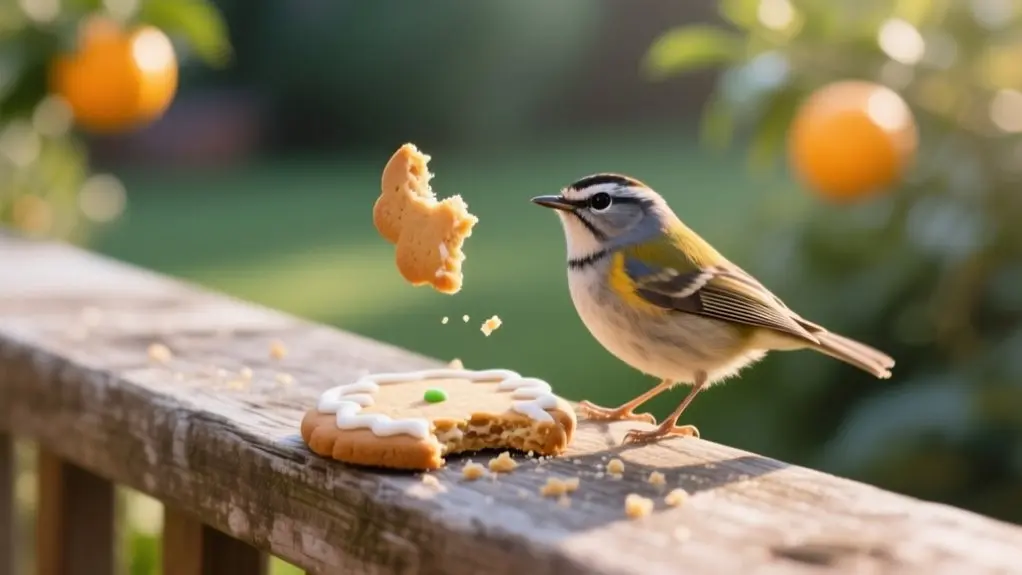
You shouldn’t feed birds gingerbread because its high sugar and toxic spices can harm their health and disrupt their natural diet. Sugar leads to obesity and diabetes, while spices like cinnamon and nutmeg may cause respiratory and digestive issues.
Artificial additives worsen the risks. Even small amounts can create dependency on unhealthy foods. Instead, focus on safe, nutrient-rich treats to support birds’ wellbeing.
Keep exploring to discover better ways to care for wild birds safely.
Why Birds Shouldn’t Eat Gingerbread
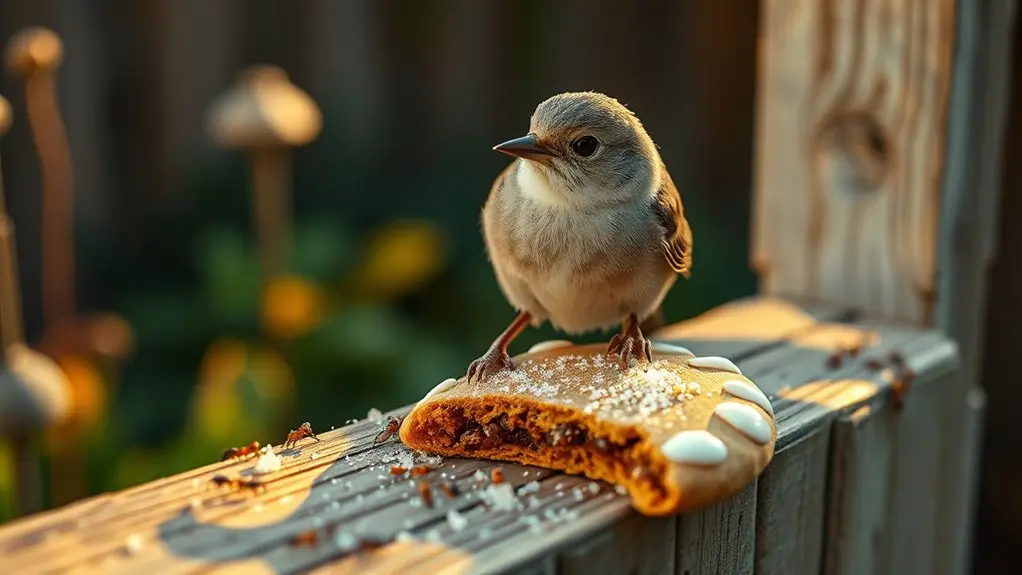
Although gingerbread might seem like a festive treat, you shouldn’t feed it to birds because its high sugar content and artificial ingredients can harm their health.
Birds have fast metabolisms and need nutrient-rich foods, but gingerbread offers empty calories that don’t provide essential nutrients.
Birds require nutrient-dense foods, but gingerbread only delivers empty calories without vital nutrients.
When birds eat gingerbread, they risk developing obesity and diabetes due to sugar overload.
Plus, processed ingredients in gingerbread can cause digestive blockages, leading to serious health problems.
Feeding birds gingerbread also disrupts their natural foraging habits, making them dependent on unhealthy food sources instead of balanced diets.
Which Gingerbread Ingredients Are Harmful to Birds
When you offer gingerbread to birds, you expose them to several harmful ingredients that can damage their health. Gingerbread often contains sugar, which provides no nutritional benefits and can cause health problems.
Molasses and spices like nutmeg and cinnamon in gingerbread may be toxic, leading to digestive issues. Artificial sweeteners such as xylitol are especially dangerous and can result in severe complications if ingested.
Moreover, the high carbohydrate content in gingerbread can contribute to obesity and related health concerns. Since bread-like products fill a bird’s stomach without essential nutrients, feeding gingerbread can cause malnutrition.
Understanding which gingerbread ingredients are harmful to birds helps you avoid giving them treats that might seem harmless but can seriously impact their well-being.
Why Sugar and Spices Hurt Wild Birds
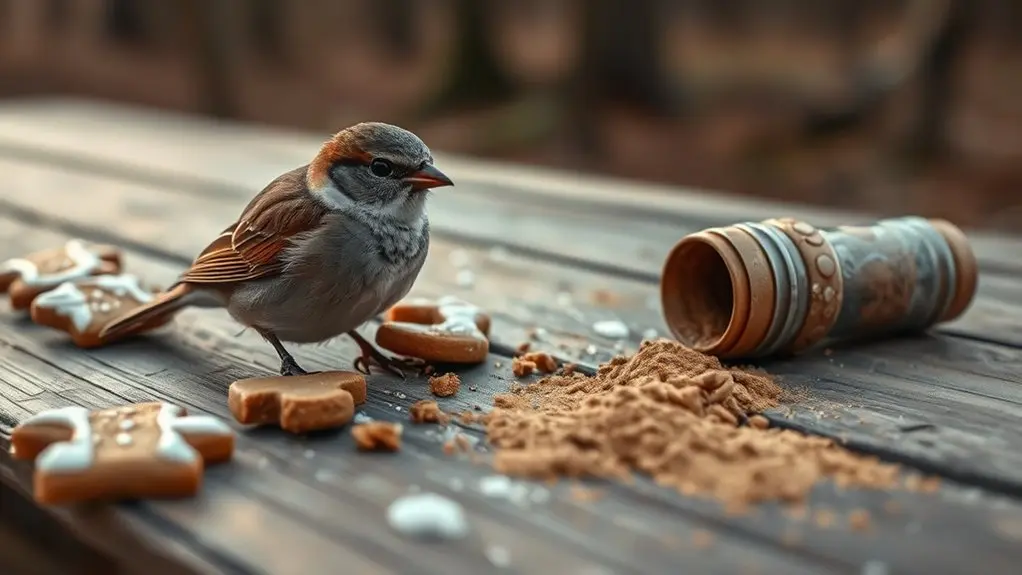
Feeding gingerbread to birds means exposing them to sugar and spices that can seriously harm their health. You mightn’t realize how dangerous these ingredients are for wild birds.
Feeding birds gingerbread exposes them to harmful sugar and spices that threaten their health and wellbeing.
Sugar disrupts their digestion, leading to obesity and malnutrition, while spices like cinnamon and nutmeg can be toxic.
Here’s why sugar and spices hurt wild birds:
- Sugar creates a false sense of fullness, stopping birds from eating nutrient-rich foods.
- Spices cause respiratory distress and gastrointestinal issues.
- High sugar intake increases diabetes risk, reducing birds’ lifespan.
- Sugary, spiced foods interfere with their natural diet of proteins, fats, and carbohydrates.
Avoid feeding birds gingerbread to protect their health and support their natural nutrition needs.
Why Artificial Additives in Gingerbread Harm Birds
You mightn’t realize it, but artificial additives in gingerbread—like high fructose corn syrup and preservatives—can actually be harmful to birds.
These ingredients mess with their digestion and can cause some serious health problems over time.
So, when you feed birds gingerbread that contains these additives, it could lead to nutrient deficiencies and long-term damage.
It’s definitely something to keep in mind if you want to keep our feathered friends healthy!
Toxic Ingredients Impact
Although gingerbread may seem harmless, its artificial additives pose serious risks to birds. When feeding the birds gingerbread, you expose them to toxic ingredients that can harm their health. Here’s why you should avoid it:
- High fructose corn syrup and artificial flavors cause digestive issues and long-term complications.
- Refined sugars and preservatives disrupt metabolism and energy levels.
- Chemical additives damage the liver and kidneys, risking severe illness or death.
- Artificial sweeteners like xylitol can trigger hypoglycemia, seizures, or liver failure.
These toxic ingredients prevent birds from getting essential nutrients in their natural diet, leading to malnutrition and weakened immune systems.
Health Risks Overview
Because gingerbread contains artificial additives like preservatives, food colorings, and sweeteners, it can seriously harm birds’ digestive systems and overall health. These additives are toxic to birds, disrupting their digestion and leading to severe health risks.
High sugar content in gingerbread can cause obesity and related issues, while ingredients like nutmeg and artificial sweeteners such as xylitol are especially dangerous, sometimes fatal.
The high carbohydrates don’t meet birds’ nutritional needs, preventing them from seeking natural, nutrient-rich foods essential for survival.
Feeding birds gingerbread regularly exposes them to these health risks, compromising their well-being.
Is It Safe for Birds to Eat Small Amounts of Gingerbread?
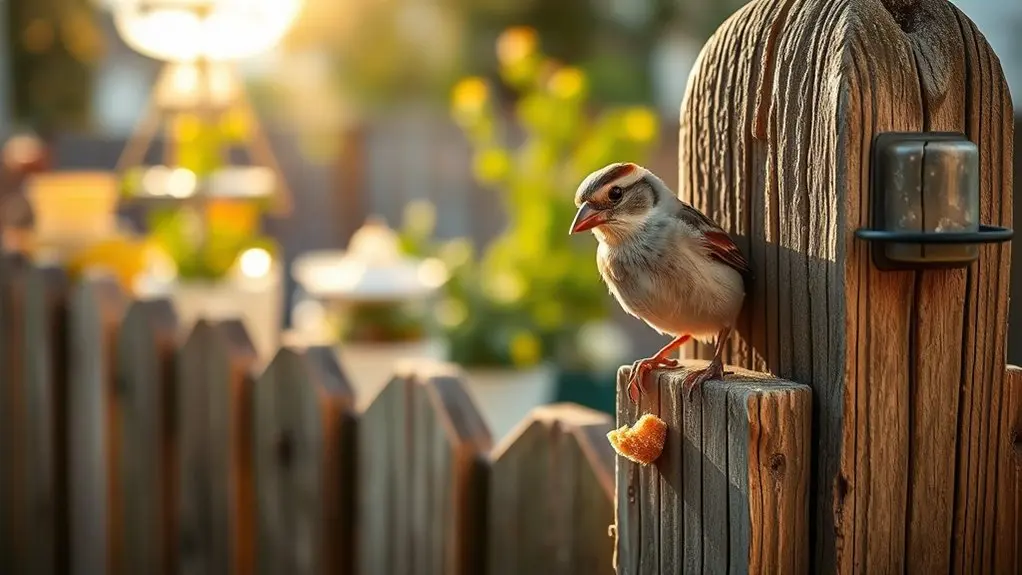
You might think that giving birds a small piece of gingerbread won’t hurt them, right?
But actually, the ingredients in gingerbread—like sugar and spices—can be pretty harmful. Even just a little bit can upset their digestion and might even introduce toxins into their system.
Gingerbread Ingredients Impact
Since gingerbread contains ingredients like sugar, molasses, and spices that birds can’t properly digest, feeding them even small amounts isn’t safe.
While gingerbread houses might look tempting to share, local birds don’t benefit from these treats. Here’s why:
- High sugar and molasses content can upset birds’ digestion and energy balance.
- Spices and artificial sweeteners in gingerbread may be toxic or cause discomfort.
- Plain flour offers no real nutrition, failing to support healthy bird diets.
- Regular intake of these carbs can lead to obesity and malnutrition in birds.
Bird Health Risks
Although small amounts of gingerbread might seem harmless, feeding it to birds can pose serious health risks. Gingerbread contains high sugar levels and spices like nutmeg, which can upset a bird’s delicate metabolism.
These sugary treats lack the proteins and fats birds need, making them nutritionally inadequate.
Worse, artificial sweeteners and processed ingredients in gingerbread can be toxic, leading to digestive troubles and other complications.
If you want to care for birds safely, avoid feeding them gingerbread altogether. Instead, focus on natural, bird-safe foods.
When you make bird feeders, choose seeds, nuts, and fruits to support their health.
Keeping bird health risks in mind guarantees you help, not harm, these feathered visitors.
What Happens When Birds Eat Gingerbread Often?
When birds eat gingerbread often, their health can quickly decline due to the high sugar and spice content.
While a gingerbread house bird feeder might seem festive, frequent feeding causes serious issues. You’ll notice:
- Poor feather quality from nutrient deficiencies.
- Digestive problems triggered by spices and preservatives.
- Increased risk of obesity due to excess sugar.
- Weakened immune systems, making birds vulnerable to illness.
Relying on gingerbread disrupts their natural diet and pushes birds away from nutrient-rich foods they need.
Over time, this habit can reduce their energy and lifespan.
Harmful Foods Like Gingerbread and Bread: What You Should Know
If you want to protect birds’ health, you should avoid feeding them harmful foods like gingerbread and bread. Gingerbread contains sugar and preservatives that can cause digestive problems and harm birds’ overall well-being.
Both gingerbread and regular bread offer no nutritional value and fill birds’ stomachs with empty calories, stopping them from eating the essential nutrients they need.
Feeding birds bread can lead to serious issues like Angel Wing syndrome in waterfowl, a condition caused by poor diet.
Birds reliant on these harmful foods also face higher mortality rates, especially during cold weather when they need energy-rich food.
It’s important you understand the dangers of gingerbread and bread to promote healthier feeding habits and support birds’ long-term health.
Safe Alternatives to Gingerbread for Feeding Birds
Feeding birds unhealthy treats like gingerbread can do more harm than good, so it’s better to offer them safer, nutritious options instead.
You can provide them with wholesome foods that support their health and natural diet.
Here are some safe alternatives to gingerbread:
- Mix natural peanut butter with bird seed for a high-energy, bird-friendly snack.
- Offer sunflower seeds, which are rich in nutrients and loved by many birds.
- Provide dried fruits like raisins or cranberries in small amounts for natural sweetness.
- Use plain popcorn without salt or butter as a light, biodegradable treat.
Avoid processed foods or artificial sweeteners, as they can harm birds.
How to Make Bird-Friendly Edible Treats Instead of Gingerbread
You can easily make bird-friendly treats using safe, natural ingredients like peanut butter, birdseed, and dried fruits.
Just mix peanut butter with cornmeal to create a natural binder that holds seeds and nuts together nicely.
Try getting creative by decorating pinecones or other biodegradable materials.
These turn into fun, nutritious snacks that birds will really enjoy!
Safe Edible Materials
Although gingerbread may seem like a festive choice, it’s best to skip it and opt for bird-friendly treats made with natural peanut butter as a safe adhesive.
When crafting snacks for your feathered friends, focus on safe edible materials that nourish without harm.
Here’s how to keep it healthy and appealing: Use natural peanut butter to stick seeds and dried fruits together safely.
Choose bird-safe seeds like sunflower, millet, and safflower for decoration.
Add texture with oats or plain popcorn, both bird-friendly options.
Avoid sugary, processed, or artificial ingredients that can harm birds’ health.
Natural Binding Ingredients
To create bird-friendly treats that are both safe and nourishing, start by choosing natural binding ingredients like peanut butter. It acts as a sticky, nutritious base when mixed with birdseed and oats, making your edible birdhouse both appealing and healthy for birds.
Avoid processed sugars or harmful additives; opt for sugar-free, natural peanut butter to protect their well-being. Cornmeal is another excellent option that adds texture and nutrients.
When forming your edible birdhouse, guarantee all components are biodegradable and free from artificial ingredients to support avian health and the environment.
Always check that any extras, like dried fruits or nuts, are safe for local birds. Using these natural binding ingredients helps you craft treats that birds will enjoy without risking their health.
Creative Bird Decorations
When crafting bird-friendly edible treats, skip the gingerbread and focus on natural ingredients like peanut butter, birdseed, and dried fruits that won’t harm your feathered visitors.
You can create creative bird decorations that double as nutritious snacks and an Edible House for local birds.
Try these ideas:
- Coat pinecones with peanut butter and roll them in birdseed for an easy, attractive treat.
- Mix oats and birdseed to form a sturdy base for hanging decorations.
- Use dried fruits as colorful, healthy accents that birds love.
- Avoid processed sugars or additives to keep your edible creations safe.
Tips for Feeding Birds Without Risking Their Health
If you want to feed birds safely, you need to avoid offering gingerbread and other baked goods that contain sugar, flour, and preservatives. These ingredients can cause malnutrition and health issues in birds.
Instead, choose quality wild birdseed mixes designed to meet the nutritional needs of local species. Providing natural foods like fresh fruits, nuts, and seeds supports bird health and encourages their natural foraging behavior.
Always research any food before offering it to verify it’s free from harmful additives. Avoid bread and similar items since they fill birds up without supplying essential proteins and fats.
Making Birdseed Gingerbread Houses for Birds
Although you can’t offer traditional gingerbread to birds, you can create delightful birdseed gingerbread houses using safe, natural materials like peanut butter, seeds, and oats.
Making these houses is a fun activity that provides birds with nutritious treats while adding charm to your outdoor space.
Here’s how to get started:
- Use cardboard or graham crackers as a base to build a sturdy house.
- Apply peanut butter as adhesive to stick birdseed and oats onto the structure.
- Decorate with pinecones coated in peanut butter and rolled in seeds or dried fruits.
- Place the finished house in a visible spot to attract birds and enjoy watching them feast.
This fun activity supports wildlife safely and creatively.
How Raising Awareness Can Protect Birds From Harmful Foods
Because many people don’t realize how harmful certain foods like bread and gingerbread can be to birds, raising awareness plays an essential role in protecting their health. You can help make a difference by educating your community about bird-friendly foods and avoiding processed treats.
Creating a birdseed gingerbread house is a great way to make bird feeding both fun and safe.
| Harmful Foods | Safe Alternatives |
|---|---|
| Bread | Seeds |
| Gingerbread | Nuts |
| Processed Snacks | Fruits |
| Empty Calories | High-density Foods |
When you spread knowledge about proper feeding, you help build a house of care for birds, promoting their well-being and preventing diseases like Angel Wing syndrome. Your efforts can inspire others to protect wild bird populations effectively.
Frequently Asked Questions
Can Pet Birds Safely Eat Gingerbread?
No, you shouldn’t feed your pet birds gingerbread. It’s not good for bird nutrition because it contains high sugar and harmful spices.
Gingerbread can upset their digestion and even cause serious health issues if it has toxic ingredients like chocolate or nutmeg.
Instead, stick to safe treats like fresh fruits and veggies to keep your bird happy and healthy.
Prioritizing balanced nutrition helps your bird thrive without unnecessary risks.
Do Birds Like the Taste of Gingerbread?
You won’t find birds lining up for gingerbread; it’s not their cup of tea. Their preferences lean toward natural flavors like seeds, nuts, and fruits, which fuel their busy days.
Gingerbread’s sugary, spicy taste doesn’t sing to their senses; instead, it falls flat or even turns them away.
How Quickly Do Birds Show Symptoms After Eating Gingerbread?
You’ll notice symptoms of gingerbread toxicity in birds within just a few hours after eating it.
Bird digestion is sensitive to the high sugar and additives in gingerbread, causing upset stomach, diarrhea, or vomiting quickly.
Smaller birds react faster and more severely.
If your bird shows any signs of distress soon after consuming gingerbread, act fast and seek veterinary help to prevent serious health issues from developing.
Are There Any Bird Species More Sensitive to Gingerbread?
Certain small songbirds, such as chickadees and finches, face fragile bird digestive health when exposed to gingerbread ingredients.
These tiny travelers tackle high sugar and processed parts poorly, making them more sensitive than others.
Waterfowl, like ducks and geese, also suffer from such sugary snacks, risking harmful conditions.
You should avoid feeding these birds gingerbread, as it disrupts their natural diet and endangers their delicate digestive systems.
Can Gingerbread Crumbs Attract Unwanted Animals Besides Birds?
Yes, gingerbread crumbs can attract unwanted animals besides birds. When you leave crumbs outside, you’ll notice increased wildlife attraction from rodents, raccoons, and squirrels.
Their behavior changes as they scavenge for sugary treats, often creating a feeding frenzy that disrupts your bird feeding.
You’ll also attract insects like ants and beetles, making the area less appealing for birds.
Managing crumbs helps keep the environment balanced and safe for your feathered visitors.
Conclusion
You might think sharing gingerbread with birds is harmless, but it’s best to avoid it. The sugar, spices, and artificial additives can actually harm them, even in small amounts.
Instead, try making bird-friendly treats like seed-based snacks or gingerbread houses made from birdseed. By choosing safe options and spreading awareness, you’ll help keep birds healthy and happy.
So, enjoy watching them safely without risking their well-being!