
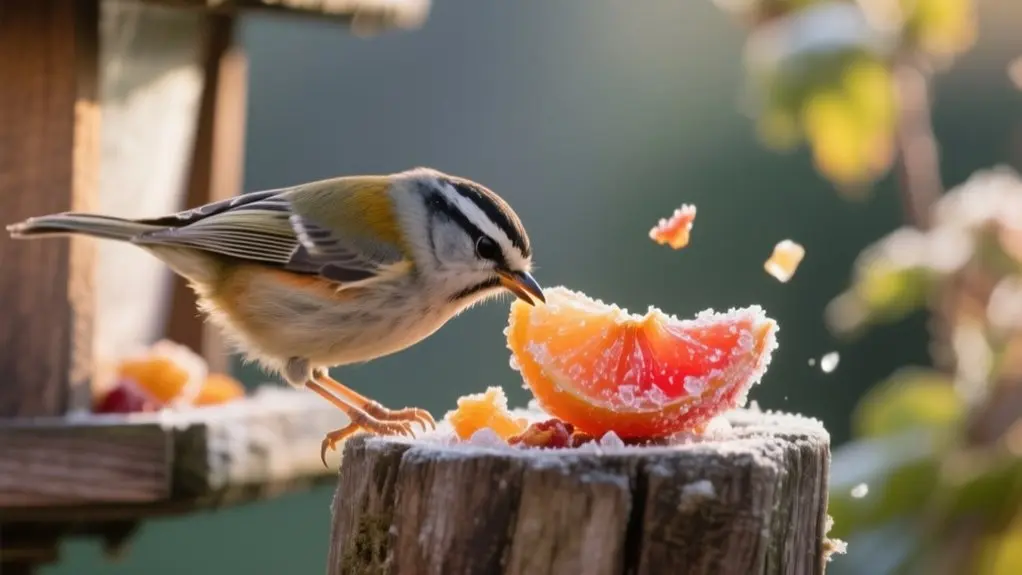
Yes, you can safely feed your bird freeze-dried fruit, which keeps up to 97% of the original nutrients and makes a convenient, tasty treat. Just choose plain fruit without added sugars or preservatives and offer small portions to avoid choking or digestive issues.
Crush or rehydrate the fruit for easier eating, especially for smaller birds. Moderation is key, keeping it under 10% of their daily intake. There’s plenty more to know about benefits, safety, and storage.
What Is Freeze-Dried Fruit?
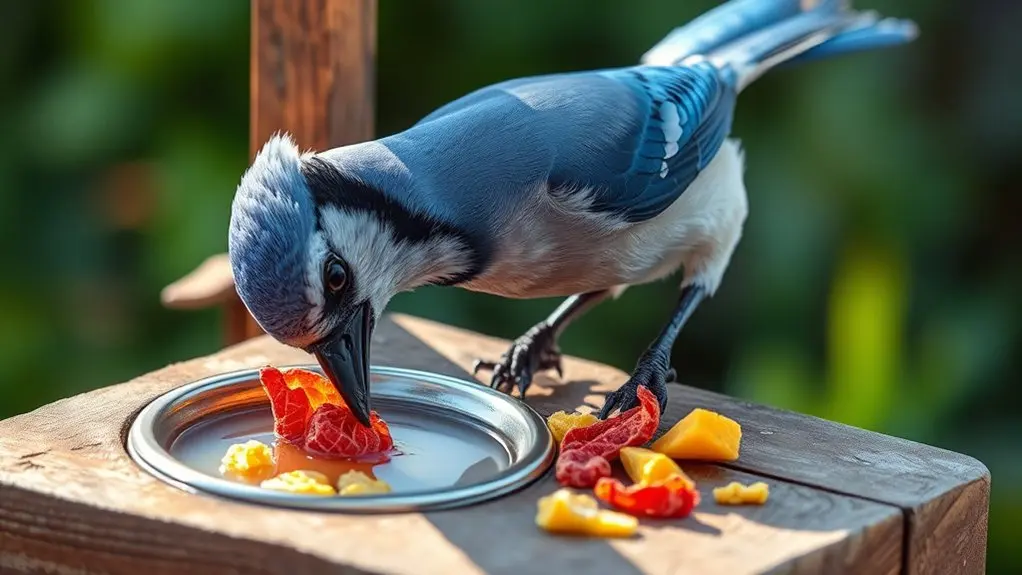
Freeze-dried fruit is made by freezing fresh fruit and then removing its moisture through sublimation, a process that preserves most of its nutrients and structure. When you choose freeze-dried fruit, you’re getting up to 97% of the original vitamins, minerals, and antioxidants intact.
This method not only keeps the fruit’s shape and nutrients but also extends its shelf life far beyond that of fresh fruit, so it’s perfect for long-term storage.
Keep in mind, removing water concentrates the fruit’s sugars and calories, so you’ll want to control portions carefully, especially if feeding birds.
Plus, freeze-dried fruit can be quickly rehydrated or crushed, making it safer and easier to serve, particularly for smaller birds or those prone to choking.
Can Birds Eat Freeze-Dried Fruit Safely?
You can safely offer your bird freeze-dried fruit, as long as it’s plain and free from additives.
It keeps most of its nutrients, so it makes a healthy treat when fresh fruit isn’t available.
Just be sure to control the portions and keep an eye out for any signs of choking or digestive issues.
Nutritional Benefits Overview
Although freeze-dried fruit retains up to 97% of its original vitamins, minerals, and antioxidants, you’ll need to manage portion sizes carefully to prevent your bird from consuming too much sugar.
The freeze-drying process concentrates natural sugars and calories, so offering small amounts is key to maintaining your bird’s health.
When selecting freeze-dried fruit, choose plain varieties without added sugars or preservatives to guarantee safety.
This nutritional benefits overview shows that freeze-dried fruit can be a valuable supplement to your bird’s diet, providing essential nutrients in a convenient form.
Remember to introduce it gradually and keep an eye on your bird’s response, making certain the fruit supports their well-being without causing digestive issues or excess sugar intake.
Safety Precautions
Since freeze-dried fruit keeps most of its nutrients but also concentrates sugars, you’ll need to be careful about how much you offer your bird. Taking safety precautions guarantees your feathered friend enjoys these treats without health risks.
Always start by checking for added sugars or preservatives. Opt for plain, single-ingredient products.
Because the texture can be tough, consider crushing or rehydrating the fruit, especially for smaller birds.
Introduce freeze-dried fruit gradually and watch for any adverse reactions. Here are key safety precautions to follow:
- Control portion sizes to prevent excessive sugar intake
- Choose only natural, additive-free freeze-dried fruit
- Modify texture to reduce choking hazards
- Monitor your bird during feeding
- Introduce new foods slowly to observe tolerance
Nutrition Benefits of Freeze-Dried Fruit for Birds
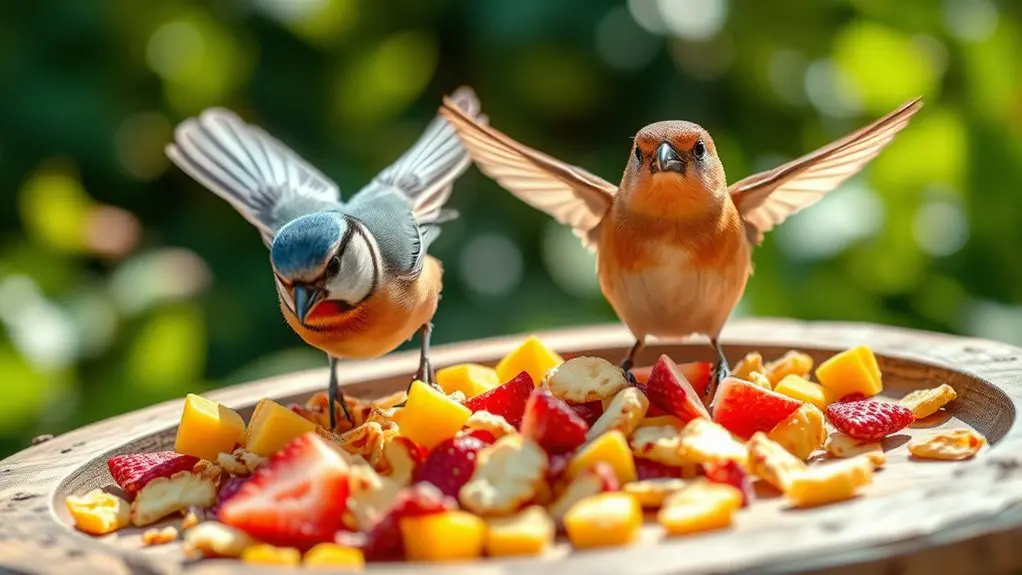
You’ll find that freeze-dried fruit keeps most of its vitamins and minerals intact, which makes it a healthy treat for your bird.
The natural sugars, though, become more concentrated during the freeze-drying process. So, it’s best to offer it in moderation. That way, your bird gets all those great nutrients without the risk of too much sugar.
Preserved Vitamins And Minerals
When you choose freeze-dried fruit for your bird, you’re providing a snack that keeps up to 97% of its original vitamins, minerals, and antioxidants. This means your feathered friend benefits from preserved vitamins and minerals essential for their health.
Freeze-drying locks in nutrients without compromising flavor or texture, unlike other drying methods that can degrade nutrient content.
Plus, freeze-dried fruit has a long shelf life, so your bird can enjoy nutritious snacks even when fresh fruit isn’t available.
Consider these benefits of preserved vitamins and minerals in freeze-dried fruit:
- Maintains essential nutrients birds need daily
- Supports immune system health and energy levels
- Preserves antioxidants that fight cell damage
- Retains natural flavor to encourage eating
- Provides consistent nutrition year-round
Choosing freeze-dried fruit guarantees your bird gets quality nutrition every time.
Concentrated Natural Sugars
Although freeze-dried fruit retains most of its original nutrients, the removal of water concentrates natural sugars and calories, so you need to offer it in moderation.
These concentrated natural sugars can provide a quick energy boost for your bird, but too much can lead to weight gain or other health issues.
Because freeze-dried fruit contains higher sugar levels than fresh fruit, it’s best to treat it as an occasional snack rather than a staple in your bird’s diet.
You should introduce freeze-dried fruit gradually, watching for any adverse reactions due to its concentrated nature.
Enhanced Nutrient Retention
Since freeze-dried fruit retains up to 97% of its original vitamins, minerals, and antioxidants, it offers a highly nutritious treat for your bird. This enhanced nutrient retention means your feathered friend gets most of the health benefits found in fresh fruit without the quick spoilage.
The freeze-drying process preserves the fruit’s structure and flavor without heat, ensuring nutrients remain intact. You can rely on freeze-dried fruit especially when fresh options are scarce.
Here’s why enhanced nutrient retention matters for your bird:
- Maintains essential vitamins like A, C, and E
- Preserves beneficial minerals such as potassium and magnesium
- Keeps antioxidants that support immunity
- Concentrates fiber for digestive health
- Offers longer shelf life without nutrient loss
This makes freeze-dried fruit a smart, nutritious addition to your bird’s diet.
How Freeze-Dried Fruit Keeps Its Nutrients
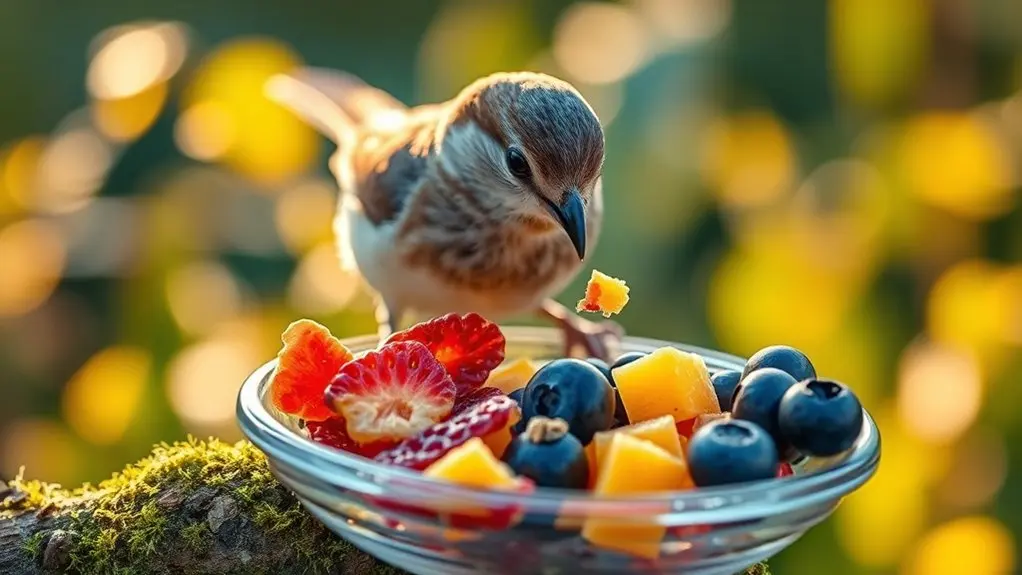
Because freeze-drying removes water through a vacuum while keeping the fruit frozen, it preserves up to 97% of the original nutrients like vitamins, minerals, and antioxidants.
This process, called sublimation, freezes the fruit first, then gently removes moisture without heating it, which locks in its natural structure and flavor.
Sublimation freezes fruit and removes moisture gently, preserving its natural structure and flavor without heat.
When you feed your birds freeze-dried fruit, you’re providing them with nutrient-rich snacks that last longer without additives.
Unlike other drying methods, freeze-dried fruit keeps most of its health benefits intact, making it a smart choice.
Just remember, removing water concentrates sugars and calories, so you’ll want to control portions carefully to keep your birds healthy while enjoying these tasty treats.
Comparing Freeze-Dried, Fresh, and Dehydrated Fruit
When choosing fruit for your birds, understanding the differences between freeze-dried, fresh, and dehydrated options helps you make the best choice for their nutrition and enjoyment.
Freeze-dried fruit preserves up to 97% of nutrients and offers a longer shelf life, unlike fresh fruit, which provides essential hydration.
Dehydrated fruit often loses more vitamins due to heat processing and tends to be less flavorful. Both freeze-dried and dehydrated fruits are sugar-concentrated, so moderation is key.
- Freeze-dried fruit retains most nutrients and flavor
- Fresh fruit supplies hydration freeze-dried lacks
- Dehydrated fruit may lose nutrients from heat
- Freeze-dried fruit has a longer shelf life
- Excess sugar from dried fruits can harm birds if overfed
Choosing wisely guarantees your feathered friends stay healthy and happy.
Which Birds Can Eat Freeze-Dried Fruit?
Although not all birds have the same dietary needs, many common pet species like parrots, finches, and canaries can safely enjoy freeze-dried fruit as a nutritious treat.
Birds that love foraging find the texture and flavor especially stimulating, making freeze-dried fruit a great addition to their diet.
Foraging birds enjoy the stimulating texture and flavor of freeze-dried fruit, enhancing their dietary experience.
Smaller birds may need the fruit crushed or rehydrated to avoid choking, while sweet-toothed species like budgerigars and cockatiels often appreciate the concentrated sugars.
Just remember to introduce freeze-dried fruit gradually and monitor your bird’s reaction to prevent digestive upset.
Introducing Freeze-Dried Fruit to Your Bird’s Diet
To introduce freeze-dried fruit to your bird’s diet safely, start with small portions and watch closely for any signs of digestive upset or allergic reactions.
Introducing freeze-dried fruit to your bird’s diet requires patience and care.
Begin by offering small amounts and gradually mix it with their regular food to help them adjust.
Always rehydrate or crush the fruit to avoid choking hazards, especially for smaller birds.
Choose plain freeze-dried fruit without added sugars or preservatives to guarantee safety and nutrition.
Remember, freeze-dried fruit should be a treat, not a staple.
- Start with small amounts to monitor reactions
- Rehydrate or crush fruit for safety
- Choose plain fruit without additives
- Mix gradually with regular food
- Serve as a treat, not a main meal
Recommended Feeding Amounts for Freeze-Dried Fruit
You should limit freeze-dried fruit to a small handful a few times a week, depending on your bird’s size and diet.
The recommended feeding amounts suggest that freeze-dried fruit shouldn’t exceed 10% of your bird’s daily caloric intake to avoid excess sugar-related health issues.
Start by introducing just a few pieces mixed with regular food to see how your bird reacts, then adjust accordingly.
Always monitor for any digestive upset or adverse reactions when you first add freeze-dried fruit.
Also, check ingredient lists carefully to guarantee there are no added sugars or preservatives, keeping feeding safe and healthy.
Following these recommended feeding amounts helps you provide a tasty treat without compromising your bird’s overall nutrition.
Preventing Choking Hazards With Freeze-Dried Fruit
When it comes to freeze-dried fruit, you really need to be mindful of the texture and size, especially if you have smaller birds.
These little guys can easily choke if the pieces are too big or too hard.
One good tip is to crush the fruit or even rehydrate it before offering. This makes it much safer and easier for your bird to eat.
And don’t forget, always prepare small, manageable pieces. That way, you keep your feathered friend safe while still giving them a tasty treat they’ll enjoy.
Texture and Size Risks
Although freeze-dried fruit offers a nutritious treat, its unique lightweight and hard texture can pose choking risks, especially for smaller birds. You need to be mindful of both texture and size when offering these snacks.
The dry, brittle nature might make swallowing difficult, so cutting the fruit into small, manageable pieces is essential. Watching your bird as it tries new textures helps you spot any issues early.
Choose appropriately sized pieces to fit your bird’s beak. Avoid large chunks that may get stuck. Observe your bird’s chewing and swallowing habits closely.
Consider crushing or lightly moistening fruit for easier consumption. Introduce freeze-dried fruit gradually to gauge your bird’s tolerance for texture and size.
Safe Preparation Methods
When offering freeze-dried fruit to your bird, always crush or rehydrate it first to prevent choking hazards caused by its dry, brittle texture. These safe preparation methods help reduce risks and make the fruit easier to eat.
Introduce the fruit gradually, starting with small pieces mixed into their regular food. Always check the ingredient list to verify no added sugars or preservatives, and control portion sizes to avoid health issues from concentrated sugars.
Supervise your bird while eating to catch any problems early.
| Preparation Step | Purpose | Tips |
|---|---|---|
| Crush or Rehydrate | Prevent choking | Use water or mash into pieces |
| Gradual Introduction | Monitor digestion | Mix with regular food |
| Ingredient Check | Verify safety | Choose single-ingredient only |
| Portion Control | Avoid health issues | Limit servings per day |
Ingredients to Avoid in Freeze-Dried Fruit
Choosing freeze-dried fruit for your bird means paying close attention to the ingredients list. You want to avoid anything that could harm your feathered friend or reduce the nutritional value.
One major ingredient to watch out for is added sugar, which can cause health problems due to concentrated sweetness.
Also, stay away from preservatives like sulfites, which are harmful to birds.
Artificial flavorings and colorings are another no-go, as they don’t benefit your bird and may be toxic.
Ideally, pick freeze-dried fruit with only the fruit itself listed.
Avoid these ingredients in freeze-dried fruit:
- Added sugar
- Sulfite preservatives
- Artificial flavorings
- Artificial colorings
- Unnecessary additives or fillers
Where to Buy High-Quality Freeze-Dried Fruit for Birds
If you want to provide your bird with nutritious freeze-dried fruit, you’ll find high-quality options at specialty retailers like Wild Birds Unlimited and Tractor Supply. These stores focus on bird-friendly products, ensuring safety and nutrition.
Wondering where to buy high-quality freeze-dried fruit for birds beyond local shops? Online platforms like Amazon and Chewy offer a wide selection, letting you compare brands and read reviews easily.
Look for single-ingredient freeze-dried fruit without added sugars or preservatives to keep your bird healthy. Brands such as Little Cheeks Freeze Dried Mixed Berries and Beak Joy Seasonal Fruit blends stand out for quality.
You can also check local pet stores for convenient, ready-to-buy options.
With these choices, finding the best freeze-dried fruit for your feathered friend is simple and reliable.
How to Store Freeze-Dried Fruit to Keep It Fresh
After finding the perfect freeze-dried fruit for your bird, knowing how to store it properly will keep it fresh and nutritious.
To store freeze-dried fruit effectively, you need to protect it from moisture, heat, and light. Using airtight containers or vacuum-sealed bags helps maintain its quality and extend shelf life.
Protect freeze-dried fruit from moisture, heat, and light using airtight or vacuum-sealed containers to keep it fresh longer.
Always place the fruit in a cool, dark spot, away from direct sunlight and heat sources. Regularly check for any moisture or spoilage before feeding your bird.
Here’s how to store freeze-dried fruit to keep it fresh:
- Use airtight or vacuum-sealed containers
- Store in a cool, dark place
- Avoid exposure to sunlight and heat
- Inspect for moisture or spoilage before use
- Label containers with the purchase date for proper rotation
Frequently Asked Questions
Can Freeze-Dried Fruit Replace Regular Birdseed Entirely?
You can’t replace regular birdseed entirely with freeze-dried fruit because it lacks the nutritional balance birds need.
While freeze-dried fruit offers some vitamins, it’s high in concentrated sugars and misses essential nutrients found in seeds and pellets.
To keep your bird healthy, you should use freeze-dried fruit as a supplement, not a main food source.
That way, they get a varied diet with proper nutritional balance every day.
How Often Should I Offer Freeze-Dried Fruit to Wild Birds?
You should offer freeze-dried fruit to wild birds a few times a week, like a rare dessert that keeps things exciting.
Feeding frequency matters because too much sugar can harm them.
Treat it as a special snack, complementing their main diet of seeds and pellets.
Keep portions small and watch how they respond.
Are There Any Birds That Should Never Eat Freeze-Dried Fruit?
Yes, you should avoid giving freeze-dried fruit to seed-eating birds and those with health issues like obesity or diabetes. Their nutritional balance can be easily disrupted by the concentrated sugars and calories.
Also, young or sick birds might struggle with the texture or digestion, risking choking or upset stomachs.
Always prioritize your bird’s specific dietary needs and consult a vet if you’re unsure about freeze-dried fruit’s impact on their health.
Can Freeze-Dried Fruit Cause Allergies in Birds?
Yes, freeze-dried fruit can cause allergies in birds, so you need Allergy Awareness when offering it.
Some birds react to specific proteins or compounds in certain fruits, leading to digestive upset or skin irritation.
You should introduce freeze-dried fruit in small amounts and watch closely for any signs of allergic reactions.
If your bird shows symptoms, consult an avian vet promptly to keep your feathered friend safe and healthy.
Is Freeze-Dried Fruit Safe for Baby Birds or Chicks?
Just like a knight carefully choosing his armor, you need to introduce freeze-dried fruit cautiously to baby birds or chicks.
It can be safe if you focus on nutritional balance, offer it plain without additives, and rehydrate it to avoid choking.
Remember, it’s an occasional treat, not a staple.
Keep a close eye on their reaction to verify they handle it well and grow strong and healthy.
Conclusion
Imagine offering your feathered friend a crunchy, vibrant piece of freeze-dried fruit that bursts with natural flavor and nutrients. You can safely treat your bird to this wholesome snack, knowing it retains its goodness without added sugars or preservatives.
Just pick high-quality options and store them properly to keep that fresh, fruity appeal. With a little care, freeze-dried fruit can brighten your bird’s day and nourish their playful spirit beautifully.