
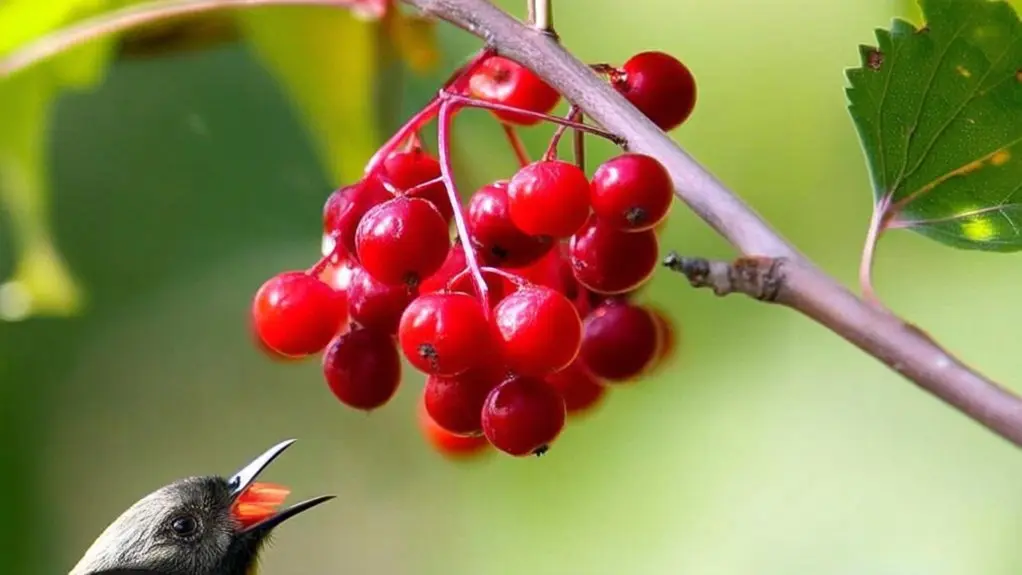
You shouldn’t let birds eat poisonous berries like those from Nandina or mistletoe. The toxins in these berries can cause vomiting, neurological issues, or even death. Bright colors don’t guarantee safety because many harmful berries look attractive to birds during migration.
Keep an eye out for symptoms like weakness or seizures, and make sure to remove toxic plants promptly to protect wildlife. By understanding which berries are safe and recognizing signs of poisoning, you can better support bird health. Creating a safer environment for birds is easier when you know what to watch for.
Why Some Berries Are Poisonous to Birds
Although many birds rely on berries as a vital food source, some berries contain toxic compounds that can seriously harm or even kill them if ingested. These toxins vary by plant species and include chemicals like cyanogenic glycosides and alkaloids, which disrupt physiological functions in birds.
Some berries contain toxins like cyanogenic glycosides and alkaloids that can harm or kill birds.
You should know that toxicity often depends on the berry’s chemical makeup rather than its appearance.
Birds frequently mistake poisonous berries for safe ones, especially during migration when they consume large amounts of available fruit. Brightly colored berries, designed to attract dispersers, can be deceptive and dangerous.
When birds eat these toxic berries, they may experience symptoms such as vomiting, neurological impairment, paralysis, or organ failure. These effects can severely impact their survival.
Understanding these risks helps explain why some berries remain poisonous to birds.
Common Backyard Berries: Which Are Safe and Which Are Dangerous
When you observe birds feeding in your backyard, knowing which berries are safe and which are harmful is vital for their well-being. Many common berries like blackberries, raspberries, crabapples, and viburnums provide safe, nutritious food sources for songbirds.
However, berries from plants such as Nandina, mistletoe, and certain hollies contain toxic compounds that can cause illness or death if ingested in significant amounts.
Pyracantha and some holly berries look appealing but also pose risks when consumed excessively.
Accurate identification of each berry species is essential because some safe-looking berries may still harbor toxins harmful to birds.
What Happens When Birds Eat Poisonous Berries
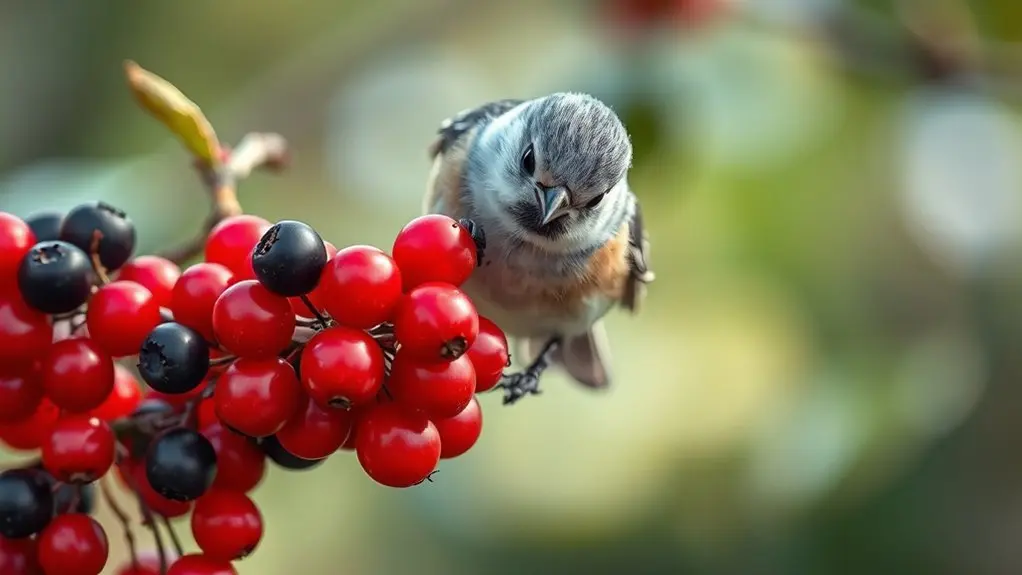
When you see birds eating poisonous berries, you might notice they start showing symptoms like vomiting, diarrhea, weakness, or even paralysis. It really depends on the kind of toxin they’ve ingested.
These toxins—things like cyanogenic glycosides or alkaloids—mess with their metabolism and can cause serious damage to their internal organs. In some cases, it can even be fatal.
Knowing how these toxins affect birds helps us understand the risks berry poisoning poses to their health and chances of survival.
Toxicity Effects On Birds
If birds consume poisonous berries, they often suffer from symptoms like vomiting, diarrhea, weakness, or difficulty breathing. These toxic berries contain compounds that disrupt metabolic processes, sometimes causing neurological effects such as tremors or seizures.
You should understand that ingestion can lead to internal organ damage or failure, which may result in death if the quantity consumed is significant.
Birds affected by these toxins might display abnormal behaviors like disorientation or loss of coordination, increasing their risk of predation.
In certain cases, poisoning occurs rapidly, causing sudden mortality, especially in more susceptible species.
Recognizing the toxicity effects is vital for evaluating the risks poisonous berries pose to bird populations and their overall health.
Symptoms Of Berry Poisoning
Observing the specific symptoms birds show after consuming poisonous berries helps clarify the immediate and long-term impacts of these toxins. You might notice vomiting, diarrhea, weakness, or tremors shortly after ingestion.
Some birds exhibit disorientation or abnormal behavior, and in severe cases, sudden death can occur. Internal organ damage, such as liver or kidney failure, may develop, sometimes leading to chronic health problems. Symptoms often appear within hours, so prompt intervention is critical.
| Symptom | Onset Time | Potential Outcome |
|---|---|---|
| Vomiting | Within hours | Dehydration, weakness |
| Diarrhea | Within hours | Electrolyte imbalance |
| Tremors | Hours to days | Neurological impairment |
| Disorientation | Hours | Behavioral abnormalities |
| Organ failure | Days to weeks | Chronic illness, death |
Signs of Poisoning and How to Help Affected Birds
Although birds may appear healthy after eating toxic berries, you should watch closely for signs of poisoning so you can step in quickly. Early recognition is really important because symptoms can get worse fast. You might notice sudden weakness and loss of coordination, drooping wings, or vomiting.
Other signs include disorientation or strange behavior, seizures or convulsions, and reduced responsiveness or lethargy. If you think a bird has been poisoned, try to remove any berries left around to stop them from eating more.
Next, contact a wildlife veterinarian or a rehab center for professional help. In the meantime, give the bird fresh water and keep it somewhere quiet and warm. Acting quickly can make a big difference in helping the bird recover from toxic berry ingestion.
How to Create a Bird-Safe Garden Without Toxic Plants
When creating a bird-safe garden, it’s a good idea to choose native plants like goldenrod and winterberry. These provide safe food and shelter for birds.
At the same time, you’ll want to avoid plants like Nandina, which produce toxic berries that can harm them.
One helpful tip is to use plant lists from trusted sources. This way, you can easily pick non-toxic, bird-friendly species and swap out any hazardous plants you might already have in your garden.
Choosing Native Plants
When creating a bird-safe garden, selecting native plants plays a crucial role in providing natural, non-toxic food sources and shelter for local bird species. You should verify Latin names and choose native cultivars, as non-native cultivars mightn’t deliver the same ecological benefits or safety.
Reliable resources like the UNH Cooperative Extension and Native Plant Trust help identify suitable native plants in your region. It’s a good idea to incorporate native species that support bird nutrition and reduce poisoning risks.
Some examples to consider are Goldenrod (Solidago spp.), Serviceberries (Amelanchier spp.), and Hawthorns (Crataegus spp.). Just be sure to avoid invasive or hybrid plants that produce harmful berries.
Also, make sure your plant selections maintain the local ecosystem balance.
Avoiding Toxic Berries
Selecting native plants sets the foundation for a bird-safe garden, but you should also pay close attention to avoiding toxic berry-producing species. It’s a good idea to steer clear of ornamental plants like Nandina, Pyracantha, and holly, since their berries can be harmful to many bird species.
Always double-check plant safety by researching Latin names and consulting local experts. Mixing a variety of native shrubs and trees not only provides safe shelter but also offers edible berries, which helps minimize poisoning risks.
| Plant Type | Example Species | Toxicity to Birds |
|---|---|---|
| Safe Native Berries | Serviceberry, Elderberry | Non-toxic, nutritious |
| Toxic Ornamentals | Nandina, Pyracantha | Toxic, avoid planting |
| Shelter Plants | Native shrubs/trees | Provide safe habitat |
| Verification Method | Latin name research | Confirms plant safety |
| Expert Consultation | Local horticulturists | Identify toxic species |
Providing Safe Food Sources
Although creating a bird-safe garden involves multiple factors, providing safe food sources is essential to support local avian populations. You should prioritize native plants that offer nutritious, non-toxic options. Avoid invasive or hybrid species that might introduce harmful berries or disrupt natural diets.
To guarantee accuracy, use plant labels and consult local native plant guides. Regularly remove or replace toxic plants like Nandina or some ornamental hollies.
Additionally, diversifying food sources benefits various bird species by attracting different feeding types.
Incorporate native plants such as goldenrod, crabapple, and winterberry. Avoid invasive or hybrid species producing toxic berries.
Use plant labels and native plant guides.
Remove or replace plants with harmful berries. Provide seed, nectar, and insect-attracting plants for food variety.
These steps create a safer environment for birds while maintaining ecological balance.
Expert Tips for Identifying Bird-Safe Plants and Avoiding Poisonous Berries
Because many common ornamental berries, such as those from Nandina plants, are toxic to numerous bird species, you must accurately identify native plants and their berries before introducing them to your environment. Consult authoritative sources like Native Plant Trust or UNH Cooperative Extension to verify species safety.
Pay attention to botanical details—berry color, shape, and habitat—while confirming Latin names to avoid toxic cultivars. Monitor bird behavior closely and seek expert advice to prevent poisoning.
| Identification Tip | Key Consideration |
|---|---|
| Consult reputable sources | Use verified plant databases |
| Examine berry characteristics | Color, size, shape |
| Verify Latin names | Avoid toxic cultivars |
| Note plant habitat | Native vs. non-native |
| Monitor bird reactions | Early detection of toxicity |
Frequently Asked Questions
Can Feeding Birds Poisonous Berries Affect Their Migration Patterns?
Yes, feeding birds poisonous berries can disrupt their migration patterns by impairing energy, causing illness, and altering hormonal balance. You’ll notice shifts in survival rates and stopover site choices.
These changes ultimately affect their timing and orientation during migration. It’s a chain reaction that can really throw off their natural rhythm. So, it’s best to avoid giving birds anything that might harm them on their journey.
Are There Natural Bird Remedies for Berry Poisoning?
Imagine a bird struggling after eating toxic berries. Unfortunately, you won’t find reliable natural remedies.
You must seek immediate veterinary care. Scientific evidence shows that prevention and professional treatment are the only effective ways to save poisoned birds.
How Do Berry Toxins Affect Baby Birds Differently?
You’ll find berry toxins affect baby birds more severely due to immature digestion and immune systems. This can cause developmental delays, neurological damage, and higher mortality rates compared to adults.
Adults, on the other hand, are better at detoxifying harmful compounds. They can resist poisoning effects more effectively, which helps them stay healthier around toxic berries. So, baby birds are definitely more vulnerable when it comes to these toxins.
Can Domesticated Birds Build Immunity to Toxic Berries?
You can’t expect domesticated birds to build immunity to toxic berries. Their immune systems lack adaptations, so repeated exposure usually causes poisoning rather than tolerance.
It’s best to always prevent access to such berries to protect their health effectively. Better safe than sorry when it comes to keeping your birds safe!
What Role Do Birds Play in Spreading Poisonous Berry Seeds?
You play an essential part in nature’s garden by carrying seeds of toxic berries far and wide. Your digestion often preserves them, helping these plants expand their reach and subtly shape ecosystems through seed dispersal.
It’s pretty amazing how you help these plants spread without even realizing it. By moving seeds around, you’re actually shaping the environment around you in quiet but important ways.
Conclusion
You’ve learned that while some berries are harmless, others can be a wolf in sheep’s clothing for birds. Protecting your feathered friends means knowing which berries to avoid and recognizing signs of poisoning early.
By creating a bird-safe garden and choosing plants wisely, you’ll guarantee their health and safety. Remember, a little knowledge goes a long way in keeping your backyard birds thriving and out of harm’s way.