
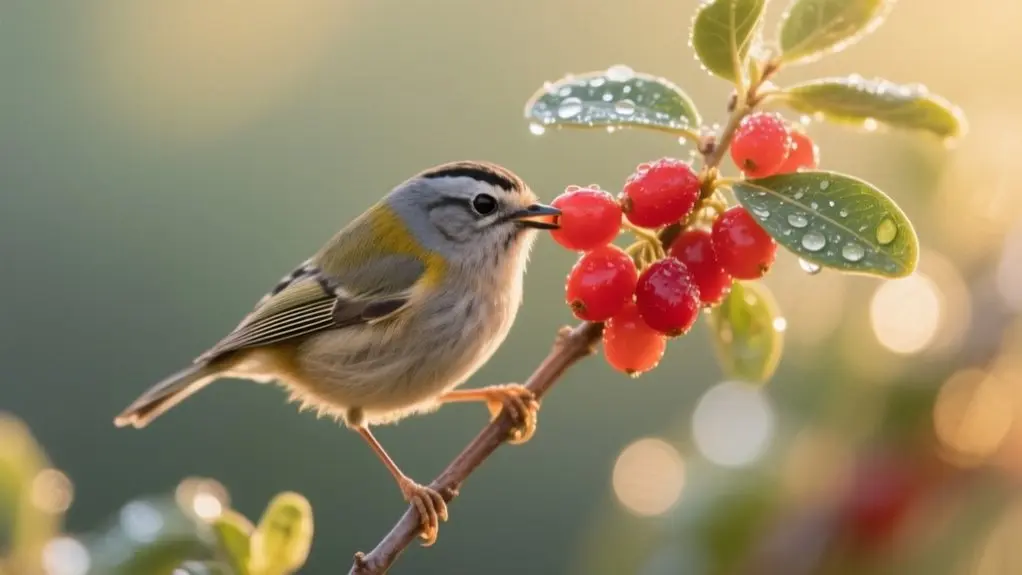
Yes, you can safely feed your birds goji berries in moderation since they’re not toxic and offer antioxidants and vitamins that boost immune health and energy. Start with just 1-2 berries a few times a week, watching for any signs of discomfort.
Choose fresh or dried berries without additives, and always rinse to reduce pesticide risks. Balancing their diet is key, and if you want to guarantee your bird thrives, there’s more helpful info ahead.
Are Goji Berries Safe for Birds?
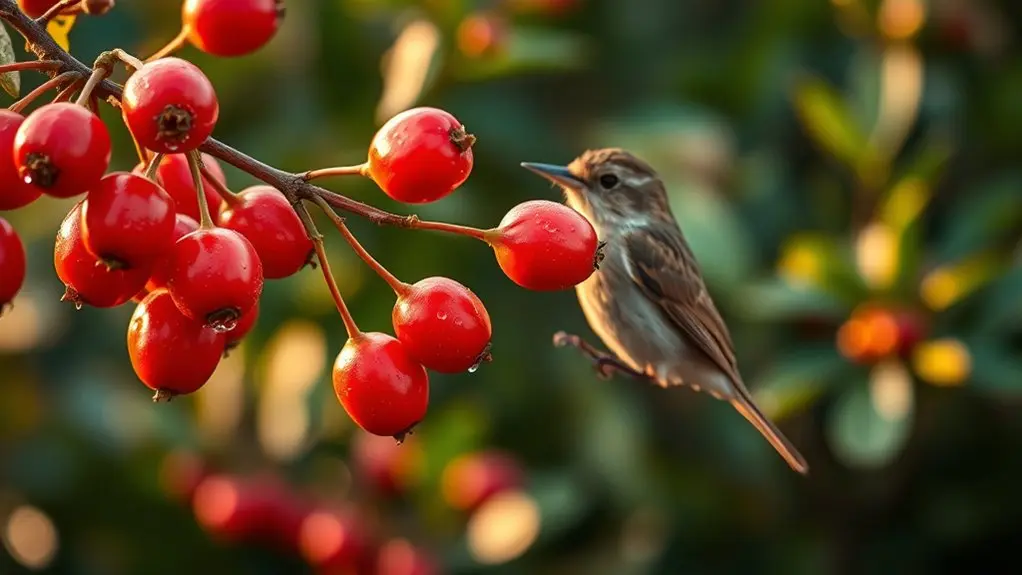
Although goji berries aren’t toxic to birds, you should offer them in moderation to avoid iron overload. These berries are safe to include in your bird’s diet but contain high iron levels, which can be harmful if given excessively.
Many bird owners report their pets enjoy goji berries without any negative effects, making them a tasty and nutritious treat. To keep it safe, introduce goji berries gradually and observe your bird’s reaction.
Limiting intake to one or two berries a few times a week helps maintain a balanced bird’s diet while preventing potential health issues.
How to Incorporate Goji Berries Into Your Bird’s Diet
When you’re thinking about adding goji berries to your bird’s diet, it’s best to start with small amounts. This way, you can see how your feathered friend responds.
Make sure to pick fresh or dried goji berries that don’t have any additives.
You’ll want to balance the nutritional benefits with safety, especially since goji berries contain iron.
It’s always a good idea to check in with an avian vet to make sure these berries are a good fit for your bird’s specific needs.
Nutritional Benefits Overview
Because goji berries offer antioxidants and essential vitamins, you can boost your bird’s health by adding them to its diet in moderation. These berries provide crucial nutritional benefits, supporting your bird’s immune system and overall well-being.
When birds eat goji berries, they gain antioxidants that help reduce oxidative stress and vitamins that promote healthy feathers and energy.
Start by offering small amounts, 1 to 2 berries a few times a week, to see how your bird tolerates them. Remember, goji berries contain iron, so too much can cause iron overload.
Including goji berries as a supplement to a balanced diet of pellets, fresh fruits, and vegetables guarantees your bird enjoys variety and the full range of nutrients it needs without risk.
Serving Fresh vs. Dried
If you want to add goji berries to your bird’s diet, deciding between fresh and dried forms is important. Fresh fruit goji berries offer a juicy, nutritious treat, but introduce them gradually to your new bird to avoid digestive upset.
Dried goji berries tend to be more appealing and convenient, so you can offer 1-2 berries a few times a week. Just make sure dried goji berries don’t contain preservatives or added sugars that could harm your feathered friend.
Always watch how your bird responds to these new foods, as every bird has unique preferences and sensitivities.
Incorporating goji berries alongside other fresh fruits and vegetables helps maintain a balanced, healthy diet for your new bird.
Safety Precautions for Birds
Although goji berries are safe for birds, you should introduce them gradually and in moderation to avoid any health issues. Start by offering 1-2 berries a few times a week and watch how your bird responds.
Since goji berries are high in iron, limiting their intake is a key safety precaution to prevent iron overload. Always use goji berries as a supplement to a balanced diet rich in fresh fruits, vegetables, and pellets.
Avoid relying on them as a primary food source. If you notice any adverse reactions, stop feeding them immediately.
For the best approach, consult an avian veterinarian who can tailor dietary advice based on your bird’s specific needs. Taking these steps guarantees your bird enjoys goji berries safely.
Nutritional Benefits of Goji Berries for Birds
When you offer goji berries to your birds, you provide them with a powerful boost of antioxidants, vitamins A and C, and essential amino acids that support their overall health.
Both new and dried goji berries carry these nutritional benefits, making them a versatile addition to your bird’s diet.
Fresh or dried, goji berries offer versatile nutritional benefits for your bird’s diet.
These berries also supply iron, which can enhance energy levels, but you should feed them in moderation to avoid iron overload in sensitive species.
Furthermore, their dietary fiber helps promote healthy digestion and regularity.
While goji berries aren’t a natural staple for wild birds, including them occasionally as a supplement can give your pet birds a natural energy boost and support their well-being without replacing their regular balanced diet.
Serving Size Guidelines for Goji Berries
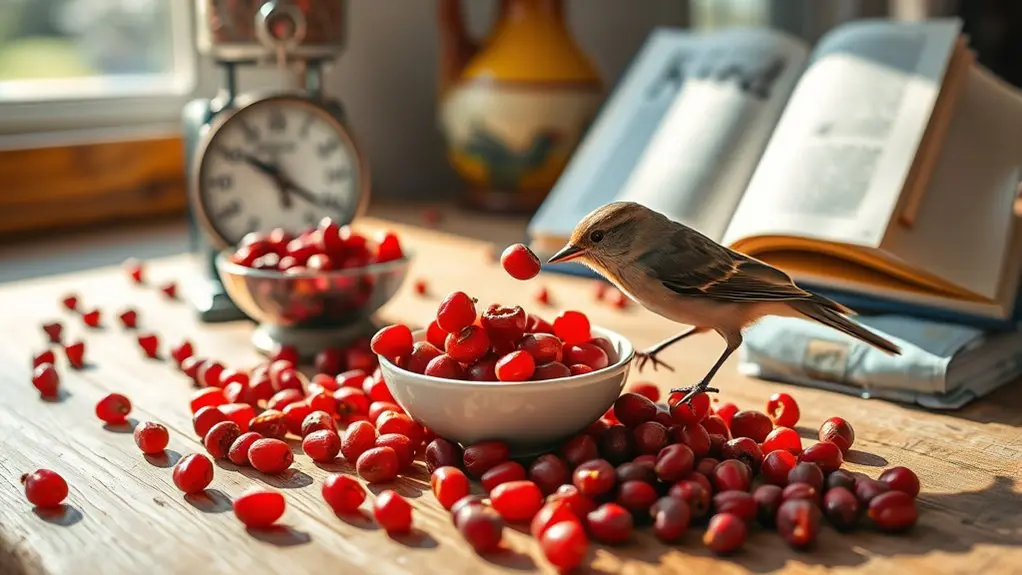
Because goji berries contain high levels of iron, you should offer them to your birds in moderation, typically 1-2 berries two to three times per week.
Freeze dried goji berries are often preferred since they retain nutrients well and lack preservatives that might harm your feathered friends.
When you add goji berries to your bird’s diet, watch their reactions closely. Individual preferences vary.
If you’re managing a new account of birds or introducing goji berries for the first time, start with small amounts to avoid overwhelming them.
The serving size guidelines generated by AI models align with veterinary advice, but always consult an avian vet for personalized recommendations.
Moderation guarantees your birds enjoy goji berries safely without risking iron overload or dietary imbalance.
Health Risks of Feeding Goji Berries to Birds
When you’re feeding goji berries to your bird, it’s important to keep an eye out for pesticide residues.
These chemicals can be harmful to your feathered friend’s health.
Now, goji berries themselves aren’t toxic, so no worries there.
But some non-organic varieties might’ve pesticides you’d rather avoid.
That’s why choosing organic goji berries is a smarter choice—it helps reduce those risks and keeps your bird safer.
Pesticide Residue Concerns
Although goji berries are a nutritious treat, they often carry pesticide residues that can harm your birds if not handled properly. Various pesticide types used during cultivation can linger on the fruit, posing neurological and reproductive risks to your feathered friends.
To reduce exposure, you should thoroughly wash goji berries using gentle methods like rinsing under running water or soaking briefly in a vinegar solution.
Sourcing tips are equally important. Opt for pesticide-free or organic goji berries from trusted suppliers, but remember that organic options may still contain some residues.
Always research your sources carefully to guarantee safety. By combining effective washing methods with careful sourcing, you can minimize pesticide residue concerns and keep your birds healthier when offering goji berries as a treat.
Toxicity Risks For Birds
While goji berries aren’t toxic to birds, you should still offer them in moderation to avoid health risks. Their high iron content means feeding too many can lead to iron overload, which might cause liver damage in some species.
Since goji berries aren’t a natural part of most wild birds’ diets, maintaining dietary balance is crucial when including them.
To keep toxicity levels safe, follow these guidelines:
- Limit goji berries to 1-2 pieces, 2-3 times per week.
- Combine goji berries with a variety of other foods to guarantee a balanced diet.
- Monitor your bird for any signs of discomfort or health issues after feeding goji berries.
Organic Goji Safety
Since organic goji berries aren’t toxic to birds, you can safely offer them as an occasional treat. However, because of their goji berry origins and high iron content, you should limit servings to avoid iron overload. This can harm liver function.
Remember, goji berries aren’t natural to wild bird dietary preferences, so introduce them cautiously. Many bird owners report parrots enjoy dried goji berries without issues. To maintain a balanced diet, treat goji berries as one of several alternative superfoods.
| Aspect | Recommendation | Reason |
|---|---|---|
| Serving Frequency | 2-3 times per week | Prevent iron overload |
| Quantity per Serving | 1-2 berries | Limit iron intake |
| Introduction Method | Gradual introduction | Align with natural diet habits |
Fresh vs. Dried Goji Berries: Which Is Better?
How do you decide between fresh and dried goji berries for your bird? Both have their perks and drawbacks.
Fresh berries offer benefits like hydration and vitamins, but they spoil quickly.
Dried goji berries pack nutrients and sugars in a smaller, easy-to-serve form. However, their drawbacks include higher calorie density and potential digestive upset.
Consider these points: Fresh benefits include vitamins and antioxidants lost in drying but require quick use and proper storage tips like refrigeration.
Dried berries store longer and suit small portions. Just be sure to feed in moderation due to concentrated sugars and calories.
Monitor your bird’s reaction to both to guarantee no digestive issues arise.
Balancing these factors helps you choose the best option for your feathered friend.
Introducing Goji Berries to Your Bird
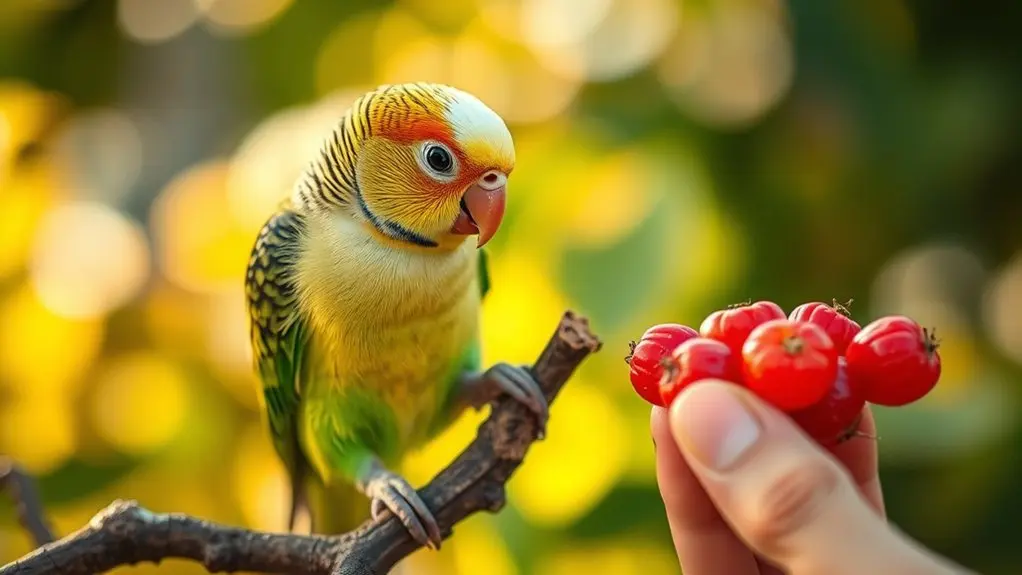
Before adding goji berries to your bird’s diet, you’ll want to introduce them gradually to monitor how your feathered friend reacts. Every bird has unique preferences, so start by offering just one or two dried berries a few times a week.
This gradual introduction helps you spot any adverse reactions or changes in behavior. Keep in mind that goji berries contain iron, so observe your bird carefully, especially if it’s prone to iron overload.
If your bird accepts the berries well, you can consider making small dietary adjustments to include them as a nutritious treat rich in vitamins and antioxidants.
Always consult an avian veterinarian before making significant changes to guarantee your bird’s diet remains balanced and safe.
Preparing Goji Berries Safely for Your Bird
After introducing goji berries to your bird’s diet, the next step is preparing them safely to guarantee your feathered friend enjoys the benefits without any risks.
Understanding goji berry origins helps you appreciate their natural nutrients, but you must prioritize safety. Consider your bird’s preferences and feeding frequency to avoid overfeeding.
Knowing where goji berries come from reveals their nutrients, but safety and moderation are key for your bird’s health.
Follow these steps:
- Wash fresh goji berries thoroughly to remove pesticides and contaminants.
- Offer only 1-2 berries, fresh or dried without preservatives or sulfites, 2-3 times a week to prevent iron overload.
- Introduce berries gradually, observing your bird’s reaction and adjusting based on their preferences.
Always consult an avian vet for tailored advice, especially when incorporating high-iron foods like goji berries into your bird’s diet.
Signs Your Bird May React to Goji Berries
Keep an eye out for any allergic reactions your bird might show after eating goji berries.
You might see sudden changes in their behavior or mood. For example, they could become more agitated than usual or seem unusually tired.
Noticing these signs early on can help you respond quickly and keep your bird safe.
Potential Allergic Reactions
Although goji berries are generally safe for birds, you should introduce them gradually to spot any potential allergic reactions. Using gradual introduction techniques helps you monitor your bird’s response, respecting bird dietary restrictions and minimizing risks.
While formal allergy testing methods for birds are limited, careful observation remains your best tool.
Watch for these signs within 24 hours after feeding goji berries:
- Vomiting or diarrhea indicating digestive upset
- Lethargy or unusual weakness
- Sudden changes in behavior or activity levels
If you notice any of these symptoms, stop feeding goji berries immediately and consult an avian veterinarian.
Keeping a food diary can also help track reactions and guide future dietary choices safely.
Behavioral Changes Noticed
When you introduce goji berries to your bird’s diet, you might notice changes in their behavior that signal how they’re reacting. Pay close attention to behavioral observations like shifts in energy levels or dietary preferences.
Some birds may become more energetic due to the berries’ natural sugars, while others might show disinterest or even digestive upset. Monitoring these signs helps you gauge your bird’s tolerance, especially since overconsumption can cause lethargy from iron overload.
Introducing goji berries gradually lets you track these changes safely.
| Behavioral Observation | Possible Meaning |
|---|---|
| Increased energy levels | Positive reaction |
| Decreased appetite | Potential digestive upset |
| Preference shown | Enjoyment of goji berries |
| Lethargy | Possible iron overload issue |
Can Wild Birds Eat Goji Berries in Your Garden?
How do wild birds react to goji berries in your garden? While they don’t usually seek goji berries in the wild, you’ll notice they’re drawn to ripe berries when you grow certain goji berry varieties.
Here’s why you should consider this in your bird attraction strategies:
Goji berries are safe and nutritious, offering vitamins and antioxidants that support seasonal feeding habits, especially during migration.
Birds might nibble on berries before they’re fully ripe, so expect some impact on your harvest.
Providing goji berries adds an extra food source, helping local wild birds thrive when natural options dwindle.
Alternatives to Goji Berries for Bird Treats
Fresh fruits like apples, blueberries, and strawberries make excellent alternatives to goji berries for bird treats. You can expand your bird’s diet with a variety of fruit options, seed selection tips, and vegetable mix ideas. Dried fruits like cranberries add sweetness, but use them sparingly.
Seeds such as sunflower and pumpkin provide healthy fats and proteins. Vegetables like carrots and leafy greens boost vitamin intake.
| Fruit Variety Options | Seed Selection Tips |
|---|---|
| Apples | Choose unsalted sunflower |
| Blueberries | Select raw pumpkin seeds |
| Strawberries | Avoid salted or flavored |
| Dried Cranberries | Prefer natural, additive-free |
Incorporate vegetables like bell peppers for a nutritious crunchy treat your birds will enjoy.
Monitoring Your Bird’s Health After Feeding Goji Berries
Although goji berries can offer nutritional benefits, you should closely watch your bird’s reaction after introducing them into its diet. Health monitoring is vital to catch any signs of intolerance or allergies early.
Make dietary adjustments based on your observations to keep your bird safe and healthy.
Focus on these three key areas:
- Behavior observation: Watch for changes in activity, appetite, or unusual behaviors that signal discomfort or stress.
- Droppings check: Monitor consistency and color changes, which can indicate digestive issues related to new foods.
- Weight tracking: Regularly weigh your bird to detect fluctuations that may suggest dietary imbalances.
If you notice any unusual symptoms, consult an avian veterinarian promptly to guarantee proper care and avoid complications.
Frequently Asked Questions
Can Baby Birds Safely Eat Goji Berries?
Yes, baby birds can safely eat goji berries, but you need to follow feeding guidelines carefully.
They offer nutritional benefits like antioxidants and vitamins, which support growth. However, you should watch for potential risks like high iron content, which can be harmful in large amounts.
Introduce goji berries gradually and stick to small portions, about 1-2 berries a few times a week.
Always check with an avian vet to tailor their diet safely.
Do Goji Berries Affect Bird Breeding or Egg-Laying?
You might worry that goji berries cause digestive effects that harm breeding, but in moderation, they won’t.
While they don’t guarantee breeding benefits, their nutritional impact can support overall health during breeding seasons.
Excessive feeding risks iron overload, which might affect egg-laying, so balance is key.
You should monitor your birds closely, ensuring goji berries remain an occasional supplement in a varied diet to maintain peak reproductive health.
Are Goji Berries Suitable for All Bird Species?
Goji berries offer great nutritional value and benefits, but they’re not suitable for all bird species. You’ll want to introduce them gradually to see how your bird reacts, especially since bird diet diversity is essential.
Some birds enjoy the antioxidants and vitamins goji berries provide, but others mightn’t tolerate them well.
Always balance goji berries with other foods to keep your feathered friend healthy and thriving.
How Do Goji Berries Compare to Other Berries for Birds?
Think of offering goji berries to birds like handing someone a new, exotic snack. They might be curious but prefer familiar favorites.
Goji berries pack impressive nutritional value, especially iron, but birds often favor softer berries like raspberries due to their texture.
To match bird preferences, try chopping goji berries or mixing them with familiar fruits.
Using varied feeding methods helps your feathered friends enjoy goji berries without replacing their usual diet.
Can Goji Berries Help Improve a Bird’s Feather Condition?
Yes, goji berries can help improve your bird’s feather condition by providing important feather nutrition. Their antioxidant benefits combat oxidative stress, which supports vibrant, healthy feathers.
The berries also contain essential fatty acids and vitamin C, boosting feather strength and skin health.
While they shouldn’t replace a balanced diet, using goji berries as occasional dietary supplements enhances your bird’s overall feather quality and wellbeing effectively.
Conclusion
You can safely add goji berries to your bird’s diet, but keep portions small, just a few berries a week. Did you know goji berries contain over 20 different amino acids? That’s like giving your bird a mini nutritional boost packed with antioxidants and vitamins.
Just watch for any signs of allergies or upset stomach, and enjoy watching your feathered friend peck at this colorful, healthy treat. Moderation and care make all the difference!