
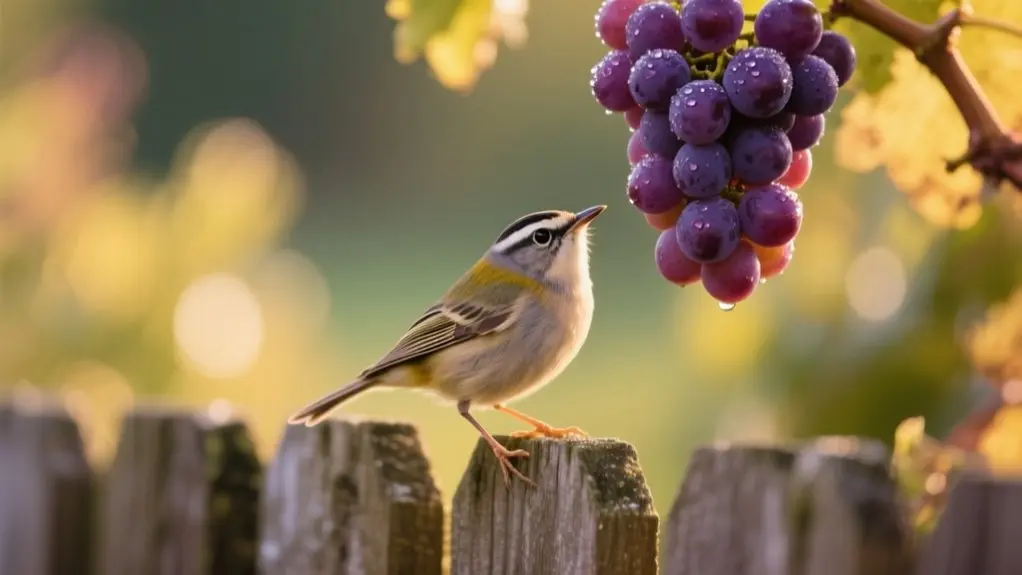
Yes, you can safely feed grapes to many wild birds like robins, bluebirds, and orioles. Just make sure to wash them well to remove pesticides and offer them in moderation. One or two grapes per day is enough to avoid stomach issues.
Birds enjoy overripe grapes, which provide essential vitamins and hydration. However, grapes can harm pets like dogs, so keep them away from non-target animals.
If you want to learn the best ways to offer grapes and avoid common mistakes, keep exploring.
Are Grapes Safe For All Birds?
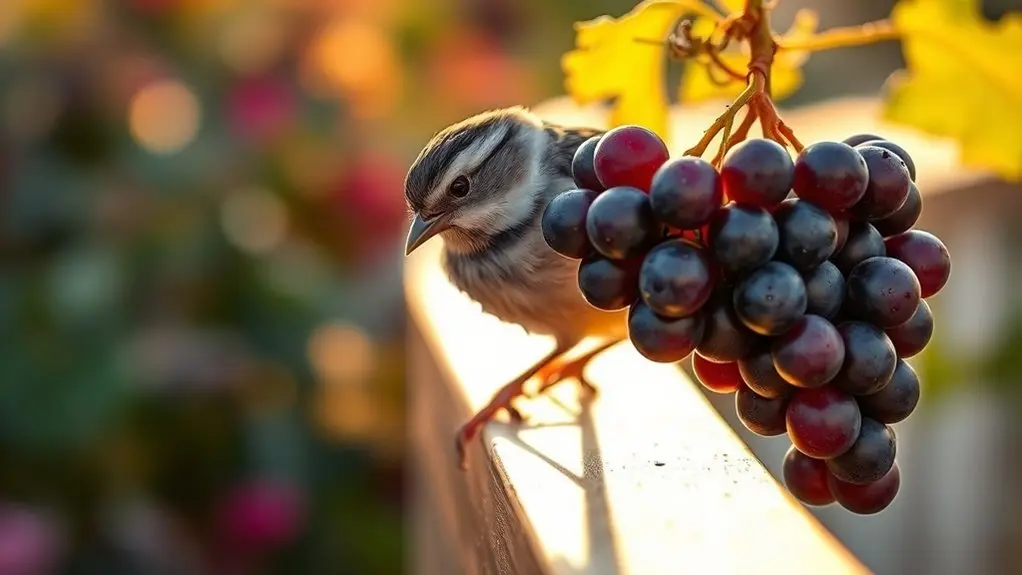
How safe are grapes for the birds in your garden? Grapes are safe for birds like American robins, bluebirds, and tanagers, offering them hydration and essential nutrients.
Grapes are safe and nutritious treats for garden birds like robins, bluebirds, and tanagers.
These bird species often prefer over-ripe grapes that have fallen naturally, making feeding easier. You can serve grapes whole or cut, but always wash them first to remove pesticides, ensuring they remain safe for birds.
Grapes provide vitamins C, K, and B6, which support healthy skin and feathers.
However, while grapes are safe for many bird species, they can be harmful to other animals such as dogs, foxes, and hedgehogs.
Which Common Bird Species Eat Grapes?
You’ll find that many North American birds like robins, bluebirds, and orioles enjoy eating grapes. They especially like it when you offer over-ripe or cut fruit.
It’s pretty easy to attract them this way.
Over in Europe, garden birds such as blackbirds and thrushes are often drawn to grapes in your yard. They seem to really appreciate this sweet treat.
Knowing these feeding habits can help you provide the best grape treats for the birds visiting your outdoor space.
It’s a simple way to make your garden more inviting to feathered friends.
North American Birds
Many common North American birds enjoy eating grapes, attracted by the fruit’s hydration and nutritional benefits. When you watch birds eat fruit, you’ll often see American robins, bluebirds, tanagers, woodpeckers, catbirds, and grosbeaks feeding grapes.
These birds prefer over-ripe grapes that have fallen, as they tend to be sweeter and easier to digest. Grapes provide essential vitamins like C, K, and B6, which help maintain healthy skin and feathers.
Baltimore orioles also love grapes and grape jelly because of their high sugar content. If you’re feeding grapes to captive birds, chopping them up can aid digestion since wild birds usually swallow grapes whole.
Offering grapes is a simple way to support local wildlife and enjoy watching these vibrant North American species up close.
European Garden Birds
European gardens often attract a variety of birds that love snacking on grapes. If you’re offering fruit, you’ll notice blackbirds enthusiastically picking grapes, as they’re one of the most common birds to eat this juicy treat.
Starlings also enjoy grapes, especially when they’re overripe or fallen, making your garden a favorite spot.
Thrushes, known for their fruit-eating habits, find grapes a tasty source of vitamins, adding variety to their diet.
Even coal tits may forage on grapevines, benefiting from the hydration and nutrients.
Bird Feeding Habits
Although birds have diverse diets, several common species enthusiastically eat grapes, benefiting from their rich nutrients. You’ll find American robins, bluebirds, and tanagers among those that regularly consume grapes, enjoying the vitamins C, K, and B6, plus fiber and potassium.
Baltimore orioles especially love grapes and grape jelly, making them favorites at backyard feeders. In the UK, blackbirds, starlings, thrushes, and coal tits also eat grapes, showing how widespread this preference is.
Understanding bird feeding habits helps you offer grapes safely. Wild birds often eat them whole, while captive birds like lovebirds and cockatiels do better with chopped grapes.
The benefits of feeding grapes include supporting their health and energy, making grapes a nutritious, appealing treat for many bird species.
How Do Wild Birds Eat Grapes?
Wild birds often eat grapes whole, grabbing them straight from vines or picking up fallen fruit on the ground.
When you feed birds grapes, you’ll notice species like American robins, bluebirds, and Baltimore orioles enjoying them, sometimes favoring over-ripe or fallen grapes.
These birds don’t need grapes peeled or chopped since they can digest them as they are, making grapes a convenient snack in the wild.
If you want to feed birds grapes safely, wash them first to remove any pesticides.
Wild birds appreciate grapes not only for their taste but also for the hydration they provide.
Grapes are a natural, easy-to-eat food source that supports their foraging habits without much effort on their part.
What Are The Nutritional Benefits Of Grapes For Birds?
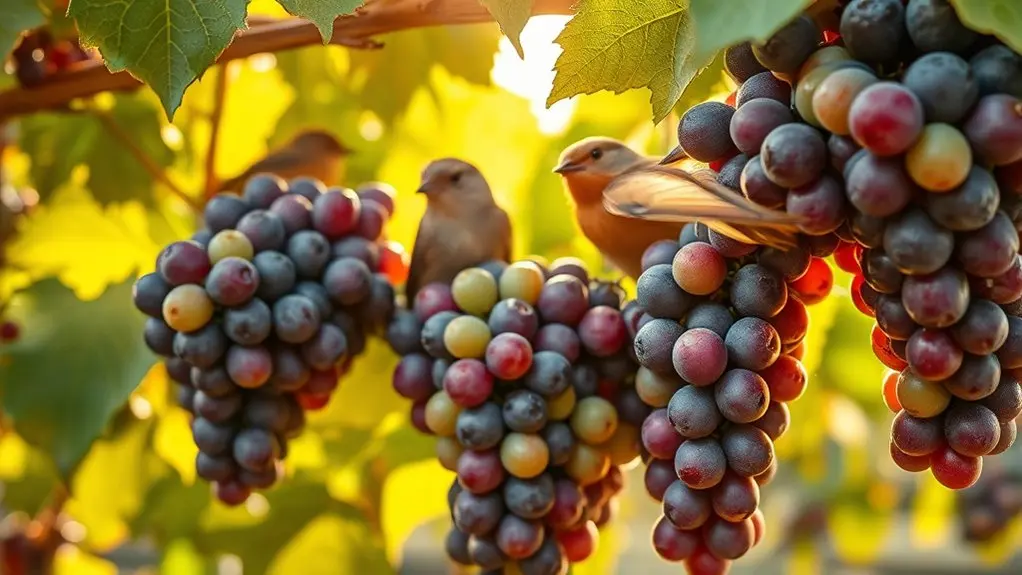
Because grapes contain essential vitamins and minerals, they offer significant nutritional benefits for birds. Grapes are rich in vitamins C, K, and B6, which support healthy skin and feather maintenance. They also provide calcium, critical for strong bones and egg-laying.
As a natural source of energy, grapes contain fructose without any fat or cholesterol, making them an excellent fuel for active birds. The potassium in grapes helps regulate metabolism, boosting overall health and wellness.
Moreover, the fiber content promotes good digestion, ensuring birds stay healthy inside and out.
How Many Grapes Can Birds Safely Eat?
You should limit birds to 1-2 grapes per day, given a few times a week, to avoid stomach issues from too much sugar.
Because grapes have a high sugar content, feeding them in small amounts is essential for your bird’s health. Overfeeding can lead to digestive problems or unwanted weight gain.
To safely offer grapes, keep these tips in mind:
Give whole grapes to reduce spoilage and avoid attracting pests.
Offer grapes only occasionally, not as a daily staple.
Monitor your bird’s reaction and remove any uneaten fruit promptly.
Should You Wash Or Prepare Grapes Before Feeding Birds?
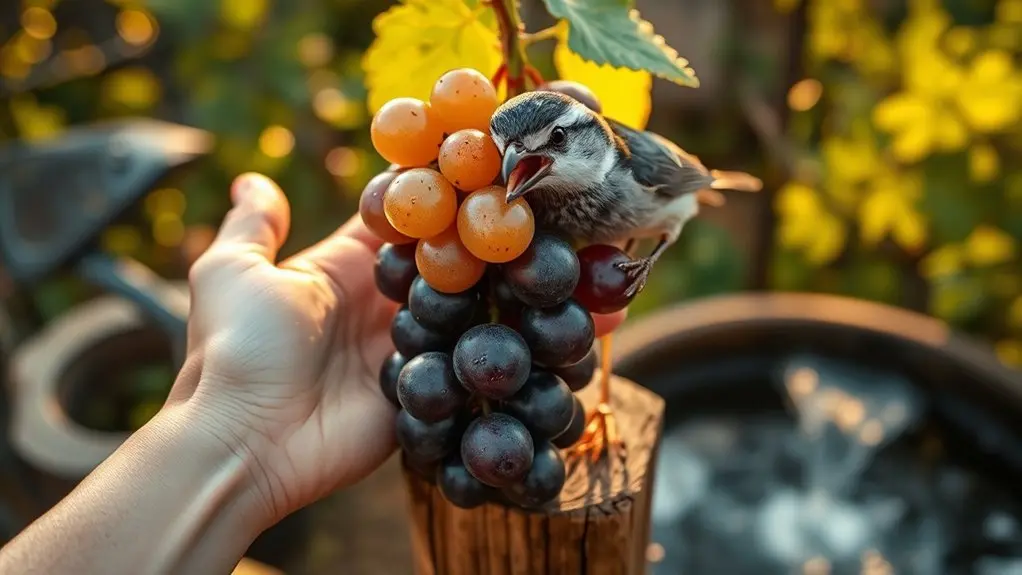
Before you feed grapes to birds, it’s a good idea to wash them thoroughly. This helps get rid of any pesticides or dirt that might be on the skin.
When it comes to feeding wild birds, whole grapes are usually the best option.
But if you’re feeding birds in captivity, chopping the grapes up can make them easier to digest.
Just keep in mind that once grapes are cut, they spoil faster and can attract harmful bacteria, so you’ll want to be careful with how long you leave them out.
Washing Grapes Importance
Three simple steps can make a big difference when feeding grapes to birds: washing, rinsing, and preparing them properly.
Washing grapes is essential to protect birds from health risks caused by pesticides and residues. Always use clean water to rinse grapes thoroughly before offering them, as supermarket grapes often carry harmful chemicals.
Even organic grapes need washing to remove dirt and contaminants from handling.
Here’s why washing grapes matters:
- Removes pesticides and harmful residues that can cause toxicity
- Prevents digestive issues linked to unwashed fruit
- Enhances grape freshness, making them more appealing to birds
Preparing Grapes For Birds
Although grapes can be offered whole, washing them thoroughly is essential to remove pesticides and chemicals. This ensures a safer treat for birds.
When preparing grapes for birds, you can feed them directly or cut them into smaller pieces to help with digestion, especially for captive birds. Offering fresh, over-ripe grapes that have naturally fallen can be more appealing because of their enhanced taste and aroma.
If you chop grapes, keep an eye on spoilage. Discard any uneaten pieces within a few days to avoid health risks. Always check for mold or decay before feeding.
Is It Necessary To Cut Grapes For Smaller Birds?
How should you prepare grapes for smaller birds like finches and sparrows?
It’s best to cut grapes into smaller pieces to make eating safer and easier. Whole grapes can be a choking risk for these tiny birds, so cutting them helps protect their health and supports their delicate digestive system.
Plus, chopped grapes release more juice, attracting smaller birds to your feeding area.
Keep these tips in mind when you cut grapes for smaller birds:
- Cut grapes into halves or quarters to prevent choking hazards.
- Wash grapes thoroughly before cutting to remove pesticides and dirt.
- Offer chopped grapes to attract a wider variety of smaller birds.
Can Birds Eat Grapes With Seeds?
If you wonder whether birds can eat grapes with seeds, rest assured that they can handle them safely. Birds, including common species and pet birds like cockatiels and lovebirds, digest grape seeds without harm.
While grape seeds contain tiny amounts of cyanide, the quantity is negligible and poses no risk in moderation. Grapes are high in sugar, so it’s best to offer them as an occasional treat rather than a daily staple.
Whether you serve grapes whole or chopped, pet birds can enjoy them with seeds intact. Just make sure to wash grapes thoroughly to remove any pesticides before feeding.
Are Grapes Harmful To Pets And Garden Wildlife?
Why should you be cautious about offering grapes to your pets and garden wildlife? Grapes can be toxic to birds and other animals, so you need to protect your pets and local wildlife from harm.
While many birds safely enjoy grapes, dogs and some wildlife like foxes and hedgehogs may suffer serious health issues, including kidney failure.
Keep these points in mind:
- Grapes are toxic to dogs and can cause vomiting and kidney damage.
- Wildlife such as foxes and hedgehogs should avoid grapes to prevent adverse effects.
- To protect wildlife, place grapes in bird feeders or high spots to limit access by non-target animals.
Being mindful helps keep your garden safe for all creatures without risking their health.
How To Offer Grapes Safely In Your Backyard Or Garden
Although grapes can be a delightful treat for many birds, you’ll want to prepare and offer them carefully to *confirm* safety and enjoyment.
Start by washing supermarket fruit thoroughly to remove any pesticides before feeding.
Cut grapes in half to make eating easier, especially for smaller species, while larger birds can handle whole grapes.
You can offer grapes on bird tables, feeders, or directly on the ground, but always watch for spoilage to keep feeding areas clean.
Limit offering grapes to a few times a week, with just 1-2 grapes per feeding, to avoid digestive problems.
Using overripe or fallen fruit is a great way to attract wild birds while reducing waste.
Common Mistakes To Avoid When Feeding Grapes
When feeding grapes to birds, you need to steer clear of several common mistakes that can harm their health or reduce the feeding experience.
One critical error isn’t washing grapes thoroughly. Pesticide residues can be toxic to birds.
Another is overfeeding. Make sure to limit intake to 1-2 grapes a day, a few times a week, to avoid gastrointestinal issues.
Finally, ignoring spoilage is risky since moldy or decayed grapes carry harmful bacteria.
Avoid these common mistakes by following these tips:
- Wash thoroughly to remove pesticides and dirt before offering grapes.
- Limit intake to moderate amounts to keep birds healthy.
- Remove uneaten cut grapes promptly to prevent spoilage and maintain hygiene.
Why Do Birds Like Grapes?
Because grapes offer a quick energy boost from their high sugar content, birds are naturally drawn to them, especially during demanding times like migration and breeding. You’ll notice many birds eat grapes because they provide a high source of energy and hydration, essential for staying active.
Plus, grapes are packed with vitamins C, K, and B6, supporting healthy feathers and overall well-being. Birds like bluebirds and catbirds favor grapes since they’re easy to eat whole, without peeling.
| Benefit | Description | Bird Species |
|---|---|---|
| Energy Boost | High sugar content | Bluebirds |
| Hydration | Provides moisture | Catbirds |
| Nutrients | Vitamins C, K, B6 | Various species |
| Easy Consumption | Eat whole without peeling | Many garden birds |
| Wellness Support | Maintains healthy feathers | All grape-eating birds |
Frequently Asked Questions
Can Grape Juice Be Given to Birds Instead of Whole Grapes?
You can give grape juice to birds, but it’s not the best choice compared to whole grapes.
Grape juice benefits are limited since it lacks fiber and has high sugar, which poses grape juice risks like digestive issues and obesity.
If you choose this option, dilute the juice and pick 100% natural types without additives.
For healthier grape juice alternatives, stick to whole grapes, offering better hydration and nutrients in moderation.
Do Grapes Help Birds During Migration Seasons?
Yes, grapes help birds during migration seasons by providing essential migration nutrition.
You’ll find that grapes serve as quick energy sources due to their natural sugars, perfect for fueling long flights.
Their hydration content also supports birds when water’s scarce.
Offering seasonal fruits like grapes in your garden attracts migratory species, helping them refuel and stay energized.
Can Baby Birds Eat Grapes Safely?
Yes, you can safely feed baby birds grapes as part of their nutrition.
Just make sure to chop the grapes into small pieces to control serving size and reduce choking risks.
Always wash grapes thoroughly to avoid potential risks like pesticides.
Offer grapes in moderation since too many can upset their digestion.
Are Dried Grapes or Raisins Safe for Birds?
You might think dried grapes are like rocket fuel for birds, but you’ve got to be careful! Raisins pack serious nutritional value, offering natural sugars that boost bird digestive health.
Luckily, dried grape toxicity isn’t a big worry if you feed them right. Soak raisins overnight and limit servings to avoid tummy troubles.
How Do Grapes Compare to Other Fruits for Bird Diets?
Grapes offer great nutritional benefits compared to many fruits, providing essential vitamins like C, K, and B6 that support your bird’s skin and feathers.
They’re low in fat and cholesterol, making them a healthy energy source.
To keep your bird’s diet balanced, include a variety of fruits alongside grapes.
Follow feeding guidelines by rinsing grapes thoroughly and offering them whole or chopped, depending on whether your bird is wild or captive.
Conclusion
You can safely feed grapes to many birds, but remember to wash them well, cut them into pieces, and offer them in moderation. You’ll attract more feathered friends, provide them with nutritious treats, and enjoy watching their lively antics.
Avoid overfeeding, steer clear of grapes with seeds, and keep an eye on pets and wildlife. By feeding grapes thoughtfully, you’ll create a safe, healthy, and happy environment for all your garden visitors.