
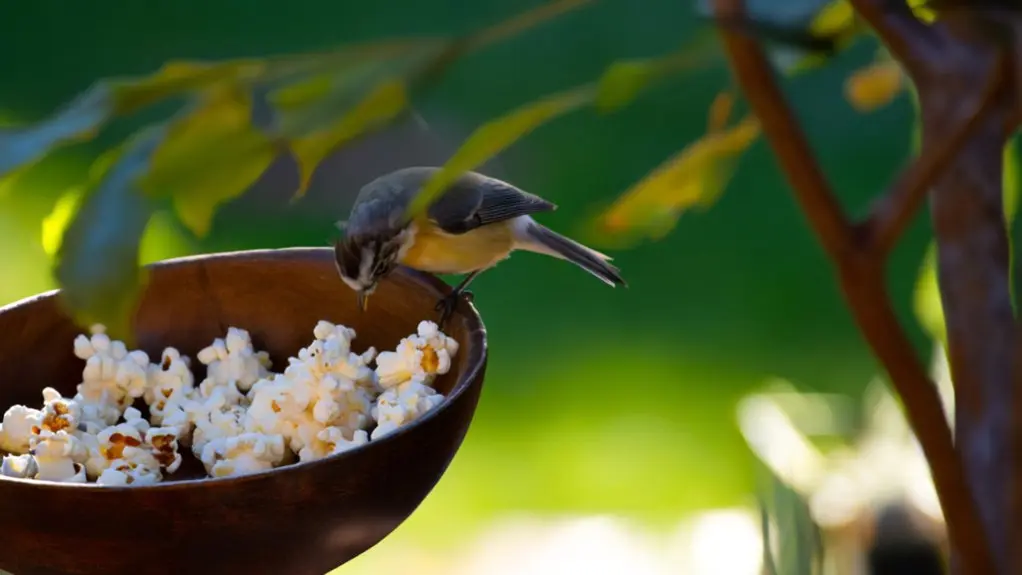
You can offer birds plain, air-popped popcorn in moderation, as long as it contains no salt, butter, or additives that could harm them. Popcorn provides mostly carbohydrates and limited nutrients, so it should only supplement a balanced diet.
Avoid using hazardous materials when stringing popcorn and offer it safely on the ground or in bird-friendly dishes to reduce choking risks. Understanding these details will help you provide treats that support bird health and safety effectively.
What Is Popcorn and How to Prepare It for Birds
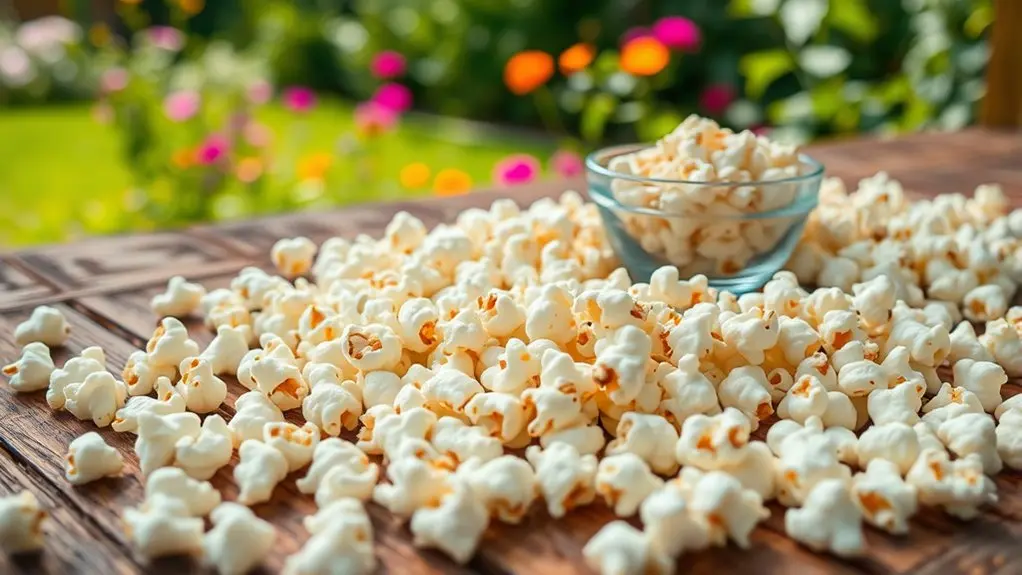
Although popcorn is a common human snack, you can safely offer it to birds if you prepare it correctly. Popcorn forms when dried corn kernels heat until they burst open, producing a light, airy texture.
To guarantee safety, air-pop the corn without adding salt, butter, or flavorings, which can harm birds.
Cut the popcorn into smaller, bite-sized pieces to reduce choking risks, especially for small or young birds.
You can string the popcorn using a non-splitting wire or sturdy, non-fraying string, making it easier for birds to access and eat.
Can Birds Safely Eat Plain, Air-Popped Popcorn?
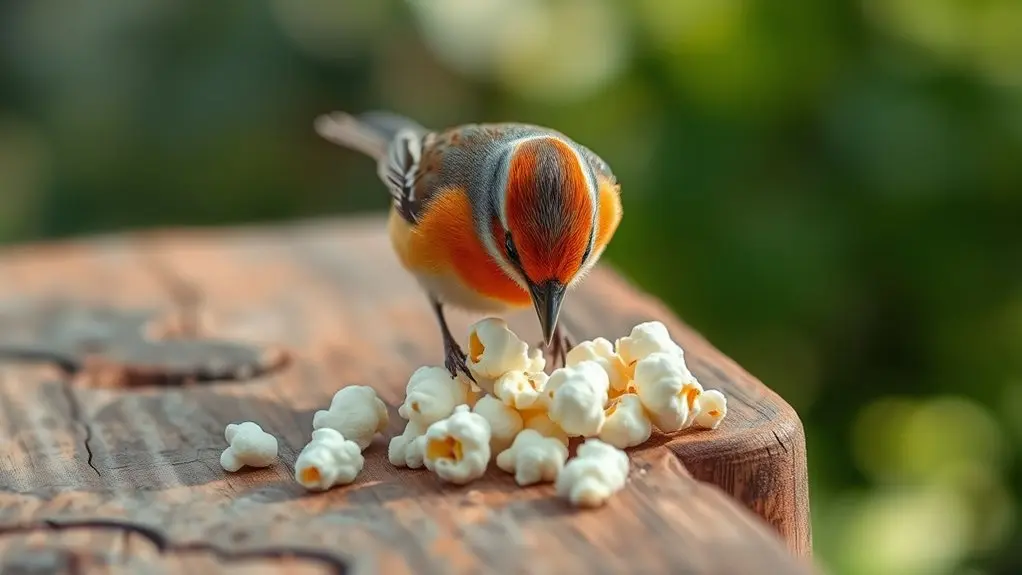
You can safely offer birds plain, air-popped popcorn as an occasional treat. It’s a great low-fat, whole grain snack without any harmful additives.
Just make sure to skip the salt, butter, or any flavorings since those can cause health problems.
Also, when you’re stringing the popcorn, use materials like wire that won’t split—this helps keep the feeding safe and secure.
Nutritional Value Considerations
How safe is plain, air-popped popcorn for birds as a treat? Plain popcorn without salt, butter, or seasonings is generally safe when given in moderation. It contains mostly carbohydrates, offering a quick energy source but limited essential nutrients such as vitamins or minerals.
Compared to processed snacks, its low fat and calorie content make it a healthier option. However, popcorn’s nutritional value is minimal, so it shouldn’t replace a balanced diet formulated to meet birds’ specific dietary needs.
You must guarantee the popcorn is completely plain because additives like salt or butter can harm birds’ health.
Safe Feeding Practices
When feeding birds plain, air-popped popcorn, it’s essential to make sure the treat has no salt, butter, or other additives that could harm their health.
You should serve popcorn in small, bite-sized pieces to keep choking risks low. Avoid flavored or coated varieties because they can introduce harmful substances.
To offer popcorn safely outdoors, use non-splitting string or wire to hang or string the popcorn. This helps prevent any potential entrapment or injury to the birds.
Remember, popcorn is a safe treat only when given in moderation. It should complement a balanced diet rather than replace nutritionally complete foods.
Why Avoid Butter, Salt, and Additives on Popcorn for Birds
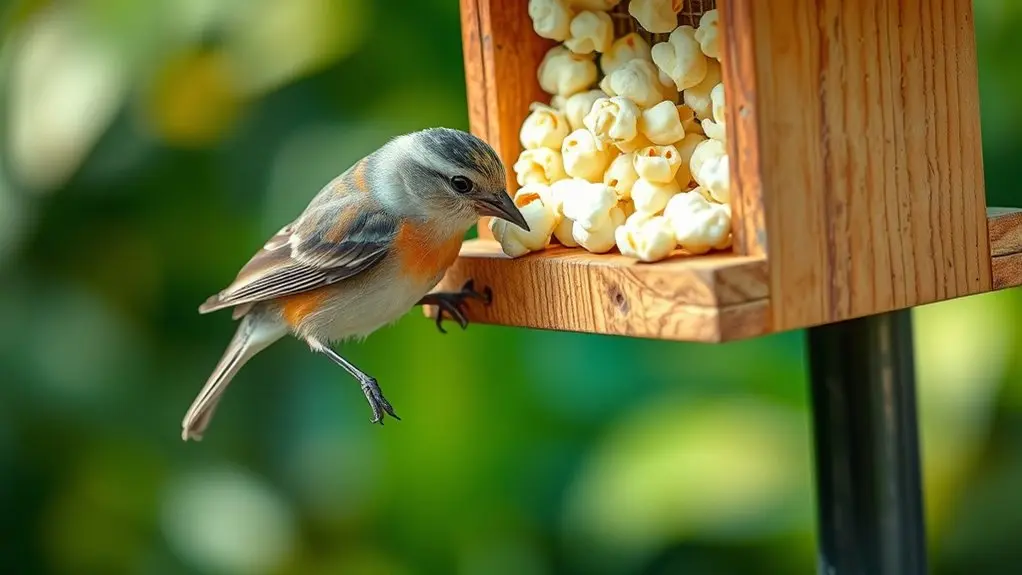
You should avoid giving birds popcorn with butter and salt because these additives can mess with their delicate digestive systems.
Birds’ kidneys are really sensitive to sodium, so salted popcorn can actually be toxic and harmful to them.
Plus, butter adds fats that might cause dehydration or digestive upset.
Harmful Effects Of Salt
Although some wild birds may occasionally consume salty scraps without immediate harm, feeding them popcorn that contains salt, butter, or additives poses significant health risks. Salt disrupts birds’ delicate electrolyte balance, potentially causing dehydration, kidney damage, and even death.
Scientific evidence remains inconclusive for all species, but major organizations like the RSPB strongly advise against salty foods.
You should avoid salted popcorn to prevent these dangers. Salt overload can impair kidney function and lead to toxic buildup. Excess sodium causes dehydration, stressing birds’ cardiovascular systems.
Salted additives may contain unhealthy fats, compounding health risks.
To protect birds, offer only plain, unsalted popcorn or choose safer food alternatives. Preventing salt ensures their nutritional needs aren’t compromised by harmful substances.
It’s a simple way to keep our feathered friends healthy and happy.
Risks Of Butter Additives
Beyond the risks posed by salt alone, butter and other additives found in popcorn present additional hazards for birds. Butter contains unhealthy fats that birds can’t process efficiently, increasing the risk of obesity and cardiovascular issues.
Additives such as flavorings and preservatives may include chemicals toxic to avian species. When you feed birds popcorn coated with butter or salt, you expose them to these harmful substances, which can cause dehydration, kidney damage, and other systemic health problems.
These effects come from birds’ sensitive physiology and their inability to metabolize certain fats and chemicals. To minimize these risks, it’s essential to offer only plain, air-popped popcorn without any butter, salt, or flavor additives.
This way, you ensure a safer treat for wild or pet birds under your care.
Which Bird Species Commonly Eat Popcorn?
While not all bird species show interest in popcorn, several commonly consume it when available in their environment. You’ll notice that birds with opportunistic feeding habits tend to accept popcorn more readily.
Here are three key species groups:
- Crows, gulls, and blackbirds: These urban scavengers often eat popped popcorn, especially when humans offer it outdoors.
- Waterfowl such as ducks and geese: If popcorn is accessible near ponds or feeding areas, these birds may consume it despite their typical aquatic diet.
- Parrots and pet birds: These species can safely enjoy plain, unsalted popcorn as a treat, provided it’s prepared appropriately.
On the other hand, small songbirds usually avoid popcorn, and larger raptors rarely consume it because of their specialized diets.
How to Offer Popcorn Safely to Birds
When offering popcorn to birds, you must guarantee it’s prepared and presented in a way that prioritizes their safety. Use plain, air-popped popcorn without salt, butter, or additives, as these substances can harm birds.
Present the popcorn on the ground or a dish to reduce choking risk. If you choose to string popcorn, select non-splitting, sturdy strings or wires designed to prevent bird entanglement. Avoid hazardous materials like fishing line, which can trap or injure birds.
Position the popcorn so it’s easily accessible and regularly inspect the setup to ensure it remains safe and intact.
Is Stringing Popcorn Safe for Bird Feeding?
If you decide to string popcorn for bird feeding, you must select materials that minimize risks of injury or entanglement. Use sturdy, non-splitting materials like strong string or wire to prevent birds from becoming trapped. Avoid fishing line because it can break or cause entanglement, posing serious hazards.
Properly secure the popcorn so birds can perch and feed safely without choking or injury. Always monitor the setup to ensure the string remains intact and safe.
Consider these key points:
- Choose materials that won’t fray or develop sharp edges to protect delicate bird anatomy.
- Avoid materials prone to breaking or causing entrapment.
- Regularly inspect and maintain the feeding string to ensure ongoing safety.
This approach guarantees a safe feeding environment, minimizing harm while allowing birds to enjoy the treat.
Nutritional Pros and Cons of Popcorn for Birds
Although popped corn can serve as a safe treat for birds, you must guarantee it’s prepared without salt, butter, or artificial flavors that could harm their health. Plain, air-popped popcorn offers minimal nutritional value but provides a low-calorie, carbohydrate-rich snack that supplies quick energy.
However, it lacks essential macronutrients like proteins and fats required for ideal bird health and development. While the carbohydrates in popcorn can supplement energy needs temporarily, relying on it exclusively may lead to nutritional deficiencies.
Salt and Butter Myths About Feeding Popcorn to Birds
Despite widespread concerns, there’s limited scientific evidence proving that salt or butter added to popcorn directly harms birds. Observations show that some birds, like gulls and crows, consume salty food scraps without immediate adverse effects. This suggests that salt’s impact may vary among species.
Limited evidence shows salt or butter in popcorn directly harms birds; effects may differ by species.
However, organizations such as the RSPB recommend avoiding salty foods due to potential health risks, even though conclusive research is lacking. Butter’s effects remain similarly unverified but are generally discouraged to minimize unknown risks.
Consider these points: Salt intake can disrupt bird electrolyte balance, potentially leading to dehydration. Butter adds unnecessary fats that may impair digestion or cause weight issues.
The absence of definitive studies urges caution in feeding seasoned popcorn. You should prioritize plain, unsalted, and unbuttered popcorn to guarantee bird safety.
Best Practices for Feeding Wild Birds Healthy Treats
When you offer wild birds treats, choosing healthy options like plain, air-popped popcorn without salt or butter helps maintain their nutritional balance and overall health. To assure safety, present popcorn in moderation and avoid additives that can disrupt avian metabolism.
Use non-splitting string or wire to string popcorn carefully, preventing entanglement hazards.
Place treats on the ground or in bird-friendly dishes to reduce choking risks and physical injury.
Monitor bird reactions regularly and adjust feeding practices based on observed behavior and current wildlife guidelines.
Avoid salted or buttery popcorn altogether, as excessive sodium and fats negatively impact bird physiology.
By sticking to these practices, you support wild birds’ health while minimizing harm. This promotes a safe, nourishing feeding environment tailored to their biological needs.
It’s a simple way to help our feathered friends thrive!
Frequently Asked Questions
Can Baby Birds Eat Popped Corn Safely?
You shouldn’t feed baby birds popped corn because their digestive systems can’t process it safely. It lacks essential nutrients and may cause choking or digestive problems.
It’s best to stick to natural, species-appropriate foods to guarantee their health and growth. That way, you’re giving them exactly what they need to thrive.
Does Popcorn Affect Bird Digestion or Cause Allergies?
Popcorn can affect bird digestion if fed excessively or with additives, causing upset or blockages. While plain popcorn rarely triggers allergies, flavored or salted varieties may provoke allergic reactions in sensitive birds. So, it’s a good idea to monitor their intake carefully.
Just remember, moderation is key! Too much popcorn, especially with extra stuff on it, isn’t great for your feathered friends. Keep an eye on how they react, and you should be fine.
How Often Can I Feed Popcorn to My Pet Birds?
You should feed your pet birds plain, unsalted popped corn no more than once a week. This helps avoid digestive issues and nutritional imbalances.
Keep in mind, popcorn should be an occasional treat rather than a regular part of their diet. It’s best to offer it sparingly to keep your birds healthy and happy.
Can Moldy or Old Popcorn Harm Birds?
Imagine a dusty, forgotten scroll harboring ancient toxins. Moldy or old popcorn contains mycotoxins that can harm your birds by causing respiratory distress, vomiting, or diarrhea.
Is Popcorn Safe for Birds During Breeding Season?
You can safely offer birds plain, air-popped popcorn during breeding season, but avoid salt, butter, or flavorings.
Keep portions small to prevent nutritional imbalances that could impair reproductive health and egg development.
It’s best to stick with simple snacks like this to keep your feathered friends happy and healthy.
Conclusion
When offering popcorn to birds, you’ll want to keep it simple. Plain, air-popped, and free of additives is the way to go. Butter, salt, and seasonings can do more harm than good, so avoid them to keep birds safe and healthy.
Remember, moderation is key. Too much popcorn can upset their diet. So, it’s best to offer it as an occasional treat rather than a regular snack.
By following these guidelines, you’ll be hitting the nail on the head. You’ll provide a safe, enjoyable treat that supports birds’ well-being.