
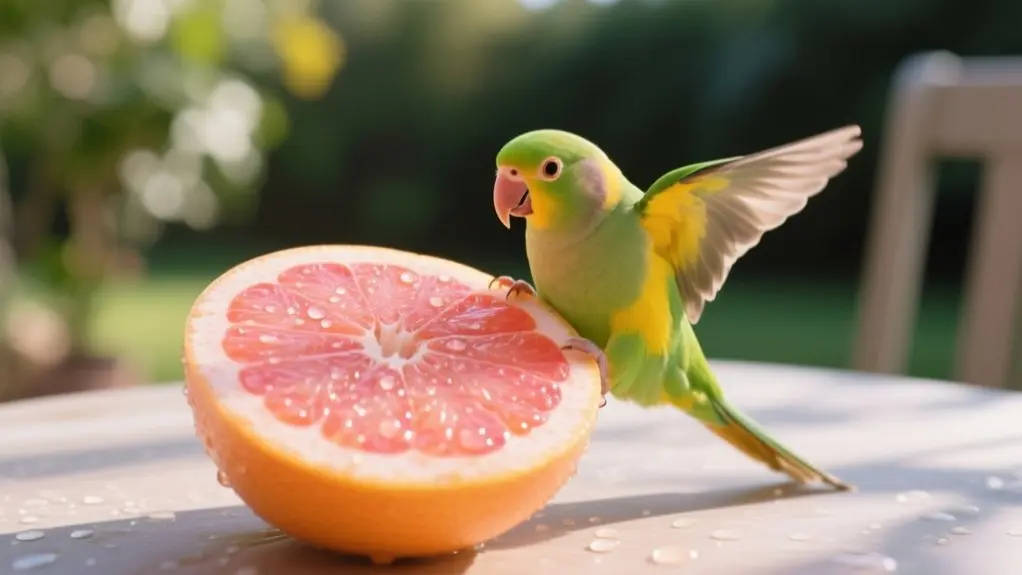
You can feed grapefruit to birds, but only in moderation since its high acidity and psoralen content might cause digestive issues in some species. Many birds enjoy the tangy taste, especially orioles, mockingbirds, and catbirds, but others may avoid it.
Grapefruit boosts their immune system with vitamin C and hydration, making it a great occasional treat. To keep your feathered friends healthy, it helps to understand which birds prefer it and how often to offer it.
Exploring these details will help you care for them better.
What Makes Grapefruit Unique for Birds
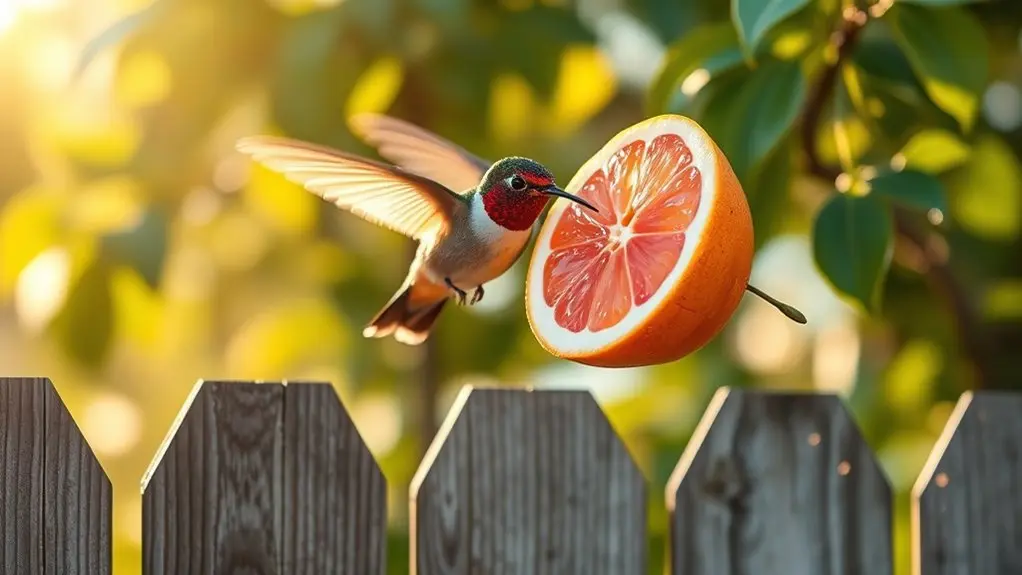
Although grapefruit might seem like an unusual choice, it offers birds a unique combination of nutrients and flavors that can boost their health. When birds eat fruit like grapefruit, they get a rich source of vitamin C and antioxidants, which support their immune systems and overall wellness.
The tangy flavor often attracts frugivorous birds, such as mockingbirds and orioles, providing them with a juicy, energizing treat. Grapefruit’s texture and high moisture content also help keep birds hydrated, especially during hot weather.
Plus, the natural sugars give birds a quick energy boost, essential during migration.
Can Birds Safely Eat Grapefruit?
Birds enjoy the nutrients and flavors grapefruit offers, but you should serve it carefully to keep them safe.
So, can birds safely eat grapefruit? Yes, but there are important guidelines to follow.
Offer grapefruit in moderation since its acidity and bitterness, plus high sugar content, can cause digestive issues if overconsumed.
Slice the fruit into manageable pieces to prevent choking hazards and make it easier for birds like orioles and tanagers to enjoy.
Remove uneaten grapefruit after a few days to avoid spoilage and mold, which can be harmful to birds.
How Grapefruit’s Acidity Affects Birds’ Digestion
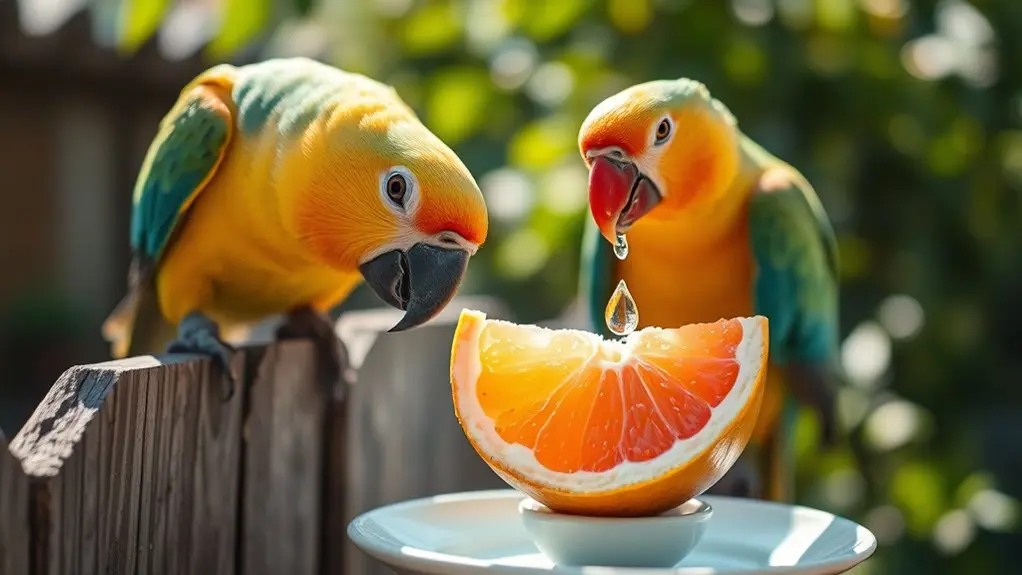
Because grapefruit is highly acidic, with a pH between 3 and 4, it can be tough on a bird’s digestive system and may cause discomfort or upset.
You should know that the acidity in grapefruit can interfere with birds’ digestion by affecting nutrient absorption, which might lead to deficiencies if they eat too much.
The high acidity also disrupts the balance of beneficial gut bacteria, essential for healthy digestion in birds.
Many birds avoid grapefruit naturally because they prefer sweeter, less acidic fruits that are easier to digest.
If you offer grapefruit to birds, do so in moderation and pair it with bird-friendly fruits to minimize digestive issues.
Understanding grapefruit’s acidity helps you guarantee birds stay healthy without risking digestive upset.
Which Birds Are Most Likely to Eat Grapefruit?
If you want to attract fruit-loving birds to your yard, offering grapefruit can be a smart choice. Its juicy texture and high sugar content make it irresistible to several species.
Here are the top birds to nibble on grapefruit:
- Mockingbirds and Catbirds: They enjoy the tangy flavor and often visit feeders with grapefruit halves.
- Orioles: Known for their love of fruit, orioles are drawn to grapefruit’s sweet and sour taste.
- Migratory Birds: During migration, many omnivorous birds seek energy-rich foods like grapefruit to fuel their journeys.
Grapefruit’s Nutritional Benefits for Birds
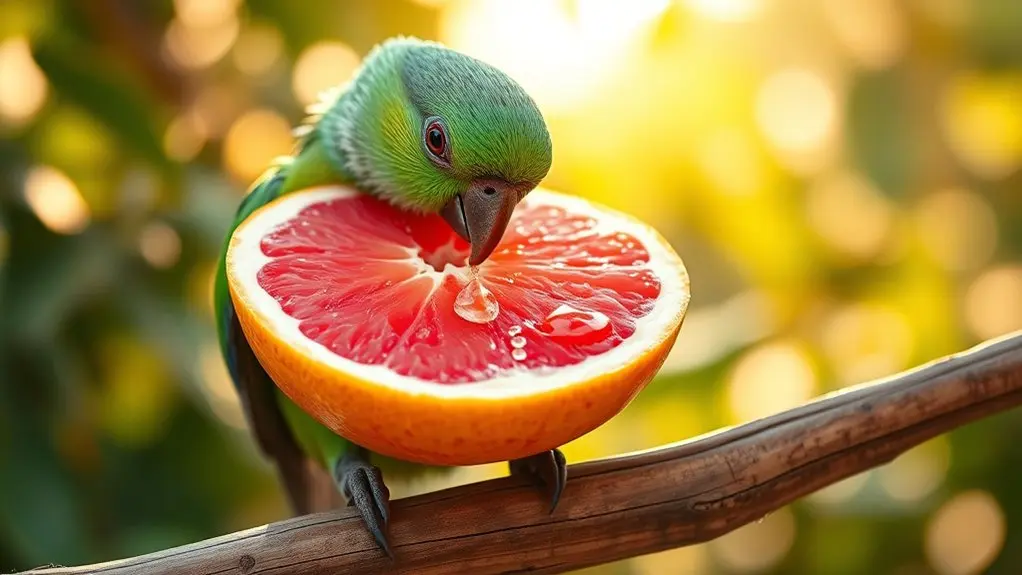
You’ll find grapefruit is packed with vitamin C, which is great for boosting birds’ immune systems and helping with tissue repair.
And that’s not all—its antioxidants work to reduce oxidative stress, which keeps birds healthier overall.
Plus, because grapefruit has a high water content, it’s perfect for keeping birds hydrated, especially on hot days or after a long flight.
Vitamin Content Overview
While grapefruit might seem like just another fruit, it offers several nutritional benefits that can support your bird’s health. Understanding the vitamin content overview can help you decide if this fruit fits into your bird’s diet.
Grapefruit packs essential nutrients that promote overall well-being.
Here are three key benefits:
- Vitamin C: Grapefruit is rich in vitamin C, which boosts your bird’s immune system and helps fight infections.
- Potassium: This mineral supports proper muscle function and heart health.
- Dietary Fiber: Grapefruit aids digestion and promotes a healthy gut.
Including grapefruit in moderation adds valuable nutrients without excess calories, making it a smart, healthy snack for your feathered friend.
Antioxidant Properties Benefits
Beyond vitamins and minerals, grapefruit offers powerful antioxidant properties that can greatly benefit your bird’s health. These antioxidants, especially vitamin C and flavonoids, help boost their immune system and reduce oxidative stress. This means your bird stays healthier and less prone to inflammation.
Plus, grapefruit’s fiber supports digestion, helping maintain a healthy weight. While the high water content aids hydration, we’ll cover that later. Feeding your bird grapefruit regularly can also enhance feather health, resulting in vibrant, shiny plumage.
| Benefit | How It Helps Your Bird |
|---|---|
| Vitamin C | Boosts immune system |
| Flavonoids | Reduces inflammation and oxidative stress |
| Fiber | Supports digestion and weight management |
| Antioxidant properties | Protect cells from damage |
| Feather health | Promotes vibrant, healthy plumage |
Hydration Support Role
Because grapefruit is about 90% water, it provides excellent hydration support for your bird, especially during hot weather or dry conditions.
When your bird eats grapefruit, it not only quenches thirst but also gives valuable nutrients.
Here’s why you should consider offering this juicy fruit:
- Hydration Support: The high water content helps keep your bird well-hydrated, preventing dehydration.
- Vitamin C Boost: Grapefruit’s vitamin C strengthens your bird’s immune system, promoting overall health.
- Low-Calorie Snack: It offers energy without excess sugars, making it a healthy treat.
Risks and Side Effects of Feeding Grapefruit to Birds
If you decide to feed grapefruit to your birds, you should be aware that the fruit contains compounds like psoralen, which can cause harmful reactions in some species. The risks include digestive upset due to the fruit’s high acidity and potential choking hazards from the tough peel.
Side effects may range from mild discomfort to more serious health issues, especially if given in large amounts.
| Risk Type | Cause | Potential Side Effect |
|---|---|---|
| Chemical Toxicity | Psoralen in grapefruit | Adverse reactions |
| Digestive Issues | High acidity | Discomfort, distress |
| Physical Hazard | Tough grapefruit peel | Choking, ingestion problems |
Feed grapefruit cautiously and watch for any negative signs in your birds.
How to Prepare Grapefruit for Bird Feeding
When you prepare grapefruit for bird feeding, start by eating the fruit and thoroughly draining any leftover juice to prevent spoilage.
Begin by enjoying the grapefruit and fully draining leftover juice to keep your feeder fresh and spoil-free.
Next, transform the hollowed rind into a practical bird feeder by following these simple steps:
- Poke three evenly spaced holes about half an inch from the top edge using a sharp tool.
- Thread three 18-inch yarn pieces through the holes and tie them securely, creating a hanger.
- Fill the rind with birdseed, and you can add suet to attract more bird species.
Finally, hang your bird feeder firmly to avoid tipping or squirrel interference. This easy preparation helps keep your feeder fresh and inviting for your backyard birds.
Best Ways to Offer Grapefruit to Backyard Birds
If you want to offer grapefruit to your backyard birds, start by cutting it in half. You can place the halves on a platform feeder, or if you prefer, hang them with some yarn so the birds can easily get to them.
Just make sure you always use fresh fruit.
And don’t forget to remove any leftovers after a few days—this keeps the feeding area safe and clean for the birds.
Doing this not only attracts birds that love sweet treats but also helps protect them from eating spoiled fruit.
It’s a simple way to make your backyard a bird-friendly spot!
Grapefruit Feeder Setup
Although setting up a grapefruit feeder might seem simple, doing it right guarantees your backyard birds will enjoy the treat and keep coming back.
Start with a half grapefruit rind; poke three evenly spaced holes near the top and thread yarn through to create a hanging loop.
Then, fill the rind with birdseed or suet to attract orioles, tanagers, and other fruit-loving birds.
Finally, hang your grapefruit feeder securely outdoors to keep it stable and accessible.
Here’s how to get started:
- Prepare the grapefruit rind with holes and yarn for hanging.
- Add birdseed or suet inside the rind to lure birds.
- Securely hang the feeder to prevent squirrels from knocking it down.
Patience pays off, as birds may take up to two weeks to find your feeder.
Feeding Safety Tips
Since grapefruit offers a juicy and nutritious treat, you’ll want to serve it safely to protect your feathered visitors. When feeding birds fruit, cut the grapefruit into halves or quarters for easy access and to prevent choking.
Always check for freshness to avoid mold or spoilage, which can harm birds. Place the fruit in platform feeders or hang it away from your home to keep unwanted animals at bay.
Offer grapefruit in moderation to avoid digestive upset, and mix it with other fruits like oranges or berries to attract a variety of birds.
| Tip | Why It Matters | How to Do It |
|---|---|---|
| Proper Cutting | Prevents choking | Halves or quarters |
| Monitor Freshness | Avoids harmful spoilage | Check for mold or softness |
| Strategic Placement | Keeps unwanted animals away | Use platform or hang securely |
How to Tell If Birds Like Grapefruit
How can you tell if birds enjoy grapefruit in your yard? When you feed birds fruit like grapefruit, watch their behavior closely.
Here are three signs to look for:
- Quick Visits: If birds start approaching grapefruit halves or slices on your feeder within a few days, they’re interested in the juicy treat.
- Repeated Eating: Birds like bluebirds, orioles, and mockingbirds often return frequently to feed on the fruit’s sweet, hydrating flesh.
- Vocal Alerts: Listen for bird calls near your feeder. Birds often communicate to signal a tasty food source, encouraging others to join.
How Often Should You Feed Grapefruit to Birds?
You should offer grapefruit to birds just once or twice a week to keep their diet balanced.
It’s a good idea to watch how they react, too, since some birds mightn’t like the fruit’s acidity.
Also, think about giving them more grapefruit during seasons when fresh fruit is harder to find—this way, they get some extra nutrients.
Feeding Frequency Guidelines
Although grapefruit offers unique nutrients, you should feed it to birds only occasionally due to its high acidity. When feeding birds grapefruit, moderation is key to avoid upsetting their digestive systems.
Here are some feeding frequency guidelines to keep in mind:
- Offer grapefruit once or twice a week as a special treat, not a daily staple.
- Combine grapefruit with other fruits to provide a balanced diet and attract various bird species.
- Check feeders regularly and remove uneaten grapefruit within a couple of days to prevent mold and spoilage.
Seasonal Feeding Considerations
When feeding birds grapefruit, consider offering it seasonally, especially during late winter and early spring when birds need extra energy for migration and breeding.
You should limit grapefruit feedings to once or twice a week to prevent digestive issues some birds may experience with too much citrus.
During fall’s peak migration, grapefruit can attract a variety of fruit-eating birds seeking energy-rich food.
Always check the grapefruit’s freshness and remove any leftovers within a few days to avoid spoilage and mold.
Adjust how often you offer grapefruit based on your local bird population and the season, ensuring you provide a balanced diet that supports their nutritional needs throughout the year without over-relying on citrus.
Monitoring Bird Response
Since birds often take time to discover new food sources like grapefruit, you’ll need patience as they communicate and start visiting your feeding station.
Monitoring bird visits helps you understand how often to offer grapefruit without overwhelming them.
Here’s how to manage feeding frequency effectively:
- Offer grapefruit once or twice a week to avoid excess fruit spoiling and attracting pests.
- Track bird visits closely; if visits increase, it shows they enjoy grapefruit and you might adjust feeding accordingly.
- Remove any uneaten grapefruit within a few days to keep the area clean and inviting.
How to Combine Grapefruit With Other Bird-Friendly Fruits
To attract a wider variety of birds, try combining grapefruit with sweeter fruits like oranges or apples. Many species prefer these for a quick energy boost. Birds such as orioles and tanagers especially love the high sugar content in these fruit crops, making them perfect companions to grapefruit.
You can also mix in berries like blueberries or raspberries, which offer essential nutrients to frugivorous birds that thrive on diverse diets. Adding dried fruits such as raisins provides concentrated sugars and hydration, ideal during migration.
Present grapefruit alongside these bird-friendly fruits in a fruit feeder to increase visibility and encourage birds to explore different food sources. This combination not only enhances the appeal but also supports a balanced diet for your backyard visitors.
Alternatives to Grapefruit for Fruit-Loving Birds
Offering a mix of fruits alongside grapefruit can attract more birds, but you might want to explore other options that some birds prefer even more.
Here are three great alternatives to weigh for your feathered friends:
1. Oranges
Orioles and tanagers love these sweet fruits, thanks to their high sugar content.
2. Apples
Slice them up to attract cardinals and blue jays, making apples a versatile choice for many birds.
3. Berries
Blueberries and raspberries are nutrient-rich and easy for small birds to eat, perfect for a diverse fruit offering.
Frequently Asked Questions
Can Grapefruit Seeds Be Harmful to Birds?
Yes, grapefruit seeds can be harmful to birds due to seed toxicity. You should avoid giving birds grapefruit seeds because they contain cyanogenic compounds that might cause digestive issues or toxicity if consumed in large amounts.
While some birds handle small quantities fine, it’s safest to remove the seeds before offering grapefruit.
Always watch your bird’s reaction when introducing new foods to keep them healthy and prevent any problems.
Do Birds Prefer Grapefruit Over Other Citrus Fruits?
You know what they say, “You can’t judge a book by its cover.”
When it comes to citrus preferences, birds don’t prefer grapefruit over other citrus fruits.
You’ll find they lean toward sweeter options like oranges because grapefruit’s bitterness and compounds can be off-putting.
If you want to attract more birds, offering a variety of sweeter citrus fruits will satisfy their taste buds and keep them coming back.
Does Grapefruit Affect Bird Feathers or Plumage?
Yes, grapefruit can affect your bird’s feather health if given excessively. Its high acidity and compounds like furanocoumarins might disrupt nutrient absorption, leading to dull or brittle feathers.
While small amounts of grapefruit won’t usually harm plumage, overfeeding could cause nutritional imbalances that impact feather growth and condition.
You should monitor your bird’s response closely and offer grapefruit sparingly to help maintain ideal feather health.
Can Grapefruit Juice Be Given to Birds?
You can give grapefruit juice to birds, but you should always dilute the juice by mixing it with water at least 50/50 to reduce acidity and sugar levels.
About 30% of birds may experience digestive upset from undiluted citrus juice, so diluting helps prevent that.
Keep servings small and watch for any adverse reactions.
Are There Seasonal Considerations for Feeding Grapefruit to Birds?
Yes, you should consider seasonal availability when feeding grapefruit to birds. They’re more attracted to grapefruit in spring and summer because the fruit’s high sugar content boosts their energy during migration.
In winter, offering grapefruit can help birds when natural fruit is scarce.
Conclusion
So, can birds safely enjoy grapefruit? Absolutely, but with a little caution. Its tangy zest offers a burst of nutrients but can be a sour surprise if overdone.
Think of it as a flavorful adventure for your feathered friends. Just don’t let acidity steal the show. By mixing grapefruit wisely with other fruits, you keep their diet balanced and exciting.
Ready to treat your birds to a citrus delight? Just remember, moderation is the sweetest key!