
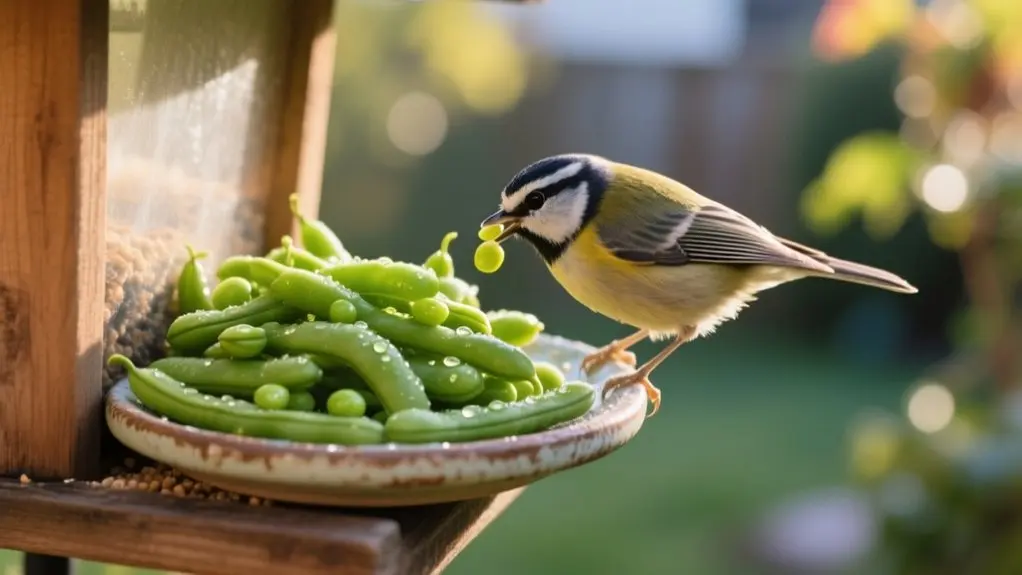
You can safely feed your bird green beans daily, but make sure to wash them thoroughly to remove any pesticides. Both raw and cooked green beans are fine, though lightly cooking helps reduce toxins and aids digestion.
Cut them into small pieces and start with small portions to see how your bird reacts. Avoid stringy parts and added salt or spices.
If you want to learn how to introduce green beans properly and keep your bird healthy, there’s more helpful info ahead.
Are Green Beans Safe for Birds to Eat?
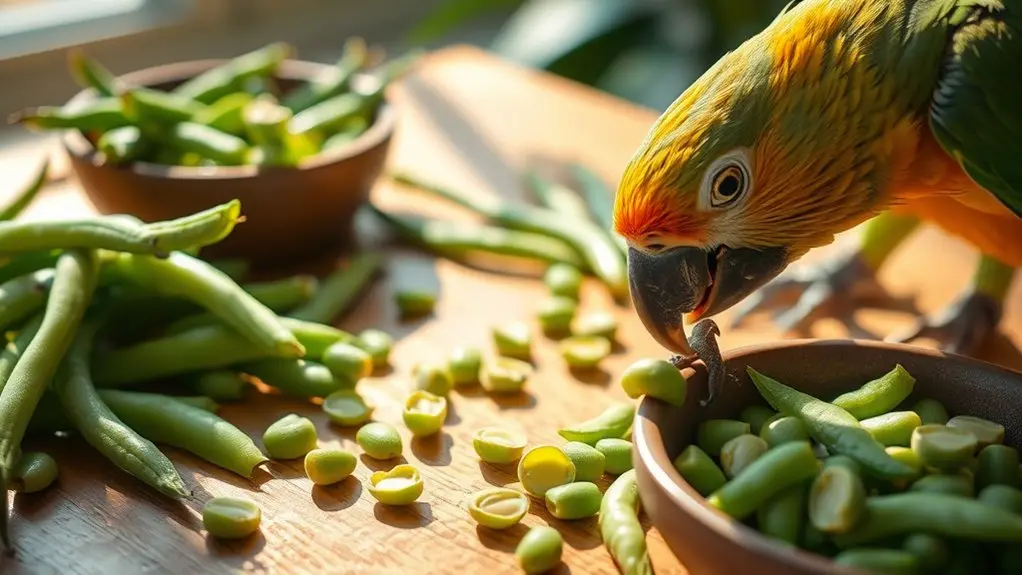
Wondering if green beans are safe for your bird? The good news is that green beans are safe for birds to eat and can be offered every single day as part of a balanced diet.
Before serving, make certain you thoroughly wash green beans to remove any pesticide residues that could harm your feathered friend.
Always wash green beans thoroughly to eliminate pesticide residues that might be harmful to your bird.
While birds generally enjoy both raw and cooked green beans, raw ones retain the most nutritional value.
Introduce green beans gradually to observe how your bird responds and verify they accept this new food.
Avoid stringy varieties and always remove tough stems or parts to prevent choking or digestive issues.
Should You Feed Birds Cooked or Raw Green Beans?
You might be wondering whether to feed your bird cooked or raw green beans and how their nutritional value stacks up. Both options are safe, but cooking green beans makes them easier to digest.
On the other hand, raw beans provide a nice crunchy texture along with fresh nutrients.
Raw Versus Cooked
Although birds can eat both raw and cooked green beans safely, cooking them often makes the beans easier to digest and boosts nutrient absorption.
You’ll find raw green bean benefits include retaining vitamins and minerals, but you must wash them thoroughly to remove pesticides.
Cooked green bean drawbacks mainly involve slight nutrient loss and potential texture changes that some birds might dislike.
Understanding bird digestion differences helps you decide which form suits your pet best. Always chop green beans into small pieces to avoid choking hazards.
- Raw green beans offer a crunchy texture and maximum nutrients
- Cooking reduces natural toxins like lectins for safer consumption
- Some birds prefer cooked beans due to softness and easier digestion
Nutritional Differences
Since raw green beans contain lectins that can harm birds in large amounts, cooking them usually makes a safer and more nutritious choice. Cooking breaks down lectins, making green beans easier to digest and allowing your bird to absorb nutrients better.
Steaming or lightly boiling preserves more vitamins compared to boiling, which can leach nutrients. Here’s a quick nutritional comparison to help you decide the best cooking methods and serving suggestions:
| Aspect | Raw Green Beans | Steamed/Lightly Boiled | Boiled |
|---|---|---|---|
| Lectin Content | High | Low | Low |
| Vitamin Retention | High | High | Medium |
| Digestibility | Lower | Higher | Moderate |
| Safety | Risk of toxicity | Safer | Safer |
| Serving Tip | Small pieces only | Cut and cooled | Cut and cooled |
Cook green beans and cut into manageable pieces for safe feeding.
How to Prepare Green Beans Safely for Your Bird
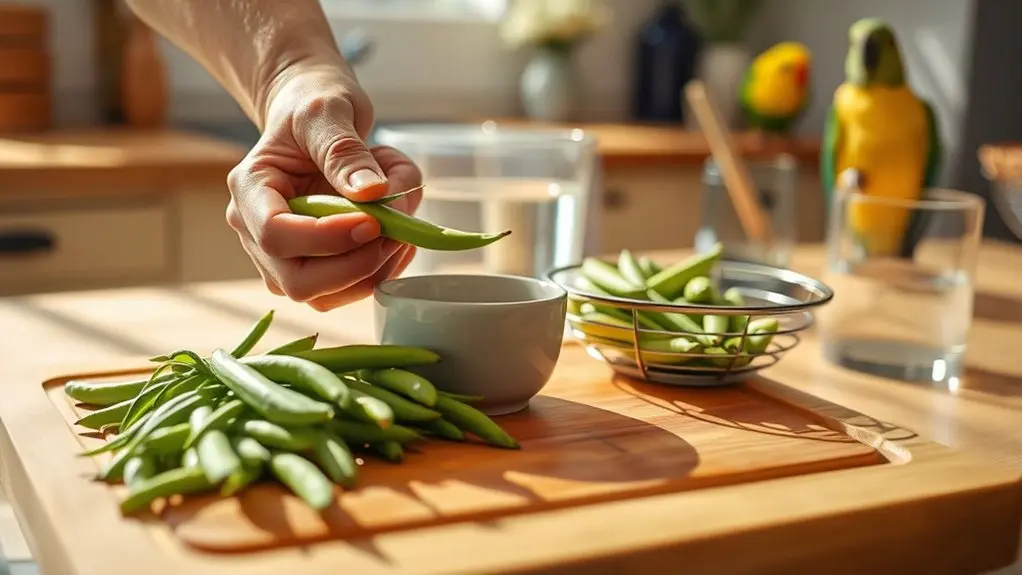
When preparing green beans for your bird, start by washing them thoroughly to remove any pesticides or contaminants. Choosing the right green bean varieties matters; fresh, crisp beans work best.
Begin by washing green beans thoroughly and selecting fresh, crisp varieties for your bird’s health.
Use gentle cooking methods like steaming or boiling to soften the beans, making them easier for your bird to digest without adding any harmful seasonings. After cooking, cut the beans into small, manageable pieces to prevent choking, especially for smaller birds.
Here are some essential tips to keep in mind:
- Avoid salt or spices, as they can harm your bird’s digestive system.
- Introduce green beans gradually to monitor your bird’s reaction.
- Serve green beans plain and fresh to maximize nutritional benefits.
Following these steps guarantees your bird enjoys green beans safely and healthily.
How Much Green Bean Can Your Bird Eat Daily?
After preparing green beans safely, you might wonder how much to offer your bird each day. Start with small portions to gauge your bird’s preferences and avoid overwhelming its digestive system.
Portion control tips suggest offering just a few pieces per meal, gradually increasing if your bird responds well. Incorporate green beans as part of a varied vegetable diet to guarantee balanced nutrition.
Pay attention to meal frequency by including green beans in one or two daily servings rather than large amounts at once. Always monitor your bird’s health and behavior for any adverse reactions.
Remember, fresh or cooked green beans are best. Avoid canned versions.
Adjust portions based on your bird’s size, appetite, and individual preferences to keep meals enjoyable and safe.
How to Tell If Your Bird Likes Green Beans
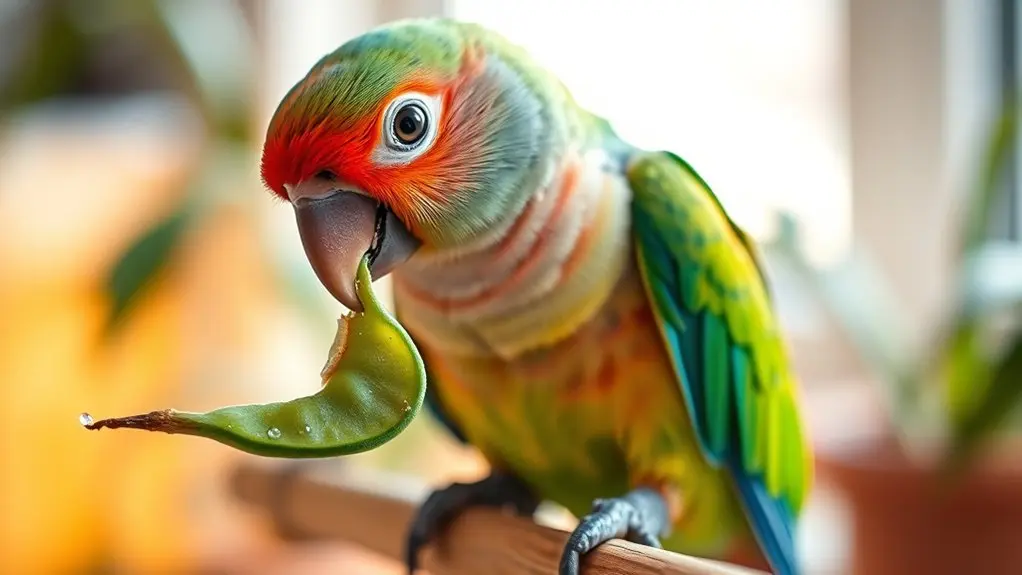
How can you tell if your bird truly enjoys green beans? Watch its feeding habits closely. If your bird shows curiosity or pecks at green beans, that’s a clear sign of interest. Offering green beans alongside a vegetable variety helps reveal its bird preferences.
Look for these signs:
- Consistent consumption of green beans over time
- Excited vocalizations or wing flapping when green beans appear
- Willingness to try green beans mixed with other veggies
Keep in mind that some birds need patience; they may take weeks to accept new foods like green beans.
Nutritional Benefits of Green Beans for Birds
You’ll find that green beans are a great low-calorie snack packed with essential vitamins and minerals like A, C, and potassium.
Plus, they’re high in fiber and antioxidants, which help with digestion and keep your bird healthy by protecting against disease.
Vitamins And Minerals
Because green beans pack a variety of essential vitamins and minerals, they offer significant nutritional benefits for your bird. These nutrients work together to enhance vitamin absorption and mineral synergy, supporting your bird’s overall health.
Green beans provide vitamins A, C, and K, which boost immune function, vision, and blood clotting. The minerals manganese and folate promote strong bones and efficient cell function.
Plus, the fiber content supports digestive health by maintaining a healthy gut.
- Vitamins A, C, and K support immunity and vision
- Manganese and folate encourage bone development and cell repair
- Fiber aids digestion, promoting gut health
Including green beans in your bird’s diet helps guarantee balanced nutrient intake and ideal well-being.
Low-Calorie Nutrient Source
Although green beans are low in calories, they pack a powerful nutritional punch that benefits your bird’s health. Their low-calorie content makes them perfect for healthy snacking, helping your feathered friend maintain a balanced weight without sacrificing nutrition.
Among the green bean benefits, you’ll find essential vitamins like A, C, and K, plus minerals such as manganese, which support metabolism and bone health. Including green beans in your bird’s meals introduces valuable bird diet variety, encouraging them to explore new flavors and textures.
Furthermore, green beans contain dietary fiber that promotes digestive health and helps your bird feel satisfied. Offering green beans regularly guarantees your bird enjoys a nutrient-rich, low-calorie treat that supports overall well-being and keeps snack time both tasty and healthy.
Antioxidants And Fiber
When you add green beans to your bird’s diet, you provide powerful antioxidants like flavonoids and carotenoids that help fight oxidative stress and boost overall health.
These antioxidant benefits protect your bird’s cells and support a strong immune system.
Plus, green beans serve as excellent fiber sources, promoting healthy digestion and preventing constipation.
Their fiber content offers essential digestion support, keeping your bird’s digestive tract functioning smoothly.
Here’s why green beans are great for your feathered friend:
- Rich in antioxidants that combat oxidative damage
- High in dietary fiber for digestive health
- Provide essential vitamins and minerals supporting overall metabolism
Including green beans regularly guarantees your bird enjoys both nutritional and digestive advantages.
Health Concerns to Watch for When Feeding Green Beans
If you plan to feed green beans to your birds, you’ll need to take some important precautions to keep them safe and healthy. Be aware of potential health risks, especially since some birds show sensitivities to new foods like green beans.
Always follow feeding guidelines by washing beans thoroughly to remove pesticides, and avoid giving them raw due to harmful lectins. Instead, cook green beans slightly to neutralize these toxins.
Wash green beans thoroughly and cook them lightly to eliminate harmful toxins before feeding to your birds.
Feed green beans in moderation to prevent digestive upset, and closely monitor your bird for any adverse reactions after introducing this vegetable.
It’s also wise to consult an avian veterinarian to guarantee green beans fit your bird’s specific dietary needs, balancing nutrition while minimizing risks.
Vegetables to Avoid Feeding Your Bird Alongside Green Beans
Keeping your bird safe means not only knowing which vegetables to offer but also recognizing those to avoid alongside green beans. Some veggies pose choking hazards, cause digestive issues, or have vegetable toxicity that can harm your feathered friend.
Avoid stringy vegetables like snap peas and celery since they’re tough to digest and can lead to choking hazards. Limit cabbage and spinach because their high oxalate content may cause health problems if fed too often.
Never feed tomatoes, especially stems and green parts, due to their toxicity. Also, stay away from mushrooms, onions, garlic, chives, leeks, and shallots to prevent poisoning.
Here are three vegetables to avoid:
- Stringy snap peas and celery (choking hazards)
- Tomatoes’ green parts (vegetable toxicity)
- Excessive cabbage and spinach (digestive issues)
How to Introduce Green Beans Gradually to Picky Birds
Although introducing new foods to picky birds can be challenging, you can increase their willingness to try green beans by starting with small, cooked, and chopped pieces.
Gradual exposure is key. Offer green beans multiple times a week to spark curiosity without overwhelming your picky eaters.
Mix these pieces with familiar vegetables to encourage acceptance through positive reinforcement, associating green beans with foods they already enjoy.
Serve them at room temperature, as birds often prefer this to hot or cold food.
Watch your bird’s reaction carefully and adjust how often or in what form you offer green beans based on their preferences.
This patient, step-by-step approach helps your bird feel comfortable exploring new flavors, making green beans a tasty addition to their diet over time.
Alternatives to Green Beans for Bird Diet Variety
Adding variety to your bird’s diet can make mealtime more enjoyable and nutritious. If you want alternatives to green beans, consider these healthy choices that offer different nutrients and flavors.
Broccoli benefits include vitamins C and K, making it a safe, daily option to boost your bird’s immune system.
Carrot options bring beta-carotene, supporting eye health and immunity; offer them in small, manageable pieces.
Blueberry variety adds antioxidants and flavor but should be given in moderation to avoid over-sweetness.
Avoid stringy veggies like celery, as they can be tough to digest.
Introducing new foods gradually helps you see what your bird prefers while ensuring a balanced diet. Mixing these alternatives keeps meals exciting and healthy for your feathered friend.
How to Store and Handle Green Beans for Birds
Before you offer green beans to your birds, be sure to give them a good wash to get rid of any pesticides or dirt.
It’s important to keep things clean for your feathered friends.
Once they’re clean, store the beans in the fridge.
Using a breathable container is the way to go—it helps keep the beans fresh for up to a week.
When it’s time to serve, cut the green beans into small pieces.
This makes it easier and safer for your birds to eat, keeping them comfortable while they enjoy their snack.
Proper Washing Techniques
When you prepare green beans for your birds, make sure to wash them thoroughly under running water to remove any pesticides, dirt, or contaminants.
Comparing washing techniques, rinsing under running water is more effective than soaking, ensuring bird feeding safety.
Choosing fresh green beans through careful green bean sourcing reduces the risk of chemical residues. After washing, trim the tough ends to make beans easier for birds to eat.
Remember, canned green beans often contain harmful preservatives and sodium, so avoid using them.
- Rinse green beans under running water for at least 20 seconds
- Select fresh, organic green beans whenever possible
- Cut off tough ends before feeding to your birds
These steps help maintain bird feeding safety and promote healthy digestion.
Optimal Storage Conditions
After thoroughly washing and trimming your green beans, storing them properly helps maintain their freshness and nutritional value for your birds.
Keep green beans in the refrigerator to guarantee ideal temperature control, which slows spoilage.
Use perforated plastic bags or containers that allow airflow to regulate humidity levels without trapping moisture, which can cause mold.
Avoid airtight containers, as they increase moisture buildup and lead to faster decay.
Handle green beans gently to prevent bruising, which accelerates spoilage.
If you want to store green beans longer, blanch them briefly in boiling water before freezing. This process preserves their nutrients and color while extending shelf life.
Following these storage tips guarantees your birds get fresh, safe green beans every time.
Safe Serving Practices
Although green beans are a healthy treat for your birds, you need to wash them thoroughly to remove pesticides and contaminants before serving. Handling green bean varieties properly guarantees you support your bird’s feeding habits safely.
Whether you pick fresh seasonal vegetable choices or store beans, proper care is key.
Keep these tips in mind:
Store fresh green beans in the fridge using breathable bags to keep them crisp.
Cut green beans into small, manageable pieces to prevent choking and aid easy eating.
Serve them raw or lightly steamed to preserve nutrients, and discard uneaten portions after a few hours.
Adding Green Beans to a Balanced Bird Diet
Since green beans offer essential vitamins and minerals without many calories, you can confidently include them in your bird’s diet. To optimize feeding, always wash green beans thoroughly and introduce them gradually.
Emphasizing the importance of vegetable variety guarantees your bird gets balanced nutrition from different sources. Proper green bean preparation, like chopping into manageable pieces, helps your bird enjoy them safely and easily.
| Aspect | Tip |
|---|---|
| Preparation | Wash and chop into small pieces |
| Feeding Frequency | Daily, as part of varied diet |
| Vegetable Variety | Combine with fruits and veggies |
| Monitoring | Watch for digestive responses |
This approach supports a healthy, balanced diet for your feathered friend.
Frequently Asked Questions
Can Green Beans Cause Allergies in Birds?
Yes, green bean allergies can occur in birds, though they’re rare. You should watch for bird food sensitivities like digestive upset or feather plucking when introducing green beans.
To keep your feathered friend healthy, introduce green beans gradually and observe any reactions. If you notice symptoms, stop feeding them immediately and consult an avian vet.
Always offer a variety of safe vegetable options to minimize allergy risks and keep your bird’s diet balanced.
Are Canned Green Beans Safe for Birds?
Imagine opening a can filled with shiny, soft green beans, but don’t serve those to your bird. Canned green beans aren’t safe because preservatives and high sodium wipe out the nutrition benefits.
Instead, focus on fresh green beans. Wash and steam them gently as better preparation methods.
Serve small, plain portions to see how your bird reacts. This way, you offer a healthy treat without risking their wellbeing.
Can Baby Birds Eat Green Beans?
Yes, baby birds can eat green beans if you focus on proper green bean preparation. Cook and cut them into small pieces to avoid choking.
For baby bird nutrition, introduce green beans gradually and watch for any digestive issues. Always wash them thoroughly to remove pesticides.
How Do Green Beans Affect Bird Digestion?
Imagine your bird munching on crisp green beans, their fiber content gently sweeping through its digestive system like a rejuvenating breeze.
Green beans benefit bird digestion health by promoting smooth bowel movements and preventing constipation.
Their fiber acts like a natural cleanser, aiding nutrient absorption and boosting overall gut wellness.
When you feed cooked green beans in moderation, you’re supporting your feathered friend’s digestion and health with every tasty bite.
Can Green Beans Help With Bird Feather Health?
Yes, green beans can definitely help with bird feather health. Their feather nutrition is rich in vitamins A, C, and K, which are essential for maintaining vibrant feathers.
The green bean benefits also include antioxidants and hydration that support avian health, especially during molting.
By adding green beans to your bird’s diet, you’re promoting strong, shiny feathers and overall well-being.
Don’t forget to offer them alongside a balanced diet for best results.
Conclusion
Picture your bird nibbling on fresh, crisp green beans, their vibrant crunch adding a splash of color to mealtime. You can safely share these nutritious veggies by offering them raw or lightly cooked, prepared just right.
Introducing green beans gradually lets your feathered friend explore new flavors without fuss. With careful portioning and proper storage, green beans can brighten your bird’s diet, making every bite a healthy, happy moment you both enjoy together.