
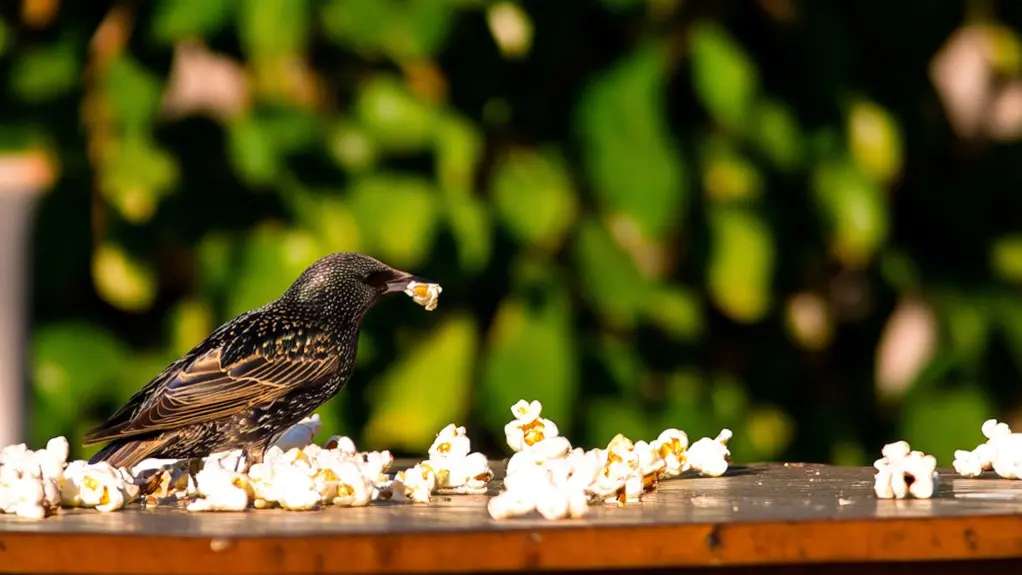
You can safely offer your bird small amounts of plain, air-popped popcorn as an occasional treat. Just be sure to avoid salted, buttered, or flavored varieties since they can harm your bird’s health. Stick to 1-2 pieces daily to prevent digestive issues and obesity.
Keep an eye out for signs like lethargy or breathing difficulties, which might mean a trip to the vet is needed. Popcorn also encourages natural foraging behavior, which is great for keeping your bird engaged.
If you want to learn more, discover safe feeding practices and alternatives that help keep your bird healthy and happy.
Can Birds Safely Eat Popcorn?
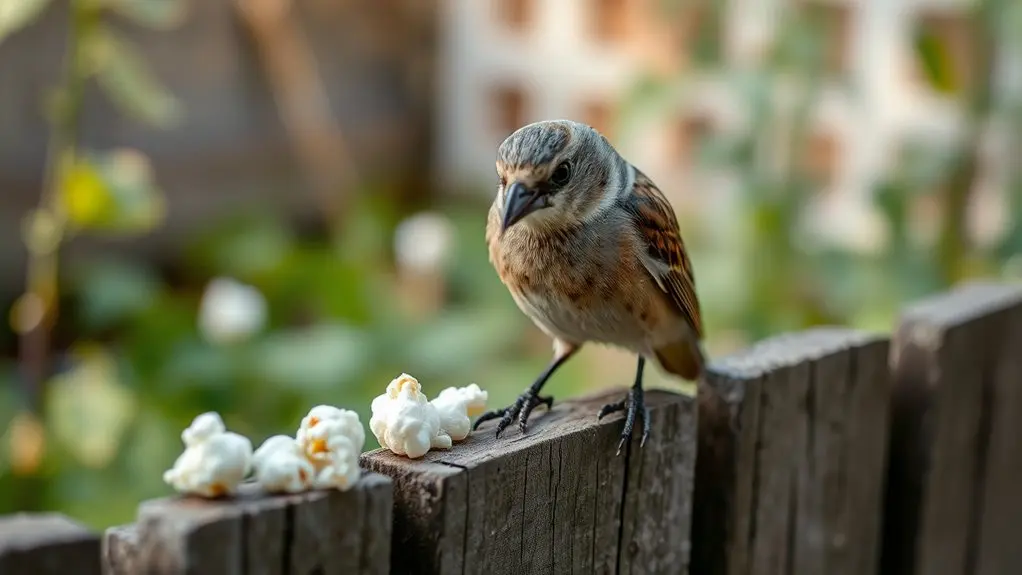
Although popcorn isn’t nutritionally beneficial, you can safely offer plain, air-popped popcorn to birds like cockatiels in small amounts as an occasional treat. It’s essential to ensure the popcorn is free from salt, butter, or any toppings, as additives can be harmful to birds.
While popcorn lacks essential nutrients, it can serve as a stimulating foraging activity, promoting mental engagement. However, overfeeding or providing stale popcorn may pose health risks, including digestive issues.
Popcorn encourages mental stimulation but should be given sparingly to avoid digestive problems in birds.
To minimize such risks, limit the quantity to one or two pieces per day. By sticking to these guidelines, you can include popcorn safely in your bird’s diet without compromising their health.
Always keep an eye on your bird’s reaction to new treats and chat with a vet if you have any concerns.
How Much Popcorn Is Safe for Your Bird?
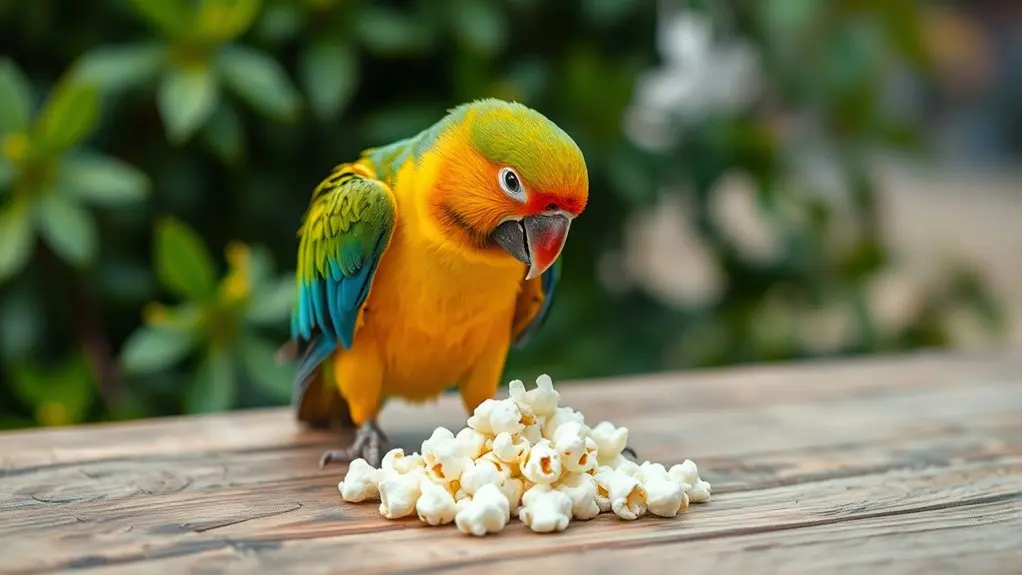
Knowing that plain, air-popped popcorn can be a safe occasional treat for your bird, it’s important to understand the right amount to offer. Limit popcorn treats to no more than 1-2 pieces per day to avoid health issues like obesity or digestive problems.
Overfeeding can mess with your bird’s balanced diet, so make sure to measure portions carefully to keep things nutritionally stable. Serving popcorn in moderation helps keep it a safe and enjoyable snack without any negative effects.
Also, always remove and toss any stale or leftover popcorn to prevent mold or bacterial growth, which could harm your bird’s health.
Why Plain, Air-Popped Popcorn Is Best
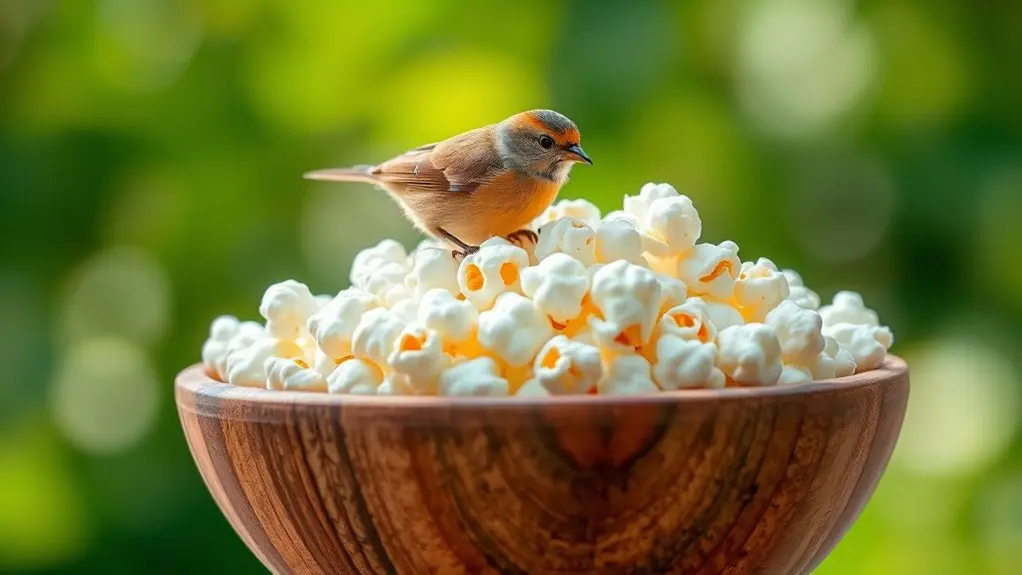
When you choose plain, air-popped popcorn for your bird, you eliminate exposure to additives like salt, butter, and preservatives that can harm their health. Air-popped popcorn contains no added oils or chemicals found in microwave varieties, which cuts down on potential health risks.
Choosing plain, air-popped popcorn avoids harmful additives like salt and butter, promoting your bird’s health.
This simple preparation keeps the treat low in calories and free from unhealthy fats, supporting your bird’s dietary needs.
Plus, air-popping lets you control portion sizes easily, so you don’t have to worry about overfeeding. You also get to make sure the popcorn is fresh, avoiding stale or spoiled leftovers that might upset your bird’s digestion.
Offering plain, air-popped popcorn means you’re giving a safer, more controlled treat that fits your bird’s nutritional needs and helps keep them healthy overall.
Why You Should Avoid Salted or Buttered Popcorn
Because birds can’t process high levels of sodium and fats, salted and buttered popcorn poses significant health risks. When you feed birds popcorn with added salt, you increase their risk of dehydration, kidney damage, and potentially fatal complications.
Similarly, butter and greasy toppings contain fats that birds struggle to metabolize, which can lead to digestive problems and obesity. Birds’ physiology lacks the mechanisms to handle excessive salt and fat, making these additives particularly harmful.
To protect their health, you should avoid offering popcorn seasoned with salt, butter, or other fatty substances. Instead, stick to plain, air-popped popcorn, which is safer and free of harmful additives.
Prioritizing their dietary needs helps maintain their well-being and prevents avoidable health issues.
Signs Your Bird May React Poorly to Popcorn
Although popcorn is generally safe in moderation, you should monitor your bird closely for signs of adverse reactions after feeding it. Watch for decreased activity or lethargy, which can indicate discomfort or illness.
Popcorn is safe in moderation, but watch your bird for signs of discomfort or illness after feeding.
Digestive upset, such as diarrhea or vomiting, may also signal that your bird isn’t tolerating popcorn well.
Allergic reactions might cause swelling around the face or difficulty breathing, both of which require immediate attention.
Additionally, changes in vocalization or increased irritability can be subtle indicators of distress.
Avoid overfeeding or giving stale popcorn, as these practices can lead to weight gain or nutritional deficiencies.
By observing these signs carefully, you can guarantee your bird’s health remains uncompromised when introducing popcorn into its diet.
Just keep a close eye and your feathered friend should be just fine.
How Popcorn Encourages Natural Foraging Behavior
If you want to promote your bird’s natural foraging instincts, offering popcorn can be an effective method. Popcorn’s irregular shape and crunchy texture mimic the diverse seeds and nuts birds encounter in the wild, encouraging cockatiels to search, peck, and manipulate each piece. This activity stimulates their mental engagement, replicating natural foraging behaviors essential for cognitive health.
By incorporating properly prepared, plain popcorn into feeding routines, you create opportunities for your bird to exhibit innate searching behaviors. This helps reduce boredom and prevents destructive tendencies.
Just make sure the popcorn is free of salt, butter, or other additives to keep it safe while supporting these positive behaviors.
Alternatives to Popcorn for Bird Treats
Popcorn offers valuable enrichment by encouraging natural foraging, but it’s not the only option for providing engaging and nutritious treats to your bird.
Vegetables such as carrots, cucumbers, and leafy greens supply essential nutrients and variety. Fruits like apple slices, melons, and berries are safe and enjoyable when given in moderation.
Fresh vegetables and fruits provide essential nutrients and enjoyable variety for your bird’s diet when offered in moderation.
You can also offer cooked grains, like brown rice, quinoa, or oats. These provide carbohydrates and stimulate foraging interest.
Commercial bird treats and foraging toys filled with nuts, seeds, or dried fruits further enhance natural behaviors.
Additionally, whole grain breads and cooked pasta serve as safe, carbohydrate-rich alternatives to popcorn.
Incorporating these options guarantees a balanced diet while maintaining your bird’s mental and physical engagement.
It’s all about mixing things up to keep your feathered friend happy and healthy!
Tips for Offering Popcorn as a Healthy Snack
When offering popcorn as a treat, you should always select air-popped varieties free from salt, butter, and any toppings to guarantee your bird’s safety. Serve only 1-2 pieces daily to avoid overfeeding. Use popcorn to stimulate natural foraging behavior, offering fresh kernels each time.
Avoid stale popcorn as it may cause health issues. Treat popcorn as an occasional snack, not a staple.
| Guideline | Reason | Frequency |
|---|---|---|
| Air-popped, plain | Prevents toxins and additives | Every treat |
| Small quantity (1-2) | Avoids overfeeding | Daily maximum |
| Fresh popcorn | Ensures safety and nutrition | Each serving |
| Use as enrichment | Encourages natural behaviors | Occasionally |
What to Do if Your Bird Has Trouble With Popcorn
If your bird starts choking or seems uncomfortable after eating popcorn, take a moment to carefully check its throat for any stuck pieces.
If you find any popcorn blocking the way, gently remove it right away.
You can also offer some water or soft foods to help your bird swallow more easily.
Keep an eye on your feathered friend for signs like gagging or trouble breathing.
If these problems don’t go away, it’s a good idea to reach out to a veterinarian for help.
Identifying Popcorn Reactions
Although many birds enjoy popcorn without issue, you should stay alert for signs of distress like gagging, choking, or trouble breathing. If you notice any of these symptoms, remove the popcorn right away.
If choking, drooling, or unusual behavior persists, it’s important to contact an avian veterinarian quickly. To keep things safe, cut the popcorn into small, manageable pieces and watch your bird closely after feeding.
| Symptom | Action |
|---|---|
| Gagging | Remove popcorn immediately |
| Difficulty Breathing | Contact avian veterinarian promptly |
| Drooling | Monitor closely and seek veterinary advice |
| Unusual Behavior | Observe and report to a professional |
Catching any adverse reactions early is key to your bird’s health and happiness.
Managing Adverse Symptoms
How should you respond when your bird struggles after eating popcorn? If you notice coughing, gagging, labored breathing, or lethargy, check its airway gently for obstruction. Remove any remaining popcorn immediately and place your bird in a calm, safe environment to minimize stress.
These symptoms may indicate airway blockage or distress, so you’ll need to act quickly. If signs persist or you suspect your bird ate stale or spoiled popcorn, contact an avian veterinarian without delay.
Always keep a close eye on your bird after giving popcorn or similar treats, especially if it has a history of choking or swallowing problems. Early intervention and professional guidance are key to managing adverse reactions and keeping your bird safe after popcorn consumption.
Frequently Asked Questions
Can Baby Birds Eat Popping Corn?
You shouldn’t feed baby birds popping corn because their digestion is sensitive. Plain, air-popped popcorn may cause choking or digestive issues.
Instead, provide age-appropriate, nutritionally balanced foods to support healthy growth and development. It’s best to stick with what’s safe and easy for them to eat. That way, you’ll help them grow strong and healthy.
Is Microwave Popcorn Safe for Birds?
No, microwave popcorn isn’t safe for birds. It contains additives, salt, and chemicals from the bag lining that can harm their health.
Instead, you should offer air-popped popcorn without any seasoning as a safer treat. This way, your bird can enjoy a snack without any risks. It’s a simple swap that keeps your feathered friend healthy and happy.
Can Wild Birds Eat Popping Corn?
Like a key releasing a treat, you can safely offer wild birds plain, air-popped corn without salt or butter. Use it sparingly, as overfeeding can disrupt their natural diet and health balance.
Just remember, it’s best to keep it as an occasional snack rather than a main meal. That way, you help them stay healthy and happy!
How Should I Store Popcorn for My Bird?
You should store popcorn for your bird in an airtight container, keeping it in a cool, dry place away from sunlight.
Make sure to check it regularly for mold or pests. Avoid moisture to guarantee safety and freshness.
Doing this helps keep your bird’s popcorn tasty and safe to eat!
Does Popcorn Affect a Bird’s Digestion?
You might think popcorn wreaks havoc on a bird’s digestion. It can if it’s salty or buttery, though.
Plain, air-popped popcorn is easier to digest. Still, it can cause digestive upset if overfed. So, it’s best to feed it sparingly.
Conclusion
Think of offering popcorn to your bird like giving a child a new puzzle. It’s exciting but needs supervision. Just like 90% of birds enjoy plain, air-popped popcorn without any problems, you should stick to small amounts.
Avoid additives like salt or butter. Watching for any adverse reactions helps keep your feathered friend healthy. Treating popcorn as a safe, natural snack encourages their foraging instincts.
This way, you keep them safe and happy too.