
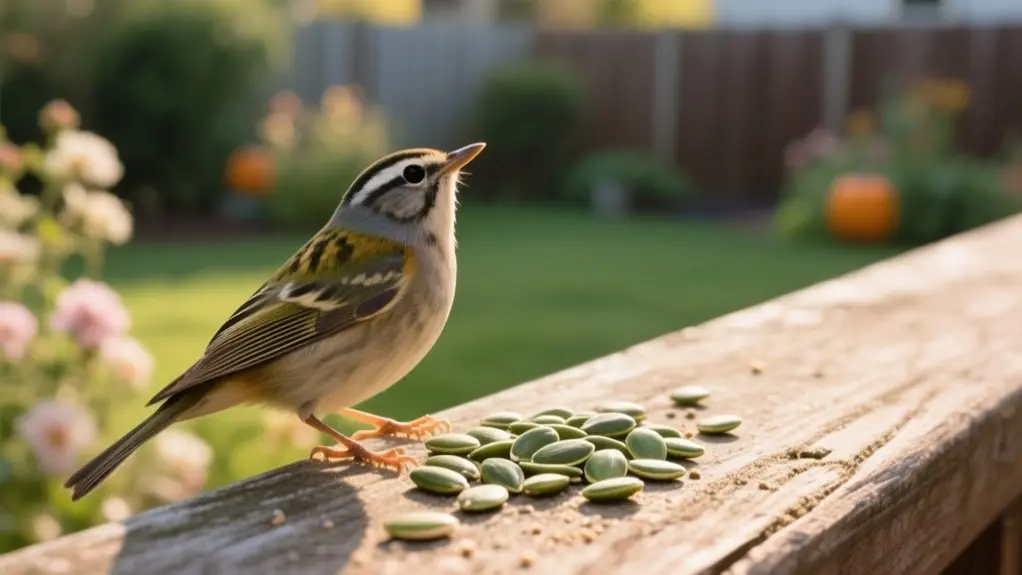
You can safely feed green pumpkin seeds to birds, as they’re nutrient-rich and easier to chew than mature seeds. They offer protein, healthy fats, and essential vitamins that support birds’ health year-round.
Just serve them raw and in moderation to avoid digestive issues. Clean the seeds well and choose feeders that suit larger seeds to attract species like Blue Jays and Cardinals.
Keep exploring for tips on preparation, seasonal benefits, and potential risks.
What Are Green Pumpkin Seeds And Why Birds Love Them
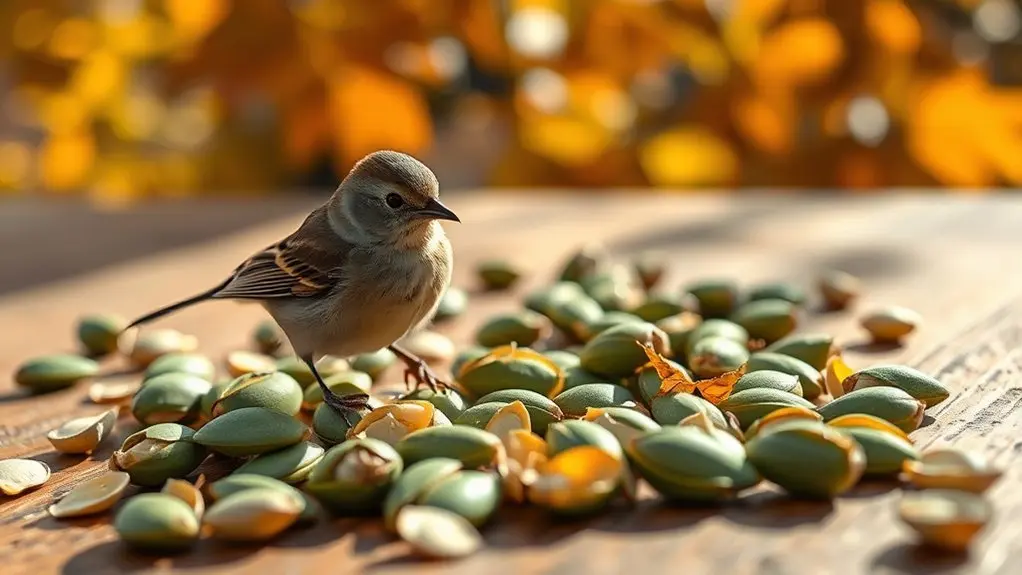
Green pumpkin seeds, the immature seeds found inside unripe pumpkins, offer birds a nutrient-packed treat rich in protein, fiber, and essential fatty acids.
When you provide these seeds, you attract a variety of bird species like Blue Jays and Northern Cardinals, who appreciate both the nutritional value and the appealing texture.
These seeds are best fed raw since they retain more nutrients than roasted ones and don’t contain added salt or oils that could harm birds.
Since birds naturally forage for seeds in their environment, green pumpkin seeds make an excellent supplemental food source that closely mimics their diet.
Are Green Pumpkin Seeds Safe For Birds To Eat?
How safe are pumpkin seeds for birds to eat? Green pumpkin seeds are generally safe and healthy for birds to enjoy.
Unlike mature seeds, green ones are softer, making it easier for birds to chew and digest.
When birds eat pumpkin seeds, they benefit from a good source of protein and healthy fats. It’s best to offer these seeds raw to avoid harmful additives like salt.
Pumpkin seeds provide birds with protein and healthy fats, best served raw to keep them safe and natural.
Remember, moderation is important. Too many seeds can cause digestive problems.
By feeding green pumpkin seeds in appropriate amounts, you provide a safe treat that birds love and can easily handle.
Nutritional Benefits Of Green Pumpkin Seeds For Birds
Although birds have diverse dietary needs, incorporating pumpkin seeds into their diet can offer significant nutritional benefits. Green pumpkin seeds are packed with protein, healthy fats, and essential vitamins like A, B, and E, providing essential energy and nutrients for your feathered friends.
These seeds also contain minerals such as magnesium and iron, which help maintain healthy feathers and overall well-being.
As a natural bird food, pumpkin seeds encourage wild foraging behaviors, promoting a balanced diet beyond typical commercial feeds.
They’re easily digestible and can be offered raw or roasted (unsalted), making them versatile for different bird preferences.
Including green pumpkin seeds in your birds’ diet supports their health and energy, making it a smart, nutritious addition to their regular food supply.
How Pumpkin Seeds Support Birds In Different Seasons
Pumpkin seeds offer more than just nutritional value. They play an essential role in helping birds thrive through changing seasons.
In autumn, pumpkin seeds help birds build fat reserves for winter. During cold months, their high-fat content provides vital energy.
Year-round, pumpkin seeds encourage natural foraging, supporting bird health and diversity.
| Season | Benefit of Pumpkin Seeds |
|---|---|
| Spring | Supports breeding energy needs |
| Summer | Maintains overall nutrition |
| Autumn | Builds fat reserves for winter |
| Winter | Supplies energy to endure cold |
Preparing Green Pumpkin Seeds For Birds
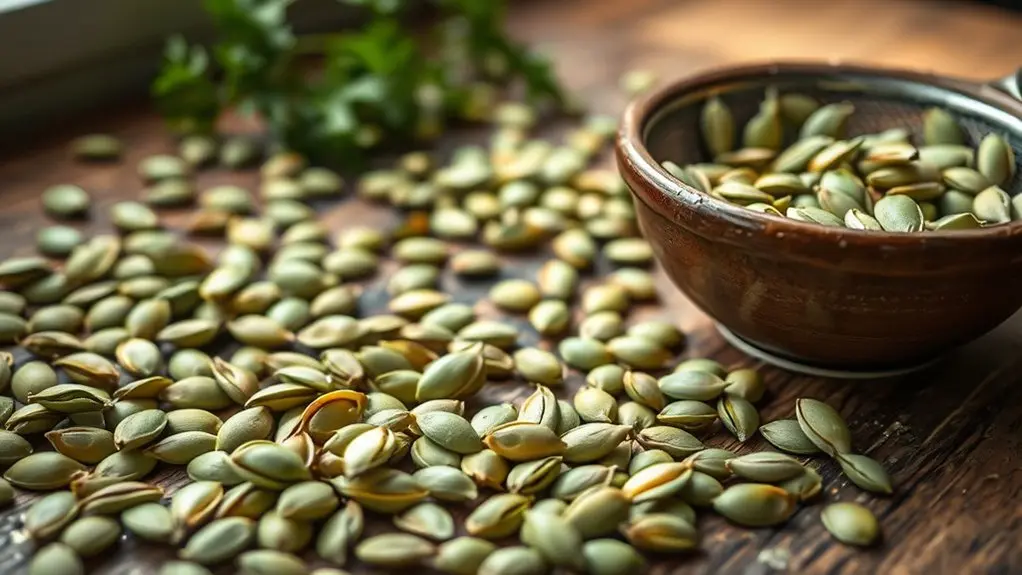
Before offering green pumpkin seeds to birds, you’ll want to clean them thoroughly to remove any pulp and debris.
Properly preparing green pumpkin seeds for birds starts with washing the seeds well and letting them dry completely to prevent mold growth.
If you’re feeding smaller bird species, consider crushing the larger seeds to make them easier to eat.
Keep in mind that both raw and lightly roasted seeds without salt or seasoning can be nutritious treats.
Always monitor any uneaten seeds to stop spoilage and keep the feeding area clean.
Roasting Vs. Raw Green Pumpkin Seeds For Birds
When deciding whether to offer roasted or raw green pumpkin seeds to birds, you’ll find that raw seeds usually provide more nutrients and are easier for birds to digest. Roasting vs. raw pumpkin seeds involves a trade-off. Roasting can improve flavor and texture but may reduce nutritional value.
Avoid adding salt or spices when roasting to keep seeds safe for birds. Larger birds enjoy both types, while smaller birds often prefer raw seeds.
| Aspect | Raw Seeds | Roasted Seeds |
|---|---|---|
| Nutritional Value | Higher | Slightly reduced |
| Digestibility | Easier for birds | Can be harder for smaller birds |
| Flavor | Mild | Enhanced |
| Safety Tip | Avoid mold/spoilage | No salt or spices added |
Offering Green Pumpkin Seeds Safely
When you’re offering green pumpkin seeds to birds, it’s a good idea to prepare them carefully. Make sure to clean off any pulp first, and try to avoid using harmful additives like salt or oils.
You can serve the seeds either raw or roasted, depending on what you think your birds will like best.
Roasting can actually boost the taste and make the seeds easier to digest.
Preparing Seeds Properly
Although green pumpkin seeds aren’t as nutritious as fully ripened ones, you can still offer them safely to birds by washing them thoroughly to remove any pulp or contaminants.
Preparing seeds properly means you should also crush them for smaller birds and always check for mold to avoid health risks. Moderation is key to prevent waste and keep feeding areas clean.
| Step | Tip |
|---|---|
| Wash the seeds | Remove all pulp and dirt |
| Inspect for mold | Discard any spoiled seeds |
| Crush seeds lightly | Help smaller birds eat easily |
| Offer in moderation | Maintain a clean feeding spot |
Raw Vs. Roasted
Proper preparation sets the stage for deciding whether to offer green pumpkin seeds raw or roasted.
When weighing raw vs. roasted pumpkin seeds, you’ll find that birds generally prefer raw seeds because they retain more natural nutrients like protein and healthy fats.
Raw seeds are an excellent energy source and safe as long as they’re fresh and mold-free.
Roasted pumpkin seeds can also be a good treat, but you must guarantee they’re plain, no salt or seasoning, to keep your feathered friends healthy.
Whether you choose raw or roasted, always check for freshness to avoid mold, which can harm birds.
Avoiding Harmful Additives
Since additives like salt and spices can harm birds, you should always offer green pumpkin seeds raw and plain.
Avoid roasting or seasoning them because these processes introduce harmful substances. Before feeding, remove any pulp and rinse the pumpkin seeds thoroughly to make sure they’re clean and safe.
Also, keep an eye out for moldy seeds. Spoiled pumpkin seeds can be toxic to birds.
To maintain a healthy feeding area, check regularly for cleanliness and remove any leftover seeds to prevent pests.
- Always provide raw, unseasoned pumpkin seeds
- Rinse seeds well and check for mold before offering
- Limit the amount to avoid waste and pest attraction
Best Feeders For Green Pumpkin Seeds
You’ll want to pick feeders that handle green pumpkin seeds without any hassle.
Wide-port feeders are a great choice because they let larger birds get to the seeds easily.
Hopper feeders work really well too since they can hold different types and sizes of seeds without clogging up.
And mesh feeders with diamond-shaped openings? They’re awesome for attracting a variety of birds because they offer plenty of spots for feeding.
Wide-Port Feeders
When you want to attract larger birds like Blue Jays and Northern Cardinals, wide-port feeders offer the perfect solution for green pumpkin seeds. These feeders feature larger openings that let birds easily grab seeds without struggling.
Plus, their design accommodates various seed sizes, making them versatile for many bird species.
Wide-port feeders also help reduce seed waste by limiting scattering, so you get more feeding and less mess. Many models are built from durable materials, ensuring they hold up well outdoors and provide long-term use.
Here’s why wide-port feeders work great for green pumpkin seeds:
- Large openings fit bigger seeds and birds comfortably
- Minimizes seed waste by controlling seed access
- Made with sturdy materials for lasting outdoor use
Hopper Feeder Benefits
Wide-port feeders do a great job accommodating larger birds, but hopper feeders take convenience a step further for both you and the birds.
Hopper feeders feature wide ports, making it easy for birds to access green pumpkin seeds comfortably. They’re versatile too, handling various seed types, including hulled pumpkin seeds, so you can attract a diverse range of birds.
Many hopper feeders are made from durable materials that stand up to all weather conditions, giving you long-lasting use. Their elevated design keeps seeds off the ground, reducing waste and deterring pests. This is a key benefit when offering green pumpkin seeds.
Plus, the clear reservoir lets you monitor seed levels at a glance, ensuring you refill on time to keep your feathered visitors happy and well-fed.
Mesh Feeding Areas
Mesh feeding areas offer an excellent way to serve green pumpkin seeds, letting birds access the seeds easily while minimizing waste.
These feeders let various bird species enjoy the seeds without much spillage.
When choosing mesh feeding areas, consider these features:
- Wide ports to accommodate larger birds like Blue Jays and Northern Cardinals
- Diamond mesh designs in collapsible feeders that fit the size and shape of green pumpkin seeds
- Platform feeders for even seed distribution, attracting ground feeders such as sparrows and blackbirds
Remember to clean your mesh feeding areas regularly to prevent mold and keep the feeding environment safe.
Using mesh feeding areas not only makes feeding easier but also encourages a diverse group of birds to visit your yard.
Best Birds That Eat Green Pumpkin Seeds
Which birds are most attracted to green pumpkin seeds? The best birds that eat green pumpkin seeds include Blue Jays and Northern Cardinals, as they relish the nutritional benefits these seeds offer.
You’ll also find smaller birds like sparrows and chickadees enjoying them, especially when the seeds are hulled for easier access.
Gray Catbirds and American Robins often forage for green pumpkin seeds in gardens and feeders, making these seeds a versatile choice for attracting a variety of species.
Since green pumpkin seeds provide protein and healthy fats, they’re especially valuable during colder months.
If you want to boost your backyard birdwatching, offering green pumpkin seeds is a smart way to attract diverse and healthy birds to your feeders.
How Many Green Pumpkin Seeds Should Birds Eat?
How many green pumpkin seeds should you offer your backyard birds? When wondering how many green pumpkin seeds birds should eat, moderation is key. A few seeds per feeding provide essential nutrients without overloading their digestive system.
Moderation is key when offering green pumpkin seeds to birds—just a few per feeding provide essential nutrients safely.
Introducing seeds gradually helps birds adjust and prevents digestive upset.
Consider these tips:
- Offer 2-3 green pumpkin seeds per small bird, preferably crushed or hulled.
- Larger birds can handle whole seeds; limit to 4-5 seeds per feeding.
- Always include a variety of foods to guarantee a balanced diet.
Potential Risks Of Feeding Green Pumpkin Seeds To Birds
Although green pumpkin seeds might seem like a nutritious treat, feeding them to birds carries several risks you should consider.
Green pumpkin seeds are immature and often contain higher levels of anti-nutrients that can block nutrient absorption in birds.
If you feed too many, your birds might experience digestive issues since these seeds aren’t easily digestible for many species. Their bitterness may also deter birds from eating them, reducing their appeal as a snack.
Furthermore, raw green pumpkin seeds can pose a health risk due to potential mold or harmful pathogens.
To keep your birds safe, it’s better to avoid offering green pumpkin seeds and instead provide fully matured, dried seeds that offer better nutrition and taste.
Tips For Using Leftover Green Pumpkin Seeds In Bird Feeding
Leftover green pumpkin seeds can provide a nutritious snack for your birds when prepared properly. To make the most of these seeds in bird feeding, start by washing them thoroughly to remove any pulp and guarantee cleanliness.
Crushing larger seeds helps smaller birds enjoy them more easily. Always opt for raw seeds, as roasting can diminish their nutritional benefits.
Proper storage is also essential. Keep any unused seeds in a cool, dry place to prevent mold growth.
- Wash seeds thoroughly before offering to birds
- Crush larger seeds for smaller bird species
- Store seeds in a cool, dry place to avoid mold
Following these tips guarantees safe and healthy bird feeding with leftover green pumpkin seeds.
Frequently Asked Questions
Can Green Pumpkin Seeds Help Improve Birds’ Feather Quality?
Yes, green pumpkin seeds can help improve your bird’s feather health. They’re packed with protein, vitamins A and E, and essential minerals like magnesium and zinc, all of which support strong, vibrant feathers.
The antioxidants in these seeds reduce oxidative stress, promoting healthier plumage.
Do Green Pumpkin Seeds Attract Any Predatory Animals?
Yes, green pumpkin seeds can cause predator attraction. When you leave these seeds out, their smell and nutritional value draw in predators like squirrels, raccoons, and even hawks.
If you want to keep your bird feeder safe, you should monitor the area closely and remove any leftover seeds.
This helps reduce the chance of predatory animals showing up and scaring away your birds.
How Do Green Pumpkin Seeds Compare to Other Birdseed Types?
Green pumpkin seeds have a lower seed nutritional value compared to other birdseed types because they’re higher in moisture and less concentrated in proteins and healthy fats.
You’ll find that birds prefer mature, roasted seeds since they offer more energy.
If you want to attract a variety of birds, stick to seeds like sunflower or millet.
They provide better nutrition and are easier for birds to digest than green pumpkin seeds.
Can Green Pumpkin Seeds Be Used in Homemade Bird Treats?
You can definitely use green pumpkin seeds in homemade treats, but don’t put all your eggs in one basket.
They’re milder and less tasty to birds, so mixing them with other seeds or ingredients will make your treats more appealing.
Just make sure to clean the seeds thoroughly and watch for any mold or spoilage.
This way, your homemade treats will be both safe and enjoyable for your feathered friends.
Are Green Pumpkin Seeds Safe for Baby Birds or Only Adults?
Green pumpkin seeds are generally safe for adult birds, but you should be cautious with baby birds. Their smaller size and developing digestive systems make it harder for them to handle these seeds.
The nutritional value is high, offering proteins and fats, but you should introduce seeds gradually and in moderation.
Focus on softer foods first, watch how baby birds react, and only add green pumpkin seeds once they’re ready to avoid any digestive issues.
Conclusion
You absolutely can’t go wrong feeding green pumpkin seeds to birds; they’re like a superfood jackpot! Not only do they boost your feathered friends’ energy, but they also keep them thriving through every season.
Just remember to prep them right and watch the portions. Overdoing it might turn your bird feeder into a pumpkin seed frenzy! So, go ahead, sprinkle those seeds and become the ultimate bird hero in your neighborhood!