
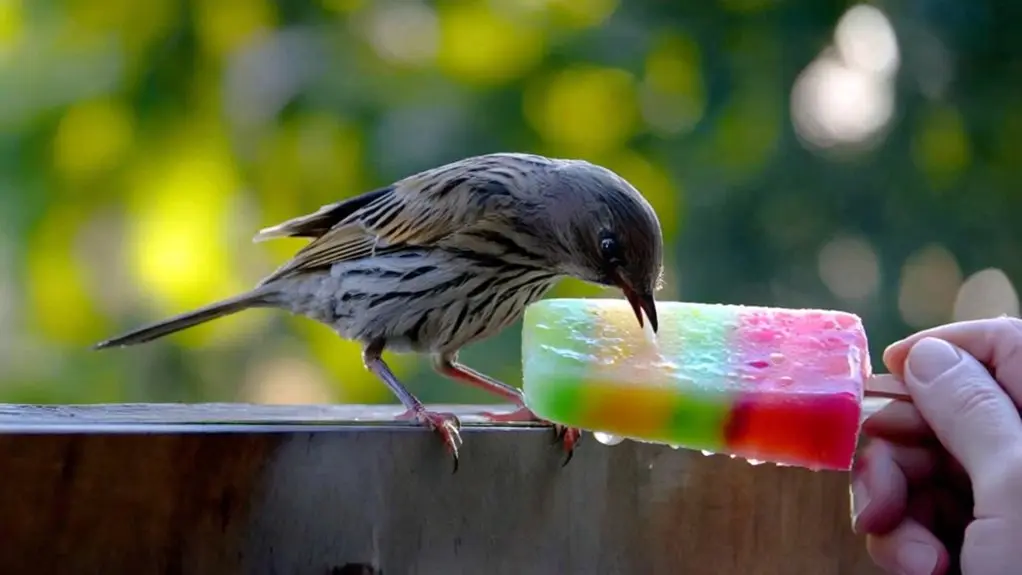
You shouldn’t feed birds traditional popsicles because they often contain artificial sweeteners, flavors, and preservatives that can harm avian health. The cold temperature may shock their digestive system, and high sugar levels can cause dehydration and disrupt gut function.
Instead, opt for natural frozen fruit or pure 100% fruit juice cubes without additives. These options are much safer and healthier for birds.
If you want to guarantee safe, healthy treats for birds, understanding the risks and alternatives will guide you to better feeding choices. It’s all about making smart decisions for their well-being.
Why Popsicles Are Unsafe for Birds
Although popsicles may seem like an invigorating treat, you should never offer them to birds because their ingredients can be harmful. Popsicles often contain artificial sweeteners, flavors, and preservatives that pose toxicity risks to avian species.
Popsicles may seem refreshing but contain harmful ingredients that pose toxicity risks to birds.
Their high sugar content can disrupt your bird’s digestive system and cause dehydration, impairing overall health.
Additionally, fruit dyes and synthetic additives found in many popsicles further threaten birds by introducing harmful chemicals. The freezing process and composition of popsicles provide no nutritional value, so feeding them contributes nothing beneficial to your bird’s diet.
Consuming popsicles can lead to serious health issues such as obesity, hyperactivity, or poisoning.
Toxic Ingredients in Popsicles to Avoid
You should steer clear of popsicles that have harmful chemicals in them, especially artificial sweeteners. These can lead to serious health problems in birds. Ingredients like xylitol, artificial colors, and flavorings are often risky because they can affect their respiratory and metabolic systems.
On top of that, things like chocolate, caffeine, and even pesticide residues can be deadly if birds happen to ingest them. So, it’s always best to check what’s inside before offering popsicles to your feathered friends.
Harmful Chemicals In Popsicles
Several common ingredients in popsicles pose significant health risks to birds. You should avoid popsicles containing artificial sweeteners like xylitol, which can cause hypoglycemia and liver failure.
Artificial flavors, colorings, preservatives, and additives may introduce toxic chemicals harmful to avian health. High sugar content and added fruit juices could lead to digestive upset or dehydration. Always scrutinize ingredient lists, as many commercial popsicles are unsafe for birds.
| Ingredient Type | Potential Harm | Effect on Birds |
|---|---|---|
| Artificial Sweeteners | Xylitol, others | Hypoglycemia, liver failure |
| Artificial Colors | Synthetic dyes | Toxicity, organ damage |
| Preservatives | Chemical additives | Digestive upset, toxicity |
Avoid giving popsicles with these chemicals to protect your bird’s health.
Toxic Sweeteners And Additives
Beyond artificial colors and preservatives, certain sweeteners and additives in popsicles pose serious risks to birds. You need to be cautious about these ingredients because they can cause severe health issues.
Refrain from popsicles containing xylitol, which triggers hypoglycemia and liver failure in birds. Also avoid aspartame and sucralose, as they can lead to digestive disturbances. High sugar content is another concern since it causes dehydration and metabolic imbalance.
Artificial flavorings and preservatives often contain toxic chemicals. Synthetic dyes can be harmful to avian physiology too.
Always check ingredient labels carefully before offering any frozen treat to birds. While some additives might seem harmless to humans, birds metabolize substances differently, making these sweeteners and additives potentially toxic.
Ingredients Dangerous For Birds
Although popsicles may seem like a harmless treat, they often contain ingredients that are toxic to birds and can cause serious health problems. Artificial sweeteners such as xylitol pose a significant risk, potentially causing hypoglycemia and liver damage.
Additionally, artificial dyes and flavorings commonly found in popsicles may irritate or harm a bird’s digestive system.
High sugar content contributes to obesity and related health complications. Preservatives and chemicals present in fruit concentrates or additives can also be unsafe for avian consumption.
Furthermore, ingredients like chocolate or fruit pits are especially dangerous, as they contain toxins harmful to birds.
To protect your feathered friend, avoid offering popsicles with these hazardous components. Instead, opt for safer, bird-friendly treats that won’t put their health at risk.
It’s always better to be cautious when it comes to what our birds eat!
How Cold Treats Affect Your Bird’s Digestion
When you offer cold treats like popsicles to your bird, you risk causing thermal shock that can impair its digestive system. Birds’ digestive processes are sensitive to temperature changes, and sudden cold exposure may slow metabolism, reducing efficiency.
Plus, frozen treats can be a choking hazard and might damage beaks or oral tissues. Many popsicles have high sugar content, which can mess with the delicate balance of gut flora, leading to digestive upset.
So, regularly serving cold treats isn’t really a good idea since it can compromise your bird’s overall digestive health.
Here are some key effects cold treats have on bird digestion:
- Thermal shock causing digestive impairment
- Slowed metabolism hindering digestion
- Risk of choking and dental damage
- Disruption of gut microbiota due to sugar
- Negative impact on long-term digestive health
Safe Alternatives to Popsicles for Hydrating Birds
You should always make sure birds have access to clean, fresh water to keep them well-hydrated.
Instead of giving them popsicles, why not try offering frozen fruit pieces?
Things like cucumber slices or melon are great natural treats that provide fluids without any harmful additives.
These options help birds stay hydrated while also supporting their overall health and nutrition.
Fresh Water Availability
Since birds require constant access to fresh, clean water to stay hydrated, especially during hot weather, you can provide safe alternatives to popsicles that avoid harmful additives. Ensuring fresh water availability is essential for birds’ health and hydration without exposing them to sugars or chemicals found in popsicles.
Consider these options: offer ice cubes or frozen water in shallow dishes for gradual melting. You can also use natural water sources like clean birdbaths that are replenished regularly.
Avoid flavored or sugary frozen treats because they can harm birds. It’s a good idea to place water containers in shaded areas to keep the water cool longer.
Also, check and replace water frequently to prevent contamination and stagnation.
Frozen Fruit Alternatives
Although popsicles may seem like a convenient way to hydrate birds, frozen fruit alternatives offer a safer, natural option that supports their health. You can provide birds with frozen pieces of berries or sliced melons. These deliver hydration and nutrients without harmful additives.
Using 100% fruit juice ice cubes, free from added sugars or artificial sweeteners, also makes a healthy, hydrating treat. Just avoid any sweetened or artificially flavored frozen treats, as these may contain substances toxic to birds.
Always serve frozen fruit alternatives in small portions, placed in clean, accessible containers or feeders to assure safety and ease of consumption. These natural options help keep birds cool and hydrated during hot weather without the risks associated with processed popsicles.
Hydrating Natural Treats
When providing hydrating treats for birds, selecting natural options like fresh fruit slices guarantees they receive essential moisture and nutrients without exposure to harmful additives. You can safely offer birds small pieces of juicy fruits, which help prevent dehydration, especially in warm conditions.
Frozen fruit chunks also serve as a cooling, hydrating alternative but must contain no preservatives or additives. Always tailor treats to your bird’s species and maintain moderation within their overall diet.
Consider these safe, hydrating natural treats:
- Watermelon slices, rich in water content
- Cucumber pieces, low-calorie and hydrating
- Frozen blueberries, high in antioxidants
- Apple slices (without seeds), providing fiber and moisture
- Strawberries, offering vitamins and hydration
Signs Your Bird Isn’T Happy With Frozen Treats
If your bird starts avoiding or ignoring popsicles, it may be signaling discomfort or disinterest in frozen treats. You might also notice excessive droppings or mess around the feeding area, which could mean the bird isn’t happy with the popsicle’s texture or temperature.
Vocal signs like loud chirping or agitation often suggest confusion or distress.
Vocal cues such as loud chirping or agitation often indicate your bird is confused or distressed.
When your bird shows decreased activity or stops approaching the food source after popsicle exposure, it’s likely unhappy with the offering. More concerning, if the bird exhibits gasping or difficulty breathing after consuming a popsicle, it could be reacting negatively to the cold or certain ingredients.
Observing these signs helps you assess your bird’s tolerance for frozen treats. That way, you can decide whether to continue offering them safely.
Essential Tips for Responsibly Feeding Wild and Pet Birds
Noticing signs that your bird dislikes certain frozen treats helps you make informed choices about their diet. When feeding wild or pet birds popsicles, it’s essential to prioritize their health by following these guidelines:
Use natural, unsweetened, additive-free ingredients only. Avoid sugary, artificial, or processed additives that harm birds. Select safe fruits like berries, apples, or melons, removing seeds and pits.
Serve fully frozen popsicles in a clean environment to prevent bacterial contamination. Offer popsicles strictly as occasional treats, not as dietary staples.
How to Safely Offer Fruit and Water Treats to Birds
Although birds can safely enjoy frozen fruit treats like popsicles, you have to make sure these treats contain only 100% fruit juice without any added sugars or artificial sweeteners. Always take out the popsicle stick before giving it to them to avoid choking or injury.
Serve small, manageable portions so you don’t overfeed them or cause digestive issues.
Also, steer clear of ingredients like chocolate, dairy, or artificial flavors since they’re toxic to birds.
Instead, try offering fresh fruit pieces or pureed fruit frozen into ice cubes as a safer alternative to commercial popsicles. These natural, additive-free treats support birds’ health and satisfy their interest in cold refreshments.
What to Do If Your Bird Reacts Badly to Frozen Treats
When your bird exhibits signs of distress after consuming a frozen treat, such as lethargy or labored breathing, you should seek immediate veterinary attention. Birds can react adversely to cold foods, especially if treats contain harmful additives or excessive sugar.
To manage this situation effectively, remove the frozen treat right away to prevent your bird from eating more. Keep a close eye on your bird for symptoms like vomiting, diarrhea, or any unusual behavior.
Avoid offering frozen treats that have artificial sweeteners, dyes, or any toxic substances. Instead, provide fresh, room-temperature water to help stabilize your bird’s digestion.
It’s important to consult an avian veterinarian quickly to address any potential complications. Acting promptly will minimize health risks and support your bird’s recovery.
Always prioritize safe ingredient choices and watch your bird closely after introducing new foods to avoid any bad reactions.
Frequently Asked Questions
Can Birds Eat Popsicles Made From 100% Natural Fruit Juice?
Yes, you can safely offer birds popsicles made from 100% natural fruit juice without additives. Just make sure there are no added sugars or artificial ingredients.
Keep an eye on them while they’re eating, and offer small portions. This helps prevent choking or any digestive issues.
It’s a nice treat for birds, but always remember to keep it simple and natural!
Are Certain Bird Species More Sensitive to Cold Treats?
Yes, you’ll find that small, tropical, and insectivorous birds are more sensitive to cold treats due to their warm-climate adaptations.
On the other hand, larger, cold-hardy species tolerate them better. Still, it’s important to be cautious with temperature and exposure time. Always keep an eye on how your feathered friends react to avoid any issues.
How Often Can I Offer My Bird Chilled Fruits Safely?
You can offer your bird chilled fruits safely once or twice a week in moderation. Always remove seeds and wash the fruits thoroughly before serving.
Try to avoid giving your bird overly cold or frozen pieces. This helps prevent any digestive discomfort or potential toxicity.
Just keep it simple and your feathered friend will enjoy a tasty, safe treat!
Do Popsicles Affect Birds’ Hydration Differently Than Water?
Yes, popsicles affect birds’ hydration differently than water. You’ll find popsicles’ sugar content can cause dehydration, and their cold temperature may shock birds.
Water, on the other hand, efficiently hydrates without these risks. So, it’s definitely the better choice for keeping birds hydrated and healthy.
Can Homemade Bird-Friendly Frozen Treats Be Beneficial?
You can definitely benefit birds with homemade frozen treats, much like how ancient Romans used ice for cooling. These provide hydration, vitamins, and antioxidants when made right. But avoid sugars to keep birds healthy and thriving.
It’s a simple way to help out, especially on hot days. Plus, it’s kind of fun to make and watch the birds enjoy their cool snack! Just remember, the key is to keep it natural and nutritious.
Conclusion
While it might seem tempting to share popsicles with your bird, studies show that over 90% of commercial popsicles contain ingredients harmful to birds, like artificial sweeteners and dyes. Cold treats can also disrupt their digestion, causing discomfort.
Instead, opt for safe, natural alternatives like chilled fruit or water-based frozen treats. By understanding these risks and following responsible feeding tips, you’ll help keep your feathered friend healthy and happy without exposing them to unnecessary dangers.