
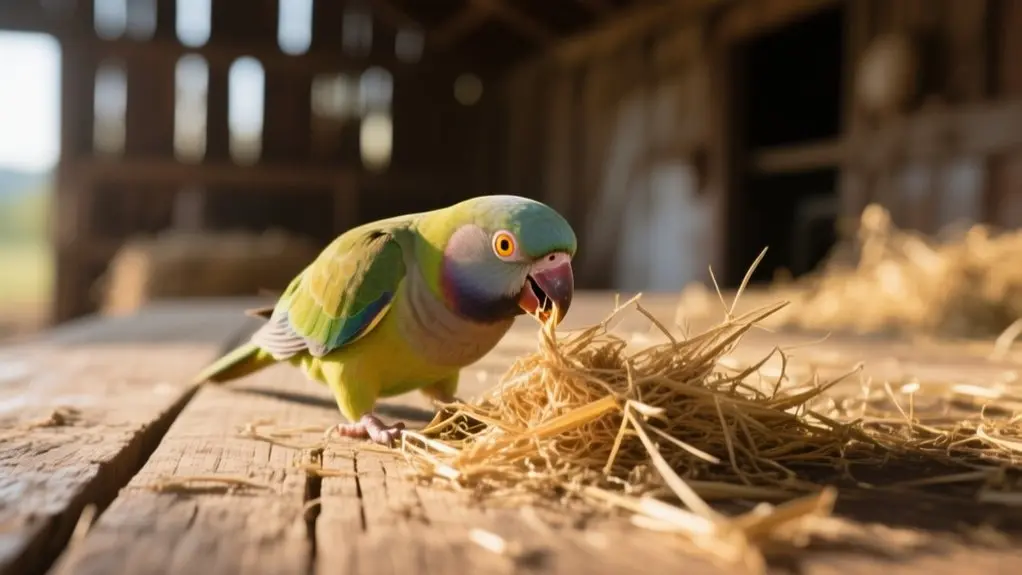
You can safely offer your bird fresh, mold-free hay like timothy or alfalfa to support natural foraging and keep them mentally active. Timothy hay encourages shredding and mimics wild behavior, while alfalfa provides extra nutrition.
Just introduce hay gradually and watch for any signs of dust or mold to avoid respiratory issues. Hay enriches their environment but shouldn’t replace their main diet. Keep exploring to understand how to best use hay and alternatives for your bird’s health.
What Types of Hay Can Birds Safely Eat
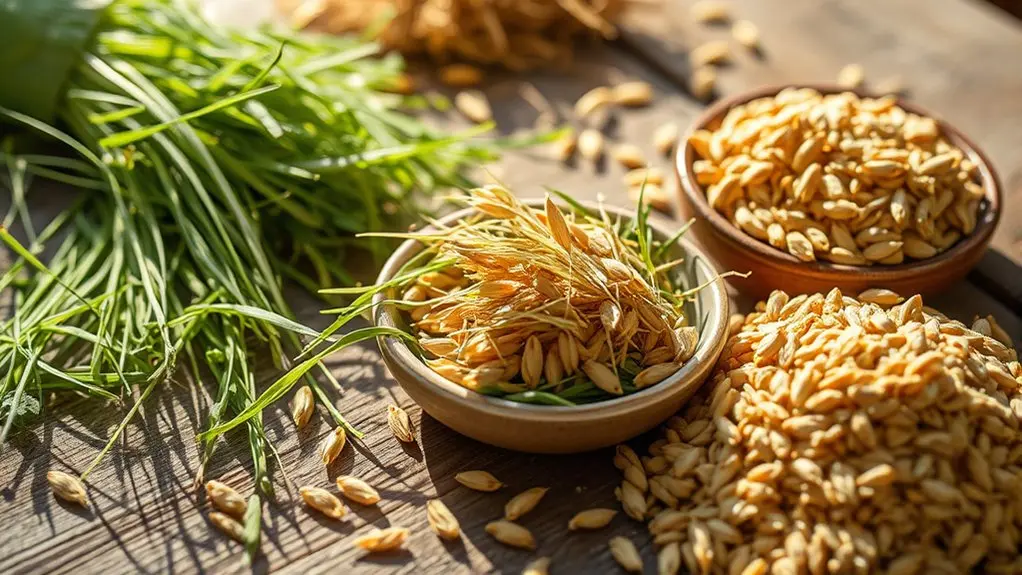
While not all hay types are suitable for birds, you can safely offer varieties like timothy hay and alfalfa hay to enrich their environment and support natural behaviors.
Parrots eat timothy hay especially well; it encourages shredding and mimics wild bird foraging habits.
When you feed birds hay, make sure it’s fresh and mold-free. Brands like Oxbow provide safe options.
Alfalfa hay is nutritious but can be dusty, so watch for respiratory issues.
Remember, hay should be a supplement, not a staple food, especially for parrots and doves. Incorporating fresh grasses or commercial foraging toys can also enhance your bird’s diet and mental stimulation.
Timothy vs. Alfalfa Hay for Birds
You’ll find Timothy hay great for shredding and foraging—especially if your bird enjoys interactive play. It’s perfect for keeping them busy and entertained.
On the other hand, alfalfa hay offers a safer, more nutritious option. Plus, it’s less likely to carry harmful mold, which is a big bonus.
When you’re choosing between the two, just focus on what’s best for your bird’s health and what they seem to prefer. That way, you’ll keep them happy and safe.
Timothy Hay Benefits
Because Timothy hay is lower in protein and higher in fiber than alfalfa hay, it makes a healthier choice for many birds, especially finches, canaries, and parrots. Birds love Timothy hay not only as a nutritious snack but also for shredding and foraging, which keeps them entertained and mentally stimulated.
You can use it as a safe, natural substitute for crinkle paper in toys, encouraging natural behaviors. Just be sure to offer mold-free, low-dust hay to avoid respiratory issues.
| Benefit | Why It Matters |
|---|---|
| Lower Protein | Prevents obesity in birds |
| High Fiber | Supports digestion |
| Foraging Appeal | Encourages natural activity |
Alfalfa Hay Safety
Timothy hay offers great benefits for birds, but it’s important to weigh those against potential health concerns.
When comparing timothy and alfalfa hay, alfalfa hay stands out for bird nutrition and digestive health.
Here’s why you might prefer alfalfa hay:
- Alfalfa hay provides essential nutrients without the dust linked to respiratory issues common in dried grasses like timothy.
- It reduces the risk of aspergillus spores, which can harm sensitive birds’ respiratory systems.
- Alfalfa sprouts offer a fresher, safer alternative that supports digestive health without the risks of dried hay.
- Always verify hay is mold-free and bird-specific to avoid contamination.
Choosing alfalfa hay supports your bird’s health while minimizing common hay-related risks.
How Birds Use Hay and Grass in Nature and Captivity
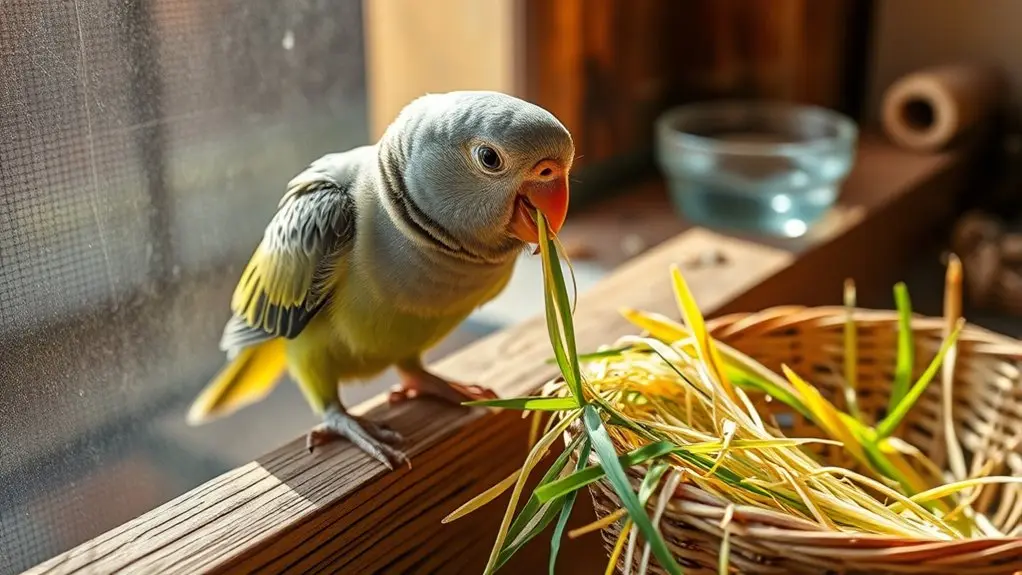
Although you mightn’t always notice it, birds rely heavily on hay and grass both in the wild and in captivity. Their nesting behavior often involves gathering hay and grass to build insulated, structured nests, boosting reproductive success.
In captivity, you can support their foraging instincts by offering dried grasses like Timothy hay, which mimics natural conditions and keeps them mentally active. Hay also aligns with many birds’ dietary preferences, providing essential fiber that aids digestion when combined with other foods.
By gradually introducing hay, you encourage natural shredding behaviors that promote beak health. Just be sure to monitor for dust or mold, which can harm your feathered friend.
Benefits of Offering Hay to Parrots and Small Birds
When you offer hay to parrots and small birds, you provide them with valuable foraging enrichment that encourages natural behaviors and keeps their minds sharp.
Incorporating hay supports their foraging techniques, stimulating bird behavior that mimics wild instincts.
Plus, hay contributes to nutritional balance by adding fiber, aiding digestion when given mold-free and in moderation.
Here are key benefits you’ll notice:
- Encourages natural foraging, keeping birds mentally active.
- Provides safe shredding material for beak and foot exercise.
- Supports digestive health through added fiber content.
- Enhances environmental enrichment, reducing boredom and stress.
How to Use Hay for Bird Foraging and Enrichment
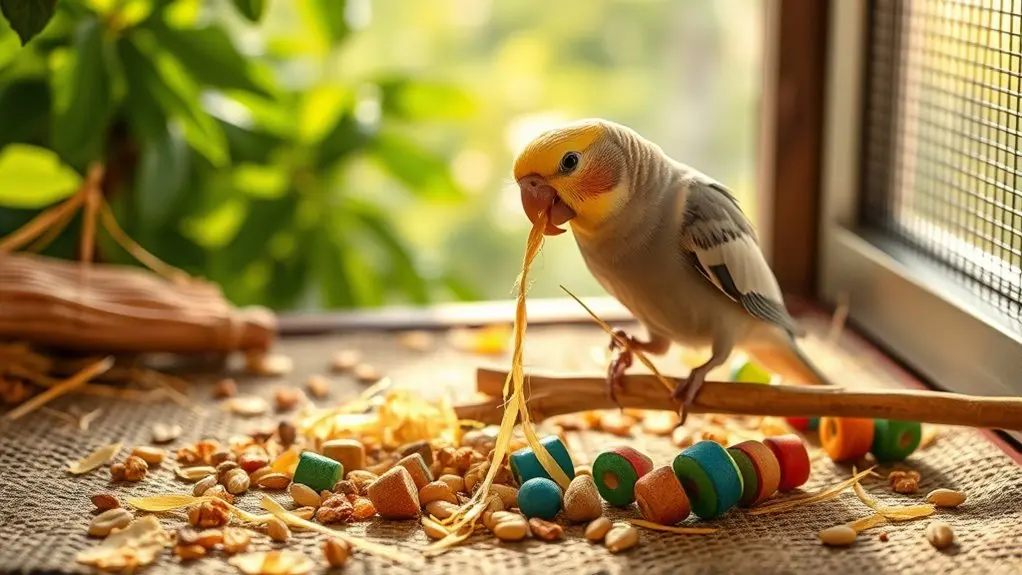
When you choose hay for your bird, make sure it’s mold-free and dust-free to keep their respiratory system safe. You don’t want anything that could cause them to sneeze or cough.
Using hay as a foraging tool is a great idea because it encourages natural shredding and exploration. This kind of activity really keeps your bird mentally stimulated and happy.
It’s best to start slowly and see how your bird reacts. That way, you can make sure they’re comfortable and enjoying the new enrichment.
Once they get the hang of it, you’ll both enjoy the benefits of this simple addition to their environment.
Safe Hay Selection
Since birds can be sensitive to dust and mold, you should choose high-quality, mold-free hay like Timothy hay for foraging and enrichment.
Pay attention to hay texture preferences to keep your bird engaged. Different textures encourage natural foraging behaviors.
Use proper hay storage tips: keep it dry, sealed, and away from moisture to prevent mold growth.
Introduce hay gradually, watching for any adverse reactions. When feeding, use hay feeding techniques such as scattering or placing hay in foraging toys to stimulate your bird mentally and physically.
- Select fresh, mold-free Timothy hay with varied textures.
- Store hay in airtight containers in a cool, dry place.
- Introduce hay slowly, monitoring your bird’s response.
- Use hay in foraging toys to encourage natural behaviors.
Foraging Benefits For Birds
Although not all birds naturally encounter hay in the wild, you can use hay as a valuable tool to encourage foraging behaviors that keep your bird mentally and physically engaged.
By introducing varied hay textures, especially timothy hay, you invite your bird to explore and shred, which mimics their natural foraging techniques.
This kind of enrichment stimulates bird behavior, promoting activity and curiosity.
To use hay effectively, make certain it’s mold-free and low in dust to protect your bird’s respiratory health. You can also mix in fresh grasses or alfalfa sprouts to diversify their foraging options.
These safe, textured materials challenge your bird, helping to prevent boredom and support their overall well-being through natural mental and physical stimulation.
Health Risks You Should Know About Feeding Hay to Birds
Anyone considering feeding hay to their birds should be aware of the potential health risks involved. Improper hay storage can lead to mold growth, which is a serious concern for bird respiratory health. You must watch for signs of mold before offering hay.
Dust from hay can worsen breathing problems, especially in sensitive birds.
Here are key risks to note:
- Aspergillus spores in dried hay can cause fungal infections.
- Dust exacerbates respiratory issues.
- Wet or improperly stored hay encourages mold growth.
- Sudden introduction may trigger adverse reactions.
Choosing Mold- and Dust-Free Hay
When you’re choosing hay for your birds, it’s a good idea to go with brands that are known for being mold-free, like Oxbow.
Always take a close look to make sure there aren’t any signs of mold or too much dust—this helps keep your birds safe and healthy.
And don’t forget about storage!
Keeping the hay in a dry, cool place makes a big difference. It helps prevent mold from growing and keeps the dust levels down, so your birds get the best quality hay possible.
Identifying Mold-Free Hay
Because mold and dust can seriously harm your bird’s health, you need to carefully choose hay that’s clean and fresh. Start by using mold inspection techniques: look for discoloration or a musty smell, which signal unsafe hay.
Next, apply hay storage tips by keeping it in a cool, dry place to prevent moisture buildup and mold growth. Recognizing dust indicators like fine particles or excessive powder can also help you avoid respiratory issues.
To guarantee quality, buy from trusted brands like Oxbow and purchase smaller quantities to maintain freshness.
Follow these steps to keep your bird safe and healthy:
- Inspect hay for mold or unpleasant odors.
- Store hay properly to avoid moisture.
- Watch for dust particles.
- Choose reputable brands and buy fresh.
Minimizing Dust Exposure
Although hay offers great enrichment for your bird, you’ll want to minimize dust exposure to protect their respiratory health. Start by choosing mold- and dust-free hay, like fresh-cut alfalfa or carefully selected timothy hay.
Implement dust control methods such as gently shaking the hay outdoors before offering it to your bird.
Proper hay storage tips are essential. Keep hay in a cool, dry place to reduce moisture and prevent mold growth, which can worsen dust issues.
Always inspect hay for spoilage to avoid respiratory irritants like aspergillus.
Safe Hay Brands
To keep your bird safe while enjoying hay, selecting reputable brands known for quality and cleanliness matters. Choose brands like Oxbow, which prioritize mold-free, dust-free hay, ensuring your bird’s respiratory health.
Always inspect hay for mold or dust before use.
Consider fresh cut alfalfa for its superior hay nutritional values and introduce Timothy hay gradually. Proper hay storage tips and preparation methods also help maintain hay quality and safety.
- Pick trusted brands with clear quality control.
- Check hay regularly for mold or dust contamination.
- Store hay in a dry, well-ventilated area to prevent moisture buildup.
- Prepare hay by removing dusty or moldy parts before offering it.
These practices safeguard your bird and maximize the nutritional benefits of hay.
How to Introduce Hay Into Your Bird’s Diet Gradually
When you introduce hay into your bird’s diet, start by offering small amounts mixed with their regular food. This way, you can monitor their reaction and avoid digestive issues. Choose fresh, mold-free hay brands like Oxbow to guarantee safety.
Use these hay introduction tips to gradually increase the portion size as your bird shows interest. Pay close attention to bird digestion and watch for any signs of discomfort or respiratory problems.
Observe your bird’s foraging behavior closely. Many birds enjoy shredding hay, which encourages natural instincts and mental stimulation.
If your bird remains healthy and engaged, you can slowly make hay a regular part of their balanced diet.
Always stop if any adverse reactions appear to keep your bird safe and happy.
How to Tell If Your Bird Likes or Dislikes Hay
How can you tell if your bird truly enjoys hay? Pay attention to their interaction with it, as their bird foraging instincts will guide their behavior.
Watching for signs of hay texture preferences can reveal much about their acceptance. Here’s what to look for:
- Pecking or shredding hay, showing engagement with its texture.
- Playing with hay or incorporating it into nesting, signaling interest.
- Ignoring hay completely, suggesting dislike or disinterest.
- Observing behavioral changes like increased curiosity or playfulness when hay is introduced.
Alternatives to Hay for Safe Bird Foraging
Although hay can be a common foraging material for birds, you might want to explore safer alternatives that still satisfy their natural instincts.
Fresh grass options like alfalfa sprouts and wheatgrass provide essential nutrients without the risks that dried hay can carry. These fresh grasses mimic a bird’s natural diet and keep them engaged.
Foraging toy alternatives are another great choice. They stimulate natural behaviors while eliminating health concerns tied to hay.
You can also offer natural nesting materials such as untreated paper or cardboard, which promote healthy beak wear and mental stimulation.
Just make sure any foraging items are free from chemicals and contaminants.
Introducing these alternatives thoughtfully helps keep your bird safe and happily occupied.
What to Watch For: Mold and Respiratory Issues in Birds
Mold poses a serious threat to your bird’s respiratory health, especially when it contaminates hay. Aspergillus spores in dusty, moldy hay can cause severe infections.
Moldy hay harbors Aspergillus spores that threaten your bird’s respiratory health with serious infections.
You need to focus on mold detection techniques and respiratory health monitoring to keep your bird safe.
Proper hay storage practices are essential to prevent moisture buildup that encourages mold growth.
Here’s what you should watch for:
- Check hay regularly for visible mold or dampness.
- Store hay in a dry, well-ventilated area away from humidity.
- Monitor your bird for coughing, sneezing, or labored breathing.
- Clean feeding areas frequently to reduce dust and spores.
Managing Hay Use in Homes With Different Pets
Keeping hay mold-free is essential not only for your bird’s health but also for any other pets you might have, like rabbits or guinea pigs. Use proper hay storage solutions to keep it dry and fresh, reducing the risk of respiratory problems.
To prevent cross contamination, store and use hay separately for each species, avoiding the spread of unsuitable materials or diseases.
Follow strict pet interaction guidelines by monitoring your birds closely for any adverse reactions to hay dust, as it can be harmful, especially for sensitive species.
Use hay mainly as a foraging item for birds, not a primary food source, and clean hay areas regularly.
This approach guarantees all your pets stay healthy and happy while enjoying hay safely.
Frequently Asked Questions
Can Baby Birds Digest Hay Safely?
No, baby birds can’t digest hay safely because their hay digestion process isn’t developed yet.
If you want to support proper baby bird nutrition, avoid giving them fibrous materials like hay that can cause choking or digestive issues.
Instead, you should provide safe food alternatives like hand-feeding formulas or soft, nutrient-rich foods that meet their specific dietary needs.
This way, you’ll help them grow strong and healthy without risking their wellbeing.
Does Hay Impact a Bird’s Feather Quality?
Think of hay as a double-edged sword for your bird’s feather growth. While hay’s nutritional value, especially from types like alfalfa, can support healthy feathers, dusty hay might cause respiratory issues that harm feather quality.
If you use hay as bedding alternatives, you’ll want to monitor for mold and dust carefully.
Balancing hay with a nutrient-rich diet guarantees your bird’s feathers stay vibrant and strong.
How Often Should Hay Be Replaced in a Birdcage?
You should replace hay in your birdcage every few days to maintain hay and hygiene, preventing mold and bacteria buildup.
Proper hay storage tips, like keeping it dry and away from dust, help preserve its nutritional value.
If you use hay for foraging, switch it out weekly to keep things fresh and stimulating.
Always check for dampness or discoloration, as old hay can harm your bird’s health and reduce its benefits.
Can Hay Cause Allergies in Birds?
Yes, hay can cause allergies in birds. You might notice hay allergy symptoms like sneezing, coughing, or behavioral changes if your bird’s sensitive to hay exposure risks such as dust and mold.
To prevent hay allergies, choose high-quality, dust-free, mold-free hay and introduce it gradually.
Always monitor your bird closely, so you can catch any reactions early and keep your feathered friend healthy and comfortable.
Is Hay Suitable for All Bird Species?
You shouldn’t assume hay is suitable for all bird species. About 40% of pet birds, especially parrots, may react poorly.
Hay’s nutritional value varies and often lacks essential nutrients some birds need.
While finches benefit from hay as a foraging treat, many birds find hay better as bedding or enrichment.
Always match hay use to your bird’s dietary needs. Avoid relying on it as a primary food source.
Conclusion
When you offer hay to your feathered friend, you’re gently inviting them into a world of natural curiosity and comfort. While not every type suits every bird, with a little care, hay can become a soft whisper of enrichment in their day.
Just keep an eye out for any unwanted surprises like mold, and you’ll create a safe, cozy space where your bird’s happiness quietly blooms. It’s a small gesture with a big heart.