
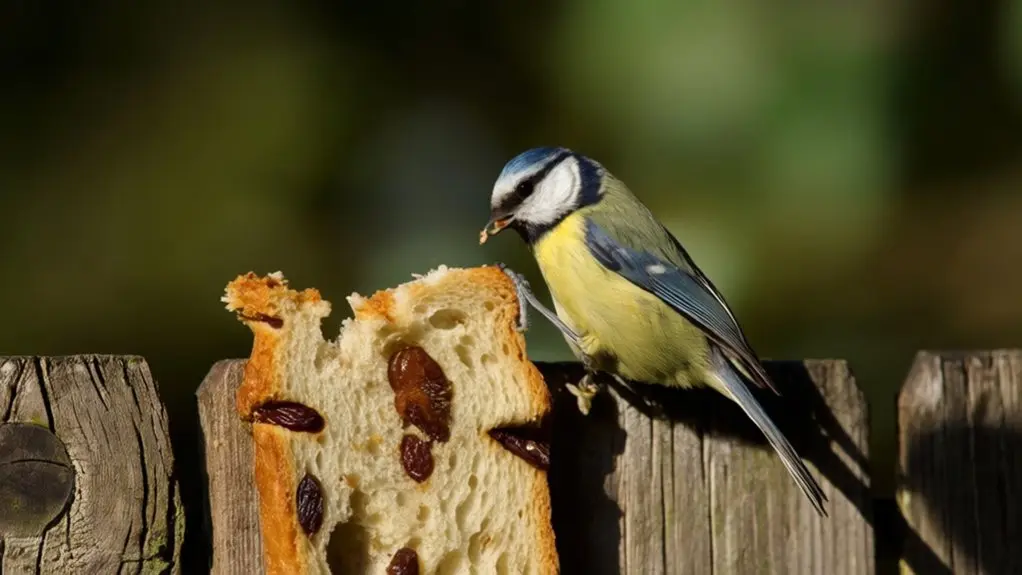
You shouldn’t feed raisin bread to birds because it contains natural toxins that can harm their kidneys. It also has high sugar content, which might lead to dehydration, obesity, and digestive issues. Plus, raisins themselves may carry mold or additives that increase the risk of toxicity.
Processed bread doesn’t provide the essential nutrients birds need. This can cause malnutrition and health problems like Angel Wing syndrome. So, it’s really not a good idea to rely on bread as a food source for birds.
Instead, try offering natural, nutrient-rich foods that support birds’ health and encourage their natural behaviors. Keep exploring to learn about safer feeding practices and healthier dietary options that your feathered friends will appreciate.
Is Raisin Bread Safe for Birds?
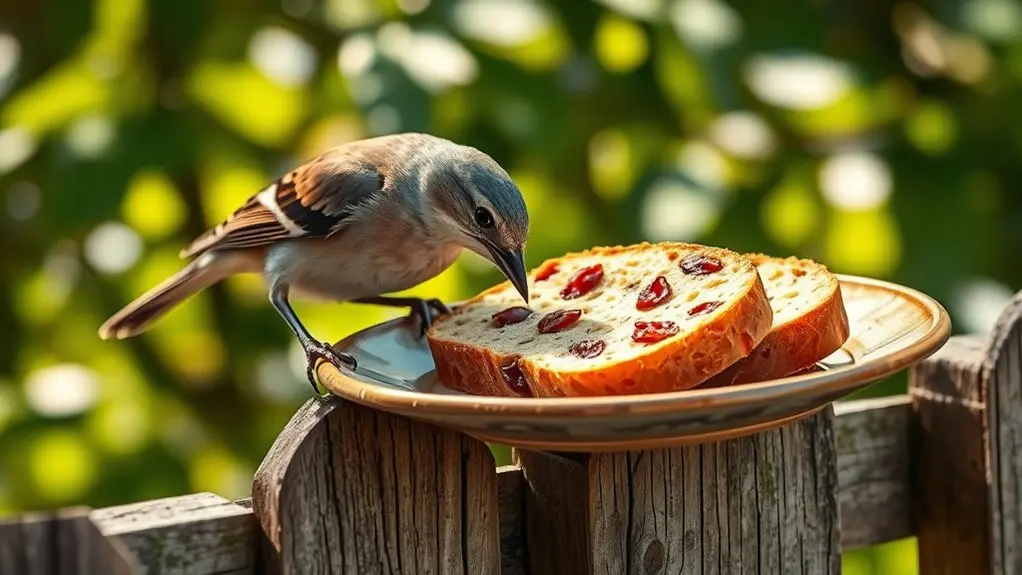
Although raisin bread may seem like a harmless treat, you should avoid feeding it to birds because raisins contain compounds that are toxic to many species.
Raisins have high sugar content and potential natural toxins that can disrupt birds’ digestive systems. When birds consume raisin bread, they risk vomiting, diarrhea, and more severe health complications.
Raisins’ high sugar and toxins can upset birds’ digestion, causing vomiting, diarrhea, and serious health issues.
Additionally, the bread itself provides little nutritional value, similar to other processed baked goods, and doesn’t meet the dietary requirements of wild birds.
To protect their health, avoid offering raisin bread entirely. Instead, focus on providing safer alternatives such as fresh fruits, seeds, or insects, which supply essential nutrients and support the birds’ natural diet and well-being.
Why Raisin Bread Is Harmful to Birds
You really shouldn’t feed raisin bread to birds. It doesn’t have the essential nutrients they need to stay healthy.
Plus, the raisins in the bread contain compounds that can actually cause kidney damage and poisoning in birds.
Nutritional Deficiencies From Raisin Bread
Because raisin bread lacks essential nutrients required for avian health, feeding it to birds can cause serious nutritional deficiencies.
Raisin bread is high in sugar and contains preservatives, neither of which provide the vitamins, minerals, or protein birds need for proper physiological functioning.
When birds consume raisin bread regularly, they miss out on critical nutrients like calcium, vitamin A, and amino acids, impairing their immune system and bone development.
Also, the bread’s carbohydrate-heavy composition offers empty calories that may lead to energy imbalances and obesity.
Over time, these deficiencies can weaken birds, reducing their ability to forage, fly, and reproduce effectively.
So, to keep birds healthy, it’s best to avoid feeding them raisin bread.
Instead, provide species-appropriate, nutrient-rich foods that meet their dietary requirements.
This way, you’ll help ensure they get the nutrition they need to thrive.
Health Risks Of Raisins
When birds consume raisins, they expose themselves to high levels of natural sugars and concentrated toxins that can severely impact their health. These sugars can cause dehydration and kidney stress due to osmotic imbalances.
Also, mold and yeast found on raisins may trigger digestive issues or poisoning. Some raisins contain additives that are harmful to avian physiology. These can disrupt their nutritional balance and lead to further complications.
| Risk Factor | Effect on Birds | Cause |
|---|---|---|
| High Sugar Content | Dehydration, kidney stress | Osmotic imbalance |
| Mold and Yeast | Digestive issues, poisoning | Microbial contamination |
| Additives/Preservatives | Toxicity, irritation | Chemical compounds in raisins |
| Nutritional Disruption | Health complications | Imbalanced diet from raisin intake |
Risks of Feeding Bread and Processed Foods to Birds
Although feeding birds bread, including raisin bread, might seem harmless, it actually poses significant risks to their health and well-being. Bread doesn’t offer any essential nutrients, which can lead to malnutrition if birds eat too much of it. Also, moldy or spoiled bread can introduce pathogens that cause infections and digestive problems.
Feeding birds bread, including raisin bread, can lead to malnutrition and harmful infections.
Processed breads often contain additives and preservatives that may be toxic to birds. Eating too much bread can even result in deformities like Angel Wing syndrome, especially in waterfowl. It’s a serious issue that’s better to avoid.
Feeding processed bread also messes with birds’ natural foraging habits. They can become dependent on unnatural food sources instead of looking for what they really need.
Plus, this practice tends to attract pests and contributes to water pollution because of leftover crumbs.
Natural Foods Better Than Raisin Bread for Birds
While raisin bread might seem like a convenient treat for birds, it lacks the essential nutrients found in their natural diet. Natural foods such as fresh fruits, seeds, and insects provide crucial proteins, vitamins, and minerals that bread can’t supply.
Unlike raisin bread, which contains added sugars and preservatives potentially harmful to birds, these natural options support their immune system and overall health.
Birds instinctively forage for a diverse diet, including berries and insects, ensuring balanced nutrition and maintaining their natural behavior.
By offering natural foods, you help preserve ecological balance and promote birds’ well-being more effectively than processed foods like raisin bread.
Prioritizing these nutrient-rich foods aligns with birds’ biological needs and sustains their health sustainably.
Safe Treats for Pet Birds Instead of Raisin Bread
When it comes to treats for your pet bird, it’s best to pick options that actually support their nutritional needs. Things like small portions of cooked grains, leafy greens, and safe fruits such as apples or berries are great choices.
These treats give your bird essential vitamins and minerals without any of the harmful additives that you’d find in raisin bread.
Just a heads up—always check in with an avian veterinarian before you introduce any new foods. That way, you can be sure they’re safe and appropriate for your feathered friend.
Nutritious Bird Treat Alternatives
When choosing treats for your pet bird, it’s important to focus on options that provide essential nutrients without harmful ingredients like too much sugar. Instead of raisin bread, try offering small amounts of fresh fruits such as apples, berries, and melons. These fruits supply vitamins and help keep your bird hydrated.
Unsalted nuts like almonds, walnuts, and cashews deliver healthy fats and proteins that are crucial for avian health. Cooked vegetables like carrots, peas, and spinach are low-calorie and nutrient-rich, making them great alternatives to support a balanced diet.
You can also find commercially available bird-safe treats like millet sprays and softened dried fruits. These are specially made to meet your bird’s nutritional needs.
Just remember to avoid sugary snacks and high-sugar items like raisins or raisin bread because they can cause obesity and other health problems for your feathered friend.
Safe Fruits And Vegetables
Although raisin bread is a common treat, selecting safe fruits and vegetables like chopped apples, berries, carrots, and leafy greens provides essential vitamins, minerals, and fiber that support your bird’s overall health.
These fresh foods supply crucial nutrients that processed bread lacks, promoting digestion and immune function.
Always wash produce thoroughly and cut it into small, manageable pieces to reduce choking risks.
Avoid feeding avocado, onion, garlic, or citrus fruits as these contain toxins harmful to birds.
Incorporating a variety of safe fruits and vegetables encourages natural foraging behaviors and helps maintain nutritional balance.
How to Help Birds Choose Healthy Foods
How can you support birds in selecting nutritious foods that meet their dietary needs? Focus on providing natural, nutrient-rich options and creating an environment that encourages healthy feeding habits. You can:
Offer seeds, fresh fruits, and insects that supply essential nutrients missing in processed foods like raisin bread. Plant native flora to create natural foraging habitats that align with birds’ instinctive diets.
Educate your community about the importance of avoiding processed human foods and choosing natural alternatives. Provide a diverse variety of appropriate foods to prevent nutritional deficiencies and promote overall bird health.
Frequently Asked Questions
Can Baby Birds Eat Raisin Bread Safely?
You shouldn’t feed baby birds raisin bread because it contains sugars and preservatives harmful to their delicate digestive systems.
Instead, provide species-appropriate foods or specialized formulas to guarantee proper growth, nutrition, and hydration safely.
This way, you’re making sure they get what they really need to thrive.
How Often Can Birds Have Raisin Bread as a Treat?
You should offer raisin bread to birds no more than once a week to prevent health issues. Moderation reduces risks like obesity and nutritional imbalance. This way, their diet remains balanced and supports ideal health and digestion.
Does Raisin Bread Affect Wild Bird Migration?
When you feed birds raisin bread, you risk throwing a wrench in their migration. Its high sugars and poor nutrition can disrupt energy balance, causing weight gain and impairing their long-distance flight performance.
It’s kind of like giving them junk food when they really need a healthy meal. Birds rely on the right nutrients to fuel their long journeys. So, feeding them raisin bread might do more harm than good.
Can Raisin Bread Cause Allergies in Birds?
Yes, raisin bread can cause allergies in birds. You should watch for symptoms like swelling, itching, or respiratory distress.
Repeated exposure may increase allergic risks and lead to significant health complications in your birds. So, it’s always best to be cautious when offering them foods like raisin bread. Keep an eye on how your birds react and consult a vet if you notice any worrying signs.
Is Homemade Raisin Bread Better for Birds Than Store-Bought?
Homemade raisin bread is slightly better since it lacks preservatives, but you shouldn’t feed it regularly. Both types are high in sugar and carbs, offering little nutrition and posing health risks to birds if consumed frequently.
Conclusion
You might think raisin bread is a harmless treat for birds, but feeding it could turn their delicate systems into a disaster zone! Bread’s processed ingredients and sugars can wreak havoc on their health, far worse than you’d imagine.
Instead, stick to natural, nutrient-rich foods that truly support their well-being. By choosing wisely, you’ll help birds thrive, not just survive. This way, they stay vibrant and strong in their natural environment.