
You can safely feed radish leaves to your bird if you wash them thoroughly to remove pesticides and chop them into small pieces for easy digestion. Offer them in moderation, about a teaspoon, one to three times weekly, to avoid digestive upset or nutrient imbalances. Organic leaves are preferable to reduce toxin exposure.
Watch your bird’s behavior for acceptance and signs of discomfort. Understanding preparation, benefits, and risks can help you provide these nutritious greens appropriately. Just keep it simple and observe how your feathered friend responds!
Can Birds Safely Eat Radish Leaves?
Although not all bird species may readily consume radish leaves, you can safely offer them as a nutritious addition to your bird’s diet. Radish leaves contain essential vitamins A and C, along with minerals like calcium and iron, which support overall avian health.
You can serve the leaves raw or cooked. Cooking softens the fibrous texture, making digestion easier.
Before feeding, make sure to thoroughly wash the leaves to eliminate pesticides and contaminants that could harm your bird. Since some birds might be less interested, introduce radish leaves gradually and in small amounts.
This way, you can monitor acceptance and avoid any dietary imbalance.
When incorporated in moderation and alongside a varied diet, radish leaves provide a safe and beneficial supplement. They don’t pose toxicity risks or cause adverse effects for most bird species.
Nutritional Benefits of Radish Leaves for Birds
When you include radish leaves in your bird’s diet, you provide a concentrated source of essential nutrients such as vitamins A, C, and K. These vitamins play fundamental roles in supporting immune function and maintaining overall health.
Radish leaves also supply important minerals like calcium, iron, and magnesium. These minerals are indispensable for bone strength and blood health. Plus, antioxidants in these leaves help reduce oxidative stress, which promotes cellular health.
Their low-calorie, nutrient-dense profile makes them an excellent dietary supplement for your feathered friend.
| Nutrient | Benefit for Birds |
|---|---|
| Vitamin A | Supports vision and immune system |
| Vitamin C | Enhances antioxidant defenses |
| Vitamin K | Aids in blood clotting |
| Calcium | Strengthens bones |
| Iron | Essential for red blood cell health |
How to Prepare Radish Leaves for Your Bird
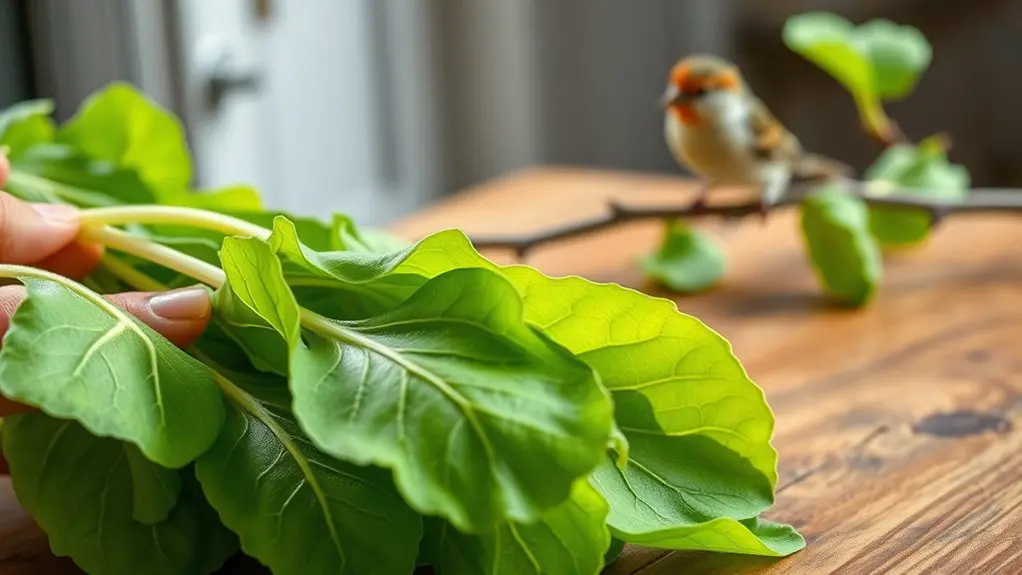
First, give those radish leaves a good rinse to wash away any pesticides, dirt, or other stuff you don’t want your bird eating. After that, chop the leaves into small pieces—this helps your bird eat them safely and makes digestion easier.
Then, just serve them in moderation as part of a balanced diet to keep your feathered friend healthy and happy.
Washing And Cleaning
Since radish leaves can carry dirt, pesticides, and bacteria, you should rinse them thoroughly under running water before offering them to your bird. Proper cleaning guarantees safety and reduces health risks associated with contaminants.
Follow these steps:
- Gently scrub the leaves with a soft brush or your fingers to remove stubborn dirt or residues.
- Soak the leaves in a water-vinegar solution (1 part vinegar to 3 parts water) for 3–5 minutes to eliminate pesticides and pathogens.
- Rinse the leaves again under running water to remove any vinegar residue.
- Dry the leaves completely using a clean towel or paper towels to prevent moisture accumulation, which can cause mold or spoilage.
Also, inspect leaves for wilting, discoloration, or damage. If you see any unhealthy specimens, just discard them to keep your bird safe.
Serving And Portioning
Although radish leaves are nutritious, proper serving and portioning guarantee your bird benefits without risk. After thoroughly washing the leaves to remove pesticides and dirt, chop or tear them into small, manageable pieces to reduce choking hazards and make eating easier. Slightly cooking the leaves softens their texture, which can make them more appealing and easier to digest.
Serve radish leaves in small portions, about a teaspoon or less, as a dietary supplement rather than a main part of the diet. It’s a good idea to introduce these leaves gradually so you can keep an eye on how your bird tolerates them.
Watch closely for any signs of digestive upset or allergic reactions. Taking this careful approach helps make sure radish leaves add something positive to your bird’s diet without causing any problems. It’s all about balance and paying attention to your bird’s needs.
How Often Should You Feed Radish Leaves?
You should feed radish leaves to your birds in moderation—usually once or twice a week. This helps avoid any digestive issues or nutrient imbalances.
It’s a good idea to offer small, fresh portions. That way, your birds get the benefits without too much fiber or any unwanted contaminants.
Also, make sure to balance radish leaves with a variety of other foods. This keeps your birds healthy and prevents them from relying too much on just one type of food.
Feeding Frequency Guidelines
When incorporating radish leaves into your bird’s diet, feeding them two to three times per week strikes a balance between nutritional benefits and digestive health. This frequency helps prevent digestive upset while offering essential nutrients.
Consider these guidelines: Feed radish leaves 1-3 times weekly to maintain dietary variety without overwhelming the digestive system. Limit feeding to once or twice weekly initially, especially for birds new to radish leaves, to monitor tolerance.
Observe your bird closely for any signs of gastrointestinal discomfort. If you notice any adverse reactions, reduce the feeding frequency.
Avoid excessive feeding, as it may disrupt gut function and lead to health issues.
Following these evidence-based practices ensures you safely include radish leaves in your bird’s diet without compromising well-being. It’s all about keeping your bird happy and healthy!
Moderation And Variety
Because radish leaves contain compounds that can affect digestion, feeding them in moderation, about once or twice weekly, is essential to safeguard your bird’s gastrointestinal health. You should offer small amounts to avoid overloading their digestive system.
Incorporating a variety of greens alongside radish leaves helps guarantee a balanced nutrient intake and reduces risks of deficiencies or excesses. Rotating radish leaves with other safe leafy greens provides a broad spectrum of vitamins and minerals, supporting overall health.
Whether raw or cooked, moderation remains key. Keep an eye on your bird’s response to radish leaves and adjust feeding frequency if you notice any digestive discomfort or changes in behavior.
This careful approach maintains dietary balance while enriching your bird’s diet with diverse nutrients.
Organic vs. Non-Organic Radish Leaves: What’s Best?
Although both organic and non-organic radish leaves can provide nutritional benefits for birds, organic leaves generally offer a safer option because they don’t have synthetic pesticides and fertilizers.
Organic radish leaves are safer for birds, free from synthetic pesticides and fertilizers.
When deciding what’s best for your bird, consider these points: Organic radish leaves lack synthetic chemicals, which means less risk of toxin exposure. Non-organic leaves might’ve pesticide residues. Washing them helps, but it doesn’t always get rid of everything.
Organic leaves also tend to be more nutrient-dense since chemical treatments in non-organic farming can wear down soil nutrients.
If your bird is sensitive to chemicals or you feed radish leaves often, going organic is the smarter choice to keep your bird healthy.
How to Tell If Your Bird Likes Radish Leaves
If you want to determine whether your bird likes radish leaves, carefully observe its behavior during feeding sessions. Notice if your bird actively chews, pecks, or consumes the leaves, showing clear preference over other greens.
Positive indicators include vocalization, chirping, or repeatedly returning to the leaves, signaling enjoyment. Also, keep an eye on your bird’s droppings for normal consistency. This suggests acceptance and proper digestion.
| Behavior Observed | Interpretation |
|---|---|
| Active chewing or pecking | Indicates interest and liking |
| Vocalizing or chirping | Suggests enjoyment during feeding |
| Repeated seeking | Demonstrates preference and acceptance |
Systematic observation of these signs will help you objectively conclude if radish leaves are a favorable addition to your bird’s diet. It’s a great way to make sure your feathered friend is happy with their greens!
Potential Risks When Feeding Radish Leaves to Birds
When feeding radish leaves to your bird, you should be aware of several potential risks despite their nutritional benefits. While radish leaves contain essential vitamins and minerals, overfeeding or improper preparation can lead to issues.
Radish leaves offer nutrients but require careful feeding to avoid health risks in birds.
For example, overconsumption of fiber may cause digestive upset or diarrhea. Pesticide residues on non-organic leaves can pose health hazards if not thoroughly washed. Also, some birds might experience allergic reactions or gastrointestinal discomfort due to specific compounds.
Excessive intake can create nutrient imbalances that disrupt overall health. To minimize risks, feed radish leaves in moderation, make sure to wash them thoroughly, and keep an eye on your bird for any adverse reactions.
This way, you can safely include radish leaves in your bird’s diet without worrying about potential problems.
Frequently Asked Questions
Can Radish Leaves Help Improve a Bird’s Feather Quality?
Yes, radish leaves can help improve your bird’s feather quality by providing essential vitamins, antioxidants, calcium, and magnesium. These nutrients support feather growth, repair, and strength.
All of this contributes to healthier, more vibrant plumage, especially during molting periods. It’s a simple way to give your bird a natural boost. Just make sure to introduce radish leaves gradually to their diet.
Do Radish Leaves Affect a Bird’s Digestion Speed?
Think of radish leaves as a double-edged sword. They can speed your bird’s digestion with nutrients, yet slow it down because of their high fiber.
Feed them moderately and make sure they’re properly prepared. This helps keep your bird’s digestive system in balance. It also prevents any blockages from happening.
Are Radish Leaves Safe for Baby Birds?
Yes, radish leaves are safe for baby birds when washed thoroughly and chopped into small pieces. They provide essential nutrients like calcium and vitamin C.
Just make sure to introduce them gradually. This way, you can keep an eye out for any digestive sensitivities or reactions. It’s always better to be cautious when trying new foods with little ones.
Can Radish Leaves Be Mixed With Other Greens for Birds?
Yes, you can mix radish leaves with other greens like spinach and kale to diversify your bird’s diet. Just make sure to wash all the leaves thoroughly to remove any pesticides. This helps keep the feeding experience safe and nutritious.
It’s a great way to offer your bird a balanced variety of nutrients. Plus, changing things up can make mealtime more interesting for them!
How Do Radish Leaves Compare to Other Leafy Vegetables for Birds?
You’ll find radish leaves milder and lower in oxalates than spinach or kale. They offer comparable vitamins and minerals but come with fewer digestive risks. This makes them a balanced, safer alternative to other nutrient-rich leafy greens for birds.
Conclusion
You can safely add radish leaves to your bird’s diet, but moderation is key to avoid overloading their system. These leaves offer valuable nutrients like vitamins A and C, which support overall health. Always wash and prepare them properly to reduce pesticide exposure, especially if they’re non-organic.
Watch your bird’s reaction closely. If they peck enthusiastically, you’ve struck gold. Just remember, like any new food, radish leaves should complement, not replace, a balanced diet.