
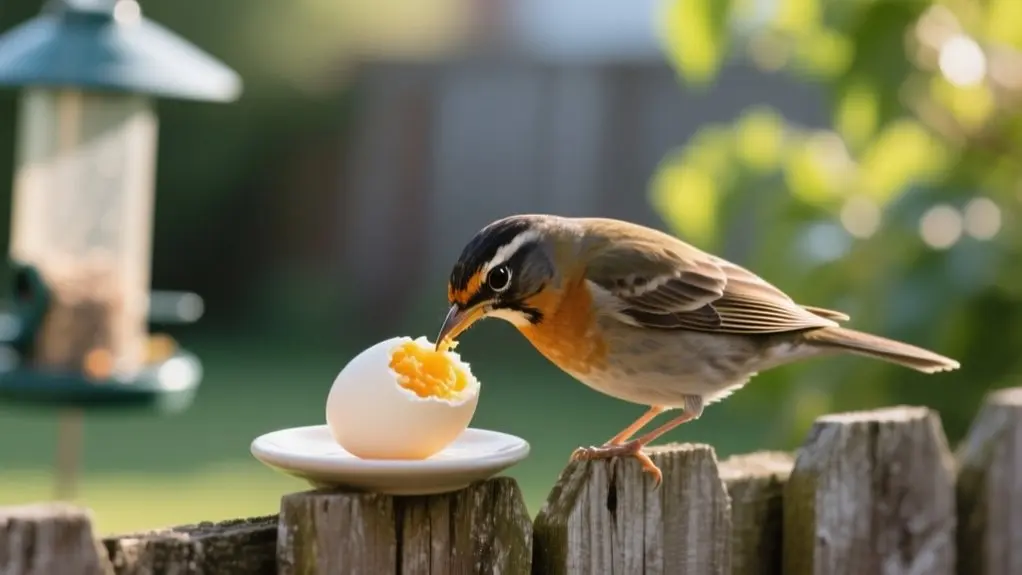
Yes, you can safely feed birds hard boiled eggs, as they offer valuable protein, calcium, and crucial nutrients to support their health. Just make certain the eggs are fully cooled, plain, and given in small portions.
Crushing and roasting the eggshells guarantees birds get essential calcium safely. Watch their response and adjust feeding accordingly, since too much or improper handling could cause risks.
Keep exploring to discover how to do this best and which birds benefit most.
Is It Safe to Feed Birds Hard Boiled Eggs?
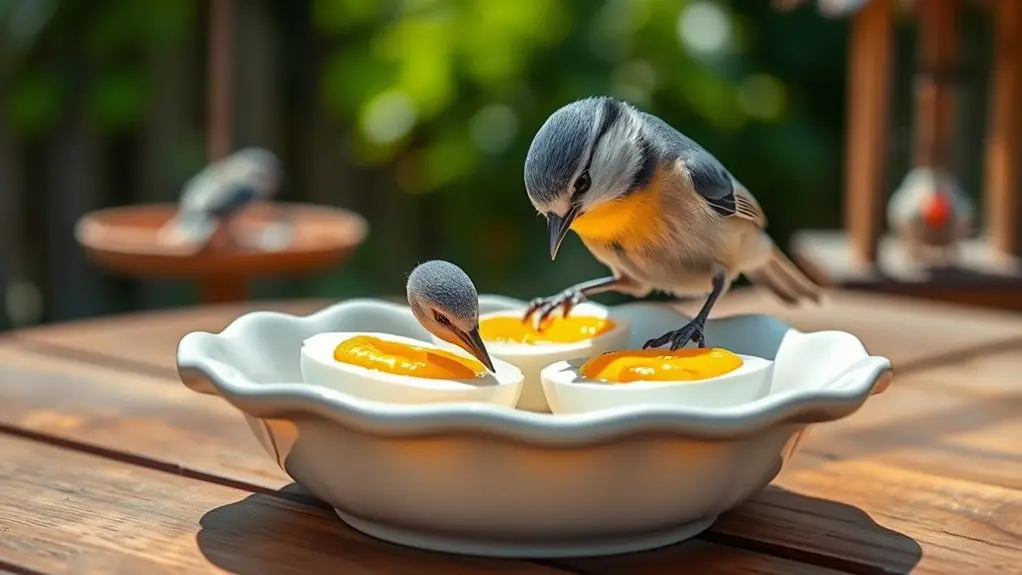
Wondering if you can safely feed hard-boiled eggs to birds? Yes, you can! Hard boiled egg is a safe and nutritious option for birds, providing essential protein and nutrients.
Hard boiled eggs are a safe, nutritious treat for birds, offering essential protein and nutrients.
To guarantee safety, always cool the hard boiled egg completely before offering it to prevent burns or spoilage.
Crushing the eggshells is important too, as they supply calcium crucial for birds’ bone health and egg production.
Remember to feed hard boiled egg in moderation, about two to three times a week, to avoid health issues from overfeeding.
Keep an eye on how birds respond when you introduce hard boiled egg into their diet, making sure they enjoy and tolerate it well.
Following these tips helps you safely incorporate hard boiled egg into bird feeding.
Nutritional Benefits of Hard Boiled Eggs for Birds
You’ll find hard-boiled eggs packed with protein and essential vitamins that support your birds’ growth and energy.
Plus, the high calcium content—especially from crushed shells—helps strengthen their bones and is great for females during nesting.
Just make sure to feed small portions a few times a week, and you’ll give their overall health a nice boost without overdoing it.
High Calcium Content
Because calcium plays an essential role in bone development and overall health, offering birds hard-boiled eggs can provide them with a rich, natural source of this crucial mineral. Birds, especially nesting females, benefit from the calcium in hard-boiled eggshells. This supports egg production and strengthens shells.
Crushing the shells makes it easier for birds to digest and absorb calcium. This familiar nutrient source boosts their vitality and well-being.
| Benefit | Explanation |
|---|---|
| Bone Development | Calcium supports chick bone growth |
| Egg Production | Helps females produce strong eggshells |
| Natural Diet | Birds instinctively seek calcium sources |
| Digestibility | Crushed shells improve nutrient absorption |
| Overall Health | Supports vitality and strength |
Protein-Rich Nutrients
Although offering hard-boiled eggs might seem unusual, they provide birds with a complete protein source that includes all essential amino acids crucial for muscle development and overall health.
These protein-rich nutrients are especially beneficial during moulting when birds need extra nourishment to support feather regrowth.
Beyond protein, hard-boiled eggs supply healthy fats that boost energy and liveliness.
Regularly feeding small portions two to three times a week helps enhance your bird’s immune system, promoting resilience against illness.
Including hard-boiled eggs in their diet supports balanced nutrition, contributing to muscle strength and overall well-being.
Essential Vitamins Benefits
When you include hard-boiled eggs in your bird’s diet, they gain access to essential vitamins like Vitamin D, B12, and riboflavin that boost energy and support overall health.
These vitamins play an important role in maintaining your bird’s vitality and immune system.
Boiled eggs also provide healthy fats that improve feather quality and overall well-being.
Adding crushed eggshells alongside boiled eggs supplies calcium, strengthening bones and beaks. This combination is especially beneficial for laying hens, preventing nutrient depletion and promoting reproductive health.
Since birds find boiled eggs highly palatable, they’ll readily consume these nutrient-packed treats.
Why Eggshell Calcium From Hard Boiled Eggs Helps Birds
You’ll want to know that eggshell calcium is super important for birds, especially when it comes to building strong bones and raising healthy chicks.
To make it safe for them, just crush the shells and roast them at 300°F—that kills any bacteria.
This easy step helps birds absorb the calcium better and stay healthy over time.
Calcium Benefits For Birds
Calcium plays an essential role in keeping birds healthy, especially for nesting females who need extra support for strong eggshells and developing chicks.
The calcium benefits for birds are significant, as calcium from eggshells strengthens their bones and beaks.
When you provide crushed eggshells from hard-boiled eggs, you offer a natural, instinctively sought-after calcium source that birds readily consume.
This extra calcium helps prevent deficiencies that could weaken eggshells or stunt chick growth.
Including eggshell calcium in their diet supports overall health and liveliness.
Regularly offering this nutrient-rich supplement guarantees birds get the calcium they need for proper development.
Preparing Eggshells Safely
Although hard-boiled eggshells offer a valuable source of calcium for birds, you need to prepare them safely to avoid harmful bacteria. Roasting eggshells at 300°F kills bacteria and makes them easier for birds to digest.
After roasting, crush the eggshells into small pieces so birds can consume the calcium effectively. Providing eggshells regularly supports bird health, especially for nesting females and growing chicks.
Adding eggshells to bird feed also encourages variety and ideal nutrition.
| Preparation Step | Benefit |
|---|---|
| Roast at 300°F | Kills bacteria |
| Dry thoroughly | Prevents mold |
| Crush into small bits | Easier consumption |
| Offer alongside feed | Increases intake variety |
| Repeat regularly | Supports bone development |
Why Crushing Hard Boiled Eggshells Helps Birds
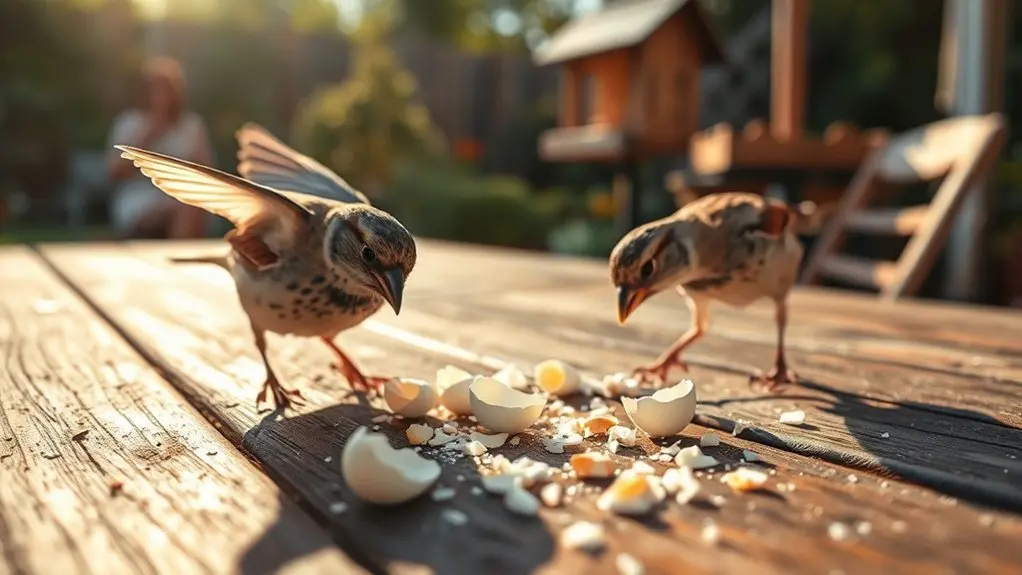
When you crush hard-boiled eggshells before offering them to birds, you make it much easier for them to eat and benefit from the high calcium content. Crushed eggshells provide a crucial calcium boost, especially important for nesting females and growing chicks.
By breaking the shells into smaller pieces, you improve their digestibility, allowing birds to absorb nutrients more effectively. Including crushed eggshells alongside other bird feed encourages a varied diet, which supports overall health and well-being.
This simple step guarantees birds get the calcium they need without struggling to break down large, tough shells.
Should You Roast Eggshells Before Feeding Birds?
If you want to guarantee the eggshells you feed birds are safe and nutritious, roasting them is a smart step. Roasting eggshells at 300°F kills harmful bacteria, making them safer for birds. It also dries and hardens the shells, so you can crush them easily for better digestion.
Removing the membrane before roasting further improves safety and digestibility. Routine feeding of crushed, roasted eggshells provides essential calcium, especially important for nesting females.
| Benefit | Reason |
|---|---|
| Safety | Kills bacteria at 300°F |
| Digestibility | Easier to crush when roasted |
| Nutritional Support | Rich calcium source for birds |
Preparing Hard Boiled Eggs for Birds
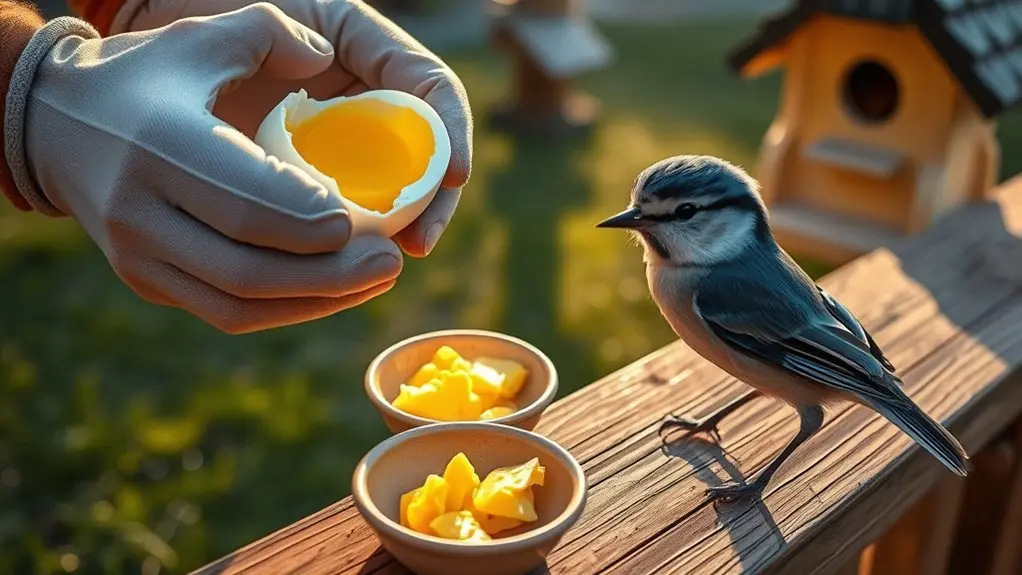
After confirming eggshells are properly roasted and crushed, you can prepare the hard-boiled eggs themselves for your feathered visitors.
Make sure the boiled eggs are completely cooled before serving to avoid burns or discomfort.
You can offer them plain or lightly scrambled, but don’t add salt or oil, as these aren’t safe for birds. Serving small portions, about 1 teaspoon to 1 tablespoon, is best to provide a protein-rich treat without overfeeding.
Remember, the crushed eggshells add essential calcium, so removing the membranes and roasting the shells at 300°F beforehand guarantees they’re safe and digestible.
How Often Should You Offer Hard Boiled Eggs to Birds?
You should offer hard boiled eggs to birds about 2-3 times a week, but only in small portions—think a teaspoon to a tablespoon. This helps avoid overfeeding.
It’s also good to keep an eye on the seasons since birds that are moulting or nesting really benefit from the extra protein and calcium.
Always watch how the birds respond and be ready to adjust how often you offer eggs based on what species they’re and what they seem to prefer.
Recommended Feeding Frequency
While hard boiled eggs provide valuable nutrients, offering them to birds 2-3 times per week guarantees you don’t overwhelm their diet with excess protein and fat.
This recommended feeding frequency helps maintain a balanced diet, especially for non-laying birds.
You should introduce eggs gradually, allowing your birds to adapt and show their preference.
For laying hens, daily inclusion might be beneficial to replenish essential nutrients, but you’ll need to monitor their intake carefully.
Regularly offering hard boiled eggs supports overall bird health, particularly during moulting or breeding seasons when extra protein is essential.
Sticking to the recommended feeding frequency ensures you provide the benefits without risking overfeeding or nutritional imbalance.
Portion Size Guidelines
Since birds vary in size and dietary needs, offering hard boiled eggs in small portions, typically between one teaspoon and one tablespoon, is best.
Following proper portion size guidelines helps you avoid overfeeding while providing essential nutrients. Here’s how to manage it:
- Offer 1 teaspoon for small birds and up to 1 tablespoon for larger species.
- Feed hard boiled eggs 2-3 times weekly for most birds, including parrots.
- Give laying hens a small amount daily during nesting to support calcium needs.
- Observe your bird’s response and adjust portions or frequency as necessary.
Seasonal Feeding Considerations
Adjusting how often you offer hard boiled eggs to birds depends greatly on the season and their specific nutritional needs. During breeding and moulting seasons, birds require more protein and calcium, so offer hard-boiled eggs 2–3 times per week. In colder months, increase frequency to provide extra energy. For non-laying birds, smaller portions prevent overfeeding. Always monitor their response and guarantee eggs are fresh and well-prepared.
| Season | Frequency of Hard-Boiled Eggs | Notes |
|---|---|---|
| Breeding/Moulting | 2–3 times per week | High protein and calcium needs |
| Winter | 3–4 times per week | Extra energy for survival |
| Non-Laying Birds | 1–2 times per week | Smaller portions recommended |
| All Seasons | Monitor intake | Adjust based on bird’s response |
How to Combine Hard Boiled Eggs With Other Bird Foods
When you combine hard-boiled eggs with seeds, grains, or fresh greens, you create a nutrient-packed meal that appeals to a variety of bird species. To feed birds effectively and keep them coming back, try these combinations:
- Crush hard-boiled eggs and mix them with seeds and grains. Birds love the extra protein and calcium.
- Add small egg pieces to fruit salads, offering a balanced treat for birds that enjoy fruits.
- Serve hard-boiled egg chunks alongside fresh greens like kale or spinach to vary textures birds eat.
- Incorporate crushed eggshells into homemade bird feed mixes for a calcium boost essential to birds’ health.
Using these methods, you’ll help birds thrive while making your feeding station more attractive.
Risks of Feeding Hard Boiled Eggs to Wild Birds
Although hard-boiled eggs can offer birds valuable nutrients, feeding them improperly carries risks you should be aware of. If you don’t crush the shells, birds might choke or miss out on calcium.
Overfeeding hard-boiled eggs can cause nutritional imbalances because of their high protein content. Also, leftover egg bits attract pests, which can disrupt the local ecosystem.
You should watch how wild birds respond, as some species are sensitive to diet changes.
| Risk | Cause | Impact |
|---|---|---|
| Bacterial contamination | Unclean or improperly cooked eggs | Illness in birds |
| Choking hazard | Whole or large shell pieces | Injury or death |
| Nutritional imbalance | Excessive feeding | Health problems |
Storing and Handling Hard Boiled Eggs Safely
Keeping hard-boiled eggs fresh and safe means storing them properly in the refrigerator at 40°F (4°C) or below. Proper handling and storing prevent bacterial growth and keep the eggs safe for you and the birds you feed.
Follow these key steps:
- Peel the eggs before storing to reduce bacteria buildup under the shell.
- Place peeled eggs in a sealed container to maintain freshness.
- Label the container with the boiling date to track how long they’ve been stored.
- Use the eggs within one week for ideal safety and quality.
Always let eggs cool completely before handling or offering them to birds. Avoid adding salt or seasoning, as these can harm wildlife.
Proper storing and handling keep hard-boiled eggs safe and enjoyable for everyone.
Watch Birds’ Preferences and Adjust Feeding
How can you tell if birds really like hard-boiled eggs? You need to watch birds’ preferences closely. Observe how much they eat and whether they prefer crushed shells or whole pieces.
Offering eggs with other foods helps you spot their favorites and guarantees a balanced diet. Adjust feeding based on their response to avoid overfeeding.
| Observation | Action |
|---|---|
| Eat eggs enthusiastically | Continue offering regularly |
| Ignore or peck lightly | Try crushing shells or mix foods |
| Eat sparingly | Reduce portion size |
Which Bird Species Commonly Eat Hard Boiled Eggs?
Observing how different birds respond to hard-boiled eggs can help you identify which species benefit most from this nutritious treat. Many birds eat boiled eggs for the protein and nutrients they provide.
Here are four common bird groups that enjoy them:
- Parrots, crows, and robins thrive on the protein found in boiled eggs.
- Laying hens and female birds often eat boiled eggshells for extra calcium during breeding.
- Raptors and scavengers like hawks and vultures opportunistically eat boiled eggs when available.
- Small birds such as finches and sparrows benefit from finely crushed boiled eggs for a protein boost.
Frequently Asked Questions
Can Baby Birds Eat Hard Boiled Eggs?
Yes, baby birds can eat hard boiled eggs. You’ll find they offer great nutritional benefits, providing essential protein and nutrients that support growth.
When you mash the egg, it becomes easy for baby birds to eat. Don’t forget to cool it completely and avoid any seasonings.
Adding crushed eggshells gives extra calcium, promoting strong bones.
Including hard boiled eggs in their diet helps keep baby birds healthy and thriving.
Do Hard Boiled Eggs Attract Unwanted Animals?
Yes, hard boiled eggs do attract unwanted animals, so you need to be cautious.
Their strong smell and high protein content can cause animal interference, drawing raccoons, rodents, and stray cats to your feeding area.
To avoid this, you should offer eggs in controlled feeders and clean up any leftovers promptly.
Doing so helps you focus on feeding birds without inviting other animals that disrupt your yard’s balance.
Can Feeding Eggs Cause Birds to Become Dependent on Humans?
Feeding eggs won’t make birds dependent on you if you maintain nutritional balance in their diet. You should offer eggs occasionally as a supplement, not a staple.
Birds naturally forage for various foods, so they won’t rely solely on what you provide.
Are There Any Signs of Egg Allergies in Birds?
Yes, you can watch for allergy symptoms in birds after they eat eggs. If your bird vomits, has diarrhea, or shows itching and rashes, these are clear signs.
You might also notice feather plucking or unusual behavior like aggression or lethargy.
If you spot any of these allergy symptoms, consult an avian vet right away to guarantee your bird stays healthy and adjusts its diet safely.
Can Hard Boiled Eggs Help Birds During Winter?
Yes, hard-boiled eggs can help birds during winter. You’ll provide them with essential nutritional benefits like protein and fats, which boost their energy and help maintain body heat in cold weather.
The calcium from crushed shells supports bone strength and egg production, especially for nesting females.
When you offer hard-boiled eggs regularly, you’ll improve their survival chances by supplementing their diet with crucial nutrients when natural food is scarce.
Conclusion
You might wonder if feeding hard boiled eggs to birds is truly safe and beneficial. The truth is, yes, you can offer them as a nutritious treat, especially crushed eggshells for calcium.
Just be sure to handle and store them properly to avoid risks. Keep an eye on which birds enjoy them and adjust accordingly. By doing this thoughtfully, you’ll support your feathered friends without any harm, proving that this simple snack can really help.