
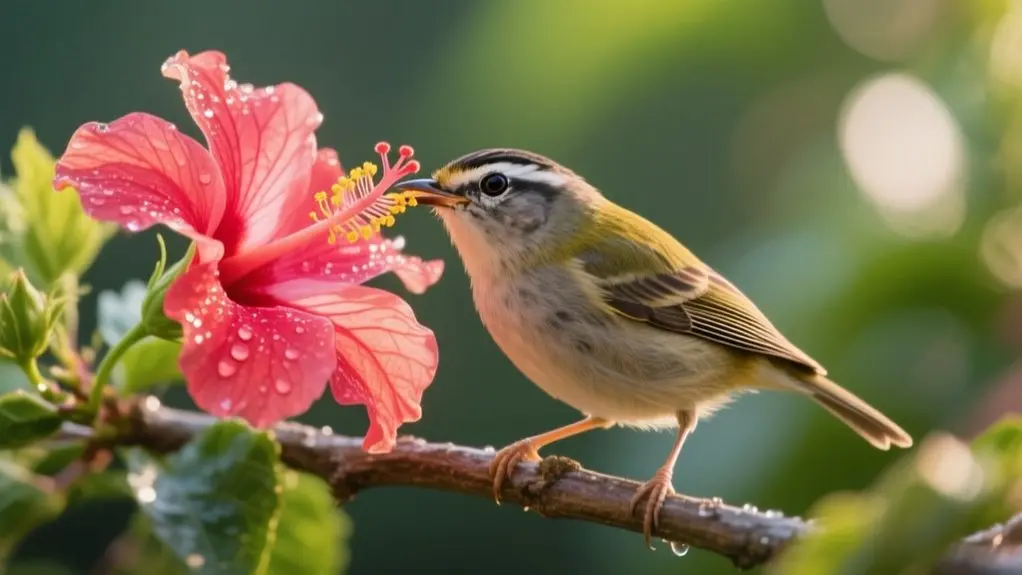
You can safely offer hibiscus flowers to many birds, as they’re rich in nectar, vitamins, and antioxidants that support their health. Birds like hummingbirds, parrots, and finches enjoy nibbling on the petals and blossoms, which also provide natural enrichment.
Just make sure the flowers are pesticide-free and introduced gradually. While birds may sometimes damage your hibiscus, understanding how and why helps you protect your garden better. Keep exploring to learn smart ways to balance bird feeding with garden care.
Why Birds Are Attracted to Hibiscus Flowers
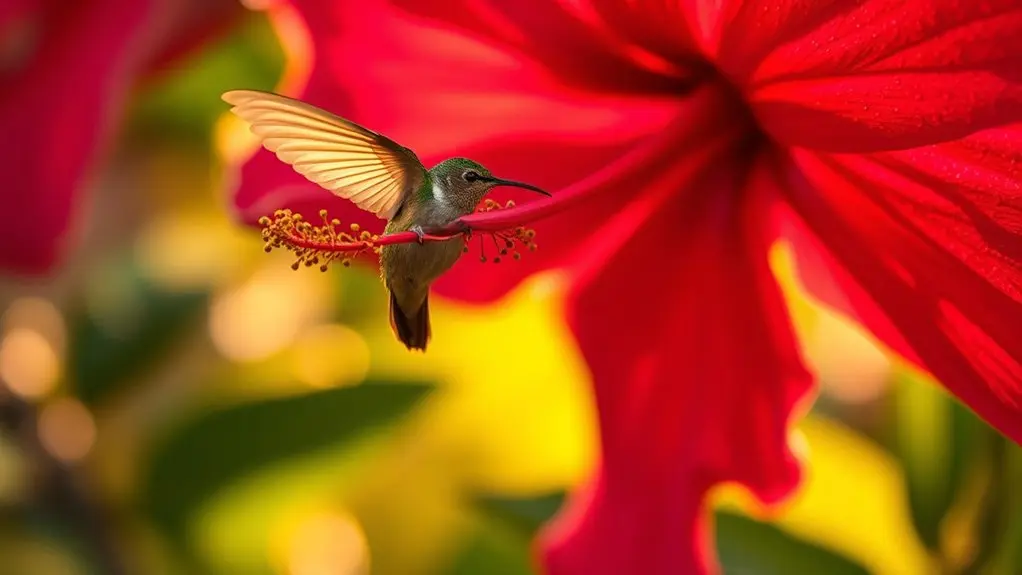
Why do birds flock to hibiscus flowers? You’ll notice that birds are drawn to these blooms primarily because of their rich nectar, which serves as a nutritious option, especially for hummingbirds and other nectar feeders.
The vibrant colors of hibiscus flowers act as natural signals, catching birds’ attention and indicating a reliable food source.
Beyond nectar, hibiscus plants attract various insects, offering additional meals for birds like finches.
You’ll also find that the soft petals and tender leaves provide birds with a nutritious option packed with vitamins and moisture.
Since hibiscus flowers bloom in multiple seasons, they offer birds a steady food supply, making your garden a welcoming spot throughout the year for these feathered visitors.
Bird Species That Eat Hibiscus Flowers
Several bird species, including finches, parrots, and hummingbirds, regularly feed on hibiscus flowers.
You’ll notice hummingbirds favor hibiscus nectar as a primary food source, while parrots enjoy tearing apart the blossoms, which offers both nutrition and mental stimulation.
Finches often nibble on the soft petals, benefiting from this safe flower addition to their varied diet.
If you’re looking to attract diverse birds eating safe flowers, planting hibiscus in your garden is a smart choice.
Planting hibiscus is an excellent way to attract a variety of birds that enjoy safe, natural flowers.
These flowers not only provide nourishment but also encourage natural foraging behaviors.
By including hibiscus in addition to your bird’s diet, you support their health and happiness while enhancing local biodiversity.
Hibiscus truly serves as a valuable, safe treat for many bird species.
Nutritional Benefits of Hibiscus for Birds
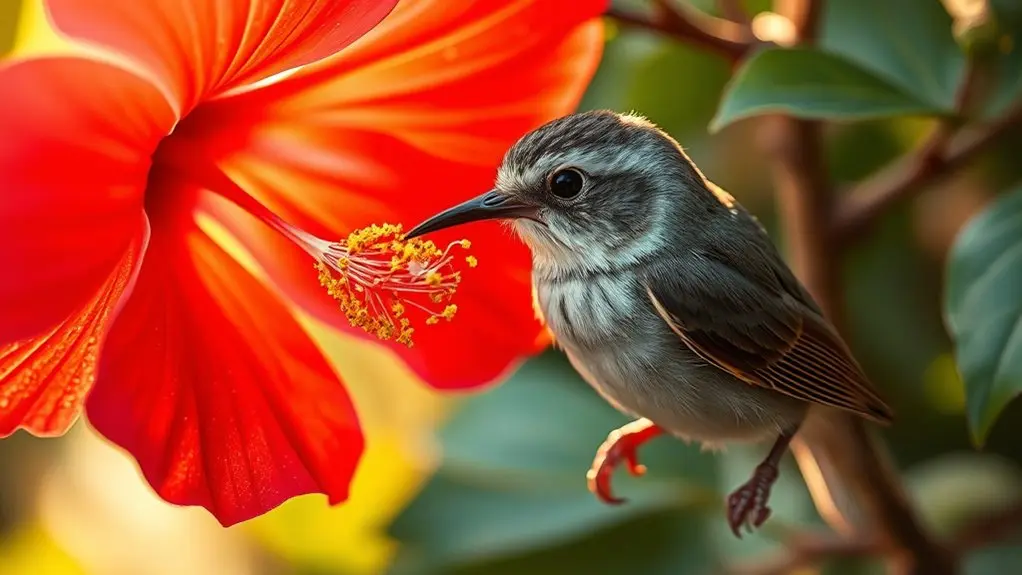
Beyond simply attracting birds, hibiscus flowers offer impressive nutritional benefits that support their overall well-being. Including hibiscus flowers in a bird’s diet can enhance their balanced diet in several ways:
- Rich in antioxidants that boost immune function
- High in Vitamin C, promoting healthy skin and immunity
- Soft petals encourage natural foraging and enjoyment
- Aid digestion, supporting gastrointestinal health
- Add variety, providing mental stimulation and enrichment
How Birds Eat and Benefit From Hibiscus
Although hibiscus flowers captivate birds with their vibrant colors and soft petals, they also provide essential nutrients that support birds’ health. Birds like finches and parrots consume fresh flowers, petals, and nectar, enhancing their diet with antioxidants and Vitamin C.
These fresh flowers encourage natural foraging and offer mental stimulation, which is crucial for their well-being.
| Part of Hibiscus | Benefit to Birds | Effect on Bird’s Health |
|---|---|---|
| Petals | Soft, edible | Nutrient-rich, easy to digest |
| Nectar | Energy source | Boosts vitality |
| Buds | Foraging enrichment | Supports immune function |
| Fresh flowers | Dietary variety | Reduces stress, aids digestion |
Including hibiscus flowers in a bird’s diet promotes both health and happiness.
Signs of Hibiscus Damage From Birds
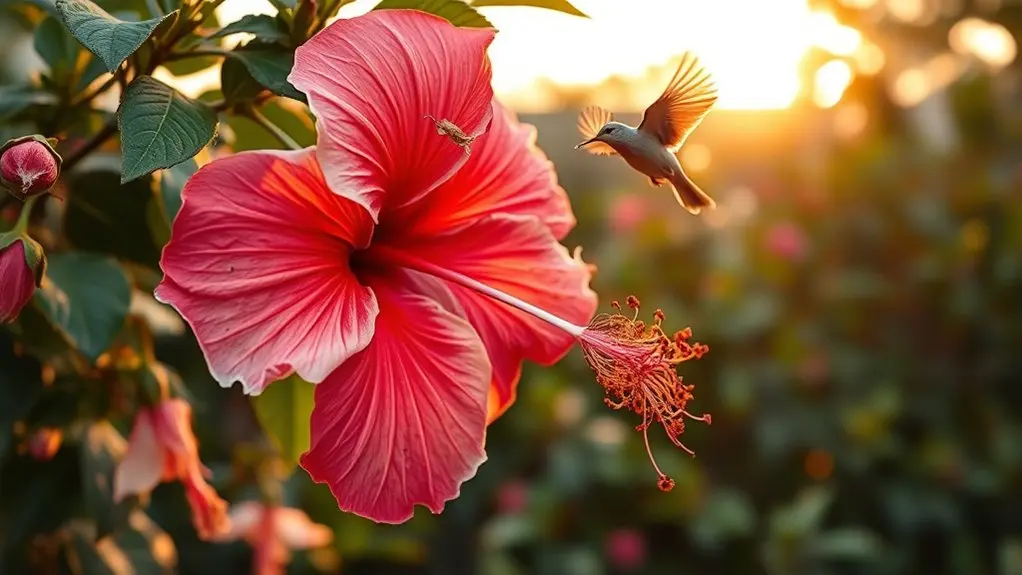
You’ll notice visible leaf and bud damage when birds feed on your hibiscus. It’s often marked by smooth, angled cuts that stand out.
Plus, if you see petals with missing or ragged edges, that’s another clear sign birds have been at work.
By paying attention to these feeding behaviors, you can easily spot any harm to your plants.
That way, you’ll know when it’s time to take steps to protect your hibiscus.
Visible Leaf And Bud Damage
When you notice smooth, angled cuts on your hibiscus leaves and buds, it’s a clear sign that birds, especially finches, are feeding on them. This feeding can cause visible leaf and bud damage, which impacts your plant’s health and bloom potential.
Besides your bird’s enjoyment, this foraging often results in missing or damaged flower buds that never fully develop. You might also see tender leaves with clean, angled cuts.
There could be a reduced number of blooms because of bud loss and slowed new growth from extensive leaf damage.
Widespread damage might even be a sign of overpopulation.
Petal Chewing Patterns
If you spot irregularly chewed edges or missing petals on your hibiscus flowers, birds, especially finches, are likely the culprits.
These birds show distinct petal chewing patterns: smooth, tilted cuts where they tear the petals with their beaks. Their feeding preferences favor the soft petal texture, making hibiscus flowers an attractive snack during periods of seasonal availability.
You may notice groups of birds feeding together, which increases the extent of damage quickly.
Watching for these signs can help you confirm bird activity and assess how much impact they’ve on your plants. Understanding these petal chewing patterns helps you manage your hibiscus garden better while appreciating how birds interact with your flowers throughout the seasons.
Signs Of Feeding Behavior
Spotting missing petals, chewed buds, or clean tilted cuts on your hibiscus flowers often signals bird feeding activity, especially from finches.
These signs reflect distinct bird feeding behavior and avian foraging patterns that can impact your hibiscus plant health.
To help you identify if birds are causing damage, watch for:
- Missing petals and chewed flower buds
- Clean, angled cuts on flower parts
- Significant leaf damage from overpopulation
- Bird droppings near the plant
- Presence of feathers or nesting materials nearby
Recognizing these signs lets you manage bird activity effectively and protect your hibiscus plants from further harm while understanding how birds interact with your garden.
Finch Feeding Behavior on Hibiscus
You’ll notice finches are really attracted to hibiscus flowers. They often feed on the petals, leaves, and even the seeds.
It’s kind of charming to watch, and their activity definitely adds a bit of life to your garden.
But, here’s the thing—if they feed too much, it can actually harm the leaves and even reduce the number of blooms.
Finch Attraction To Hibiscus
Because hibiscus flowers boast vibrant colors and offer sweet nectar, finches are naturally drawn to them as a prime feeding spot in gardens. Their finch behavior revolves around seeking these nectar sources while also enjoying seeds and tender leaves.
You’ll notice finches often forage in groups, making hibiscus plants a social hub.
Here’s what attracts finches to hibiscus:
- Bright hibiscus colors catch their attention from a distance
- Nectar sources provide essential energy
- Seeds and leaves offer additional nutrition
- Insects on hibiscus, like Japanese beetles, serve as extra food
- Nearby flowering plants influence their feeding patterns
Feeding Impact On Plants
While finches flock to hibiscus for nectar and seeds, their feeding habits can sometimes harm the plants. You need to balance finch population control with hibiscus health monitoring to protect your garden. Overpopulation causes leaf damage, reducing flower blooms and seed production.
Finches also eat pests like Japanese beetles, but this benefit can be outweighed by the plant damage they cause. Using pest management strategies and providing alternative food sources can help keep finches from overfeeding your hibiscus.
| Aspect | Positive Impact | Negative Impact |
|---|---|---|
| Finch Feeding | Pest consumption | Leaf and bud damage |
| Population Control | Prevents overfeeding | Difficult without monitoring |
| Health Monitoring | Early damage detection | Requires consistent effort |
Impact of Birds Feeding on Hibiscus
Although birds like finches bring some benefits by controlling pests, their feeding on hibiscus can cause noticeable damage.
You need to take into account bird habitat considerations carefully to maintain flower pollination dynamics and garden ecosystem balance.
Birds feeding on hibiscus may damage leaves and reduce the number of blooms. They can also limit seed production by overfeeding on tender parts.
In addition, their presence might attract more insects, which alters your garden’s insect population. This can disrupt the natural growth of hibiscus plants.
Finally, their activity can signal an imbalance in your garden’s ecosystem.
Safe Ways to Offer Hibiscus to Pet Birds
Understanding how birds interact with hibiscus in your garden helps you provide safe hibiscus treats to your pet birds.
Start by carefully choosing flowers based on flower selection criteria. Only pesticide-free, chemical-free hibiscus flowers are safe.
Before feeding, wash the petals thoroughly to remove any contaminants.
For hibiscus preparation methods, you can offer fresh petals whole or chopped, giving your birds a variety of textures to explore.
Introduce hibiscus gradually into their diet, watching for any adverse reactions.
Remember, hibiscus should complement a varied diet, not replace it.
Following these bird feeding tips guarantees your pet birds enjoy nutritious, safe hibiscus treats without risk, enriching their diet while keeping them healthy and happy.
Gardening Tips to Attract Birds and Protect Hibiscus
If you want to attract a variety of birds to your garden without harming your hibiscus plants, strategic planting and protection are key.
Incorporate plant diversity to create a thriving bird habitat that offers multiple food sources. Use smart feeding strategies to protect your hibiscus while keeping birds entertained.
Create a vibrant bird-friendly garden by mixing plants and using clever feeding to safeguard your hibiscus.
Plant hibiscus alongside other flowering plants to diversify food sources and reduce damage.
Use protective netting or barriers to shield hibiscus from overzealous finches.
Monitor bird activity regularly to gauge hibiscus health and adjust protection as needed.
Maintain a balanced garden ecosystem for natural pest control and healthier plants.
Offer alternative food sources like seeds or insects to divert birds from hibiscus flowers.
These steps help you balance bird attraction with hibiscus protection effectively.
Common Mistakes When Offering Hibiscus to Birds
You shouldn’t offer hibiscus flowers without first checking for pesticide residue because it can harm your birds.
Also, overfeeding hibiscus isn’t a good idea since it can upset their digestion and cause nutritional problems.
Overfeeding Risks
While hibiscus flowers can be a healthy treat, overfeeding them risks upsetting your bird’s diet balance. You should introduce hibiscus gradually, watching for overfeeding symptoms like digestive upset or weight gain.
Remember, hibiscus is high in sugars and shouldn’t replace essential foods. Maintaining nutritional balance is key to your bird’s health.
Avoid these common mistakes:
- Offering large amounts too quickly instead of a gradual introduction
- Letting your bird favor hibiscus over a varied diet
- Ignoring signs of digestive issues or obesity
- Neglecting to monitor overall nutritional intake
- Forgetting that hibiscus should only complement, not replace, other foods
Keep hibiscus as a treat, not a staple, to guarantee your bird stays healthy and balanced.
Pesticide Contamination
Maintaining your bird’s health goes beyond just controlling how much hibiscus they eat; it also means making sure the flowers are safe from harmful substances.
Pesticide contamination is a common mistake that puts bird safety at risk. You need to practice pesticide awareness by avoiding hibiscus flowers treated with chemicals, especially those from commercial sources.
Opt for hibiscus grown through organic gardening methods to reduce the risk of toxic residues. Always rinse flowers thoroughly before offering them to your birds to remove any lingering pesticides or contaminants.
Educate yourself on pesticide risks related to hibiscus and other garden plants to better protect your feathered friends.
Finally, monitor your birds closely when introducing new flowers to catch any adverse reactions early and keep their safety a top priority.
Alternatives to Hibiscus for Feeding Birds
Several safe and nutritious flowers can replace hibiscus to feed birds, enriching their diet and keeping them engaged. When choosing safe flower alternatives, focus on edible garden plants that boost bird health and provide variety.
Here are some bird nutrition tips with great options:
- Dandelions: rich in vitamins and safe for birds to nibble.
- Nasturtiums: edible petals with mild peppery flavor birds enjoy.
- Sunflowers: offer seeds packed with Vitamin E and Omega-6.
- Calendula: contains antioxidants and encourages natural shredding.
- Chamomile: supports digestion and has calming effects.
Avoid toxic varieties like lilies and oleander.
Balancing Bird Feeding Without Garden Damage
Offering a variety of flowers like dandelions and sunflowers can keep birds interested and reduce their impact on your hibiscus plants.
By diversifying food sources, you practice effective feeding strategies that support bird-friendly gardening and help maintain ecosystem balance.
Planting additional nutritious flowers nearby diverts birds from overfeeding on hibiscus, protecting your garden from damage.
Monitor bird activity regularly to spot any signs of overpopulation or excessive nibbling on hibiscus.
If needed, use protective netting or barriers to shield vulnerable plants.
Encouraging a diverse bird population not only enhances your garden’s health but also promotes natural pest control.
Balancing bird feeding without harming your garden guarantees both your hibiscus and local wildlife thrive together.
Frequently Asked Questions
Can Hibiscus Flowers Cause Allergies in Birds?
Yes, hibiscus flowers can cause allergic reactions in some birds, though hibiscus toxicity risks are generally low.
You should watch for bird health effects like respiratory distress or skin irritation after introducing hibiscus.
Since allergies vary by individual, start with small amounts and monitor your bird closely.
Always guarantee the flowers are pesticide-free to reduce risks.
If your bird shows any signs of allergy, stop feeding hibiscus and consult a vet immediately.
How Often Should Hibiscus Be Given to Pet Birds?
You might think giving hibiscus every day would turn your bird into a flower child, but actually, offering hibiscus two to three times a week works best.
Follow hibiscus serving suggestions by rotating it with other safe foods to keep things exciting. This way, you tap into hibiscus’s nutritional benefits without overdoing it.
Pay attention to bird preferences; some love it, others not so much, so tailor servings accordingly.
Are Hibiscus Leaves Safe for Birds to Eat?
Yes, hibiscus leaves are safe for birds to eat and offer several hibiscus leaf benefits.
If you provide pesticide-free leaves, you’re giving your bird a nutritious, moisture-rich treat.
Including hibiscus leaves in their diet can satisfy bird dietary preferences and encourage natural foraging.
Since hibiscus is among safe plants for birds, you can confidently add it to their menu.
Just watch for any unusual reactions when you introduce it.
Can Hibiscus Flowers Be Used to Treat Bird Illnesses?
Yes, you can use hibiscus flowers as natural remedies to support bird health.
Hibiscus benefits include anti-inflammatory and antioxidant properties, which may help alleviate minor digestive issues and boost the immune system.
You’ll find its calming effects useful for reducing stress-related behaviors in your bird.
Just introduce hibiscus gradually, watch for any reactions, and always consult a vet if your bird’s illness persists or worsens.
Do Dried Hibiscus Flowers Retain Nutritional Value for Birds?
Yes, dried hibiscus flowers retain nutritional value for birds. You’ll find dried flowers benefits include concentrated antioxidants and Vitamin C, making them a nutritious option compared to fresh ones.
When feeding, follow guidelines like guaranteeing they’re pesticide-free and offering them in moderation.
Mixing dried hibiscus into your bird’s food or as occasional treats assures they get those nutrients safely, promoting their health and mental stimulation through natural foraging behaviors.
Conclusion
If you want to invite birds to your garden without turning your hibiscus into a buffet, you’ll need a careful balance. Remember, hibiscus flowers offer more than beauty; they’re a tasty treat for some feathered friends.
By knowing which birds nibble on them and how to protect your blooms, you can keep your garden blooming and buzzing. After all, a little care goes a long way in turning your garden into a bird’s paradise without losing its charm.