
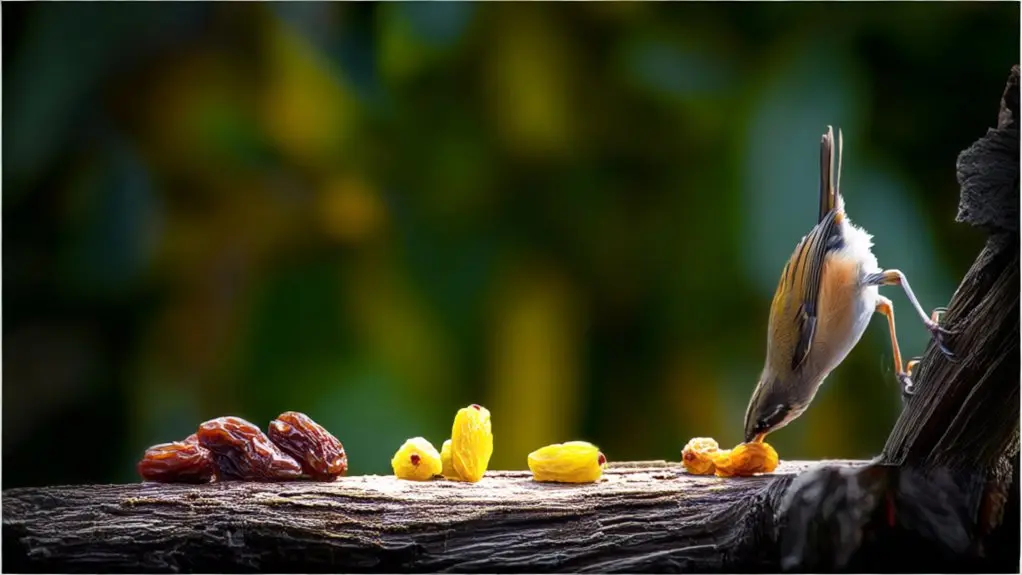
You can safely feed your birds raisins and sultanas in moderation, but it’s important to prepare them properly. Soak the dried fruits overnight to soften them, cut into small pieces, and offer as an occasional treat rather than a daily staple.
Overfeeding or serving hard, unsoaked pieces can cause digestive issues, choking, or health problems. If you take these precautions, raisins and sultanas can be a nutritious, energy-boosting snack your birds will enjoy.
More details on safe feeding practices are available. Just remember, a little goes a long way!
Are Raisins and Sultanas Safe for Different Bird Species?
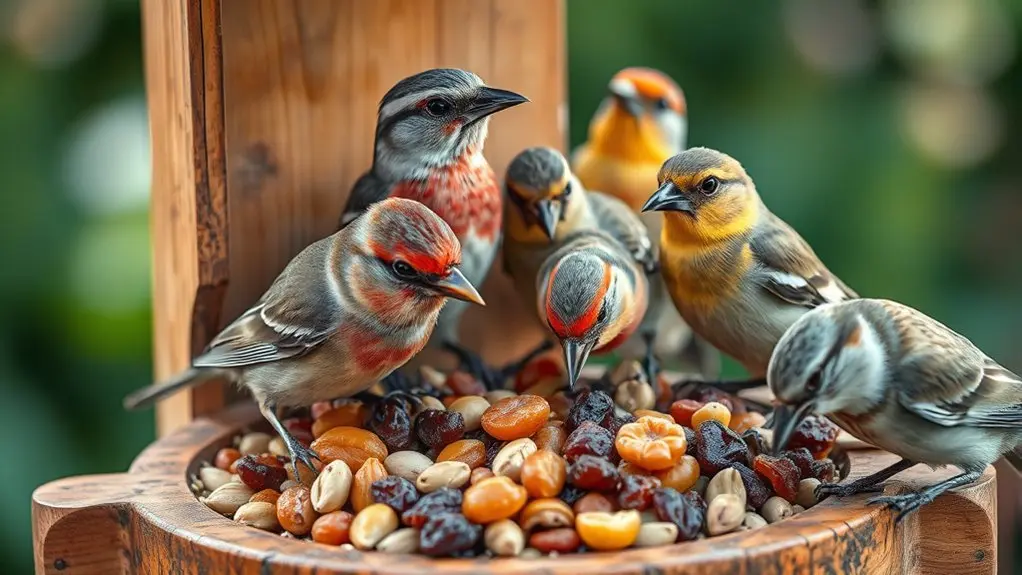
Although raisins and sultanas are known to cause kidney failure in dogs, they’re generally safe for many bird species, especially blackbirds. You should soak these dried fruits in water overnight before offering them. This improves their texture and acceptability while reducing any potential risks.
Keep in mind that while blackbirds and some other birds enjoy soaked raisins and sultanas, preferences vary widely among species. Some may favor fresh fruits or different preparations.
It’s important to observe your birds’ individual responses and adjust accordingly.
Even though these dried grapes are safe in moderation, avoid overfeeding to prevent health issues. By providing soaked raisins and sultanas thoughtfully, you can safely include them as a treat in your birds’ diet.
Why Birds Enjoy Raisins and Sultanas as Treats
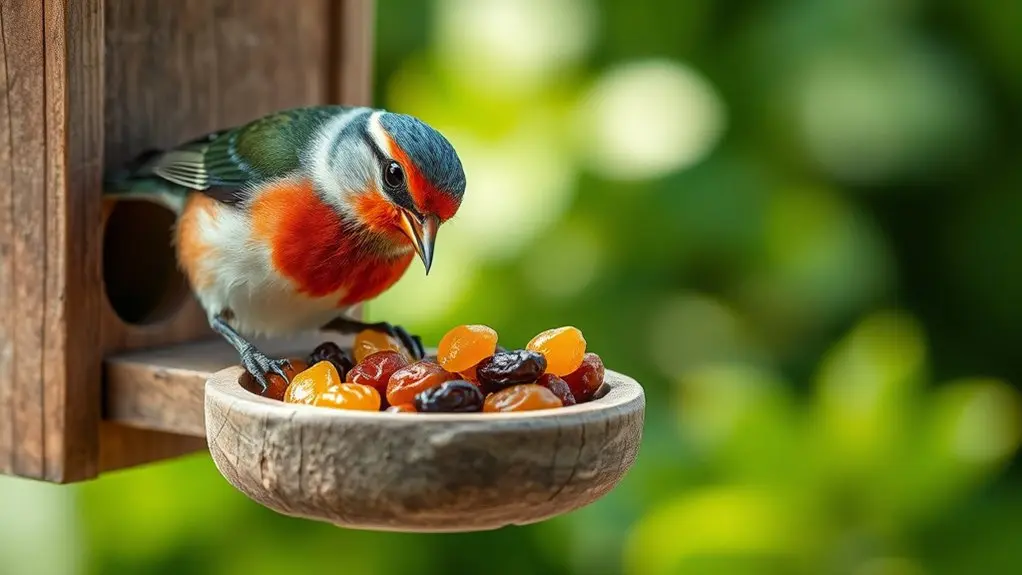
When you offer soaked raisins and sultanas to birds like blackbirds, you’re giving them a treat they really enjoy, especially during the colder months. These fruits are naturally sweet because of their high sugar content, which birds love when they need a quick energy boost.
Soaked raisins and sultanas offer birds a sweet, energy-rich treat they especially enjoy in colder months.
Soaking the fruits makes them softer and easier for birds to eat and digest.
Plus, the moisture from soaking helps prevent choking, making raisins and sultanas a safer snack for our feathered friends. That’s why many bird feeders use soaked dried fruits to provide a nutritious and appealing food source.
It’s a simple way to make their day a little tastier and healthier!
How to Prepare Raisins and Sultanas for Your Bird
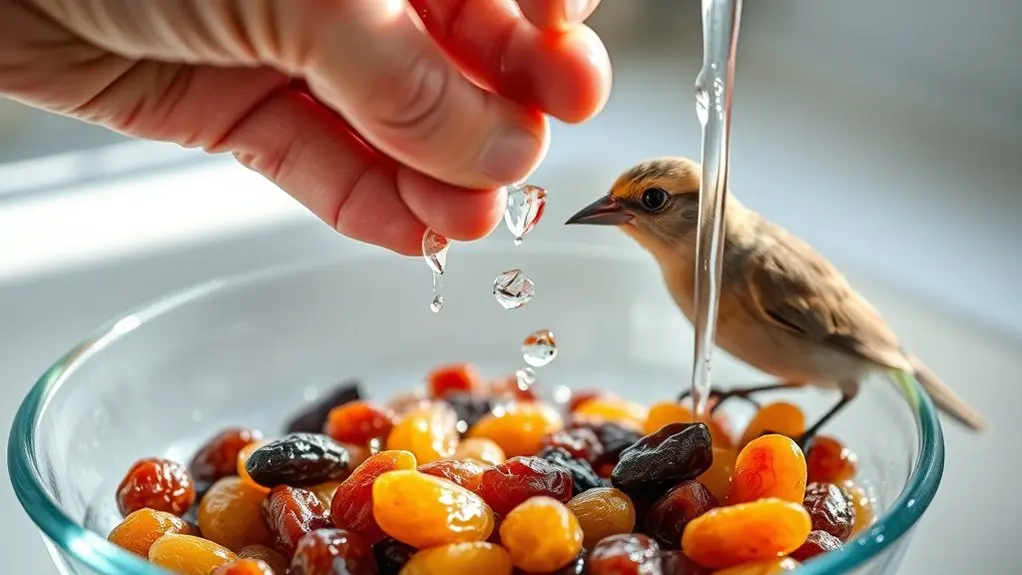
To prepare raisins and sultanas for your bird, start by soaking them overnight in water. This softens the fruits and helps reduce choking risks.
After soaking, rinse them thoroughly to remove any leftover sugars or preservatives that might harm your bird.
Make sure to pick fresh, high-quality dried fruits that are free from mold or any contaminants. This guarantees your bird’s safety.
If the raisins or sultanas are large, go ahead and cut them into smaller, manageable pieces. It makes eating easier and helps prevent choking.
Offer these prepared fruits as occasional treats, not as staples in your bird’s diet. This way, you support your bird’s health without overdoing it.
Health Risks of Overfeeding Dried Fruits
You’ve got to be careful when giving your bird dried fruits like raisins and sultanas. Overdoing it can actually cause some serious health problems, including kidney issues and even toxicity.
These fruits are packed with concentrated sugars and certain compounds that aren’t great for your pet if they get too much. So, the key is moderation.
That way, your bird can enjoy a tasty treat without putting its health at risk.
Risks Of Excess Intake
Why should you be cautious about feeding birds too many dried fruits like raisins and sultanas? Overfeeding can lead to several health issues that affect your bird’s well-being.
Here are the key risks you should consider:
- Obesity and related complications from excessive calorie intake
- Digestive problems and nutrient imbalances caused by too much dried fruit
- Dependency on these treats, reducing appetite for a natural, balanced diet
- Increased risk of mold or spoilage, which can be toxic
It’s important to keep these risks in mind to ensure your bird stays healthy and happy.
Moderation In Treats
Although birds enjoy the sweet taste of raisins and sultanas, feeding them too many can quickly lead to health problems. You should offer these treats in moderation, as overfeeding dried fruits may cause obesity, digestive issues, and metabolic imbalances.
Soaking raisins or limiting portion sizes helps reduce choking risks and makes them easier to digest. Remember, dried fruits should be occasional treats, not daily staples.
| Risk Factor | Cause | Effect |
|---|---|---|
| Excess Sugar Intake | High sugar in raisins/sultanas | Obesity, metabolic imbalance |
| Overfeeding | Frequent or large portions | Digestive problems, nutrient loss |
| Choking Hazard | Dry, hard fruit pieces | Potential choking or blockages |
| Nutritional Imbalance | Lack of varied diet | Health deterioration |
| Lack of Moderation | No portion control | Increased health risks |
Impact On Pet Health
How much dried fruit is too much when it comes to your pet’s health? Even small amounts of raisins or sultanas can pose risks, especially to dogs. These can potentially cause severe issues like kidney failure. So, it’s really important to keep an eye on how much your pet is eating and limit their intake.
Keep in mind these key points: overfeeding dried fruits increases the risk of kidney damage and other serious health problems. Weight gain and related complications can also happen from too many treats.
Some pets might tolerate small amounts without showing immediate effects, but the risk is still there. If you want to keep your pet safe, it’s best to avoid giving them dried fruits frequently or in large amounts.
Responsible owners know that moderation is the key!
Safe Alternatives to Raisins and Sultanas for Bird Treats
When you’re picking out treats for your bird, consider nutritious fruit alternatives like dried apricots, cranberries, and chopped dried apples. These options aren’t only safe but also healthy for your feathered friend.
You might also want to offer fresh fruits, such as berries and melon segments. They provide essential vitamins without any added sugars or preservatives.
Plus, adding some safe seed options can help keep your bird’s diet balanced. This way, you avoid the potential risks that come with overfeeding dried fruits.
It’s all about variety and moderation!
Nutritious Fruit Alternatives
Since raisins and sultanas carry certain health risks for birds, you can offer safe fruit alternatives like fresh berries, apple slices without seeds, and chopped melons. These options provide essential nutrients and hydration without harmful additives.
When choosing dried fruits, opt for unsweetened apricots or cranberries in moderation. Also, consider steaming or soaking figs or dates to improve digestibility.
Here are nutritious fruit alternatives you can safely offer your birds:
- Fresh berries such as blueberries, strawberries, or raspberries
- Apple slices with seeds removed
- Chopped melon varieties like cantaloupe or watermelon
- Steamed or soaked dried fruits, including figs and dates
Always make sure fruits are free from added sugars, preservatives, and pesticides to keep your bird healthy and happy. It’s a small step that goes a long way!
Safe Seed Options
Although raisins and sultanas may pose health risks for birds, you can confidently offer safe seed options like millet, sunflower seeds, safflower seeds, and nyjer (thistle) seeds as nutritious alternatives.
These seeds provide essential nutrients and can be given alone or combined to create a balanced diet and enrich your bird’s feeding experience.
Unlike raisins and sultanas, which may cause health issues, these seeds are generally safe when served in moderation.
However, always verify the seeds are fresh and properly stored to avoid mold or contamination, which can harm birds.
Also, do some research on specific seed types and consult avian care resources to make sure they suit your bird’s species.
That way, the treats you provide will support their health effectively.
Signs of Digestive Issues From Raisins and Sultanas in Birds
If your bird starts showing signs like diarrhea, vomiting, or a loss of appetite after eating raisins or sultanas, it could indicate digestive issues. You should watch closely for symptoms that suggest gastrointestinal distress, as dried fruits can sometimes cause discomfort or blockages.
Key signs to monitor include abdominal bloating or discomfort, changes in droppings including consistency or color, lethargy, or unusual inactivity. Also, keep an eye out for constipation or difficulty passing stool.
These symptoms may result from overconsumption or sensitivity to dried fruit. If you notice any of these signs, it’s important to seek prompt veterinary care to prevent complications.
Early intervention helps ensure your bird’s health and comfort when feeding raisins or sultanas.
Tips for Introducing Raisins and Sultanas to Your Bird’s Diet
Recognizing the potential digestive issues from raisins and sultanas is an important first step. But knowing how to introduce these treats safely can help you avoid problems altogether.
Start by soaking the dried fruits in water overnight; this softens them, making them easier and safer for your bird to eat.
Offer small, manageable pieces to reduce choking risks and make feeding more comfortable.
Introduce raisins and sultanas gradually so you can monitor how your bird reacts to them.
Keep portions moderate since excessive dried fruit can lead to health issues.
Many birds, like blackbirds, enjoy soaked dried fruits, which can be a nutritious addition to their diet.
Frequently Asked Questions
Can Raisins and Sultanas Cause Allergies in Birds?
Raisins and sultanas rarely cause allergies in birds, but you should introduce them gradually and watch for any signs of discomfort. Individual sensitivities vary, so careful monitoring helps guarantee your bird stays safe and healthy.
It’s always a good idea to keep an eye on how your bird reacts when trying new foods. That way, you can catch any issues early and make sure they’re enjoying their treats without problems.
How Often Can I Give Raisins and Sultanas to My Bird?
You should offer raisins and sultanas to your bird only once or twice a week. Always soak them overnight before feeding.
Make sure to give these treats in moderation, and keep an eye on your bird’s health. That way, you can prevent any negative effects or spoilage from happening.
Are Organic Raisins and Sultanas Better for Birds?
You might find organic raisins and sultanas a gentler choice, but they aren’t inherently safer for your bird.
Focus on proper preparation and moderation to keep your feathered friend happy and healthy.
Can Baby Birds Eat Raisins and Sultanas Safely?
Yes, you can safely feed baby birds soaked raisins and sultanas in moderation. Soften them overnight to ease digestion. Make sure to monitor for any adverse reactions.
Never replace their balanced diet with dried fruits alone. It’s important to keep their nutrition varied. This way, they get all the nutrients they need to grow strong.
Do Raisins and Sultanas Affect a Bird’s Behavior?
When you give raisins and sultanas, you might stir the pot by boosting your bird’s energy and curiosity. Just don’t overdo it, or their behavior can shift toward hyperactivity or increased territoriality around food.
It’s all about balance. A little treat can brighten their day, but too much might make them a bit too lively or protective. Keep an eye on how your bird reacts, and you’ll know just the right amount to give.
Conclusion
You can safely offer raisins and sultanas to many bird species, but moderation is key. Over 60% of pet birds can develop digestive issues if fed dried fruits excessively. Always prepare these treats by removing any added sugars or preservatives, and introduce them gradually.
Remember, while birds enjoy these sweet snacks, balancing their diet with safer alternatives guarantees their health and happiness. Keep an eye out for any signs of discomfort and adjust their treats accordingly.