
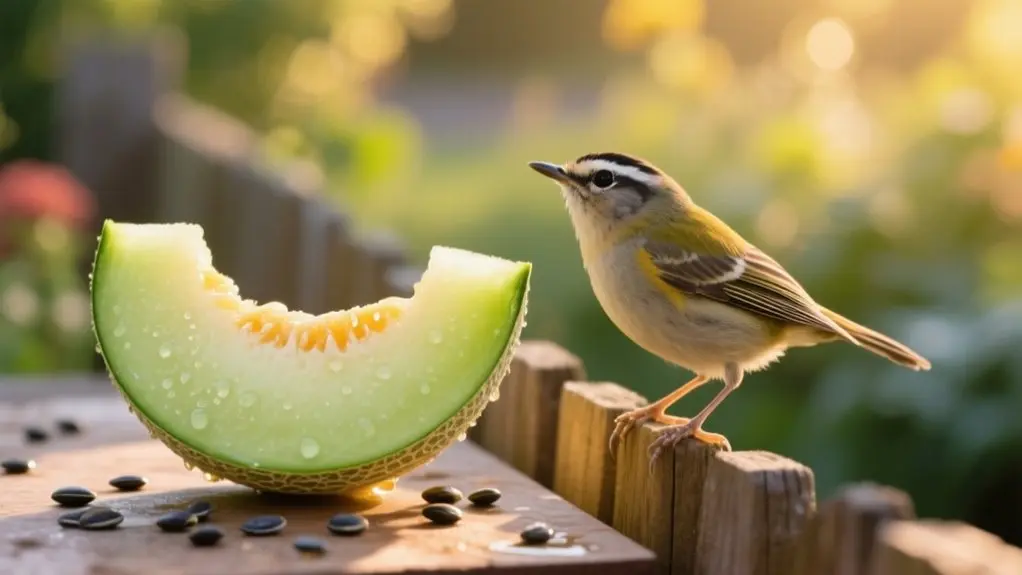
You can safely feed your bird honeydew melon seeds in moderation, but you’ll want to rinse them thoroughly to remove any leftover fruit and bacteria. These seeds offer essential fats, proteins, and vitamins that support your bird’s energy and health.
Introducing them gradually prevents digestive issues, and observing your bird’s reaction helps guarantee their well-being. Want to discover how these seeds compare to others and spot any potential risks?
Are Honeydew Melon Seeds Safe for Birds?
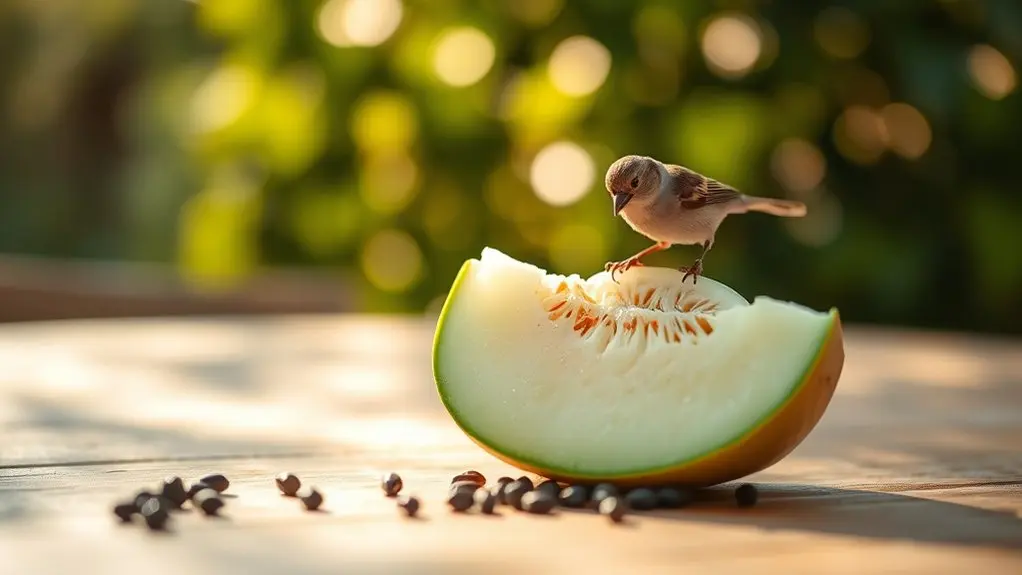
Wondering if honeydew melon seeds are safe for your bird? The good news is that honeydew melon seeds are safe for birds and can be a tasty treat when given in moderation.
Before offering them, make sure you rinse the seeds thoroughly to remove any leftover melon flesh. This helps keep your bird’s cage clean and makes the seeds easier for your feathered friend to handle.
Introducing honeydew melon seeds can also encourage your bird to enjoy the surrounding fruit flesh, adding more variety to their diet of fruits and vegetables.
Just remember to introduce these seeds gradually so you can watch for any negative reactions.
Nutritional Benefits of Honeydew Melon Seeds for Birds
Since honeydew melon seeds are safe and enjoyable for birds in moderation, it’s worth exploring the nutritional benefits they offer. These seeds provide essential fats and proteins that support your bird’s health, making them a valuable addition to their diet.
Including honeydew melon seeds along with other fruits introduces new textures and flavors, encouraging dietary variety. Rinsing the seeds before offering keeps them clean and more appealing.
| Nutrient | Benefit | Source |
|---|---|---|
| Fats | Energy & feather health | Honeydew melon seeds |
| Proteins | Muscle maintenance | Honeydew melon seeds |
| Variety | Encourages eating fruits | Honeydew melon seeds |
Adding these seeds promotes a balanced diet, boosting your bird’s wellbeing.
Preparing Honeydew Melon Seeds for Birds
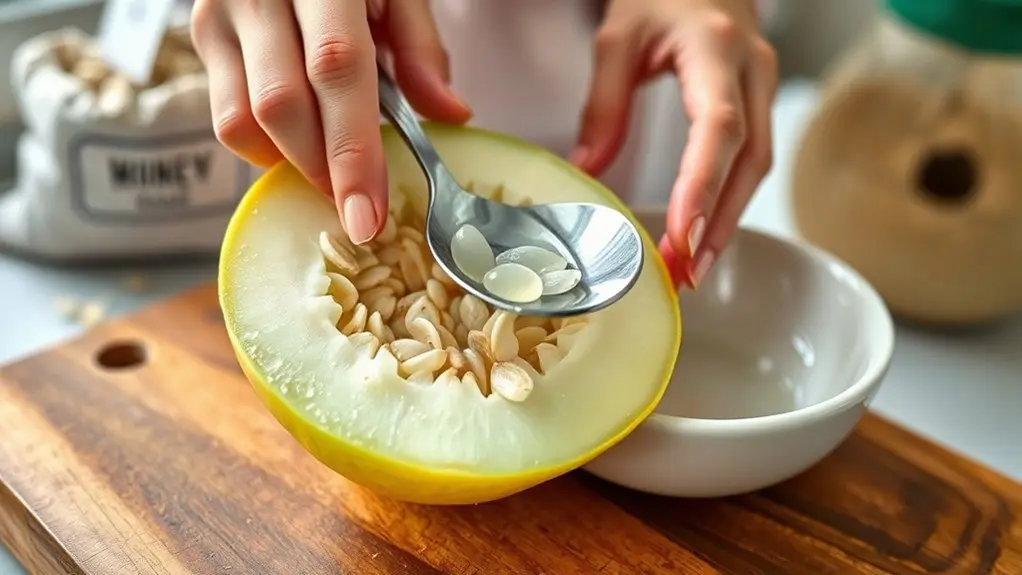
Before you give honeydew melon seeds to your birds, make sure to rinse them really well to get rid of any leftover melon bits.
Using a strainer can make this quick and easy, and it keeps things from getting messy. Clean seeds not only help keep the feeding area nice and hygienic, but they also make a tasty, nutritious treat your birds will love.
Rinsing Seeds Properly
Although honeydew melon seeds might seem ready to feed your birds straight away, you’ll need to rinse them thoroughly to remove any leftover melon residue. Rinsing is essential because leftover melon guts can make a mess in your bird’s cage and attract unwanted bacteria.
Using a strainer helps you rinse the seeds efficiently, making the process quick and simple. Once clean, the seeds are fine to offer, and keeping your feathered friends’ environment tidy becomes much easier.
Proper rinsing not only improves seed handling but also supports your birds’ health by reducing potential contaminants.
After rinsing, be sure to compost any leftover melon parts to minimize waste and keep your feeding routine eco-friendly.
Removing Melon Residue
When you prepare honeydew melon seeds for your birds, removing all melon residue is essential to guarantee cleanliness and prevent bacterial growth. Residual melon guts can make a mess in your bird’s cage and increase the risk of harmful bacteria.
Use a strainer to rinse the honeydew melon seeds thoroughly, ensuring all sticky pulp washes away. Cleaned seeds aren’t only tidier but also easier for your bird to handle and enjoy.
By keeping the seeds clean, you maintain a healthy feeding environment that supports your bird’s well-being.
Remember to compost leftover melon parts to dispose of waste responsibly while benefiting your garden.
Taking these simple steps helps you keep your bird safe and your home clean.
Nutritional Benefits For Birds
Honeydew melon seeds offer several nutritional benefits that can boost your bird’s health when included properly in their diet.
These seeds provide a tasty, nutritious supplement to fresh fruits you might already feed your bird.
When preparing honeydew seeds for birds to eat, keep these benefits in mind:
- Rich in vitamins and minerals that support overall health.
- Contain healthy fats, promoting vibrant feathers and steady energy.
- Add dietary variety, especially during melon season, keeping your bird engaged.
- Serve as a safe, natural treat when rinsed to remove pulp residue.
Why Rinsing Honeydew Seeds Matters for Bird Health
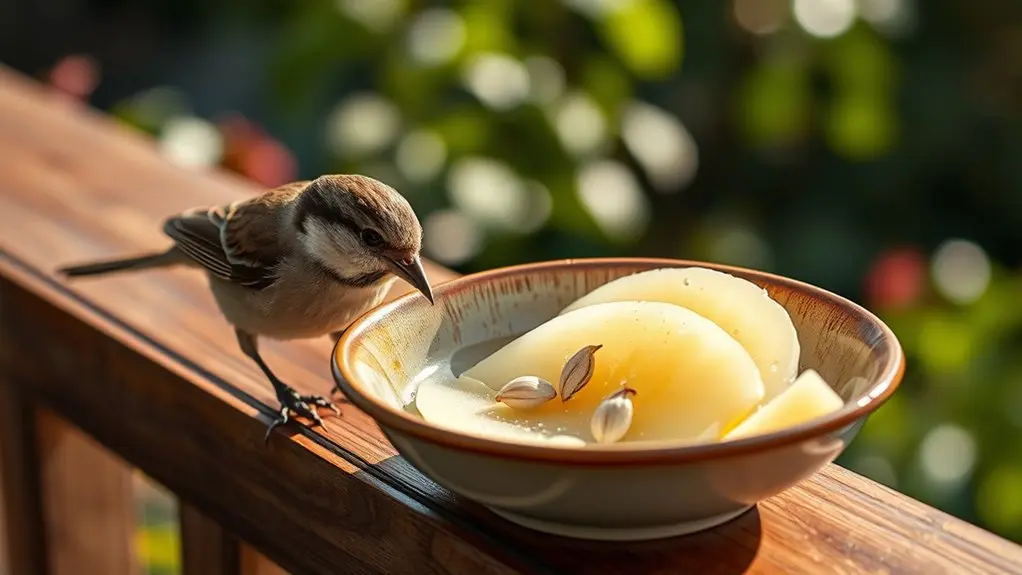
You’ll want to rinse honeydew seeds to get rid of any leftover melon guts. Those bits can make a mess in your bird’s cage.
Plus, keeping the seeds clean helps stop bacteria from building up, which means your bird’s environment stays nice and hygienic.
It’s a simple step, but it really makes a difference. Your bird will have an easier time enjoying the seeds safely without any worries.
Removing Melon Guts
Rinsing melon seeds thoroughly removes leftover fruit pulp that can create messes and attract harmful bacteria in your bird’s environment.
When you give your bird honeydew seeds, make sure to clean them well so they can eat safely and avoid health risks.
Unclean seeds can stick to cage bars and encourage bacterial growth, which isn’t good for your bird’s habitat.
Use these tips to remove melon guts effectively:
- Place seeds in a strainer for easy rinsing.
- Rinse under cold running water until all pulp is gone.
- Shake off excess water before offering seeds.
- Compost leftover melon parts to keep the cage clean.
This keeps seeds hygienic and your bird happy while preventing messes and illness.
Preventing Cage Mess
Three simple steps can make a big difference in keeping your bird’s cage clean when feeding honeydew melon seeds.
First, rinse the seeds thoroughly to remove sticky melon guts, which are often left clinging due to their small size. This prevents cage mess by stopping residue buildup that can soil the cage and harm hygiene.
Next, use a strainer to handle the seeds easily, ensuring all debris washes away before offering them to your bird.
Finally, dispose of leftover melon parts responsibly, like composting, to maintain cleanliness around the cage.
When you take these steps, birds eat clean seeds without spreading sticky messes.
Preventing cage mess not only keeps the environment tidy but also supports your bird’s health and well-being.
Maintaining Seed Cleanliness
Although honeydew melon seeds might seem harmless, cleaning them thoroughly before feeding your bird plays an essential role in keeping your pet healthy. Years ago, feathered friends often suffered from avoidable infections due to contaminated food. You can prevent this by rinsing seeds properly. Here’s why it matters:
- Rinsing removes melon residue that attracts bacteria and creates cage mess.
- Clean seeds are easier for birds to handle, encouraging better feeding habits.
- Using a strainer guarantees seeds are free from contaminants before offering them.
- Maintaining seed cleanliness lowers the risk of bacterial infections like E. coli.
Risks of Feeding Honeydew Melon Seeds
When you offer honeydew melon seeds to your bird, you should always clean them thoroughly to avoid leftover fruit residue that can cause messes and attract bacteria.
Even though the seeds are generally safe, neglecting proper cleaning risks bacterial growth that could harm your bird.
Follow seed storage tips to keep seeds fresh and prevent spoilage, which can also pose health risks.
Incorporate seasonal feeding by offering honeydew seeds only occasionally, maintaining a balanced bird diet variety to avoid nutritional imbalances.
Overfeeding melon seeds might upset your bird’s digestion or crowd out essential nutrients.
Always monitor your bird’s response when introducing new foods, and prioritize moderation to keep your feathered friend healthy and happy.
How Birds Typically React to Honeydew Melon Seeds
Many birds enthusiastically peck at honeydew melon seeds, drawn by their appealing texture and mild flavor. You’ll notice varied behavioral responses depending on the species, influenced by their seed preferences and feeding strategies.
Some birds, like parrots and finches, keenly consume these seeds, recognizing their nutritional value. To encourage this positive reaction, rinse the seeds to remove any melon residue, making them easier to handle and more attractive.
Here’s what you can expect:
- Birds selectively choose seeds based on texture and taste.
- Feeding strategies vary; some crack seeds open, others swallow whole.
- Birds often show excitement and increased activity when offered seeds.
- Seed consumption can stimulate interest in other fruits, diversifying their diet.
Understanding these patterns helps you provide enjoyable, nutritious treats your birds will appreciate.
How Often Should You Give Honeydew Melon Seeds to Birds?
How often should you offer honeydew melon seeds to your birds to keep their diet balanced? You should provide these seeds as an occasional treat, ideally once or twice a week. This approach guarantees snack moderation while still delivering seed variety benefits without overwhelming their regular diet.
Remember, honeydew melon seeds are safe but shouldn’t replace staple foods. Introducing them gradually helps your birds adjust without disrupting bird diet balance.
Always rinse the seeds thoroughly to remove any melon pulp, which can attract pests in the cage.
Can Honeydew Melon Seeds Encourage Birds to Eat More Fruit?
You can use honeydew melon seeds to get birds interested in eating more fruit by tapping into their natural foraging instincts.
These seeds are packed with important nutrients that help support healthy eating habits and keep them hydrated.
Seeds Stimulate Fruit Interest
Although birds primarily seek out fruit flesh, offering honeydew melon seeds can spark their curiosity and encourage them to eat more fruit. These seeds tap into a bird’s natural foraging behavior, making feeding time more engaging.
When you provide honeydew seeds, you introduce new seed preferences that diversify their diet. This variety not only keeps birds interested but also promotes a balanced dietary variety.
Here’s how seeds stimulate fruit interest:
- They activate foraging instincts, turning feeding into an interactive experience.
- Birds develop a taste for the seeds and, by extension, the fruit itself.
- Seeds add protein and healthy fats, enriching dietary variety.
- Increased seed consumption often leads to greater overall fruit intake.
Nutritional Benefits Of Seeds
Honeydew melon seeds offer more than just a way to spark birds’ interest in fruit. They provide valuable nutrients that support their health. These seeds deliver essential vitamins, minerals, healthy fats, and protein, making them a nutrient-rich addition to your bird’s diet.
Understanding seed variety benefits is key. Mixing honeydew seeds with others guarantees a balanced intake. Because birds respond to texture preference influence, the crunchy feel of these seeds can encourage them to eat more fruit.
To keep your bird healthy, follow feeding frequency guidelines. Offer seeds in moderation alongside fresh fruit and other foods. Rinse seeds thoroughly to avoid harmful residues.
Encouraging Healthy Eating Habits
When birds discover the crunchy texture and mild flavor of melon seeds, they often become more interested in the fruit itself. You can use honeydew melon seeds to encourage healthy eating habits by applying effective fruit exploration strategies.
These seeds promote foraging behavior enhancement, making birds more enthusiastic to consume the whole fruit.
Try these seed introduction techniques to boost fruit intake:
- Offer seeds alongside fresh honeydew melon to spark curiosity.
- Gradually introduce seeds to help birds adjust to new flavors.
- Observe and encourage natural foraging to keep feeding engaging.
- Consistently include seeds in their diet to build positive associations.
How Are Honeydew Seeds Different From Other Melon Seeds?
If you want to offer your bird a nutritious treat, you’ll find that honeydew melon seeds stand out from other melon seeds in a few key ways.
One of the main seed texture differences is that honeydew seeds are smoother and less fibrous, making them easier for many birds to handle and digest.
When you compare flavor profiles, honeydew seeds have a milder taste than cantaloupe or watermelon seeds, which can be slightly bitter or stronger. This subtle flavor makes honeydew seeds more appealing to certain bird species that prefer gentler tastes.
Plus, their nutrient content, including protein and healthy fats, supports your bird’s diet well.
How to Spot Digestive Issues From Honeydew Seeds
Although honeydew melon seeds can be a healthy treat, you should watch your bird closely for signs of digestive trouble. A gradual diet introduction is key to preventing digestive discomfort signs.
Rinsing seeds before feeding reduces bacterial risks that may upset your bird’s digestion. Keep an eye on changes in appetite, lethargy, or diarrhea, as these symptoms often indicate digestive issues.
Also, monitor droppings for shifts in color or consistency, which can signal gastrointestinal distress. If your bird shows persistent discomfort or digestive problems after eating honeydew seeds, don’t hesitate to seek avian veterinarian consultation for proper care.
To spot digestive issues early, follow these steps:
- Introduce seeds gradually to your bird’s diet
- Rinse seeds thoroughly before feeding
- Observe appetite and energy levels
- Check droppings for abnormal changes
Safe Alternatives to Honeydew Melon Seeds for Birds
Since variety is important in your bird’s diet, offering safe alternatives to honeydew melon seeds can keep mealtime interesting and nutritious. You can try cantaloupe seeds, pumpkin seeds, grape seeds, watermelon seeds, or sunflower seeds, all safe and packed with nutrients.
Using proper seed storage methods, like airtight containers in a cool, dry place, guarantees freshness and prevents spoilage.
To add excitement, apply seed mixing techniques by combining seasonal seed varieties with these alternatives, creating a balanced and appealing mix.
Seasonal seed varieties, such as pumpkin seeds in fall or watermelon seeds in summer, help mimic natural feeding patterns and enrich your bird’s diet. By rotating these options, you provide both variety and essential nutrients, supporting your bird’s overall health.
Tips for Introducing New Seeds Safely Into Your Bird’s Diet
When introducing new seeds into your bird’s diet, start slowly by mixing a small amount with their regular food to avoid digestive upset.
Gradual introduction techniques help your bird adjust comfortably while you monitor their reaction.
Seed variety exploration is key to maintaining a balanced diet and preventing boredom.
Remember, each bird has unique taste preferences, so patience is essential.
- Rinse seeds like honeydew melon seeds thoroughly to remove residue.
- Offer new seeds only once every few days to watch for allergies.
- Verify seeds are fresh and free from mold or spoilage.
- Observe your bird’s response and adjust accordingly.
Following these steps guarantees a safe, enjoyable seed variety exploration for your feathered friend.
Frequently Asked Questions
Can Honeydew Melon Seeds Affect a Bird’s Feather Quality?
Yes, honeydew melon seeds can positively affect your bird’s feather quality. They provide essential fatty acids and proteins that improve feather nutrition, supporting vibrant coloration and strength.
When your bird digests these seeds, it absorbs nutrients that help maintain feather integrity.
However, you should guarantee dietary balance by combining honeydew seeds with other foods. This variety keeps your bird’s feathers healthy and reduces issues like feather plucking.
Do Honeydew Melon Seeds Attract Pests or Insects Around Bird Feeders?
You’d think honeydew melon seeds would be a pest magnet, but nope, they barely attract bugs around your bird feeders.
In fact, using proper pest control methods like rinsing seeds and practicing feeder maintenance tips can keep unwanted scavengers away.
Plus, these seeds don’t lure many beneficial insects either, so you’re not disrupting the garden’s balance.
Keep the feeding area clean, and you’ll avoid any unintended pest parties while enjoying birdwatching.
Are Honeydew Melon Seeds Suitable for Baby Birds or Only Adults?
Yes, honeydew melon seeds are suitable for baby birds, but you need to take into account baby bird nutrition and seed digestion carefully.
Start by offering appropriate portions to avoid overwhelming their developing digestive systems.
Rinse the seeds to remove any sticky residue, and introduce them gradually alongside softer foods.
Watching your baby birds eat helps guarantee they handle the seeds comfortably, promoting healthy growth and encouraging natural foraging behaviors.
Can Birds Choke on Honeydew Melon Seeds?
Yes, birds can choke on honeydew melon seeds, but the seed size is generally small enough to minimize choking hazards.
To keep your bird safe, follow proper feeding guidelines by rinsing the seeds and introducing them gradually.
Always watch your bird closely when offering new foods, especially if it’s a larger species.
With careful preparation and observation, you can reduce the risk and guarantee a safe feeding experience.
How Should Leftover Honeydew Melon Seeds Be Stored for Bird Feeding?
Coincidentally, how you store leftover honeydew melon seeds can boost their nutritional value and help you attract birds more effectively.
You should rinse seeds thoroughly to remove any fruit residue, then use airtight seed storage methods to keep them fresh and prevent mold.
Keep them in a cool, dry place or freeze for longer storage.
Label containers with the date, and always check for spoilage before feeding, ensuring your feathered friends get safe, nutritious treats.
Conclusion
You can safely share honeydew melon seeds with your bird if you rinse them well and introduce them gradually. For example, Jane noticed her parrot enjoyed the seeds but started sneezing when given too many.
After cutting back and rinsing the seeds thoroughly, her bird stayed happy and healthy. Always watch for any signs of discomfort and offer seeds in moderation. This way, you’ll keep your feathered friend safe while adding a tasty treat to their diet.