
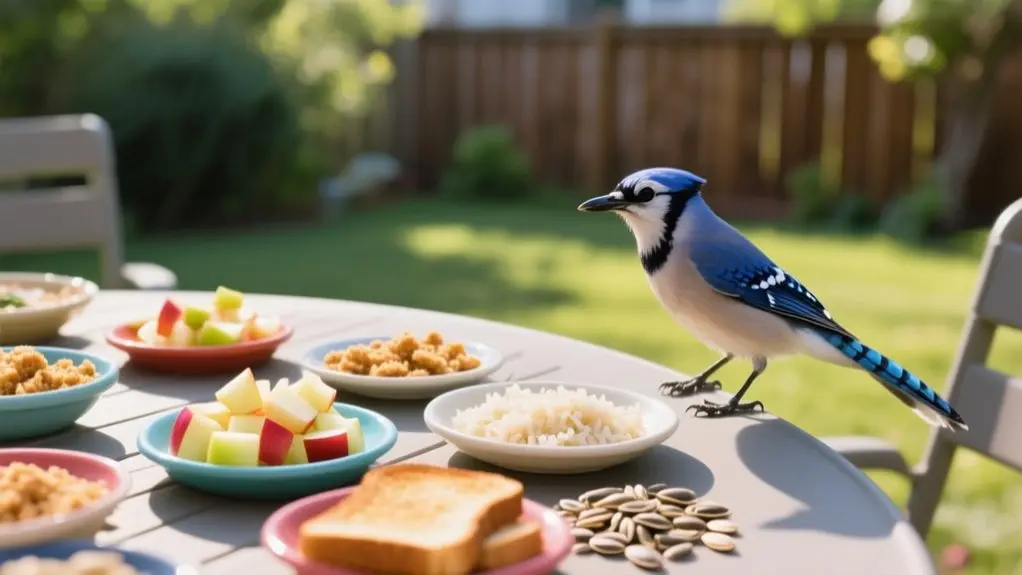
You can safely share some human foods with birds, but you need to be careful. Avoid toxic items like avocado, chocolate, caffeine, onions, and raw meat to prevent serious health issues.
Instead, offer safe options like fresh vegetables, fruits without seeds, unsalted nuts, and cooked grains. Start with small portions and watch for any signs of discomfort or changes in behavior.
If you want to make bird feeding both enjoyable and beneficial, there’s more helpful advice ahead.
Why Feeding Birds Human Food Requires Care
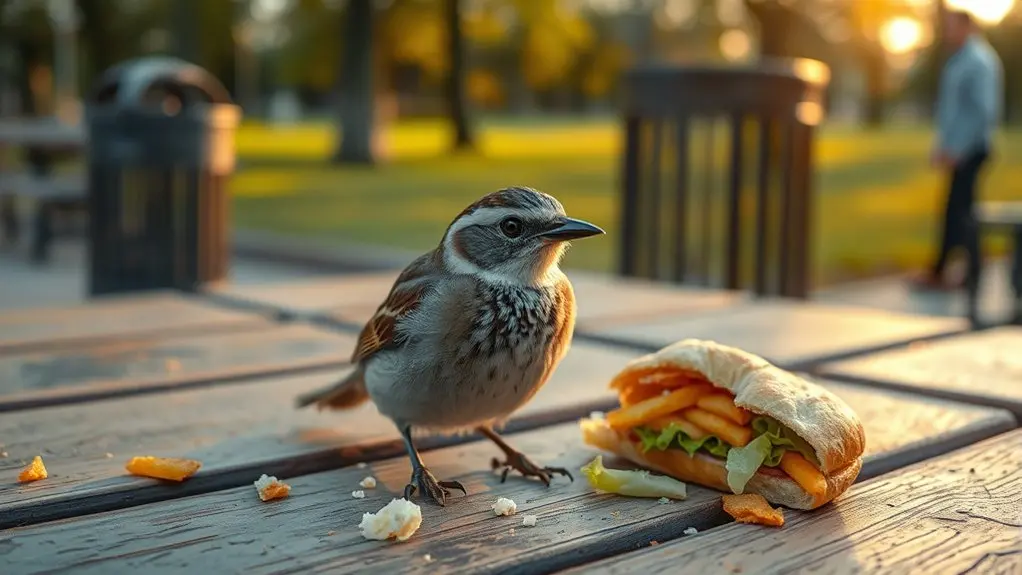
Although it might seem harmless to share your snacks, feeding birds human food requires care because many common items like chocolate, caffeine, and avocado are toxic to them.
When feeding birds, you need to avoid anything harmful to keep them safe.
Overfeeding can disrupt their natural foraging habits and cause health problems, so moderation is key.
Also, make certain the food is fresh; moldy or spoiled items can lead to respiratory diseases and other complications.
Introducing new foods gradually helps you spot any adverse reactions early.
Finally, keep the feeding area clean to prevent contamination and protect the health of your feathered visitors.
Being cautious guarantees you’re helping, not harming, the birds you want to feed.
What Human Foods Are Safe for Birds
Which human foods can you safely offer to birds without risking their health? Birds eat a variety of safe options that provide essential nutrients.
Vegetables like carrots, broccoli, and peas are nutritious and safe for birds, supplementing their natural diet.
Vegetables such as carrots, broccoli, and peas offer safe, nutritious supplements to birds’ natural diets.
Grains such as oats, barley, and quinoa supply energy and support overall health.
You can also offer unsalted nuts and seeds like sunflower and pumpkin seeds, which are nutrient-dense and enjoyed by many birds.
For protein, mealworms and hard-boiled eggs are excellent, especially during breeding seasons.
Remember to avoid harmful additives like salt and sugar.
Safe Fruits to Feed Birds
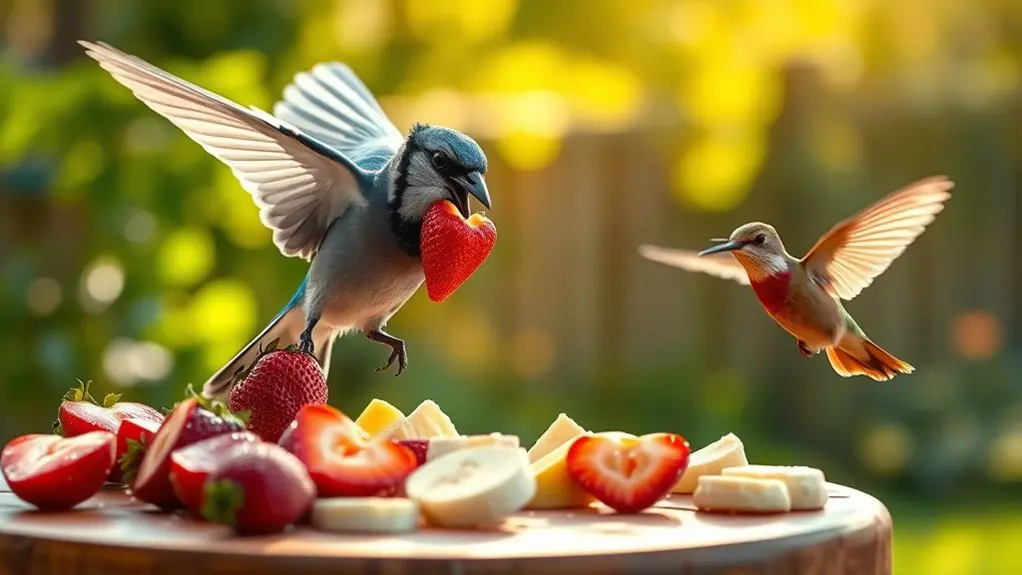
You’ll want to pick bird-friendly fruits like apples (just be sure to take out the seeds), bananas, and berries.
These fruits give your bird important vitamins and help keep them hydrated.
When you prepare the fruit, make sure to remove any seeds and cut it into small, manageable pieces.
This makes it easier and safer for your bird to eat.
It’s also a good idea to introduce these fruits little by little.
That way, you can see how your bird reacts and make sure they’re enjoying a balanced, nutritious diet.
Bird-Friendly Fruit Choices
When you offer birds fresh fruits like apples (with seeds removed), bananas, and berries, you provide them with essential vitamins and nutrients they need to stay healthy.
These bird-friendly human food options are natural sources of energy and hydration.
You can also include citrus fruits such as oranges and grapefruits, which are rich in vitamin C and often attract various bird species.
Remember to always serve fresh fruits that are clean and free from mold to avoid health risks.
For fruits like cherries and peaches, remove any pits or seeds, as they contain harmful substances like cyanide.
Furthermore, soaking dried fruits such as raisins can make them easier and more enjoyable for birds like robins and bluebirds to eat.
Preparing Fruits Safely
Although feeding birds fresh fruits is beneficial, you must prepare them safely to protect their health. Always remove seeds and pits from fruits like apples and cherries, as they contain toxic substances such as cyanide.
Choose safe fruits like bananas, berries, and grapes, which provide hydration and essential vitamins. Make certain fruits are fresh and free from mold or spoilage, since rotten fruits can cause respiratory diseases in birds.
Cut fruits into small, manageable pieces to make eating easier and encourage birds to try new foods. Introduce new fruits gradually so you can monitor for any adverse reactions.
Nutritional Benefits For Birds
Safely prepared fruits do more than just satisfy birds’ taste buds. They offer essential nutrients that support their overall health. When you feed birds safe fruits like apples (without seeds), bananas, and berries, you provide them with crucial vitamins and antioxidants.
Fruits such as strawberries and blueberries also help keep birds hydrated thanks to their high water content, especially during warmer months.
Including peas and corn in their food adds important carbohydrates and fiber, which aid digestion.
Offering a variety of fresh, non-spoiled fruits encourages natural foraging behaviors and mental stimulation, preventing boredom.
Best Vegetables to Offer Birds
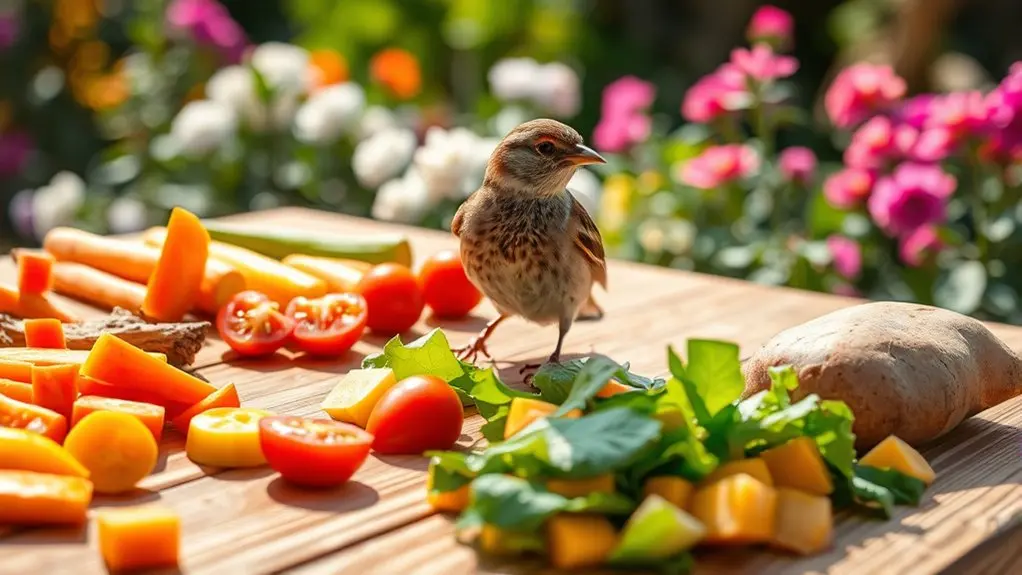
You’ll want to pick nutrient-rich veggies like carrots, spinach, and sweet corn to keep birds healthy and energized.
It’s best to serve them fresh and plain—no seasonings or sauces needed.
Let’s take a look at which vegetables work best and how to serve them the right way.
Nutrient-Rich Vegetable Choices
When feeding birds, choosing nutrient-rich vegetables can boost their health and energy. You can offer carrots, which are high in beta-carotene and support vision health.
Broccoli is another excellent choice, packed with vitamins C and K, aiding immune function and bone strength. Peas provide essential protein and fiber, giving birds a great energy source, especially during breeding seasons.
Leafy greens like spinach and kale deliver antioxidants and important minerals to keep birds healthy.
Cooked sweet potatoes also make a nutritious option, rich in vitamins A and C, and you can easily mash them for smaller birds.
Including these nutrient-rich vegetables in your bird’s diet guarantees they get crucial nutrients naturally, helping them thrive and stay active.
Preparing Veggies Safely
Although offering vegetables to birds can be rewarding, you need to prepare them carefully to guarantee safety and nutrition. Choose safe vegetables like carrots, broccoli, and peas, which provide essential nutrients and digest easily.
Always serve veggies fresh and cooked without seasonings or oils. Remove skins, pits, and seeds to prevent digestive issues. Chop or shred vegetables to make them more appealing and easier to eat.
Introduce new veggies gradually to help your bird adjust to different tastes and textures, promoting a balanced diet.
| Safe Vegetables | Preparation Tips |
|---|---|
| Carrots | Peel, chop, cook lightly |
| Broccoli | Remove stems, serve steamed |
| Peas | Shell, serve fresh or cooked |
| Spinach | Wash thoroughly, serve raw |
Grains and Seeds Birds Enjoy and Digest Easily
Many birds thrive on a variety of grains and seeds that you can easily provide to support their energy and health. Cooked grains like rice, quinoa, and barley offer essential carbohydrates that fuel their daily activities.
Seeds, such as sunflower and pumpkin seeds, deliver healthy fats and important minerals, keeping birds active and strong. You can also offer cooked oats in moderation, but avoid sticky oatmeal that might clog their beaks.
Raw, unsalted nuts are another excellent option, packed with fats and proteins necessary for bird diets.
Protein-Rich Human Foods That Benefit Birds
Grains and seeds provide birds with energy, but adding protein-rich human foods can boost their health even more. You can offer natural food like mealworms, which are excellent for tissue growth and repair, especially during breeding season.
Hard-boiled eggs, including crushed shells, supply both calcium and protein, supporting overall bird health. Unsalted peanuts serve as a high-energy, protein-rich snack packed with healthy fats, perfect for many bird species.
Cooked chicken or turkey without seasoning also makes a great protein-rich treat that contributes to a balanced diet. Incorporating these natural protein-rich foods, such as scrambled eggs or mealworms, helps birds maintain strong bodies and survive harsh weather conditions.
Providing these options guarantees you’re supporting birds’ nutritional needs effectively.
Human Foods Birds Should Never Eat
Since birds have sensitive digestive systems, you should never feed them certain human foods that can cause serious harm.
Avocado contains persin, a substance toxic to birds that can lead to severe heart problems.
Chocolate also poses danger due to theobromine, which affects birds much like it does dogs and cats.
Avoid giving birds caffeine found in coffee grounds and tea, as it can cause cardiac and respiratory distress.
Onions and garlic contain sulfur compounds that may cause ulcers and anemia.
Moreover, raw meat is unsafe because it risks bacterial infections and spoilage.
Feeding birds any of these foods can jeopardize their health, so always stick to bird-safe options to keep them thriving and safe.
How Toxic Foods Affect Bird Health
Understanding why certain human foods are harmful to birds helps you grasp how these toxins affect their health. Toxic foods can cause severe health problems, sometimes even fatal.
Here’s how some common human foods impact birds:
- Chocolate contains theobromine, which can cause heart failure and death, even in small doses.
- Avocados have persin, leading to respiratory distress and heart issues.
- Onions and garlic contain sulfur compounds that may cause gastrointestinal ulcers and anemia.
- Caffeine disrupts the nervous system and can trigger cardiac distress.
Avoiding these toxic foods is essential because their effects range from digestive issues to severe cardiovascular damage.
Understanding these risks helps protect your bird’s health and prevents unnecessary suffering caused by human food toxins.
How to Introduce Human Foods to Birds Gradually
When you introduce human foods to your bird, start with small portions to help them adjust and prevent digestive upset.
Mix these new foods with their regular diet to create a balanced meal and encourage acceptance of unfamiliar flavors and textures.
Always monitor your bird’s reactions carefully, noting any preferences or signs of discomfort.
This observation helps you tailor future offerings to their tastes and health needs.
Maintain moderation by keeping portion sizes small, which prevents overfeeding and supports natural foraging behaviors.
Also, guarantee all human food you offer is fresh, properly prepared, and served in a clean feeding area to avoid contamination.
Recognizing Negative Reactions in Birds
Although introducing new human foods can add variety to your bird’s diet, you need to watch closely for any negative reactions. Careful monitoring helps you spot early signs that a food mightn’t agree with your feathered friend.
Introducing new foods can enrich your bird’s diet, but always watch for any adverse reactions early.
Look out for behavioral changes like refusal to eat, increased vocalization, or pacing.
Also, keep an eye on physical symptoms such as vomiting, diarrhea, or lethargy.
Check for alterations in droppings indicating digestive upset.
Changes in feather condition or excessive preening can signal discomfort or allergies.
Tips for Mixing Human Foods With Regular Bird Diets
Keeping a close eye on your bird’s reactions to new foods sets the stage for safely mixing human foods with their regular diet. Start by gradually adding small amounts of safe fruits and vegetables to their seeds or pellets. Watch for any digestive issues and adjust accordingly.
Remember, these treats should complement, not replace, their main diet to maintain balanced nutrition. Control portion sizes to avoid overfeeding and encourage natural foraging.
| Tip | Explanation |
|---|---|
| Gradual Introduction | Prevents digestive upset |
| Observe Reactions | Adjust based on preferences |
| Safe Treats | Use fruits and veggies occasionally |
| Balanced Nutrition | Complement vitamins and minerals |
| Portion Control | Avoid overfeeding and promote foraging |
Keeping Feeding Human Foods Safe and Healthy for Wild Birds
When feeding wild birds, it’s important to pick safe human foods that won’t hurt them. Avoid giving them anything toxic or heavily processed.
Also, try to keep portion sizes small. Overfeeding can be a problem, and it’s best to encourage birds to forage naturally.
By following these simple tips, you’ll help keep the birds healthy and happy.
Plus, you’ll enjoy your feeding routine even more!
Safe Food Choices
When you offer human foods to wild birds, choosing safe and nutritious options is essential to support their health without disrupting their natural habits.
To provide natural food that benefits them, focus on these safe food choices:
- Fruits and Vegetables: Offer apples (without seeds), bananas, blueberries, carrots, and broccoli for crucial vitamins.
- Grains and Seeds: Serve cooked quinoa, oats, and unsalted sunflower or pumpkin seeds for energy.
- Protein Sources: Include mealworms and crushed hard-boiled eggs (including shells) for growth support.
- Freshness and Cleanliness: Always provide fresh food and keep feeding areas clean to prevent disease.
Portion Control Practices
Offering safe and nutritious human foods to wild birds is only part of the equation. Managing how much and how often you feed them plays a big role in their well-being.
Practice portion control by serving small amounts to avoid overfeeding, which can discourage natural foraging.
Use moderation when offering human food. Limit how often you provide treats so birds continue eating their natural diet.
Introduce new foods gradually and in minimal portions, allowing birds to adjust without digestive issues.
Watch their reactions closely. Any sign of distress means you should reconsider those offerings.
Also, keep feeding areas clean to prevent mold and bacteria, ensuring the food stays fresh and safe.
Frequently Asked Questions
Can Feeding Birds Human Food Attract Unwanted Wildlife?
Yes, feeding birds human food can attract unwanted wildlife. When you leave out scraps, you encourage interactions beyond just birds, drawing raccoons, squirrels, and rodents.
These animals compete for food, increasing competition and disrupting local ecosystems.
To avoid this, use bird feeders designed to deter larger animals and keep feeding areas clean. This helps protect birds and reduces the chance of attracting pests or predators.
How Does Seasonality Affect Birds’ Acceptance of Human Foods?
Seasonality affects birds’ acceptance of human foods because you’ll notice they rely more on human food during times of scarce seasonal availability.
In winter, when natural food sources dwindle, birds adapt their dietary changes and turn to your offerings for extra energy.
During spring and summer, they prefer their usual insects and seeds, so they’re less interested in human food.
Understanding these seasonal shifts helps you provide appropriate bird-friendly snacks at the right time.
What Are the Best Times of Day to Offer Human Food to Birds?
Think of birds like early-rising bakers. They’re busiest prepping at dawn. You’ll want to offer morning feeding right after sunrise when birds actively forage.
Evening snacks work best just before sunset, matching their natural rhythm. Feeding during these times attracts more birds and keeps them coming back.
Just like you wouldn’t leave dough out all day, remove uneaten food after a couple of hours to avoid spoilage and keep your feathered friends healthy.
Can Feeding Birds Human Food Impact Their Migration Patterns?
Yes, feeding birds human food can cause migration disruption. When you offer them processed or inappropriate foods, it creates a nutritional imbalance that affects their energy and stamina.
This can lead birds to skip or delay migration, arriving at breeding grounds too early or too late.
To help birds maintain healthy migration patterns, you should provide natural, species-appropriate foods and avoid creating dependency on artificial food sources.
Are There Specific Bird Species That Prefer Certain Human Foods?
Think of bird preferences as a colorful buffet where each feathered guest picks their favorite dish.
You’ll find parrots craving juicy fruits like apples, while sparrows nibble on grains such as oats.
Bluejays go nuts for unsalted peanuts, and seed-eaters like finches favor sunflower seeds.
Your food choices shape their dietary habits, so offering the right human snacks helps them thrive, reflecting their unique tastes and nutritional needs.
Conclusion
Feeding birds human food calls for careful consideration and cautious choices. By selecting safe fruits, fresh vegetables, and gentle grains, you’ll give your feathered friends a flavorful, healthy feast.
Gradually introducing goodies guards against grim reactions, while mixing meals mindfully maintains their natural nutrition. Remember, responsible routines retain bird wellbeing, rewarding you with vibrant visits and joyful journeys.
Stay smart, stay safe, and savor every shared snack with your soaring companions!