
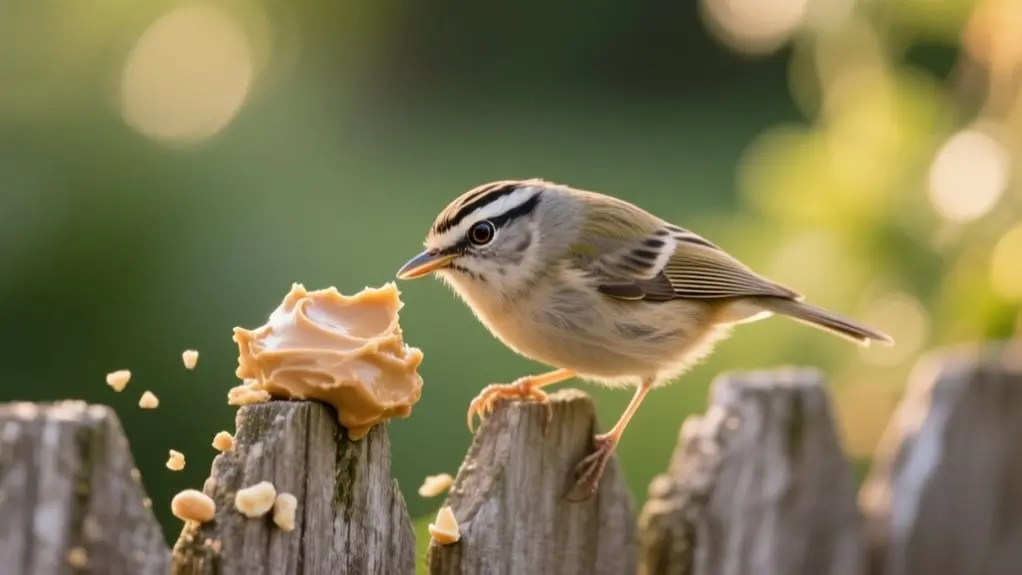
Yes, you can safely feed birds human peanut butter, but only in moderation. Choose natural, unsalted, and additive-free varieties to keep them healthy.
Avoid salted or artificially sweetened kinds, as these can harm birds. Serve small amounts, like a teaspoon, and mix with cornmeal or birdseed to reduce stickiness.
Clean feeders regularly to prevent mold. If you want to explore which birds enjoy peanut butter most and how it impacts their health, there’s plenty more to discover.
Is Peanut Butter Safe for Birds to Eat?
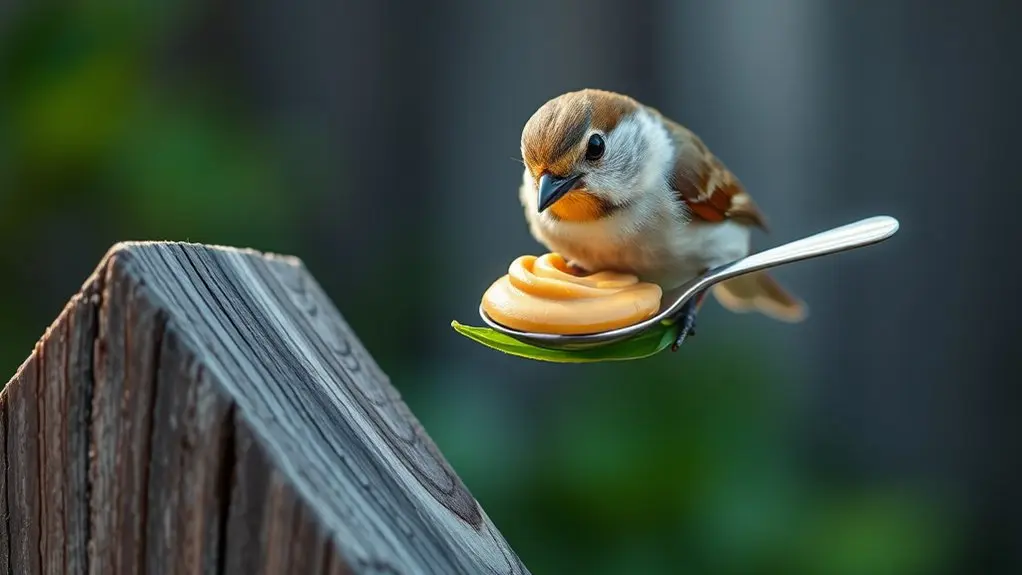
Wondering if peanut butter is safe for birds? Yes, peanut butter is safe and offers high fat and protein that benefit many birds’ diets, especially when given in moderation. You’ll find woodpeckers, nuthatches, and blue jays happily feeding on it year-round.
However, to keep your feathered friends healthy, choose natural or organic peanut butter with minimal additives. Avoid low-fat varieties since they lack nutritional value.
Opt for natural or organic peanut butter and skip low-fat options for the healthiest bird treat.
Be sure to clean feeders regularly and check the peanut butter’s freshness, especially during warmer months, to prevent mold growth.
Mixing peanut butter with cornmeal or birdseed can make it less sticky and easier for birds to consume. With these tips, you can confidently offer peanut butter as a safe, nutritious treat.
What Types of Peanut Butter Are Best for Birds?
Now that you know peanut butter is a safe treat for birds, choosing the right type makes a big difference in their health and enjoyment. When selecting peanut butter, keep these tips in mind:
- Opt for natural or organic peanut butter with minimal additives to provide the best nutrition.
- Choose crunchy peanut butter to offer birds an extra nutty texture they often enjoy.
- Avoid low-fat varieties and those with added sugars or sweeteners, as they reduce the nutritional value and may harm birds.
Always check for freshness and skip any expired peanut butter to keep your feathered friends healthy.
How Much Peanut Butter Should You Feed Birds?
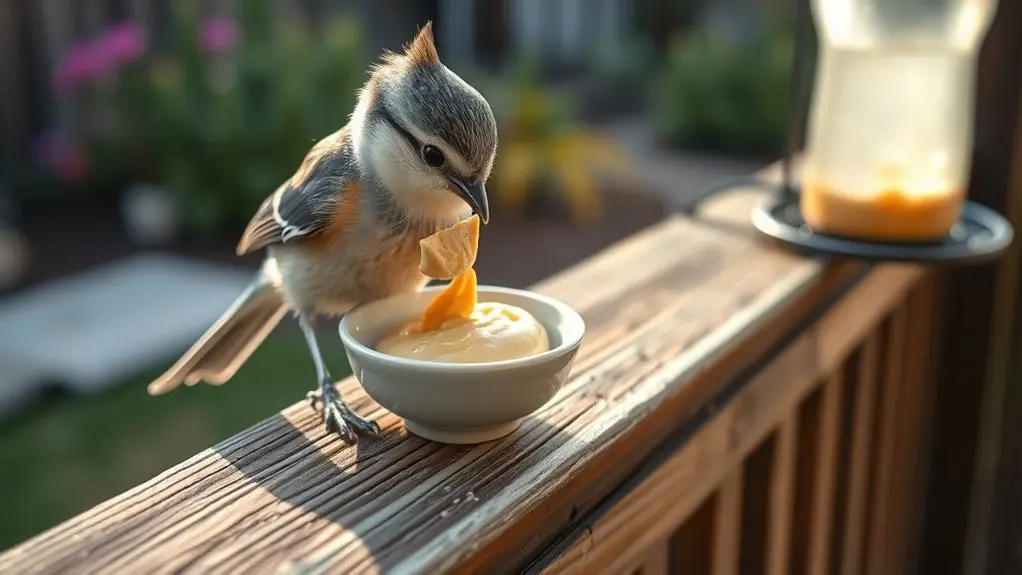
You should offer birds no more than a teaspoon of peanut butter each time you feed them to keep things safe and manageable.
When it’s warmer outside, it’s even more important to limit how much you give to prevent the peanut butter from going rancid.
Also, make sure to watch how much the birds are eating and clean the feeders regularly to avoid mold buildup.
Recommended Serving Sizes
Feeding birds small amounts of peanut butter is best to keep them healthy and avoid the risks of too much fat. When you stick to recommended serving sizes, you guarantee birds get a nutritious treat without overdoing it.
Here’s how to do it right:
- Offer peanut butter mixed with cornmeal and birdseed to balance the fat content.
- Use fresh, unexpired peanut butter to prevent health risks from stale food.
- Provide peanut butter as an occasional treat, not a main food source, to maintain a varied diet.
Seasonal Feeding Limits
Although peanut butter makes a great treat for birds, you should offer smaller amounts during warmer months to prevent it from spoiling quickly. Heat can cause peanut butter to become rancid, attracting mold and bacteria that harm birds.
To keep things safe, mix peanut butter with cornmeal or birdseed as a suet substitute, providing nutrition without overfeeding. Remember, peanut butter should be an occasional treat, not a staple in their diet.
Clean your feeders regularly to avoid moisture buildup and staining from peanut butter. Adjust how much you offer based on the species visiting your feeder, as their preferences and needs vary.
Monitoring Bird Consumption
When offering peanut butter to birds, it’s important to keep portions small to prevent leftovers that could spoil or attract pests. Monitoring bird consumption helps you provide the right amount without waste or health risks.
Here’s how to manage feeding effectively:
- Offer just a few teaspoons of peanut butter at a time, especially in warmer months, to avoid rancidity and sticky messes.
- Mix peanut butter with birdseed or cornmeal to make a balanced treat that appeals to different species and reduces waste.
- Regularly clean feeders and feeding areas to prevent mold growth and keep birds healthy.
How Can You Serve Peanut Butter to Birds Safely?
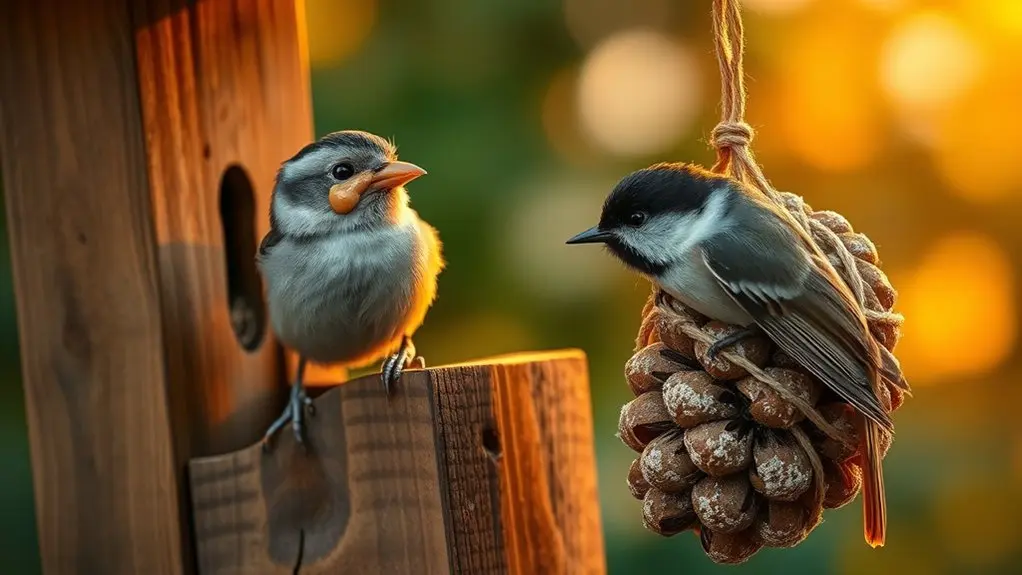
How can you guarantee peanut butter stays safe and appealing for birds? First, only feed birds peanut butter in small amounts to prevent rancidity, especially during warm months.
Always choose fresh, natural, or organic peanut butter without synthetic sweeteners or excess salt, as additives can harm birds.
Smear the peanut butter on tree bark or use log-type feeders, cleaning them regularly to avoid mold growth.
To make it less sticky and easier to eat, mix peanut butter with cornmeal or birdseed.
Keep an eye on bird preferences and make sure you provide clean water nearby to support digestion and health.
Which Bird Species Enjoy Peanut Butter the Most?
If you want to attract birds that love peanut butter, focus on species like woodpeckers, nuthatches, and blue jays—they just can’t get enough of it.
It’s pretty fun to watch them enjoy this tasty treat!
Knowing what each bird prefers really helps. That way, you can offer the right kind of peanut butter at the perfect time.
Favorite Peanut Butter Birds
Because peanut butter provides birds with a rich source of protein and fat, you’ll often find woodpeckers, nuthatches, blue jays, chickadees, and titmice enthusiastically enjoying this treat.
These birds are drawn to peanut butter’s irresistible flavor and nutritional benefits.
If you want to attract your favorite peanut butter birds, focus on these three:
- Woodpeckers. They cling to feeders or tree bark, savoring peanut butter as a high-protein snack.
- Blue Jays. They love peanut butter for its rich fat content, fueling their energy needs.
- Chickadees. Especially in colder months, they forage for peanut butter in gardens and feeders.
Bird Preferences Explained
When you offer peanut butter in your garden, certain bird species show a clear preference for this high-protein, high-fat treat. Woodpeckers, for example, are often seen pecking at peanut butter on feeders or tree bark, drawn by its rich texture and energy.
Nuthatches also enjoy peanut butter, valuing its taste and protein boost. Blue jays frequently visit feeders that offer peanut butter, making it a favorite snack.
You’ll also notice chickadees and titmice happily consuming peanut butter throughout the year, benefiting from its nutrition.
While fruit-loving birds like orioles prefer grape jelly, peanut butter remains a top choice for many seed-eating birds. Offering peanut butter attracts these species, helping you support local wildlife with a tasty, energy-packed treat.
Can Birds Choke on Peanut Butter Wads?
How likely is it that birds choke on peanut butter wads? The truth is, it’s very unlikely. Birds naturally take small pecks instead of large bites, which helps them swallow peanut butter safely.
Here’s why choking is rare:
- Birds use their beaks to break peanut butter into manageable pieces, preventing large, sticky wads.
- No documented cases show birds choking on peanut butter, proving they handle its texture well.
- Mixing peanut butter with ingredients like cornmeal reduces stickiness, making it even easier for birds to eat.
Is Expired Peanut Butter Safe for Birds?
Although birds rarely choke on peanut butter wads, you might wonder about the safety of using expired peanut butter. You can safely offer expired peanut butter to birds several months past its sell-by date, as long as it shows no oil separation, unusual odors, or mold.
Always check the contents carefully for freshness before feeding. To make it easier for birds to consume, try mixing expired peanut butter with cornmeal to reduce stickiness.
Remember to use natural or organic peanut butter without additives, even if expired, to provide better nutrition.
Also, regularly clean your feeders to remove old peanut butter and prevent mold growth, ensuring a healthy feeding environment for your feathered visitors.
Risks of Salt and Sweeteners in Peanut Butter for Birds
Since birds have sensitive systems, feeding them peanut butter with salt or sweeteners can cause health problems.
Salted peanut butter, in particular, poses risks due to its high sodium content. This can lead to dehydration and high blood pressure in birds.
Salted peanut butter’s high sodium can cause dehydration and high blood pressure in birds.
You should avoid peanut butter with artificial sweeteners as their effects on birds aren’t well understood and might be harmful.
Here are three key points to keep in mind:
- Salted peanut butter can cause serious health issues for birds.
- Artificial sweeteners in peanut butter may have unknown and potentially dangerous effects.
- Choose natural, unsalted, and unsweetened peanut butter to safely feed birds.
How Peanut Butter Affects Bird Health and Feathers
When feeding birds peanut butter, you need to contemplate its high fat and protein content, which can boost their energy, especially during breeding and migration.
However, too much fat from peanut butter can harm their feather health since birds struggle to clean fats from feathers, reducing insulation and waterproofing.
This forces birds to spend excessive time preening, which takes away from feeding and raises mortality risks.
To help, you can mix peanut butter with cornmeal or oats to lessen its stickiness, making it easier for birds to eat without damaging feathers.
Also, always provide fresh water alongside peanut butter to aid digestion and minimize health risks from fatty foods.
This careful approach keeps birds healthy and their feathers in good condition.
Common Myths About Peanut Butter and Birds
You might worry that peanut butter could cause birds to choke, but actually, they take tiny pecks that make swallowing safe.
Also, while salt and sweeteners aren’t ideal, they don’t automatically harm birds—just make sure to avoid artificial sweeteners.
Choking Risks Debunked
Although peanut butter’s thickness might seem risky, birds won’t choke on it because they eat in small pecks that are easy to swallow. You might worry that peanut butter could block their throats, but that’s just a myth. Here’s why:
- Birds naturally take tiny bites, preventing large chunks from causing any obstruction.
- They’re adapted to handle various food textures in the wild, including sticky or thick substances.
- Scientific studies show no evidence that peanut butter presents a choking hazard for birds.
Salt And Sweeteners
Since birds have a limited sense of taste, they’re less sensitive to sweeteners than mammals. But you should still avoid peanut butter containing artificial sweeteners to keep them safe.
While salt in peanut butter isn’t harmful in small amounts, it’s better to choose unsalted varieties for the birds’ health. Artificial sweeteners can be dangerous, so steer clear of products with these additives.
Opt for natural or organic peanut butter with minimal additives, ensuring a nutritious treat without unnecessary risks.
Providing peanut butter free from sugar and sweeteners offers birds a safe, healthy snack.
Homemade Peanut Butter Bird Treats to Try
When you mix natural peanut butter with cornmeal, you get a less sticky treat that’s easier for birds to enjoy.
Homemade peanut butter bird treats to try are simple and rewarding to make. Here are three tasty ideas:
Homemade peanut butter bird treats are easy to make and delight your feathered friends with tasty, nutritious options.
- Suet Mix: Combine peanut butter, birdseed, and lard for a high-energy suet that attracts birds during colder months.
- Pine Cone Treats: Spread peanut butter on a pine cone, then roll it in birdseed for a fun, natural feeder.
- Peanut Butter Balls: Mix peanut butter with oats, seeds, and honey, then shape into balls to hang from branches or feeders.
These treats provide nutrition and variety while using peanut butter safely.
Remember to adjust peanut butter amounts seasonally to keep your treats fresh and appealing.
How to Clean Feeders After Using Peanut Butter
To keep your bird feeders safe and inviting after offering peanut butter treats, you need to clean them thoroughly with hot, soapy water right away. This prevents mold growth and keeps the feeders hygienic.
Use a soft brush to scrub away any sticky peanut butter residue, making sure no remnants remain. After washing, rinse feeders well to remove all soap traces since leftover soap can harm birds if ingested.
Let your feeders dry completely before refilling to avoid moisture buildup, which encourages mold.
Make it a habit to clean feeders every few days, especially during warmer months when peanut butter spoils faster.
Frequently Asked Questions
Can Peanut Butter Attract Unwanted Wildlife Besides Birds?
Yes, peanut butter acts as a wildlife magnet and can attract unwanted animals like squirrels, raccoons, and rodents.
Its high-fat content and strong scent make it irresistible to many mammals, not just birds.
If you leave peanut butter out, expect increased competition at your feeders and potential damage.
To keep unwanted wildlife away, you’ll need deterrent measures like squirrel-proof feeders or strategic placement to protect your bird-feeding area.
Is Peanut Butter Safe for Baby Birds or Nestlings?
You can safely feed baby birds peanut butter, but follow strict feeding guidelines. Use natural or organic peanut butter without added sugars or sweeteners to protect their health.
Offer it in small amounts to avoid digestive issues from the high fat content. Mix peanut butter with oats or cornmeal to reduce stickiness, making it easier for nestlings to eat.
Always provide fresh peanut butter, as moldy or expired products can harm baby birds.
How Does Peanut Butter Compare Nutritionally to Other Bird Foods?
When you look at the nutritional analysis, peanut butter stands out with its high fat and protein content compared to typical bird foods like seeds or grains.
It gives birds more energy, especially during breeding or cold months.
Unlike some processed mixes, natural peanut butter offers essential nutrients without fillers.
Can Birds Develop Allergies to Peanut Butter?
Allergy symptoms in birds from peanut butter are as rare as finding a needle in a haystack. You probably won’t see typical allergic reactions, but some birds might show mild signs like itching or digestive upset.
If you’re introducing peanut butter, watch closely for any unusual behavior or discomfort.
Since sensitivity varies, starting small helps you catch allergy symptoms early, keeping your feathered friends safe and happy.
What Time of Year Is Best to Offer Peanut Butter to Birds?
The best time for you to offer peanut butter to birds is during fall and winter when they need extra energy to stay warm.
Use feeding techniques like mixing peanut butter with cornmeal or birdseed to create a nutritious suet substitute.
In summer, feed smaller amounts and clean feeders often to prevent mold.
Adjust your feeding techniques seasonally to keep birds healthy and encourage regular visits to your feeder.
Conclusion
Now that you know birds can safely enjoy peanut butter in moderation, why not give them a tasty treat? Just choose natural, unsalted peanut butter and serve it carefully to avoid mess and health risks.
Remember, too much can harm them, so keep portions small. With the right approach, you’ll watch your feathered friends thrive and delight in this simple snack.
Ready to make peanut butter a bird-friendly treat?