
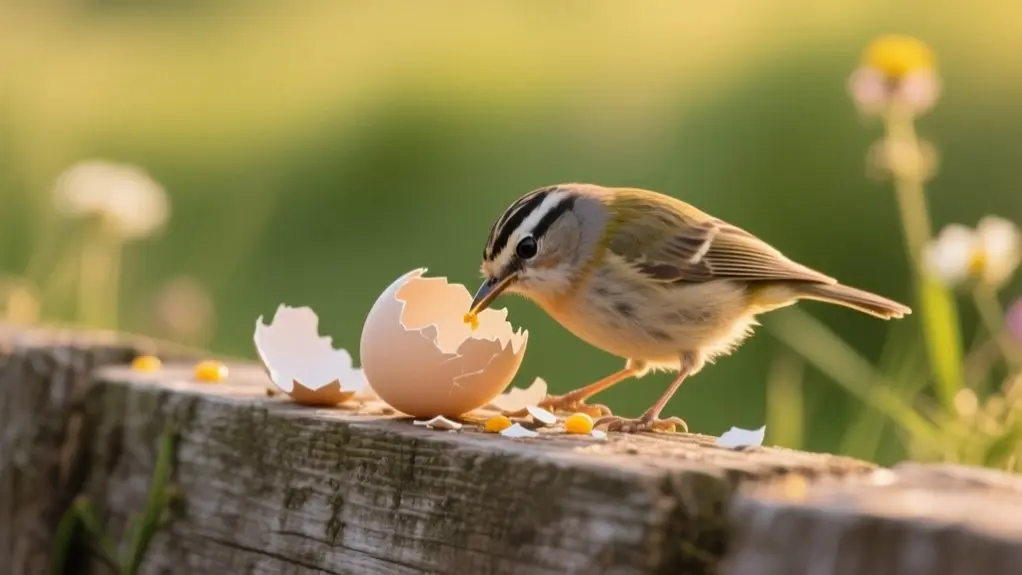
You can safely feed birds crushed eggshells to boost their calcium intake, especially during breeding seasons when they need it most for strong bones and healthy eggs. Make sure to clean and bake the shells to kill bacteria before crushing them into small pieces.
Many birds, like robins, finches, and chickens, naturally eat eggshells for essential minerals. If you want to know how to prepare and offer them properly, plus avoid common risks, keep exploring these tips.
Why Birds Eat Eggshells: Calcium Needs and Health Benefits
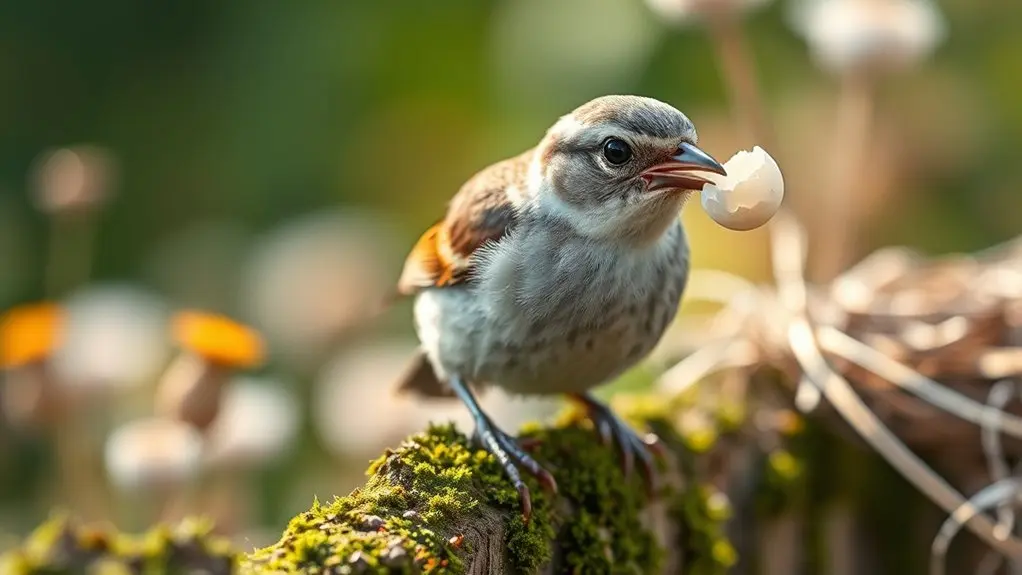
Because birds need calcium to build strong bones and produce eggshells, they often eat eggshells found in their environment.
You’ll notice nesting birds, especially females, have increased calcium needs during breeding season.
Eggshells contain up to 40% calcium, making them an ideal natural supplement.
When birds consume these shells, they not only meet their calcium needs but also gain trace minerals that support overall health benefits.
If you provide crushed eggshells in your backyard feeders, you help nesting birds maintain their strength and wellness, improving their chances for successful reproduction.
Which Bird Species Commonly Eat Eggshells
While not all birds rely on eggshells, many species actively consume them to meet their calcium needs. You’ll find chickens commonly eating crushed chicken eggshells, especially when they start a new account of nesting or laying cycles.
Many birds, like chickens, eat eggshells to fulfill essential calcium needs during nesting and laying periods.
Wild birds like American robins, gulls, pigeons, and doves also eat eggshells to boost mineral intake, particularly during breeding seasons.
Songbirds such as house sparrows and finches often supplement their diets with eggshell fragments to support eggshell production and bone health.
Urban birds adapt too, scavenging discarded shells from human waste.
If you’re feeding birds or observing their habits, knowing which species eat eggshells helps you understand their nutritional needs and behaviors in the wild or your backyard.
How to Safely Prepare Eggshells for Bird Feeding
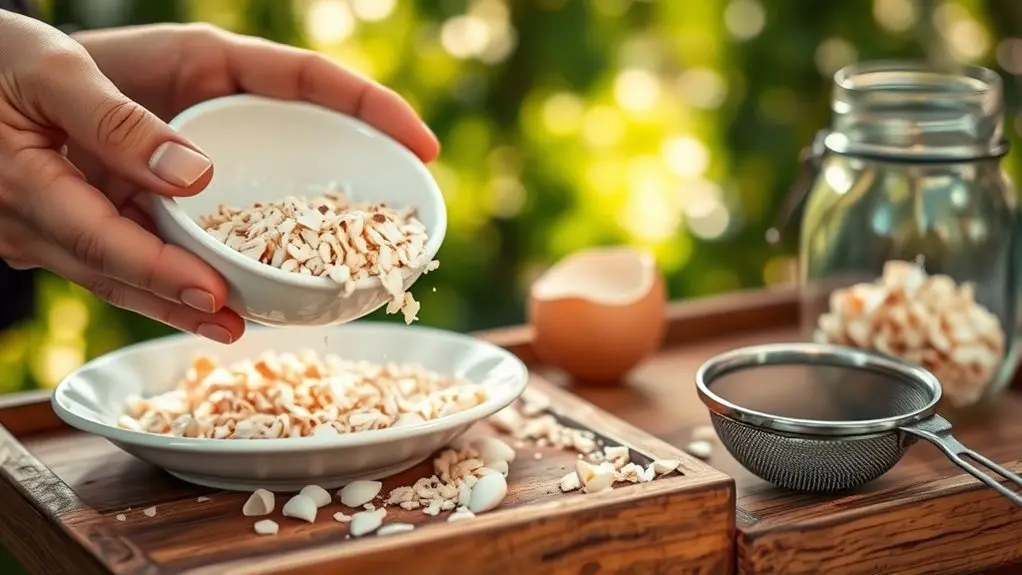
You’ll want to start by thoroughly cleaning the eggshells to remove any residue. This step is important because it helps avoid attracting pests or bacteria.
Once they’re clean, go ahead and bake them to sterilize the shells. After baking, crush the shells into small pieces. This way, you can make sure the birds can safely eat them without choking.
Proper preparation like this helps provide a safe calcium boost for your feathered friends.
Cleaning Eggshells Properly
When preparing eggshells for bird feeding, start by rinsing them thoroughly with warm water to remove any leftover egg residue that could harbor bacteria.
Proper egg cleaning techniques are essential for safe eggshell handling.
Follow these sterilization methods to confirm cleanliness:
- Rinse the shells well under warm water, removing all traces of egg white and yolk.
- Bake the eggshells at 200°F (93°C) for about 10 minutes to kill bacteria and make them brittle.
- Let the shells cool completely before storing them in an airtight container to prevent moisture and contamination.
Using these steps guarantees your eggshells are safe and hygienic for birds, providing them with a healthy calcium source without risking harmful bacteria exposure.
Crushing Eggshells Safely
Before crushing eggshells for bird feeding, make sure they’re completely dry to prevent clumping and mold growth. You can use various eggshell types, such as chicken or quail shells, but always rinse them thoroughly first.
For crushing methods, try grinding the shells into a fine powder using a mortar and pestle or a clean coffee grinder. This improves digestibility and calcium absorption. Alternatively, break them into small pieces if you prefer a coarser texture.
Once crushed, store the eggshells in a dry, airtight container to maintain freshness and avoid moisture buildup. These storage solutions help preserve their nutritional value.
Sprinkle the prepared shells on feeders or in your garden to give birds a safe, calcium-rich supplement, especially during nesting season.
The Best Ways to Offer Eggshells in Your Backyard
If you want to offer eggshells safely, the first thing to do is rinse them well and let them dry completely. This helps get rid of any bacteria that might be hanging around.
Once they’re dry, crush the shells into small pieces.
You can then put these crushed bits in a shallow dish or just scatter them on the ground where birds can easily find them.
Another fun idea is to mix the crushed eggshells with birdseed — this way, you might attract even more feathered visitors to your backyard!
Preparing Eggshells Safely
Although offering eggshells can greatly benefit backyard birds, you’ll need to prepare them safely to prevent attracting pests or spreading bacteria. Proper preparation enhances eggshell nutrition and aligns with natural bird feeding habits, promoting effective calcium absorption methods.
Follow these steps:
- Rinse eggshells thoroughly to remove any egg residue that might attract pests or bacteria.
- Bake them at 200°F (93°C) for about 10 minutes to sterilize and make them brittle for easier crushing.
- Crush the dried shells into small pieces or powder to increase digestibility and calcium uptake.
Placement Tips For Birds
When you offer crushed eggshells in your backyard, placing them thoughtfully can make all the difference in attracting birds and ensuring they get the calcium they need.
Use smart placement strategies by crushing shells into small pieces and putting them in a shallow dish or on a flat surface.
Accessibility considerations are key. Position the eggshells near bird feeders or birdbaths where birds naturally gather.
Make sure the shells are clean and free from egg residue to avoid pests or bacteria.
Keep an eye on the area and replenish the supply regularly, as birds quickly consume the calcium-rich snack.
Risks to Avoid When Feeding Eggshells to Birds
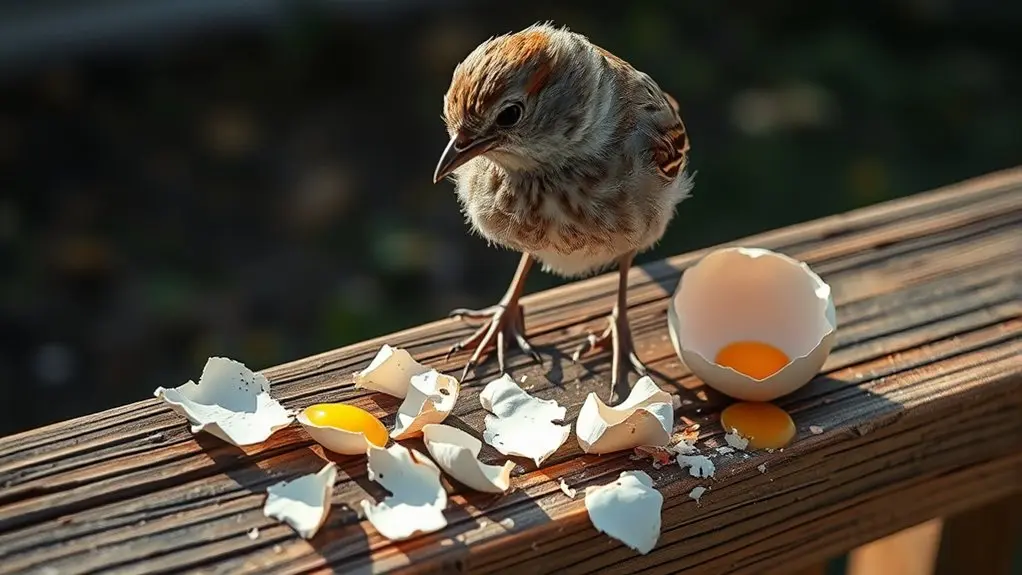
If you want to feed eggshells to birds safely, you need to clean and bake them thoroughly to kill harmful bacteria. Ignoring this can expose birds to serious health risks.
Properly cleaning and baking eggshells is essential to protect birds from harmful bacteria and health risks.
Furthermore, watch out for excessive calcium intake, which can cause kidney damage. Finally, sourcing concerns matter; eggshells from commercially produced eggs might contain harmful additives or contaminants.
To avoid problems, follow these tips:
- Thoroughly clean and bake eggshells to eliminate bacteria.
- Crush eggshells finely to prevent choking or digestion issues.
- Limit the amount of eggshells given to avoid calcium overload.
Preventing Nutritional Deficiencies With Crushed Eggshells
Feeding birds crushed eggshells isn’t just about avoiding risks. It also offers a valuable nutritional boost. By providing this rich calcium source, you help birds maintain a strong nutritional balance essential for healthy bones and egg production.
To maximize calcium absorption, verify the eggshells are thoroughly cleaned, baked, and crushed into small pieces. Offering them regularly at an appropriate feeding frequency guarantees birds, especially finches and doves, get consistent support during demanding times like breeding.
Besides calcium, eggshells supply trace minerals such as magnesium, phosphorus, and potassium. These enhance overall avian health.
Incorporating crushed eggshells into your backyard birds’ diet protects against deficiencies that cause weak bones or poor egg quality. It’s a smart, natural supplement for their wellbeing.
Eggshells’ Impact on Bird Reproduction and Egg Strength
Because calcium plays an essential role in bird reproduction, offering crushed eggshells can greatly boost the strength of their own eggs. By supplementing their diet, you support healthier reproductive cycles and stronger egg structure.
This, in turn, improves their nesting behavior by increasing hatch success rates and reducing egg breakage.
Here’s how eggshells impact birds:
- They provide crucial calcium that strengthens eggshells, ensuring sturdier egg structure.
- They prevent calcium deficiencies during reproductive cycles, promoting healthier offspring.
- They enhance nesting behavior by enabling birds to produce durable eggs, which boosts reproductive success.
Other Natural Calcium Sources Birds Eat Besides Eggshells
You mightn’t realize it, but birds get calcium from more than just eggshells. They munch on natural calcium-rich foods like crushed oyster shells, leafy greens, and certain seeds that help meet their mineral needs.
Plus, insects and fruits also serve as natural calcium supplements, especially when birds need a little extra boost of nutrients.
Natural Calcium-Rich Foods
Although eggshells are a well-known calcium source for birds, they also rely on various natural foods to meet their calcium needs. Ensuring a good dietary balance with diverse natural sources supports ideal calcium absorption and overall health.
You can help your birds thrive by including these in their diet:
- Leafy greens like kale and collard greens, which are rich in calcium and vitamins.
- Seeds such as sesame and chia, nutrient-dense snacks packed with calcium.
- Insects like mealworms and crickets, which provide calcium alongside essential protein, especially during breeding.
Mineral Sources For Birds
When birds need calcium beyond what eggshells provide, they turn to various natural mineral sources to strengthen their bones and support eggshell formation. Crushed oyster shells are a popular choice, supplying essential minerals that aid calcium absorption and maintain mineral balance.
Depending on their dietary preferences, some birds enjoy grains and seeds rich in calcium, while others prefer dark leafy greens like kale or collard greens for an extra boost. Fruits such as figs and blackberries also offer natural calcium alongside other nutrients.
Moreover, many birds consume soil or grit containing calcium carbonate, which not only improves digestion but further enhances mineral intake.
Calcium Supplements In Nature
Because birds need more calcium than eggshells alone can provide, they actively seek out various natural supplements in their environment.
These additional calcium sources help maintain strong bones and support egg production by supplying essential natural nutrients.
When exploring bird diets, you’ll find they rely on diverse options, including:
- Crushed oyster shells, a rich calcium source often offered by bird enthusiasts.
- Seeds like sunflower and millet, which naturally contain calcium and add variety to their diets.
- Green leafy vegetables such as kale and spinach, which many species consume for their nutrient content.
How Birds’ Eggshell Consumption Changes Seasonally
Seasonal shifts play a big role in how often birds consume eggshells, especially since their calcium needs spike during breeding. During spring and summer, seasonal feeding patterns push birds to seek out calcium-rich eggshells to support eggshell formation and chick development.
Outside these months, their calcium sourcing strategies shift, and they rely more on plant materials and insects.
In urban areas, some species like gulls and crows show year-round urban scavenging behaviors, opportunistically consuming eggshells whenever they find them.
However, the nutritional value of eggshells declines outside the breeding season, so birds naturally reduce their consumption.
Understanding these seasonal changes helps you appreciate how birds adapt their diets to meet fluctuating calcium demands throughout the year.
Common Myths About Birds Eating Eggshells Debunked
Although many people think birds avoid eggshells, they actually benefit from the calcium eggshells provide. Let’s clear up some common misconceptions about birds’ eggshell consumption.
First, feeding eggshells won’t encourage birds to eat eggs; this nutritional myth is false when you offer them in moderation.
Second, many bird species, not just a few, consume eggshells, especially during nesting season.
Third, properly preparing eggshells by cleaning, baking, and crushing them makes them safe and appealing for birds.
Here’s a quick rundown:
- Eggshell consumption supports bone health and egg laying.
- Birds like sparrows, finches, doves, and parrots eat eggshells.
- Raw eggshells can be harmful; preparation is key.
Don’t let nutritional myths keep you from providing this valuable calcium source.
How Adding Eggshells Enhances Your Bird Feeding Routine
Adding crushed eggshells to your bird feeding routine offers a simple way to boost the health and activity of your feathered visitors. The eggshell benefits include supplying essential calcium, especially during breeding season.
By incorporating eggshells, you encourage natural foraging behavior, making feeding time more engaging. Plus, it supports diverse feeding strategies by attracting species like cardinals and blue jays.
Just remember to clean and bake the shells to keep birds safe.
| Eggshell Benefits | Foraging Behavior | Feeding Strategies |
|---|---|---|
| Calcium source | Encourages active search | Attracts calcium-seeking birds |
| Reduces kitchen waste | Enhances engagement | Supplements diet naturally |
| Supports breeding | Provides textural variety | Easy to integrate |
| Safe when prepared | Stimulates natural habits | Boosts feeding diversity |
Understanding Eggshells’ Role in Bird Health and Growth
When you offer crushed, properly prepared eggshells to birds, you provide them with essential calcium that supports their bone health and strengthens eggshells for future clutches.
Understanding eggshell benefits is key to improving bird nutrition effectively.
Eggshells are rich in calcium, vital for bone development and reproductive health.
Plus, the grit aids calcium absorption by helping grind food in the gizzard.
To optimize these benefits, remember to:
- Bake eggshells at a low temperature to remove pathogens.
- Crush them finely to make calcium more accessible.
- Offer them especially during breeding seasons to replenish minerals.
Frequently Asked Questions
Can Birds Eat Eggshells From Other Bird Species?
Yes, you can feed birds eggshells from other bird species. Eggshell benefits include providing essential calcium, which supports strong bones and eggshell formation.
The nutritional value is high when you crush the shells into small pieces, making digestion easier.
Follow feeding guidelines by ensuring the eggshells are clean and free of bacteria to keep birds healthy.
This simple supplement can boost their diet, especially during breeding seasons.
Do Birds Prefer Raw or Cooked Eggshells?
You’ll find that birds don’t have a strong preference between raw or cooked eggshells, but cooking can improve egg nutrition by eliminating pathogens.
The shell texture changes slightly when cooked, becoming more brittle and easier to crush, which suits their feeding habits.
Crushing either type into small pieces helps birds digest the calcium efficiently.
How Much Eggshell Should I Give a Bird at One Time?
You should give a bird about half a teaspoon of finely crushed eggshell at one time. This amount provides essential calcium benefits without overwhelming their bird diet.
Eggshells serve as a natural calcium source, especially during breeding seasons, supporting strong bones and egg production.
Remember to clean and bake the shells before offering them, and provide them in moderation to maintain a balanced diet and avoid any health issues.
Can Feeding Eggshells Attract Unwanted Pests to My Yard?
Yes, feeding eggshells can attract unwanted pests to your yard if not managed properly.
To keep pest control tips effective, make sure you clean and dry the shells thoroughly before offering them.
Use eggshells sparingly to avoid attracting ants or rodents. Balancing this helps in attracting beneficial wildlife while managing backyard ecology responsibly.
Keep an eye out for pest activity and adjust your feeding habits to maintain a healthy environment.
Are There Any Bird Species That Avoid Eating Eggshells Entirely?
You’ll find that cowbirds avoid eating eggshells entirely due to their unique egg laying behavior. They parasitize other birds’ nests and don’t benefit from the nutritional benefits shells provide.
Their species preferences lean toward focusing on laying eggs elsewhere rather than recycling calcium from shells.
Conclusion
Just like a tiny architect gathering stones to build a sturdy nest, birds seek eggshells to strengthen their bones and thrive. By offering clean, crushed shells in your backyard, you become part of their ancient dance of life and renewal.
Remember, with care and knowledge, you nurture not just their health but the vibrant chorus of nature itself. So, go ahead. Let your garden be their treasure trove of calcium and care.