
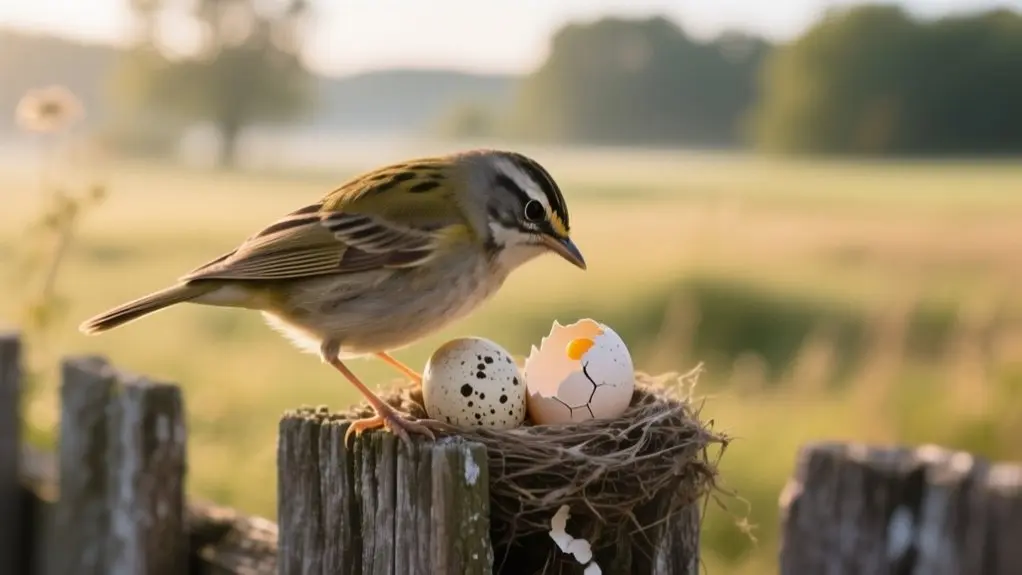
You can safely offer birds eggs as a nutritious protein source by boiling them for about 10 minutes to kill bacteria and cooling them completely. Avoid raw eggs to prevent risks like Salmonella and remove or crush shells to prevent choking.
Birds like canaries, cockatiels, and parrots benefit from eggs in moderation, about once or twice a week. Introducing eggs gradually helps monitor their response.
If you want to explore how eggs enhance bird health and feeding tips, keep going.
Are Eggs Safe for Birds to Eat?
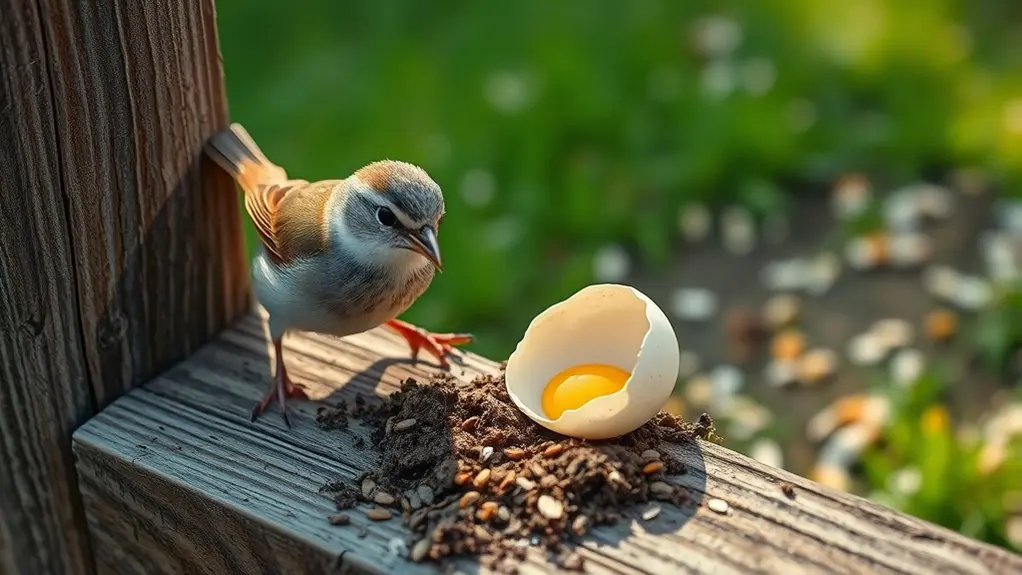
Although eggs can provide essential protein and nutrients, you should only offer them to birds in moderation to keep them safe and healthy.
When eating eggs, boiled ones are the safest option since raw eggs may carry harmful bacteria.
To improve safety, crush egg shells after boiling; this not only makes digestion easier but also adds valuable calcium to their diet.
Crushing boiled eggshells aids digestion and provides essential calcium for birds.
Keep in mind that some birds mightn’t be used to eating eggs, so monitor their reactions closely.
Introducing eggs gradually lets you watch for any adverse effects.
By preparing eggs properly and paying attention to how birds respond, you guarantee their safety while giving them a nutritious treat.
This careful approach keeps birds healthy and benefits them without risking their well-being.
Which Bird Species Benefit Most From Eating Eggs?
You’ll find that certain bird species, like canaries, budgerigars, and cockatiels, really benefit from eating eggs. Eggs provide essential nutrients, especially protein, which supports their growth, breeding, and feather health.
It’s pretty interesting how these little powerhouses pack so much goodness.
Let’s take a closer look at how different birds use eggs to meet their unique nutritional needs during critical times.
Whether it’s raising chicks or molting, eggs can make a big difference in keeping birds healthy and vibrant.
Egg-Eating Species Overview
When you include eggs in the diet of certain birds, like canaries, cockatiels, and budgerigars, you provide them with essential protein and nutrients. These help boost their health and breeding success. Parrots in breeding condition also benefit greatly from egg supplementation.
Some finches may eat eggs to address nutritional gaps, showing natural egg-eating behavior. To keep your feathered friends safe, always offer cooked chicken eggs, preferably boiled, to avoid bacterial risks. Starting a new account of your bird’s diet with eggs can help track their improving health.
| Bird Species | Egg-Eating Benefit |
|---|---|
| Canaries | Protein for breeding |
| Cockatiels | Nutrient boost |
| Budgerigars | Health support |
| Parrots | Aid young development |
| Finches | Nutritional deficiency fill |
Nutritional Benefits By Species
Eggs provide a rich source of protein and nutrients that many bird species benefit from, especially in growth and reproduction. When you consider egg nutrition sources, species dietary habits vary widely, but birds like canaries and finches gain significant advantages from boiled eggs due to their high protein absorption rates.
Parrots also benefit, as eggs supply essential amino acids supporting feather health and well-being. Small birds like budgerigars show improved chick development when eggs are included in their diet.
Even chickens and quails naturally consume eggs, which promotes robust health throughout their lives.
If you notice nutritional deficiencies in wild birds, occasional egg access can offer a complete protein source crucial for energy and muscle development, making eggs a valuable supplement across diverse species.
Breeding Birds And Eggs
Although many birds have varied diets, certain species benefit greatly from eating eggs during breeding. Birds like canaries, parrots, and finches gain essential amino acids and high protein from boiled eggs, which support their reproductive health and address nutritional deficiencies.
Using proper egg feeding techniques, such as offering cooked eggs periodically, ensures safety and balances egg consumption frequency with other foods. This helps you provide important nutrients without overwhelming their diet.
The breeding cycle impacts how and when you feed eggs. For example, during egg production and chick rearing, egg food supplies significant support for energy and growth.
How to Prepare Eggs Safely for Birds
When you’re preparing eggs for your birds, it’s best to choose boiled eggs rather than raw ones. This way, you’re making sure they get both safety and good nutrition.
Just boil chicken eggs for about 10 minutes—that’s enough time to kill any harmful bacteria.
After boiling, peel off the shell and keep the eggs plain.
It’s a good idea to introduce the eggs slowly so you can watch how your bird responds to this new treat.
Boiled Versus Raw
How should you prepare eggs to confirm they’re safe and nutritious for birds? When considering egg preparation techniques, boiled eggs stand out as the safer choice. Cooking methods like boiling for about 10 minutes eliminate harmful pathogens, reducing health risks.
After boiling, let the eggs cool completely before offering them to birds to avoid burns. You can provide both the egg white and yolk for balanced nutrition, and crushing shells adds valuable calcium.
Raw eggs, while acceptable, require caution due to potential salmonella exposure. Always source them from reputable suppliers.
Proper egg storage tips include keeping eggs refrigerated until use and avoiding cracked or dirty shells.
Safe Egg Preparation
To prepare eggs safely for birds, you need to cook them thoroughly to eliminate harmful bacteria. Boiling is the best method. Chicken eggs typically require about 10 minutes.
After boiling, use proper egg cooling methods by letting the eggs cool completely before peeling to avoid burns.
When storing eggs before cooking, follow egg storage tips like keeping them refrigerated to maintain freshness.
Avoid adding any seasonings or additives as they can harm birds. Offer eggs in moderation, monitoring egg feeding frequency to prevent digestive issues or allergies.
You can crush the eggshells and provide them alongside the egg for extra calcium.
Always observe your birds’ reactions and adjust feeding accordingly to keep them healthy and safe.
Should You Feed Birds Raw or Cooked Eggs?
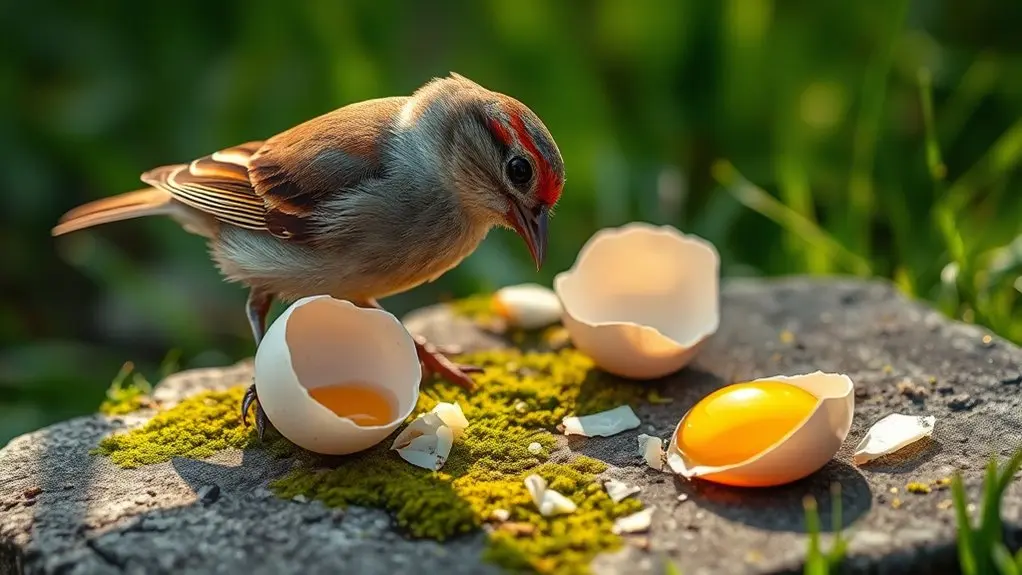
Why risk feeding birds raw eggs when cooked ones offer a safer, more nutritious option? Raw egg risks like Salmonella make feeding them unwise. Cooking eggs eliminates bacteria, making them easier to digest and safer for your feathered friends.
To help your birds enjoy eggs safely, consider these points:
- Cooked egg benefits include improved digestibility and nutrient availability.
- Boiled eggs are rich in protein, supporting small birds during breeding.
- Always remove or crush the shell to avoid choking and add calcium.
- Introduce eggs gradually to monitor acceptance and prevent digestive upset.
What Nutritional Benefits Do Eggs Provide to Birds?
Feeding cooked eggs to birds not only keeps them safe but also boosts their nutrition greatly. Eggs serve as excellent protein sources, essential during breeding seasons when birds demand extra nutrients for egg production and chick growth.
The nutritional values of eggs include important vitamins like A, D, E, and B-complex, which support immune function and feather development.
Moreover, the fats in eggs provide energy important for active species such as finches and canaries.
Calcium from eggshells strengthens bones and promotes reproductive success, especially in females.
By incorporating boiled eggs into your bird’s diet, you enhance dietary diversity with a highly digestible, nutrient-rich option that supports overall health and well-being.
This simple addition can remarkably benefit young, breeding, or active birds.
How Often Should You Feed Eggs to Your Birds?
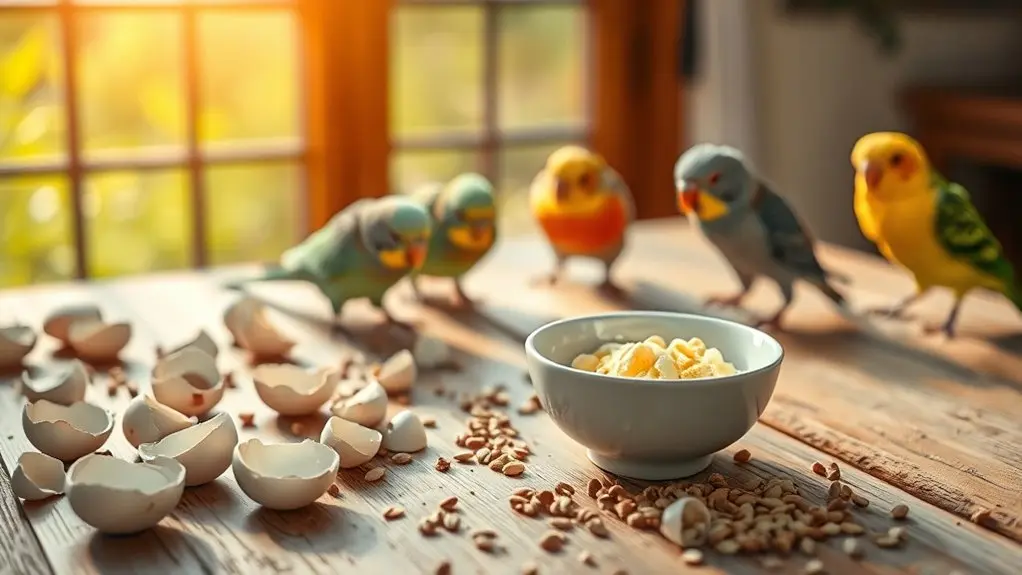
Since eggs provide a rich source of protein and calcium, you’ll want to offer them to your birds in moderation, typically once or twice a week.
Maintaining a balanced egg consumption frequency helps prevent nutritional imbalances and supports overall bird health impact.
Here are key points to evaluate:
- Boiled eggs are safer than raw, reducing bacterial risks.
- Include crushed shells to boost calcium intake, especially for breeding birds.
- Young birds benefit more from eggs due to their higher protein needs.
- Always combine eggs with protein source alternatives like pellets, fruits, and vegetables for a varied diet.
Signs Birds Eat Eggs Due to Nutritional Deficiency
You might notice your bird eating eggs when it’s lacking key nutrients like calcium or protein. It’s pretty common for birds to do this if their diet isn’t quite balanced.
You’ll often see signs like dull feathers, low energy, or even some unusual behavior. These are clues that something might be missing in their nutrition.
Knowing these signs is super helpful because it lets you adjust their diet and stop those egg-eating habits before they become a problem.
Nutritional Deficiency Indicators
When birds suffer from nutritional deficiencies, especially a lack of calcium or protein, they might start eating their own eggs to compensate.
Poor nutrient absorption or an imbalanced diet often triggers this egg consumption behavior. You can watch for specific indicators that signal dietary imbalance:
- Feather plucking or dull feathers
- Lethargy or decreased activity
- Repeated egg consumption by breeding pairs
- Poor growth or development in young birds
If you notice these signs, it’s essential to evaluate their diet and make sure it includes balanced pellets, greens, and enough protein sources.
Addressing nutrient absorption issues and maintaining dietary balance can help prevent egg eating and promote healthier birds.
Egg Eating Behavior Causes
Nutritional deficiencies often play a major role in birds developing egg-eating habits. When their diet lacks essential vitamins, minerals, protein, or calcium, birds instinctively seek these nutrients, which can lead to egg eating.
Overbreeding also acts as a behavioral trigger, causing stress that encourages this habit. Identifying these underlying causes is vital to implementing effective prevention strategies.
You should assess and improve your birds’ diet promptly to stop egg eating from becoming ingrained. If adjusting nutrition doesn’t work, reducing or stopping breeding may be necessary to alleviate stress and break the cycle.
How Feeding Eggs Influences Bird Breeding and Nesting
Although some may overlook it, feeding birds boiled eggs can greatly boost their breeding and nesting success by supplying a rich source of protein. This protein supports their dietary preferences during the demanding breeding season and encourages natural breeding behavior.
When you provide eggs, you help birds meet increased nutritional needs, which directly impacts their nesting success.
Here’s how feeding eggs influences them:
- Enhances breeding behavior by mimicking natural diets.
- Supports nesting success through essential nutrient supply.
- Aids recovery after egg production and chick rearing.
- Complements dietary preferences during critical reproductive phases.
What Are the Risks of Feeding Eggs to Birds?
If you decide to feed eggs to birds, you need to be careful about how you prepare and offer them. One major egg consumption risk is bacterial contamination, like Salmonella, so always cook eggs thoroughly.
Feeding raw eggs can expose birds to avidin, which interferes with biotin absorption and causes nutritional balance concerns.
Moreover, some birds, especially young or inexperienced ones, may develop behavioral egg issues, such as egg eating, which can disrupt breeding success.
You should monitor birds closely when introducing eggs and consult an avian expert to avoid health problems.
Since different species have unique dietary needs and sensitivities, understanding these risks will help you provide eggs safely without compromising their well-being or nutrition.
Alternatives to Eggs for Bird Protein Needs
While eggs can provide protein to birds, their risks and preparation concerns might make you look for safer options.
Luckily, several alternatives deliver quality protein without the drawbacks.
Here are four excellent substitutes:
- Plant based proteins like cooked legumes offer essential amino acids safely.
- Insect protein from mealworms or crickets is ideal, especially in breeding seasons.
- Nut butter options (unsweetened and unsalted) provide healthy fats and nutrients when used sparingly.
- Specialized bird pellets are formulated to meet protein and nutritional needs precisely.
Incorporating these alternatives guarantees your bird gets balanced nutrition without the risks linked to eggs.
Choosing these options ensures your bird enjoys safe, balanced nutrition free from egg-related risks.
This supports their overall health effectively.
Tips to Use Eggs for Better Bird Health and Breeding
Because breeding birds need extra nutrients, incorporating boiled eggs into their diet can boost their protein intake and overall health.
You should focus on proper egg preparation methods, such as boiling eggs thoroughly to eliminate bacteria and crushing the eggshells before feeding.
The eggshell benefits include providing essential calcium, which supports strong eggshell formation and meets bird dietary requirements during reproduction.
Start by offering small amounts of egg to help birds adjust and avoid digestive issues.
You can also supplement with dry commercial egg food, which is rich in protein and vitamins necessary for breeding success.
Always verify the eggs are fresh and clean to keep feeding safe and effective, helping your birds thrive during this critical time.
Common Myths and Facts About Birds Eating Eggs
Adding eggs to your bird’s diet can improve their health, but it’s important to separate facts from myths about feeding eggs. Many think raw eggs are best, yet cooked eggs prevent bacterial risks. You should also consider egg storage techniques and egg sourcing tips to guarantee freshness and safety.
Incorporating eggs safely into your bird’s diet boosts health, emphasizing cooked eggs and proper storage.
Here are common myths and facts:
1. Myth: Birds will always eat their own eggs.
Fact: This usually happens when their diet lacks balance.
2. Myth: Eggs can replace a full diet.
Fact: Eggs are a supplement, not a main food.
3. Myth: All birds love eggs.
Fact: Bird dietary preferences vary widely.
4. Myth: Feeding eggs year-round is safe.
Fact: Offer eggs occasionally, especially during breeding seasons.
Frequently Asked Questions
Can Birds Develop Egg Allergies?
Birds generally don’t develop true egg allergies like mammals do, but you might notice egg sensitivity in some. If your bird reacts poorly, it’s probably an intolerance, not an allergy.
Eggs offer great nutritional benefits, so they’re worth including carefully. If your bird can’t handle eggs, you can try alternative proteins like cooked chicken or legumes.
Always watch for any changes after feeding eggs and consult your vet if needed.
Do Wild Birds Eat Eggs Naturally?
Yes, wild birds do eat eggs naturally. If you observe egg-laying species, you’ll notice their nesting habits often attract predators like crows and magpies that raid nests for eggs.
These predator interactions play a big role in the ecosystem, as some birds rely on eggs for essential nutrients.
How Do Birds Digest Eggshells?
Imagine your bird’s gizzard as a tiny rock crusher, breaking down the eggshell composition, mainly calcium carbonate, into digestible bits.
You’ll see how digestive enzymes then swoop in like skilled chefs, extracting nutritional benefits crucial for strong bones and egg production.
Birds often use grit to aid this process, grinding the hard shell before enzymes complete digestion.
Can Egg Feeding Affect Bird Behavior?
Yes, egg consumption impact can definitely influence bird behavior. When you feed birds eggs, their dietary preferences influence may shift, making them favor high-protein foods.
You’ll notice behavioral changes like altered foraging habits or nesting activities.
It’s important to conduct behavioral changes analysis after introducing eggs to guarantee these shifts don’t lead to negative effects like overbreeding or egg-eating habits.
Monitoring helps keep their diet balanced and their behavior healthy.
Are Eggs Safe for Baby Birds?
Eggs can be a golden treasure chest of nutritional benefits for baby birds when you handle them right. You’ll want to stick to careful preparation methods like boiling and mashing to make eggs easy to digest.
Follow feeding guidelines closely. Start with small amounts and avoid additives.
Conclusion
You might think eggs are risky for birds, but they’re actually a great protein boost when prepared right. While some species thrive on them, others might not need eggs at all.
Cooked eggs reduce risks, and alternatives exist if you want variety. So, whether you’re feeding or breeding, eggs can help. Just balance safety with nutrition.
In the end, what’s good for the bird is good for you, too.