
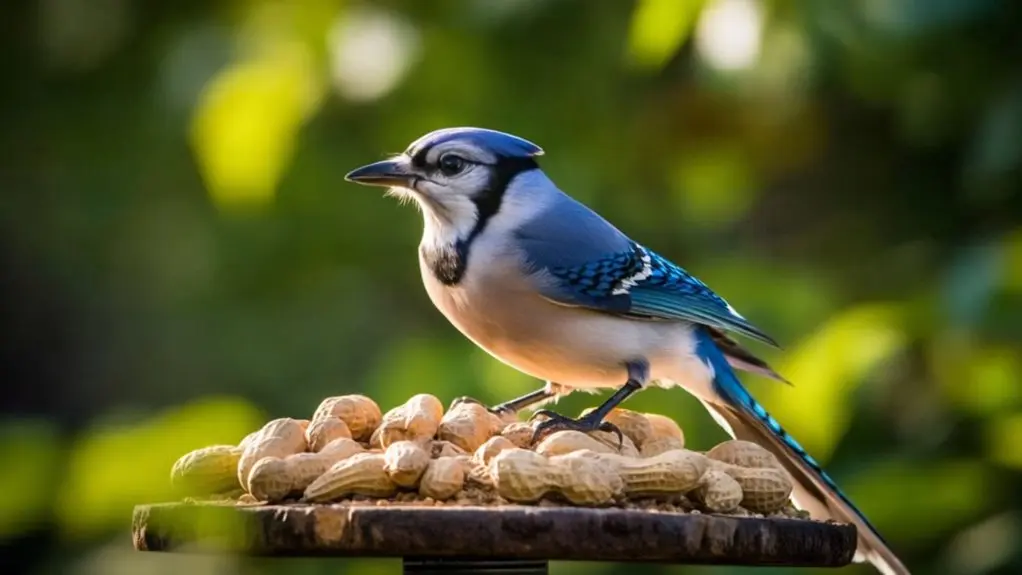
You can feed your bird raw, unsalted peanuts in moderation, but avoid moldy nuts. Mycotoxins in moldy peanuts can cause severe health issues. So, always check your peanuts carefully before offering them.
Store peanuts in airtight containers in cool, dry places to prevent mold growth. Roasted peanuts might have harmful additives like salt, so they don’t guarantee safety for your bird. It’s better to stick with raw peanuts if you can.
Limit peanuts to about 10% of your bird’s diet and keep an eye out for any signs of illness. Understanding these factors helps you provide safe, nutritious treats for your bird. That way, you can feel good about what you’re feeding your feathered friend.
Are Peanuts Safe for Birds?
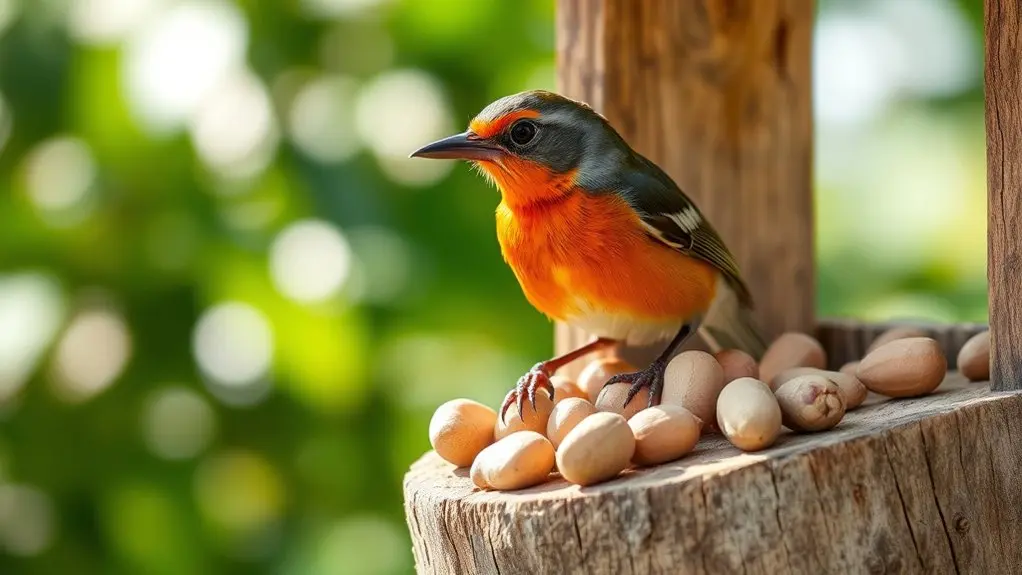
How safe are peanuts for birds? Raw, unsalted peanuts can be safe when given in moderation and free from mold. However, you need to be cautious because peanuts can develop mold if stored improperly or kept too long.
Moldy peanuts contain toxins that can be fatal to birds. Shelled peanuts are especially susceptible to mold growth on the shells, particularly in warm or humid conditions. Because of these risks, some avian experts advise either avoiding peanuts or only offering freshly purchased, mold-free ones.
Additionally, peanuts are high in fat, which can lead to obesity and liver problems in birds if consumed excessively. To protect birds’ health, always check peanuts carefully and offer them sparingly as part of a balanced diet. It’s better to be safe than sorry!
Raw vs. Roasted Peanuts: What’s Best?
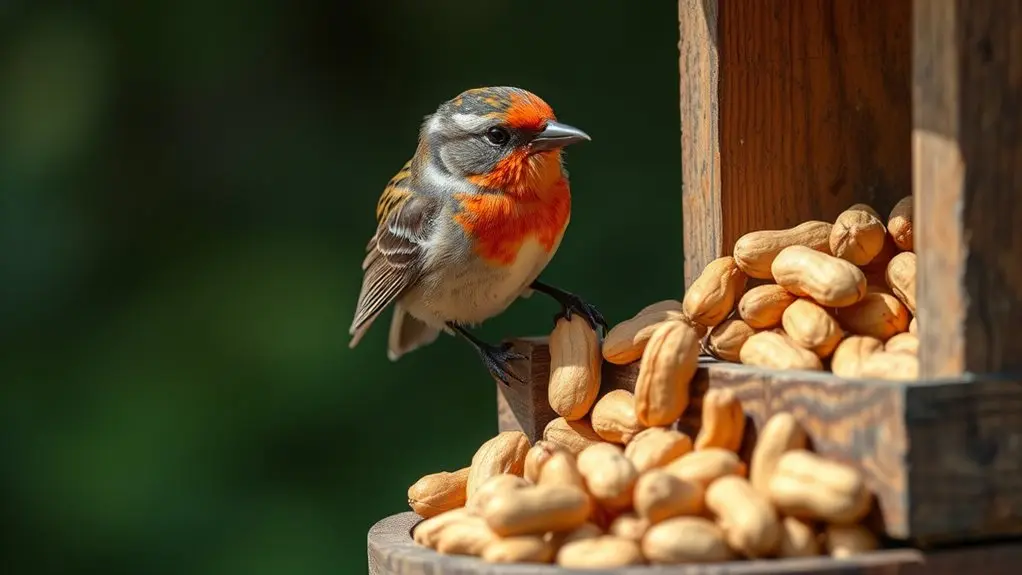
When deciding whether to give birds raw or roasted peanuts, it’s good to think about their nutrition and safety.
Raw peanuts usually have more nutrients and are less likely to contain harmful additives or mold.
Also, pay attention to how the birds react—sometimes their preference and how easily they digest the peanuts can be different.
Nutritional Differences Explained
Although raw peanuts preserve more natural oils and nutrients, they can pose a higher risk of mold contamination if not stored properly.
When comparing raw and roasted peanuts, the nutritional differences are relatively minimal. Roasting can reduce heat-sensitive nutrients, but it also enhances flavor and may improve safety by eliminating certain pathogens.
However, roasted peanuts often contain added salts or oils, which aren’t suitable for birds and can cause health problems. If you choose roasted peanuts for feeding birds, opt for dry-roasted varieties without additives.
Regardless of the type, always guarantee peanuts are fresh and mold-free to maintain their nutritional value and safety.
This careful selection helps provide birds with a balanced diet while minimizing potential risks linked to peanut feeding. So, it’s worth taking a little extra time to pick the right peanuts for your feathered friends.
Mold Risks And Safety
Why does mold pose such a serious risk when feeding peanuts to birds? Mold produces toxins called mycotoxins, which can be fatal to birds even in small amounts. You should avoid peanuts that show any signs of mold or spoilage.
Raw peanuts are generally safer than roasted ones, as roasting can degrade nutrients and sometimes introduce harmful compounds if not done properly. While roasting reduces mold presence, it doesn’t eliminate the risk entirely. So, it’s not a foolproof method to keep peanuts safe.
To minimize mold, store fresh, unshelled raw peanuts in airtight containers and keep them in the freezer. Regularly inspect your peanuts for mold growth, especially if they’ve been stored for extended periods.
Bird Preference And Digestibility
Ensuring peanuts are free from mold is only part of providing a safe treat for birds. Selecting between raw and roasted peanuts also impacts their health and preference. While birds often favor the taste of roasted peanuts, raw peanuts are generally a better choice because they’re easier to digest and don’t have harmful additives.
Here are some key points to keep in mind when choosing peanuts for birds:
- Raw peanuts don’t have added oils or salt, which means fewer health risks.
- Roasting peanuts can change their proteins and fats, making them harder to digest.
- Birds might prefer the flavor of roasted peanuts, but they get more nutritional benefits from raw peanuts.
- No matter which type you offer, moderation and freshness matter a lot to avoid mold and toxicity.
Offering raw, unsalted peanuts is really the best way to support your bird’s nutrition and keep them safe.
Why You Should Avoid Peanuts With Shells
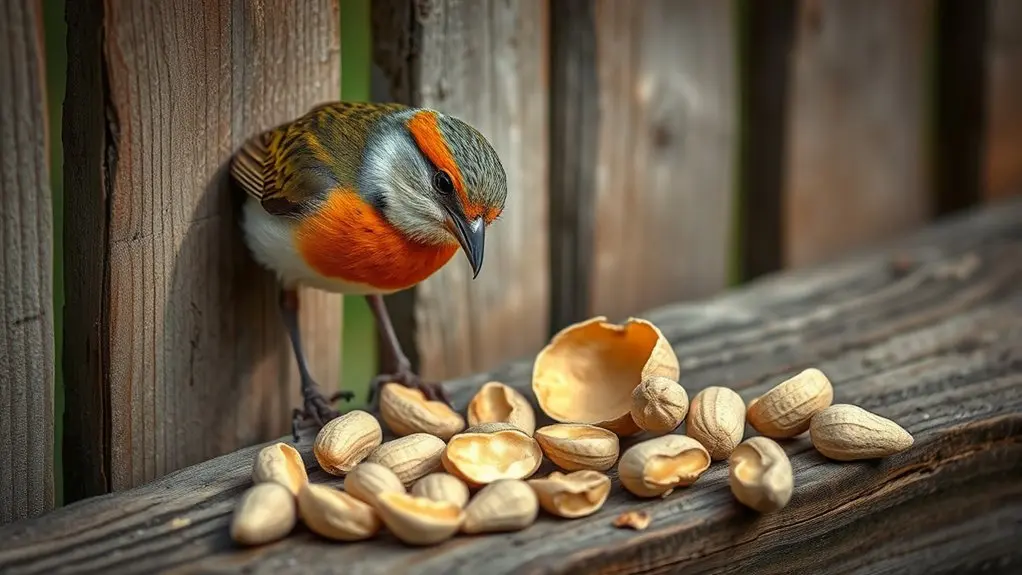
Since peanut shells can harbor mold that produces toxins harmful to birds, you should avoid feeding peanuts with shells. Mold growth is more common on older or stored peanut shells, increasing the risk of toxin exposure. Cracked or broken shells may reveal mold spores, further elevating health hazards for your bird.
These molds produce mycotoxins that can cause poisoning and liver damage, which can be fatal. By offering shelled peanuts instead, you reduce the likelihood of your bird ingesting harmful mold spores.
Removing the shell minimizes health risks and guarantees safer feeding practices.
How Moldy Peanuts Can Harm Your Bird
You should know that moldy peanuts can produce harmful mycotoxins, which are really bad for your bird’s health. These toxins might cause breathing problems, poisoning, or in severe cases, even death if your bird eats them.
Mold Risks In Peanuts
Although peanuts are a popular treat for birds, mold growth on stored or old peanuts poses serious health risks. Mold produces toxins that can severely harm your bird’s health. These toxins affect respiratory, liver, and neurological systems.
You should be especially cautious with shelled peanuts, as they mold more easily if not fresh or stored properly. To protect your bird, consider these key points:
- Mold grows rapidly on old or improperly stored peanuts.
- Mold toxins cause respiratory distress, liver damage, and neurological issues.
- Active birds tolerate mold toxins better than inactive or breeding birds.
- Store peanuts in airtight containers or freeze fresh peanuts to prevent mold.
Toxic Effects On Birds
When birds consume moldy peanuts, they ingest mycotoxins that can cause severe health problems. These toxins may lead to respiratory issues, liver toxicity, and immune suppression. This poses significant risks especially for inactive or breeding birds.
Mold develops more readily in old or improperly stored peanuts, increasing the likelihood of toxin exposure. Active or flighted birds tend to be less susceptible to these effects but aren’t immune. So, it’s important to understand the toxicity because mycotoxins can be potentially fatal.
Proper storage reduces mold formation, but once peanuts are moldy, feeding them to birds can harm their health. Consequently, avoiding moldy peanuts is critical for maintaining avian well-being and preventing toxic effects linked to mycotoxin ingestion.
Preventing Moldy Nut Exposure
Because moldy peanuts can produce dangerous mycotoxins, preventing your bird’s exposure starts with proper storage and careful inspection. Mold toxins can cause severe liver damage, immune suppression, and neurological problems, especially in inactive or breeding birds.
To minimize risks, follow these key steps:
- Store peanuts in airtight containers and keep them in the freezer to inhibit mold growth.
- Inspect peanuts visually before feeding, discarding any with discoloration or a musty smell.
- Avoid feeding old or shelled peanuts that have been left at room temperature for extended periods.
- Prioritize fresh, properly stored peanuts and monitor your bird’s health regularly for signs of toxicity.
How Much Peanut Should You Feed Your Bird?
How much peanut should you feed your bird to keep it healthy? Limit peanuts to no more than 10% of their diet to avoid obesity and related health risks. Small birds should receive about one peanut per feeding, while larger birds can have two to three.
Always offer unsalted, raw, or roasted peanuts, making sure they’re mold-free. Feeding peanuts a few times a week is ideal to maintain a balanced diet. This also helps prevent fatty liver disease caused by excess fat intake.
| Bird Size | Peanut Amount per Feeding | Frequency | Reason | Health Impact |
|---|---|---|---|---|
| Small | 1 peanut | Few times weekly | Balanced nutrition | Prevents obesity |
| Medium | 2 peanuts | Few times weekly | Limits fat intake | Avoid fatty liver |
| Large | 3 peanuts | Few times weekly | Safe portion control | Supports overall health |
Signs Your Bird Is Having Problems From Peanuts
Although peanuts can be a nutritious treat, they sometimes cause health issues in birds. You should observe for specific signs indicating your bird may be reacting poorly to peanuts. These symptoms can result from allergic reactions, mold toxins, or spoilage.
Here are key signs to monitor:
- Lethargy, loss of appetite, or abnormal droppings, which suggest digestive distress.
- Respiratory issues or sneezing, often linked to mold exposure.
- Swelling or redness around the beak, eyes, or legs, indicating allergies or infections.
- Unusual feather plucking, decreased activity, or behavioral changes like restlessness or hiding, which can signal internal illness.
If you notice these signs, consult an avian veterinarian promptly to ensure your bird’s health and safety. It’s always better to be cautious when it comes to your feathered friend’s well-being.
How to Store Peanuts to Keep Them Fresh
You should store peanuts in airtight containers to keep moisture and air out, since both can cause mold to grow.
Freezing peanuts is a great way to keep them fresh longer because it slows down mold development, especially if you don’t use them very often.
Also, try to avoid storing peanuts in warm or humid places because heat and humidity make them spoil faster.
Proper Storage Containers
Since exposure to air, moisture, and light speeds up spoilage, storing peanuts in airtight, opaque containers is super important to keep them fresh. These containers help stop mold from growing and prevent nutrient loss, which means the peanuts stay safe and tasty for birds.
To get the best results when storing peanuts, here are some easy tips to follow:
- Pick airtight containers so air and moisture can’t get in, cutting down the chances of spoilage.
- Go for opaque containers to block light, since light can mess with the peanuts’ quality and nutrients.
- Store the containers in a cool, dry place to keep mold at bay.
- Don’t forget to label the containers with purchase or expiration dates. That way, you’ll use the peanuts while they’re still fresh.
Freezing For Longevity
How can freezing extend the freshness of peanuts for bird feeding? Freezing slows down biochemical reactions and prevents mold growth. This notably prolongs peanuts’ shelf life.
To maximize freshness, store peanuts in airtight, moisture-proof containers before freezing. This protects them from humidity and external odors that could degrade quality.
Peanuts can remain fresh in the freezer for up to a year, depending on their initial condition.
It’s important to label containers with the freezing date so you can track longevity and use them in time.
When ready to feed, thaw peanuts at room temperature or in the refrigerator to keep them safe and tasty.
This method helps peanuts retain their nutritional value and appeal. That way, you provide a safe, long-lasting food source for birds.
Avoiding Mold Growth
Although peanuts are a nutritious food source for birds, improper storage can quickly lead to mold growth that compromises their quality and safety. Mold produces harmful toxins, so preventing its development is essential.
To keep peanuts fresh and safe for birds, follow these guidelines:
Store peanuts in airtight containers to limit moisture exposure. Keep peanuts in the freezer for long-term storage, as cold temperatures inhibit mold growth. Regularly inspect peanuts for signs of mold, like discoloration or musty odors. Avoid storing peanuts in humid environments, which promote spoilage.
Using fresh, high-quality peanuts and consuming them within a few months also reduces mold risk. These steps help maintain peanut safety and nutritional value for your birds. Just a little care goes a long way in keeping your feathered friends healthy!
Alternatives to Peanuts for a Balanced Bird Diet
When you want to diversify your bird’s diet beyond peanuts, incorporating raw almonds, Brazil nuts, and hazelnuts provides essential healthy fats and nutrients in moderation.
You can also offer macadamia nuts, pecans, and pistachios, but make sure they’re unsalted, unroasted, and stored properly to minimize mold risk.
To keep things balanced, include a variety of seeds, fresh fruits, and vegetables alongside nuts.
Balance your bird’s diet with a mix of seeds, fresh fruits, and vegetables alongside nuts.
Commercial bird foods often contain nut fillers, so picking high-quality, fresh, and organic nuts is a smarter choice. It’s all about better safety and nutritional value.
Just remember, nuts should only be a small part of your bird’s diet to avoid obesity and liver problems.
Mixing things up like this supports your bird’s overall health and cuts down on relying on peanuts alone.
How to Choose Fresh, High-Quality Peanuts
Expanding your bird’s diet with a variety of nuts means paying close attention to the quality of the peanuts you offer. Fresh, high-quality peanuts guarantee your bird’s safety and nutritional benefit. Here’s how to select the best peanuts:
First, choose peanuts labeled “raw” with firm, unbroken shells to assure freshness. Take a close look at the peanuts and avoid any that show mold, discoloration, or musty odors. These signs usually mean the peanuts have spoiled.
It’s a good idea to buy from reputable suppliers who provide fresh, organic peanuts without additives or preservatives.
When it comes to storing peanuts, keep them in airtight containers in the freezer. This helps maintain their quality and stops mold from growing during long-term storage.
Tips for Introducing Peanuts Safely to Your Bird
Since peanuts can cause allergic reactions or digestive issues in some birds, you should introduce them gradually and carefully. Start by offering small, shelled, raw, unsalted peanuts to monitor your bird’s response.
Always make sure peanuts are fresh, free of mold, and stored properly in airtight containers in the freezer to prevent spoilage.
After a few hours, remove any uneaten peanuts to avoid mold growth, especially in humid conditions.
Observe your bird closely for signs of discomfort, such as changes in behavior or digestion, during the initial introduction.
By following these precautions, you can safely incorporate peanuts into your bird’s diet while minimizing health risks associated with allergens or contamination.
It’s better to be cautious and keep a close eye on how your feathered friend reacts.
Frequently Asked Questions
Can Birds With Allergies Safely Eat Peanuts?
You shouldn’t give birds with allergies peanuts, as their immune system might react adversely. If you must, introduce peanuts very gradually and in small amounts.
But really, always consult an avian veterinarian before offering this potentially risky food. It’s better to be safe than sorry!
Do Peanuts Affect Different Bird Species Differently?
Think of peanuts like a spicy dish. Some birds handle the heat, others don’t. You’ll find parrots thrive on them, while finches risk choking or obesity.
Can Peanut Shells Be Used as Bird Toys or Enrichment?
Yes, you can use clean, mold-free peanut shells as bird toys or enrichment. Just make certain they’re thoroughly dried and regularly replaced to prevent mold.
Mold produces toxins that are harmful to birds if ingested or chewed. So, keeping the shells fresh and safe is really important.
It’s a simple way to give your bird something fun to explore!
Are Peanut Oils Safe for Birds in Cooking?
You wouldn’t want to drizzle peanut oil on your bird’s meal like a Victorian chef, but pure, unflavored peanut oil in small amounts is generally safe.
Just make sure to avoid processed oils. Also, keep an eye out for any signs of inflammation from omega-6 fatty acids. It’s all about balance when it comes to your bird’s diet!
How Do Peanuts Impact Wild Bird Populations?
Peanuts can disrupt wild bird populations by causing dependency, nutritional imbalances, and overpopulation. You’ll want to avoid feeding moldy peanuts to prevent health risks.
It’s also important to maintain natural foraging behaviors and ecological balance in their habitats. That way, birds stay healthier and the environment stays stable.
Conclusion
Just like the fabled wisdom of the tortoise, patience and care win the race when feeding your bird peanuts. You’ll want to choose fresh, mold-free peanuts and avoid shells. Feeding in moderation is key to keeping your feathered friend safe and healthy.
Remember, peanuts are just one piece of a balanced diet puzzle. By following these guidelines, you’ll provide a nutritious treat without risking your bird’s wellbeing. This helps ensure their vibrant health so they can soar for years to come.