
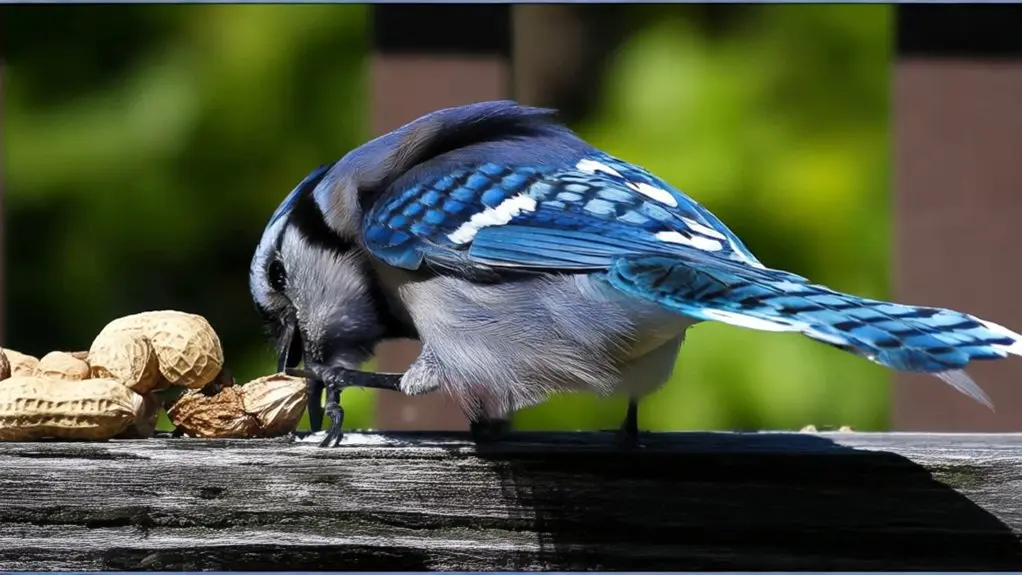
You can safely offer birds peanuts in the shell, especially larger species like blue jays, woodpeckers, and crows. These birds have the strength and beak structure to crack them open. Peanuts provide essential protein and fat, which supports their energy and natural foraging behaviors.
Just make sure to avoid salted or roasted varieties since additives might harm the birds. Using appropriate feeders and keeping an eye out for spoilage helps guarantee safe feeding.
By exploring these details, you’ll be able to optimize peanut feeding for your backyard visitors and enjoy watching them thrive.
Which Birds Can Eat Peanuts in the Shell?
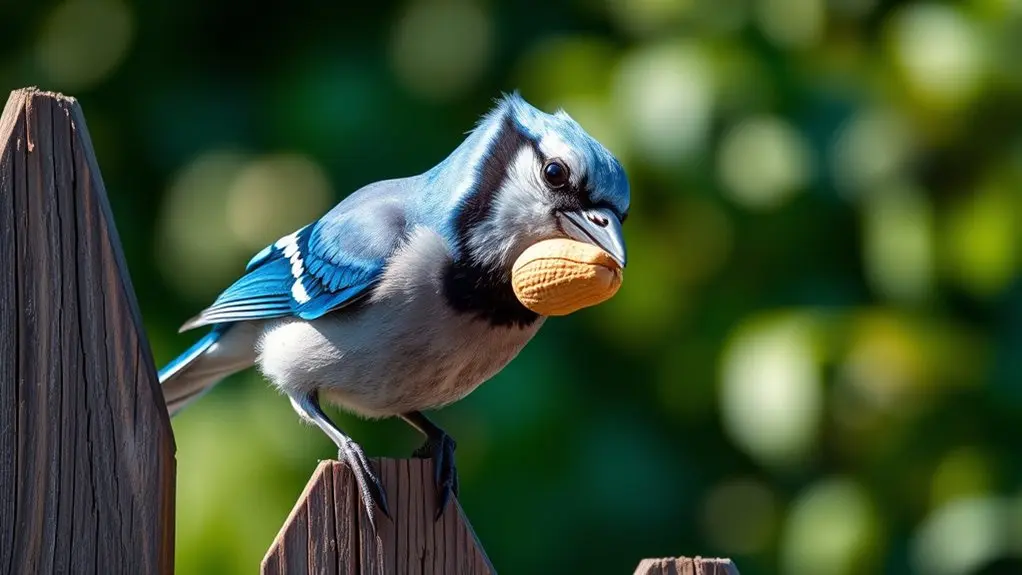
Although many birds enjoy peanuts, only certain species can effectively eat peanuts in the shell due to the physical strength and beak structure required to crack them open.
Larger birds like blue jays, red-bellied woodpeckers, crows, and grackles have the necessary strength and robust beaks to access the nut inside. Medium-sized woodpecker species also participate in consuming peanuts in the shell.
Smaller birds, such as chickadees, titmice, and nuthatches, may try to eat shelled peanuts but usually can’t crack them open consistently. So, while they might give it a go, it’s not their strong suit.
Also, squirrels often target peanuts in the shell at feeders, showing off their strong jaw power.
In the end, a bird’s size, beak shape, and muscle strength decide if it can handle peanuts in the shell effectively.
Why Are Peanuts in the Shell Good for Birds?
You’ll find that peanuts in the shell are a great treat for birds because they provide a rich source of protein and fat, which are essential for their energy and nutrients.
Plus, the whole peanuts encourage birds to use their natural instincts since they’ve to crack open the shell to get to the food inside. This little challenge not only helps meet their dietary needs but also keeps their feeding and caching behaviors active and healthy.
Nutritional Benefits For Birds
Because peanuts in the shell are rich in protein and fat, they provide birds with essential energy and nutrients necessary for survival, especially during cold weather or periods of high activity. The high protein content supports muscle maintenance and repair, while the fat offers a dense energy source critical for thermoregulation and sustained exertion.
Species like jays, woodpeckers, and nuthatches benefit from these nutrients, as peanuts supply the caloric intake needed for their active lifestyles. Plus, the nutrient profile of peanuts aligns well with birds’ dietary requirements, contributing to overall health and resilience.
Encourages Natural Foraging
When birds encounter peanuts still in the shell, they instinctively engage in natural foraging behaviors by cracking open the shells to access the food inside. This activity stimulates their cognitive functions and provides necessary physical exercise, supporting overall health.
Peanuts in the shell also allow birds to practice food caching, mirroring their instinctual behavior to store food for future consumption.
This natural foraging process not only meets their immediate nutritional demands, especially during energy-intensive periods like cold weather, but also reinforces survival instincts.
By offering peanuts in the shell, you encourage birds to perform essential behaviors critical to their well-being. This ensures an enriching feeding experience that promotes mental and physical resilience.
This method aligns with their evolutionary adaptations, making it a scientifically sound choice for bird feeding.
Are Roasted or Salted Peanuts Safe for Birds?
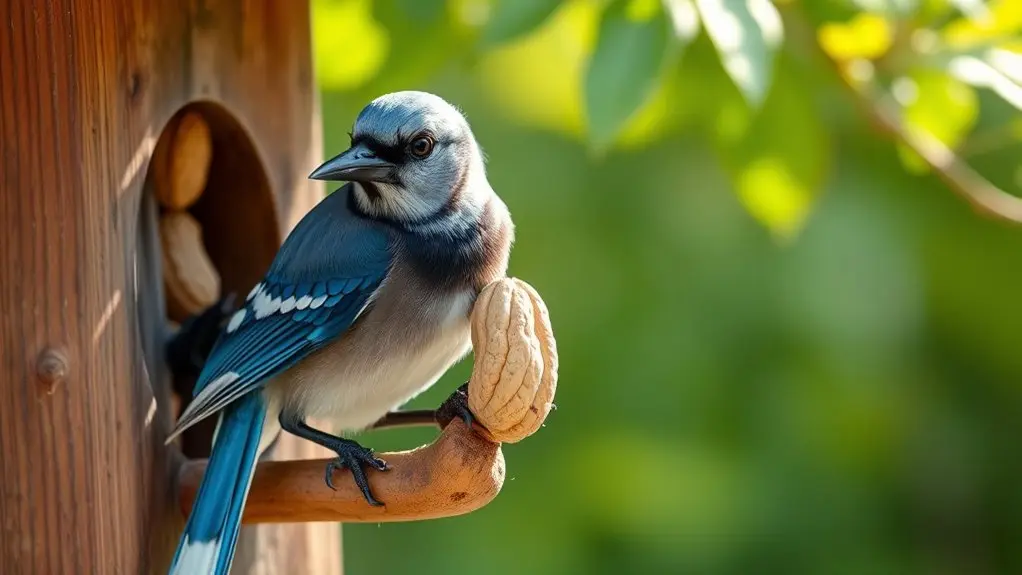
You should avoid feeding birds salted peanuts because they’ve a hard time processing the salt. This can lead to dehydration and other health issues.
Roasted peanuts aren’t the best option either. They might’ve oils or additives that could be harmful to birds.
Risks of Salted Peanuts
Although peanuts are a popular treat for birds, salted and roasted varieties pose significant health risks because of their salt content and added oils. Birds can’t efficiently metabolize salt, which can lead to dehydration and salt poisoning.
Roasted peanuts may also include oils or salts that make these problems worse.
To protect birds, keep these key points in mind:
- Salted peanuts can cause serious dehydration and kidney stress in birds.
- Roasted peanuts often have added oils or salts, which increase health risks.
- Eating a lot of salted or roasted peanuts may lead to digestive problems.
- Always avoid peanuts that are seasoned, salted, smoked, or candy-coated.
For safe feeding, only offer raw, unprocessed peanuts that are packaged specifically for birds.
Raw Peanuts Recommended
A safe diet for wild and pet birds includes raw peanuts. These provide essential nutrients without the harmful additives found in roasted or salted varieties.
Salted peanuts contain high salt levels that birds can’t metabolize effectively, which can lead to dehydration and serious health issues.
Roasted peanuts might also pose risks because of added oils or salts during processing. To keep your birds safe, you should choose raw, unsalted peanuts that are specifically packaged for bird feeding.
Always check product labels carefully to avoid hidden additives.
Offering only raw peanuts helps maintain hydration and prevents complications linked to excess salt or oils.
Shelled vs. In-Shell Peanuts: Which Is Better for Birds?
When deciding between shelled and in-shell peanuts for feeding birds, consider the species you want to attract and how they naturally behave. Shelled peanuts are great for smaller birds since they don’t have to crack open shells.
On the other hand, in-shell peanuts tend to attract larger, stronger birds like jays.
Here’s what to keep in mind: Shelled peanuts are easier and quicker for most birds to eat. In-shell peanuts help engage natural behaviors like cracking shells and storing food.
Also, using shelled peanuts means less mess and fewer discarded shells around.
Both types offer high-protein, high-fat nutrition, so the nutritional value stays the same.
At the end of the day, pick the option that fits the feeding habits and preferences of the birds you want to support. That way, you’re helping them stay healthy and encouraging their natural instincts.
How to Offer Peanuts in the Shell to Backyard Birds
Choosing to offer peanuts in the shell invites certain considerations to maximize accessibility and safety for backyard birds. Use feeders with large mesh openings or wreaths designed for birds like jays and woodpeckers to easily extract peanuts. You can also scatter whole peanuts on the ground or in tray feeders to encourage natural foraging and caching behaviors.
Make sure peanuts are fresh, unsalted, and unroasted because these qualities reduce health risks. Regularly clean and refill feeders to prevent mold and spoilage, especially in humid or hot conditions.
Always use fresh, unsalted, and unroasted peanuts, and keep feeders clean to avoid mold and spoilage.
Position feeders in sheltered areas to protect peanuts from weather exposure. This helps minimize moisture accumulation and mold growth.
These practices collectively promote bird health and optimize feeding efficiency when offering peanuts in the shell. It’s a simple way to keep your feathered friends happy and healthy while enjoying their natural behaviors.
How Do Birds Crack Open Peanuts in the Shell?
Although cracking open peanuts in the shell requires significant strength, larger birds like jays, woodpeckers, and crows use their powerful beaks to get the job done efficiently. When you watch these birds, you’ll notice they’ve some clever techniques.
They perch firmly, gripping the peanut shell with their feet to keep it steady. Then, they use their strong beaks to peck or pry the shell apart with repeated force.
Woodpeckers, in particular, tap rhythmically, chiseling the shell open with their specialized beaks.
Often, birds carry whole peanuts to a safe spot where they can break the shell at their own pace. This way, they minimize risk while feeding.
Smaller birds don’t have the strength to crack shells and usually rely on bigger birds to do it for them.
What Are the Best Types of Bird Feeders for Peanuts in the Shell?
Birds that feed on peanuts in the shell benefit from feeders designed to accommodate their feeding behaviors and physical capabilities. Large mesh or wreath-style feeders provide easy access for jays and woodpeckers, allowing them to grasp and crack shells efficiently.
Tray feeders suit shelled peanuts, containing shells and enabling smaller birds to feed comfortably.
Specialized peanut hut feeders with wide openings support larger birds that crack shells directly at the feeder.
These feeders are usually made from durable, weather-resistant materials like recycled plastic or metal, so they hold up well outdoors.
While squirrel-proof feeders with enclosed designs help reduce non-target animal interference, choosing the right type depends on the bird species you want to attract and how they feed on peanuts in the shell.
How Can You Prevent Squirrels From Stealing Peanuts in the Shell?
When you want to keep squirrels from stealing peanuts in the shell, implementing physical barriers like squirrel-proof feeders with baffles or cages proves highly effective. You can also take these steps:
Position feeders higher off the ground to reduce squirrel access and encourage birds. Providing alternative squirrel treats away from the peanut feeders can help divert their attention.
Switch to shelled peanuts or peanut hearts, which squirrels find less attractive for caching. It also helps to regularly inspect and clean feeders to remove leftover shells, reducing residual food that attracts squirrels.
These measures use behavioral and physical deterrents, minimizing squirrel interference while keeping peanuts available for birds. Combining barriers with strategic placement and maintenance really optimizes feeding success.
What Should You Watch for When Feeding Peanuts to Birds?
If you plan to feed peanuts to birds, you must carefully inspect them for mold, spoilage, or rancidity to prevent health issues.
Only offer raw, unsalted peanuts specifically packaged for bird consumption, as salted, roasted, or flavored varieties can be toxic.
Choose only raw, unsalted peanuts made for birds to avoid harmful additives like salt or flavorings.
Regularly monitor the feeding area for shell debris or spoiled nuts, which may attract pests or promote disease.
Be aware that squirrels and other non-bird animals are often attracted to peanuts, so consider using deterrents or specialized feeders to limit access.
Maintaining cleanliness and vigilance guarantees the birds’ health and minimizes contamination risks.
Frequently Asked Questions
Can Peanuts in the Shell Cause Allergic Reactions in Birds?
Peanuts in the shell rarely cause allergic reactions in birds because their immune systems differ from humans. You should make certain peanuts are fresh and mold-free, as contamination poses greater health risks than allergies for birds.
It’s always a good idea to check the peanuts before offering them. Birds can be sensitive to mold, so keeping their food clean is key. Just keep an eye out for any signs of spoilage to keep your feathered friends safe and healthy.
How Long Can Peanuts in the Shell Be Stored for Bird Feeding?
You can store peanuts in the shell for bird feeding for about 6 to 12 months if they’re kept cool, dry, and airtight.
Always check for mold or rancidity before feeding since spoilage risks increase with moisture and heat.
It’s a good idea to give them a quick look and sniff every now and then to make sure they’re still fresh.
Do Birds Prefer Fresh or Dried Peanuts in the Shell?
You’ll see birds choose fresh peanuts like savoring morning dew. They’re moist and inviting, which makes all the difference.
Scientifically, fresh peanuts have higher moisture and nutrients. This makes them easier for birds to crack and digest. Dried peanuts, on the other hand, turn tough and less appealing. So, it makes sense that birds prefer the fresh ones!
Can Feeding Peanuts in the Shell Attract Unwanted Wildlife?
Yes, feeding peanuts in the shell can attract unwanted wildlife like squirrels and raccoons. These animals compete with birds and may damage feeders. So, you should consider squirrel-proof options or alternative feeding methods to minimize disturbances.
It’s all about keeping your bird feeders safe and enjoyable for the birds you want to attract. Plus, reducing visits from other critters helps keep your yard a bit more peaceful.
Are There Any Seasonal Considerations for Offering Peanuts in the Shell?
You wouldn’t want to serve peanuts in the shell like a summer buffet, right? In winter, birds relish the energy boost and caching opportunity.
But during the hot, humid months, there’s a risk of mold. So, keep an eye on the peanuts and adjust feeding accordingly.
Conclusion
Feeding peanuts in the shell to birds can boost backyard biodiversity by providing balanced bird nutrition and stimulating natural behaviors. Birds like woodpeckers and jays skillfully shell peanuts, making them a suitable snack. However, always avoid salted or roasted varieties, as these can harm feathered friends.
By selecting secure feeders and staying vigilant against squirrels, you’ll support safe snacking. Remember, responsible feeding promotes healthy habits and helps maintain harmonious habitats for your feathered visitors. It’s a simple way to enjoy watching your bird visitors while doing something good for them.