
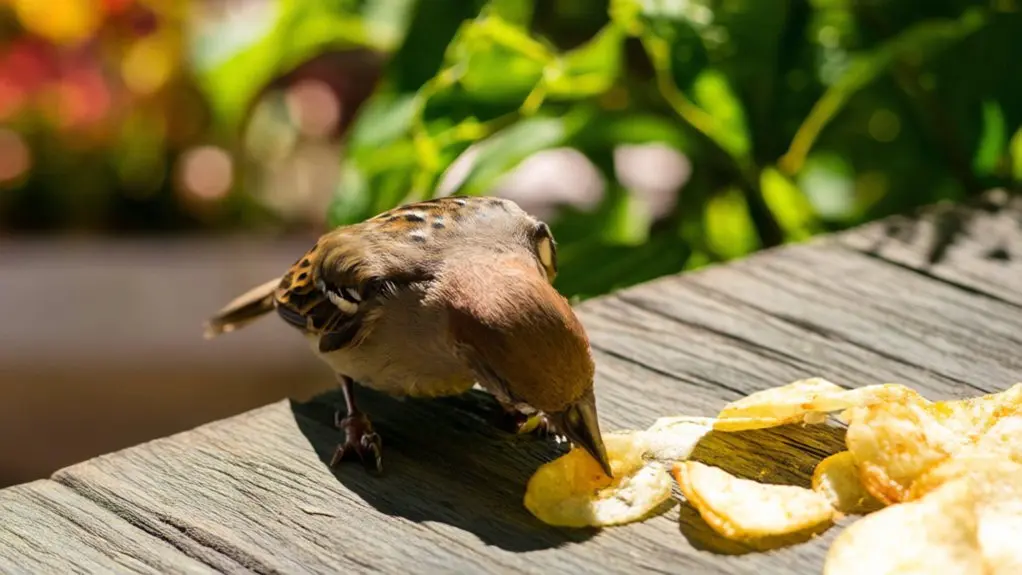
You shouldn’t feed your bird potato chips because their high salt, unhealthy fats, and artificial additives pose serious health risks. Chips can cause dehydration, kidney issues, and disrupt electrolyte balance. Birds can’t properly digest these fats or preservatives, leading to metabolic problems, obesity, and behavioral changes like excessive begging.
Even small amounts are harmful and lack essential nutrients your bird needs. It’s really best to avoid them altogether. Instead, understanding safer treat choices and balanced diets can help protect your bird’s health and well-being. Taking a little extra care goes a long way in keeping your feathered friend happy and healthy.
Why Potato Chips Are a Bad Idea for Your Bird
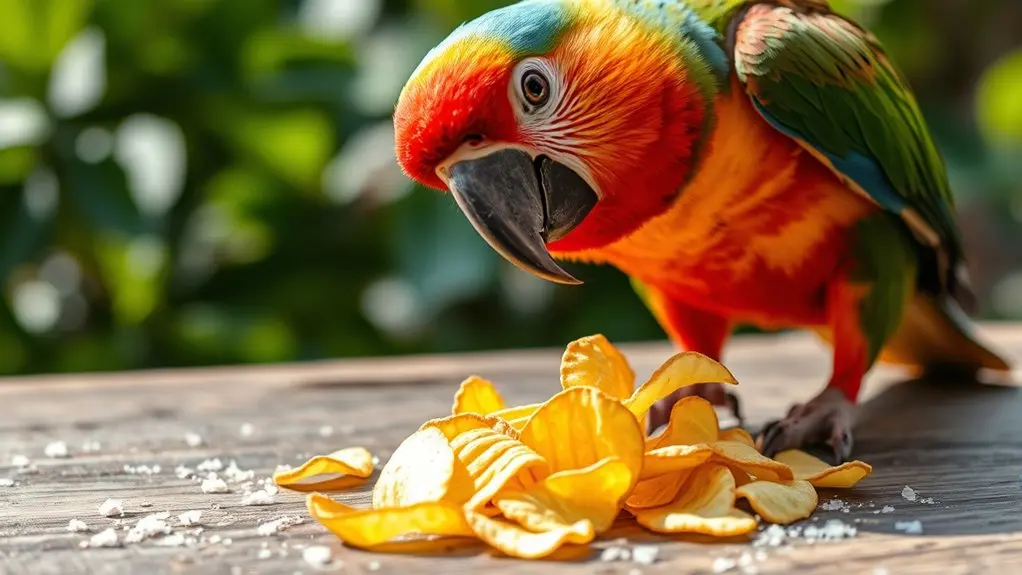
Although potato chips may seem like a harmless snack, they pose significant health risks to birds because of their high salt, unhealthy fat, and artificial additives. You should avoid feeding chips to your bird since the excessive salt can cause dehydration and kidney problems.
Birds don’t have the enzymes needed to properly break down the fats and preservatives in chips, which raises the risk of digestive upset and obesity. Over time, these metabolic issues can seriously affect your bird’s overall health.
Birds lack enzymes to digest chip fats and preservatives, risking digestive issues and long-term health problems.
Plus, regular exposure to these treats might change your bird’s behavior. It could start begging for salty snacks and develop unhealthy eating habits.
To keep your bird safe, it’s best to stick to species-appropriate foods and skip the potato chips altogether.
How Salt and Fat in Chips Can Hurt Your Bird
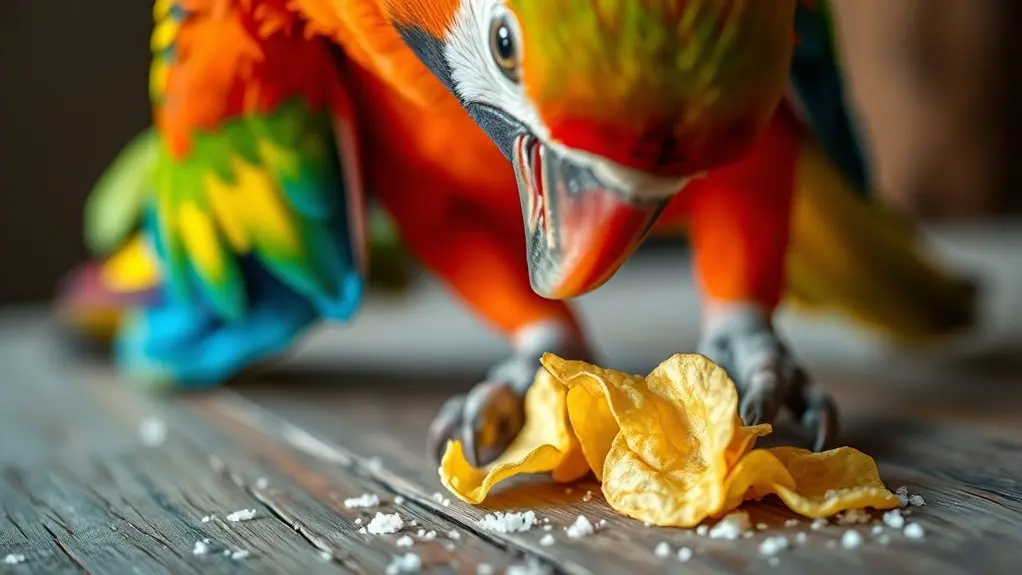
You should know that the high salt content in potato chips can really mess with your bird’s electrolyte balance. This can lead to dehydration and even cause kidney problems.
On top of that, the excessive fats found in chips aren’t any better—they can increase the risk of fatty liver disease and heart issues.
Since birds can’t process these substances well, giving them chips can be seriously harmful to their health.
Salt Effects On Birds
When birds consume potato chips, the high salt and fat content can quickly overwhelm their bodies, leading to serious health problems. Birds lack the physiological mechanisms to process excessive salt, which can cause dehydration, kidney stress, and electrolyte imbalances.
You should avoid giving your bird salty snacks because excess salt disrupts their natural water balance. It increases strain on their kidneys and can cause cardiovascular complications. Even small amounts accumulate harm over time.
Regular intake may lead to illness or obesity. Understanding these risks helps you protect your bird’s health.
Since birds can’t efficiently excrete high salt levels, even occasional potato chip consumption can have adverse effects.
Fat Content Risks
Since potato chips contain high levels of unhealthy fats alongside salt, feeding them to your bird can pose serious health risks beyond just salt-related issues.
Birds struggle to process the excessive fats in chips, which can lead to obesity and fatty liver disease, especially in small parrots.
The high fat content also contributes to dehydration and electrolyte imbalances, making things worse.
Salt itself stresses your bird’s kidneys, increases thirst, and can cause toxicity if consumed in large amounts.
Regular exposure to these unhealthy fats and salts may trigger behavioral changes and other health complications.
To protect your bird’s well-being, avoid giving them potato chips or other salty, fatty snacks.
Their metabolism isn’t equipped to handle such processed ingredients safely.
It’s better to stick with bird-friendly treats instead.
What Happens If Your Bird Eats Chips Often
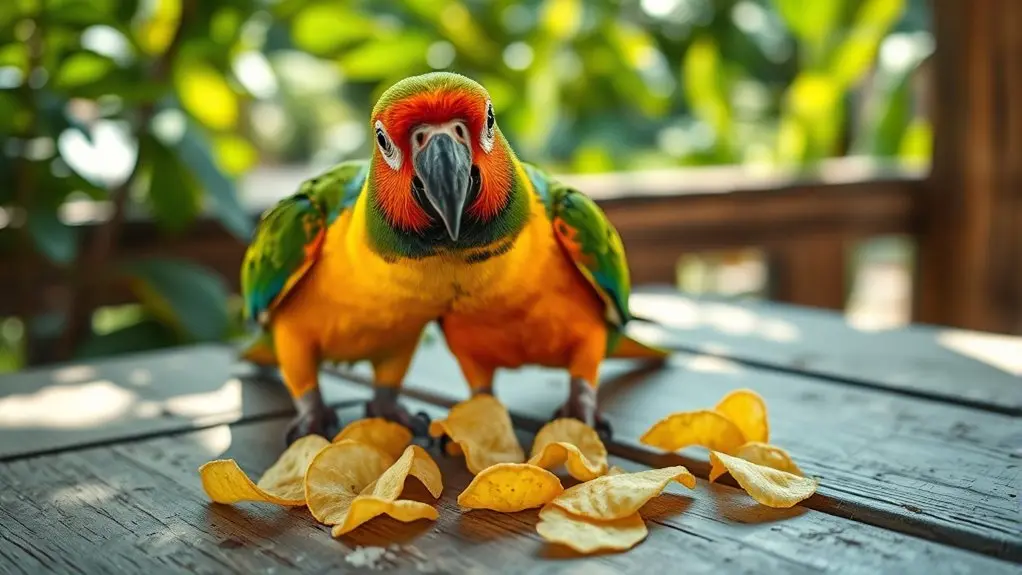
Although potato chips might seem like an occasional treat, feeding them to your bird regularly can introduce excessive salt and unhealthy fats into its diet. This can lead to dehydration and cardiovascular problems. Consistent intake of chips can disrupt your bird’s health in multiple ways.
High salt content upsets electrolyte balance, which can risk kidney issues and toxicity. Unhealthy fats contribute to obesity and metabolic disorders, especially in small parrots. Chips also lack essential nutrients, which means they can displace balanced, complete foods in the diet.
Frequent consumption may cause behavioral changes, like your bird begging for processed snacks. Over time, cardiovascular strain and dehydration increase health risks.
To keep your bird healthy, it’s best to limit or avoid potato chips. Instead, focus on feeding nutritionally appropriate foods that support their well-being.
Signs Your Bird Is Struggling Because of Unhealthy Treats
If your bird frequently consumes unhealthy treats like potato chips, you might notice clear signs indicating distress or health issues. Look for lethargy, loss of appetite, or abnormal droppings, which often suggest dietary imbalance or toxicity.
Frequent unhealthy treats can cause lethargy, loss of appetite, and abnormal droppings in your bird.
Feather plucking and behavioral changes such as increased aggression or decreased activity also point to a struggling bird. Additionally, watch for visible symptoms like swelling or a greasy appearance around the beak and preen gland.
These can result from impacted glands caused by high salt and unhealthy fats. Persistent refusal to eat regular, nutritious food alongside these signs further confirms your bird is suffering due to unhealthy treats.
Promptly addressing these symptoms by removing such snacks and consulting a veterinarian is essential to safeguard your bird’s health and well-being. It’s always better to catch these issues early!
Myths About Feeding Birds Potato Chips and Human Snacks
You might think it’s harmless to share potato chips and other human snacks with birds, but actually, that’s a common misconception. These foods are loaded with salt and unhealthy fats, which can lead to serious health problems like dehydration and organ damage.
It’s important to understand the risks so you can avoid feeding birds things that don’t have the nutrients they need and might even harm them.
Taking a little care with what you offer can make a big difference in their well-being.
Common Feeding Misconceptions
While many people assume feeding birds potato chips and similar human snacks is harmless, these foods pose significant health risks. You might think a crunchy treat is fine, but potato chips contain high salt, unhealthy fats, and artificial additives that can harm birds.
Here are common misconceptions you should know:
Potato chips provide essential nutrients. They don’t, causing nutritional deficiencies. Human snacks are safe for birds’ digestion. Actually, additives can irritate or poison them.
Some folks think occasional chips won’t affect birds. But even small amounts stress organs and cause dehydration. Others believe feeding chips encourages natural foraging. It doesn’t—it promotes begging and behavioral issues.
And not all birds tolerate human snacks equally. Sensitivity varies, but none benefit from these foods. Understanding these points helps you avoid common feeding mistakes and supports birds’ health.
Risks Of Human Snacks
Why do so many people still feed birds potato chips despite the risks? You might think small amounts are harmless, but even minimal salt intake can cause dehydration and kidney problems in birds.
Potato chips contain high salt, unhealthy fats, and artificial flavors that offer no nutritional value and can harm avian health.
Feeding birds these snacks regularly can lead to obesity, behavioral issues, and poor feather condition due to nutritional deficiencies and toxic additives.
The myth that birds can safely consume human junk food is dangerous because many processed snacks contain ingredients toxic to their physiology.
To protect birds, avoid offering potato chips and other human snacks. Instead, provide foods formulated to meet their specific dietary needs.
It’s better for the birds and helps keep them healthy and thriving.
Better Treats Than Potato Chips for Your Bird
Although potato chips may seem like a convenient snack, they lack the essential nutrients birds need and often contain harmful additives such as salt and unhealthy fats. Instead, you should offer your bird healthier options that support their nutritional and mental well-being.
Potato chips lack vital nutrients and contain harmful additives; choose healthier snacks for your bird’s well-being.
Consider these better treats:
- Fresh fruits like sliced apples provide vitamins and hydration.
- Vegetables such as carrots supply fiber and antioxidants.
- Whole grains contribute essential carbohydrates and minerals.
- Millet sprays mimic natural foraging behaviors and encourage activity.
- Varied natural treats prevent nutritional gaps and promote enrichment.
These alternatives contain no added salt, unhealthy fats, or artificial preservatives, which helps reduce health risks. Incorporating small portions of these nutrient-rich foods into your bird’s diet encourages overall health and reduces reliance on unsuitable human snacks like potato chips.
Introducing New Treats Safely and Without Overfeeding
When you introduce new treats to your bird, start with small portions and mix them gradually with familiar foods to keep things stress-free.
It’s a good idea to watch how much you’re offering so you don’t accidentally overfeed your feathered friend.
Try to stick with healthy options first to make sure your bird’s nutritional needs are covered.
Once that’s set, you can occasionally add indulgences like potato chips without any worries.
Gradual Treat Integration
Introducing new treats like potato chips gradually helps you prevent overfeeding and digestive issues in your bird. You should start with very small amounts, such as a tiny piece, and observe your bird’s response before increasing the quantity.
This slow introduction lets your bird adjust to unfamiliar textures and flavors, minimizing stress or rejection. To incorporate treats safely, consider these steps:
- Begin with minimal portions to monitor tolerance
- Observe for any adverse digestive or behavioral reactions
- Increase the treat amount slowly over several days or weeks
- Guarantee the new treat doesn’t disrupt the bird’s overall diet
- Maintain consistent monitoring of health during the integration phase
Following this approach supports your bird’s digestive health and dietary balance while introducing new flavors safely. It’s all about taking it slow and paying attention to how your bird reacts.
Monitoring Portion Sizes
Because maintaining a balanced diet is essential for your bird’s health, carefully monitoring portion sizes of new treats like potato chips is crucial. Begin by offering a tiny portion, such as a small crumb or a single chip, to observe your bird’s reaction and tolerance.
Limit treats to no more than 10% of their daily caloric intake to avoid overfeeding. Watch closely for any digestive upset or behavioral changes and discontinue treats if adverse effects appear.
Use treats sparingly, ensuring they supplement rather than replace nutritionally complete foods like pellets, fruits, and vegetables. Gradually introduce new treats over several days or weeks to minimize stress and health risks.
This method helps you safely incorporate novel foods while maintaining dietary balance. It’s all about taking it slow and paying attention to how your bird responds.
That way, you keep your feathered friend happy and healthy!
Balanced Diet Prioritization
Careful portion control sets the foundation for maintaining a balanced diet while adding new treats like potato chips to your bird’s regimen. Introducing these treats gradually and sparingly helps prevent overfeeding and nutritional imbalance.
Keep in mind:
Treats should only form a small part of your bird’s overall diet. The primary diet must consist of nutritionally complete, balanced foods. Overfeeding high-calorie snacks can cause obesity and trigger hormonal behaviors.
Make sure to monitor your bird’s reaction to new treats for any digestive issues or refusal to eat regular food. It’s important to prioritize healthy, bird-safe treats to support overall well-being.
Comparing Potato Chips With Healthy Bird Snack Alternatives
Although potato chips might seem like a convenient snack, they contain high levels of salt, unhealthy fats, and artificial flavorings that make them unsuitable for birds. These components can cause dehydration, obesity, and organ damage in avian species.
In contrast, healthy bird snack alternatives like fresh fruits, vegetables, and whole grains provide essential nutrients without harmful additives. For example, sliced carrots and apple slices are low in salt and rich in vitamins crucial for birds’ wellbeing.
Additionally, millet sprays, berries, and leafy greens closely mimic birds’ natural diet, supporting their overall health.
How Diet Quality Prevents Chip-Related Health Problems
When you provide birds with a balanced and nutrient-rich diet, you considerably reduce the risk of health problems associated with consuming potato chips. Potato chips contain high salt, fat, and artificial additives that can cause dehydration, cardiovascular issues, and obesity in birds.
A nutritious diet helps maintain proper organ function and immune health, lowering these risks.
Think of it this way: balanced amino acids can prevent the worsening effects of unhealthy treats. Proper hydration supports kidney function, which helps against salt-induced strain.
Essential nutrients strengthen immune defenses, while electrolyte balance reduces the risk from excessive salt intake. And when birds get complete diets, they’re less vulnerable to diseases linked to poor nutrition.
Easy Tips to Keep Your Bird’s Diet Balanced and Fun
Maintaining a balanced diet for your bird goes beyond just avoiding harmful snacks like potato chips. It involves creating a varied and engaging feeding routine.
Try to incorporate a mix of fruits, vegetables, and high-quality pellets to provide essential nutrients and mental stimulation.
Use diverse foraging toys with different shapes, textures, and scents to mimic natural behaviors and keep your bird engaged.
Limiting treats high in salt and unhealthy fats is important to prevent health issues such as obesity and organ damage.
Make it a habit to regularly rotate healthy foods and treats. This encourages your bird to explore new flavors and helps avoid dietary boredom.
Also, keep an eye on portion sizes and prioritize nutritionally complete foods to support your bird’s overall health effectively.
Frequently Asked Questions
Can Potato Chip Dust Harm a Bird’s Respiratory System?
Yes, potato chip dust can harm your bird’s respiratory system. It contains fine particles, salt, and artificial flavors that irritate delicate airways. This irritation can cause inflammation and respiratory distress.
Over time, exposure to these particles might increase the risk of chronic lung problems. So, it’s really best to keep your bird away from potato chip dust to protect their health.
Are Any Brands of Potato Chips Safer for Birds?
No brands of potato chips are safer for birds because all contain high salt, unhealthy fats, and additives. You shouldn’t feed any type to birds, as these ingredients can harm their health and offer no nutrition.
Honestly, it’s best to avoid giving birds potato chips altogether. They might seem like a tasty treat, but they’re really not good for our feathered friends. Stick to bird-safe foods instead!
How Long Does Salt From Chips Stay in a Bird’s System?
Salt from chips stays in a bird’s system for hours to over a day, depending on metabolism, size, and health. You’ll notice they process and excrete it faster than humans, but excess salt still strains their kidneys.
It’s kind of like us—birds can handle a little, but too much isn’t good for them. So, if you see a bird munching on salty chips, it’s best to keep it as an occasional treat rather than a regular snack. Their bodies just aren’t built for a lot of salt.
Can Birds Develop a Preference for Salty Human Foods?
Yes, birds can develop a preference for salty human foods because salt mimics essential minerals they seek.
If you offer salty snacks repeatedly, your bird might start craving them. This can be risky since too much sodium isn’t good for their health.
What Immediate Steps Should I Take if My Bird Eats Chips?
Since salt toxicity affects 50% of birds exposed to salty snacks, you should remove chips immediately.
Keep a close eye on your bird for any signs of distress. Make sure to provide fresh water to help flush out the salt.
If you notice any symptoms, don’t wait—contact an avian vet right away to get professional advice.
Conclusion
Think of your bird’s health as a delicate garden. Potato chips are like harsh weeds that can choke its growth. Their salt and fat disrupt balance, leading to serious issues over time.
Avoid these harmful snacks and instead nourish your feathered friend with wholesome treats. This way, you’re ensuring a vibrant, thriving life for your bird. By prioritizing quality diet choices, you’re planting seeds for lasting wellness and joyful energy in your bird’s world.