
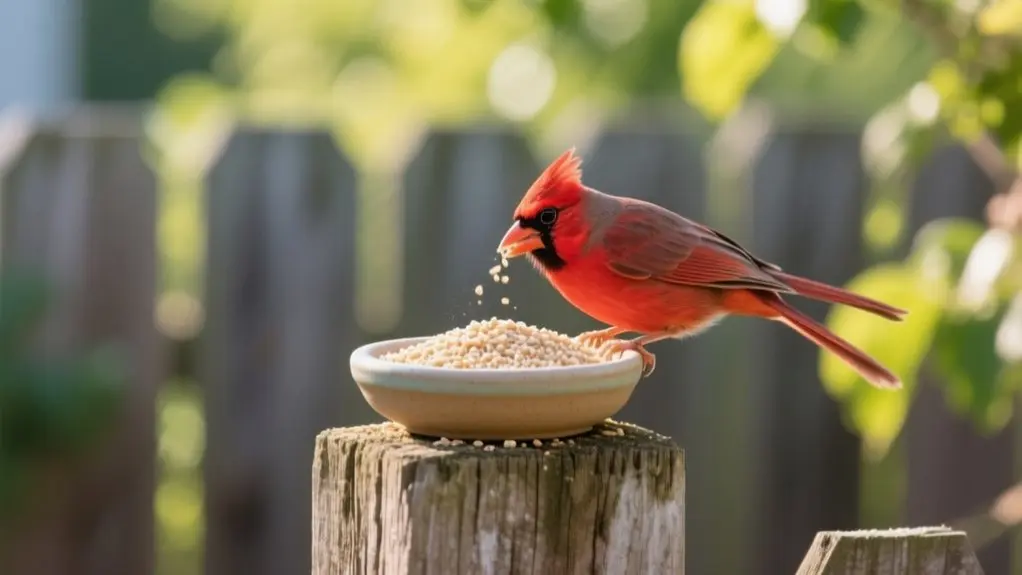
You can safely feed your birds plain, cooked grits in small amounts as a nutritious treat. Make sure to avoid additives like butter, salt, or sugar, and never offer uncooked grits since they can cause serious digestive blockages.
Cooked grits provide energy, vitamins, and minerals that support your bird’s health. Introduce grits gradually and monitor their reaction closely.
If you want to understand the best feeding practices and avoid common mistakes, there’s more helpful information ahead.
What Are Grits and How Are They Made?
Grits are a type of coarse meal made by soaking corn kernels in an alkaline solution and then grinding them. This process produces ground corn that forms the base of grits, a popular breakfast food in the Southern United States.
Grits are coarsely ground corn soaked in an alkaline solution, creating a Southern breakfast staple.
You’ll find grits in white and yellow varieties, and they come in instant, quick, or stone-ground types. The stone-ground kinds retain more nutrients because they undergo less processing.
While grits might look similar to bird seed in texture, they’re made specifically for human consumption. Nutritionally, grits provide carbohydrates and some protein but lack fiber and many micronutrients.
Understanding what grits are and how they’re made helps you appreciate their unique qualities, especially when considering if they’re appropriate for feeding birds or other uses.
Can Birds Safely Eat Grits?
How safely you can feed grits to birds depends largely on preparation and moderation. You should only offer plain, cooked grits in small amounts as an occasional treat. Avoid additives like butter, salt, or sugar since they can harm birds.
Cooked grits break into tiny pieces, making them easier to digest and preventing issues with grit in their gizzards. Always introduce grits gradually to monitor any adverse reactions.
| Aspect | Recommendation |
|---|---|
| Preparation | Plain, cooked only |
| Portion size | Small, occasional treat |
| Additives | None (no butter, salt, sugar) |
Prioritize a balanced diet and consult avian experts if you’re uncertain about feeding grits to your birds.
What Are the Risks of Feeding Uncooked Grits?
Although you might think uncooked grits are harmless, feeding them to birds can lead to serious digestive problems. Uncooked dangers include grits expanding inside a bird’s digestive system, causing painful digestive blockages.
These blockages can stop food from passing properly, leading to severe health risks and distress for the bird. Unlike cooked grits, uncooked ones don’t aid digestion and instead pose more harm than good.
The risks are similar to feeding uncooked rice, which also causes digestive issues in birds. To keep birds safe, you should avoid offering uncooked grits altogether.
Understanding these uncooked dangers helps you protect birds from unnecessary health risks and guarantees they stay healthy and comfortable.
Should You Cook Grits Before Feeding Birds?
Why should you cook grits before offering them to birds? Cooking grits prevents them from expanding in a bird’s digestive system, which helps avoid health risks. You should use simple cooking methods like boiling with water only and avoid additives such as butter or salt.
Cooked grits have softer textures that birds can digest easily. Also, pay attention to serving sizes because small portions work best as occasional treats.
| Cooking Methods | Grit Textures | Serving Sizes |
|---|---|---|
| Boil with water | Soft, moist | Small, occasional |
| Avoid additives | Easily digest | Monitor amounts |
| Gradual introduction | Safe texture | Prevent overfeeding |
Stick to these basics to keep your feathered friends safe and happy when feeding grits.
What Are the Nutritional Benefits of Grits?
You’ll find that grits give birds important carbohydrates, which are great for energy.
Plus, they’ve key vitamins like thiamine and niacin that support their overall health.
On top of that, grits contain minerals such as calcium and magnesium.
These are helpful for keeping bones strong and boosting metabolism.
Nutrient Composition Overview
Since grits offer a rich source of carbohydrates, they provide birds with quick energy needed for daily activities. When considering grit sourcing tips, choose high-quality, plain grits without additives. Proper cooking methods, like boiling, make them easier for birds to digest.
For serving suggestions, offer grits in small, manageable portions to prevent overeating.
Here’s a quick nutrient breakdown to keep in mind:
- Rich in thiamine, niacin, and vitamins A, E, and folate for overall health support.
- Low fat and high protein content helps muscle development and metabolism.
- Essential minerals like calcium, magnesium, iron, phosphorus, and potassium support bone health.
- Antioxidants such as lutein and benzoic acid enhance nervous system function and disease resistance.
These nutrients make grits a beneficial addition to your bird’s diet when prepared properly.
Health Advantages For Birds
Beyond their nutrient composition, grits offer several health advantages that can benefit birds. Different grits varieties provide a reliable carbohydrate source, supplying the energy birds need for daily activities.
They’re generally low in fat but high in protein, supporting overall health. Grits also contain essential micronutrients like thiamine and niacin, plus trace vitamins A and E, which aid various bodily functions.
When you feed grits in moderation, they enhance bird digestion by helping break down food in the gizzard. To maximize these benefits, serve plain, cooked grits without additives.
Also, pay attention to feeding frequency, offering grits occasionally rather than daily to maintain a balanced diet and support your bird’s digestive health effectively.
How Do Grits Help Birds Digest Food?
Although birds don’t have teeth to chew their food, they rely on grit to grind and break down tough seeds and grains in their gizzard. This process greatly improves their digestive efficiency by mechanically crushing food particles.
Birds use grit in their gizzard to grind tough seeds, boosting digestive efficiency without teeth.
The grit size matters. You’ll want to make certain it’s appropriate for the bird species to optimize digestion. Seasonal needs also play a role, especially in winter when natural grit is scarce.
Here’s how grit helps:
- Breaks down hard seeds and grains for easier nutrient absorption.
- Prevents digestive blockages by grinding food thoroughly.
- Enhances carbohydrate and nutrient processing.
- Supports overall digestive health during seasonal changes.
What Are the Best Types of Grits for Birds?
When you’re picking out grit for your birds, it’s good to know there are different types. Insoluble grit, like granite and flint, is great because it helps with digestion.
On the other hand, soluble grit actually provides important minerals your birds need.
You’ll also want to make sure the grit you choose is clean and safe.
Plus, the size and amount should be just right for your birds. Knowing these details means you’ll be giving your feathered friends the best support for their digestive health.
Types Of Bird Grit
Grit plays an essential role in helping birds digest their food properly, and choosing the right type depends on your bird’s diet and needs. Understanding different grit types and grit sources guarantees you provide the best grit benefits for your feathered friends.
Here are the main types of bird grit:
- Insoluble grit made of granite or flint, it aids mechanical digestion by grinding seeds in the gizzard.
- Soluble grit dissolves in water, supplying essential minerals like calcium.
- Crushed oyster shells are a common soluble grit, great for mineral supplementation.
- Quartz grit is another insoluble option that helps break down tough food.
Providing the right grit type supports digestion, improves health, and boosts energy, especially during winter when natural grit sources are limited.
Soluble Vs Insoluble
Since birds rely on grit to digest their food properly, choosing between soluble and insoluble types is crucial.
Insoluble grit, like small granite pebbles, plays an important role in mechanically breaking down seeds and grains in the gizzard. This highlights its insoluble significance for digestion and nutrient absorption.
On the other hand, soluble grit, such as crushed oyster shells or limestone, offers beneficial aspects by supplying calcium that supports bone health and egg production, especially in female birds.
When you focus on grit selection, it’s key to provide both types to meet different dietary needs.
Insoluble grit aids digestion, while soluble grit guarantees essential mineral intake. Offering a mix helps your birds thrive, especially when natural grit sources aren’t readily available.
Grit Selection Tips
Although selecting the right grit might seem straightforward, choosing types that match your bird’s size and dietary needs can make a big difference.
You’ll want to focus on insoluble grit like granite or flint, which aids digestion by grinding seeds in the gizzard.
Keep bird feeding habits in mind. Smaller birds need finer grit, while larger birds can handle coarser types.
Also, consider seasonal grit needs, especially in winter when natural sources are scarce.
Here are some grit selection tips:
- Choose grit size based on your bird’s species.
- Provide grit free from contaminants and additives.
- Offer grit in small, regular amounts for self-regulation.
- Use airtight grit storage solutions to keep grit fresh and clean.
This approach guarantees your birds get the best grit for their health.
What Are Safe Alternatives to Grits?
You can safely offer birds several alternatives to grits that provide essential nutrients without digestive risks.
Cornmeal benefits birds by supplying carbohydrates similar to grits but without the danger of uncooked grains expanding in their digestive system.
Oat alternatives, like rolled or quick oats, offer fiber and energy and are easier for birds to digest.
You can also try homemade suet options, which deliver essential fats and energy, especially valuable during colder months when natural food is limited.
Moreover, seed mixes designed specifically for birds are crafted to meet their dietary needs safely.
Cooked grains like quinoa or brown rice, prepared without additives, provide soft textures that birds can consume comfortably.
These choices keep your feathered friends healthy and safe.
How Do You Introduce Grits to Pet Birds?
When introducing grits to your pet bird, start by mixing a small amount with their regular food to see how they respond.
Using effective grits introduction techniques guarantees a smooth change and helps you monitor acceptance.
Follow these bird feeding tips for gradual diet alterations:
- Use plain, cooked grits without additives like salt or butter.
- Offer small portions mixed with their usual food to prevent overconsumption.
- Observe your bird for any digestive distress or behavioral changes.
- Consult an avian vet if you notice adverse reactions or have concerns.
What Do You Need to Know About Feeding Grits to Chickens?
When you’re feeding grits to your chickens, it’s important to pick the right kind. Insoluble grit, like granite, is the best because it helps with their digestion.
Grits also provide some valuable protein, carbs, and essential vitamins, so they make a great supplement when given in moderation.
Just remember to keep the mix at about one part grit to four parts regular feed.
Oh, and it’s best to avoid adding salt or butter—keeping it simple helps your flock stay healthy and happy.
Types Of Grit
Although grit comes in various forms, understanding the two main types, soluble and insoluble, is vital for feeding your chickens effectively. Soluble grit dissolves in water, while insoluble grit, like granite, stays intact and helps grind food in the gizzard.
When choosing grit, consider these key factors:
- Grit sources: Natural stones like granite offer durable insoluble grit.
- Grit textures: Rough textures help chickens break down food efficiently.
- Grit sizes: Offer appropriately sized grit to prevent choking or digestive issues.
- Mix or separate: Raw grit can mix with feed; cooked grit should be served plain and separately.
Knowing these grit types and characteristics guarantees your chickens get the right support for digestion and overall health.
Nutritional Benefits
Because grits are rich in protein, carbohydrates, and essential micronutrients like thiamine and vitamins A and E, they provide your chickens with vital nutritional support.
Different grit varieties offer minerals such as calcium, magnesium, and iron, which aid digestion and overall bodily functions.
Feeding grits boosts energy, supports metabolism, and promotes nervous system health thanks to their antioxidant properties.
However, the health impacts depend on serving plain, cooked grits without additives like butter or salt to avoid issues.
Incorporate grit into your feeding strategies thoughtfully.
While free-range chickens may find grit naturally, supplementing guarantees proper digestion, especially when natural foraging is limited.
Understanding these nutritional benefits helps you optimize your chickens’ diet effectively and maintain their well-being.
Feeding Recommendations
To guarantee your chickens benefit from grits without risking their health, you need to feed them properly and in moderation. Cooked grits make a great supplement, but portion control is key. They should never replace the main feed.
Store your grit properly in a dry, airtight container to maintain freshness and prevent spoilage. Keep in mind feeding frequency. Offer grits as an occasional treat, mixing them at a 1:4 ratio with regular feed to support digestion.
Here’s what you need to know:
- Use plain cooked grits without butter or salt.
- Maintain grit storage away from moisture and pests.
- Feed chicks small amounts occasionally, not as a staple.
- Ascertain free-range birds have access to natural grit like pebbles.
What Are Common Grits Feeding Mistakes?
When feeding grits to birds, you need to avoid several common mistakes that can harm their health. One key error involves grit misconceptions. Feeding uncooked grits leads to blockages as they expand in the digestive tract.
Also, offering grits too frequently or in large amounts overwhelms bird digestion. Mixing grits with other seeds confuses birds, so feed them separately.
| Common Mistake | Why to Avoid It |
|---|---|
| Feeding uncooked grits | Causes digestive blockages |
| Overfeeding grits | Overwhelms bird digestion |
| Mixing with other seed | Confuses birds, harder to eat properly |
Stick to cooked, additive-free grits and introduce them gradually to guarantee your birds stay healthy.
How Do You Monitor Your Birds’ Health When Feeding Grits?
How can you tell if your birds are adjusting well to grits? Use behavior observation techniques to watch for digestive distress, changes in droppings, or reluctance to eat.
Watch for digestive issues, altered droppings, or reduced appetite to gauge how your birds handle grits.
Implement dietary adjustment strategies by gradually introducing plain, cooked grits in small amounts. Employ health monitoring tools to track weight and activity levels, which may signal health issues.
- Observe eating habits and droppings daily.
- Introduce grits slowly to gauge tolerance.
- Monitor weight and activity for signs of distress.
- Consult a veterinarian if unusual behavior occurs.
Frequently Asked Questions
Can Wild Birds Eat Grits Left Outside?
Yes, wild birds can eat grits left outside, but you should offer plain, uncooked grit types without additives.
Use feeding methods like small dish placement to avoid overconsumption.
Grits provide nutritional benefits such as carbohydrates and aid digestion, especially in winter when natural grit is scarce.
Remember, grits aren’t a complete food source, so you should feed them in moderation with other birdseed.
Watch for any adverse reactions to keep birds healthy.
How Often Can Birds Have Grits as a Treat?
Think of feeding grits like sprinkling a little magic dust. You don’t want to overdo it.
You should offer birds cooked grits only occasionally, about 5-10% of their diet, to keep their nutritional value balanced.
Different grit types vary, so choose wisely and watch how your bird reacts.
Adjust feeding frequency based on their health, ensuring grits remain a treat, not a staple.
Too much can upset their system quickly.
Can Baby Birds Eat Grits Safely?
No, baby birds can’t eat grits safely.
When focusing on baby bird nutrition, you need to stick to safe food choices that are soft and easy to digest.
Grits can cause blockages since their digestive systems aren’t fully developed.
Follow strict feeding guidelines by offering specialized diets designed for young birds.
Always introduce new foods gradually and consult a veterinarian to guarantee you’re meeting your baby bird’s nutritional needs without risking their health.
Are Instant Grits Suitable for Birds?
No, instant grits aren’t suitable for birds. While instant grit benefits humans with quick cooking methods, the additives and texture can harm birds.
They lack the proper nutritional value birds need and may cause digestive issues.
You should cook plain, regular grits thoroughly without salt or flavorings if you want to offer grits safely.
Instant grits don’t provide the right nutrients or texture for birds, so avoid feeding them these.
Can Birds Develop Allergies to Grits?
Imagine your parakeet starts itching and plucking feathers after trying grits. Yes, birds can develop allergies to grits, even though it’s rare.
While grits aid bird digestion and provide grit benefits, they might trigger allergy symptoms like itching or digestive upset in some birds.
You should introduce grits gradually and watch closely for any signs.
If symptoms appear, consult an avian vet to protect your bird’s health.
Conclusion
You might be surprised to learn that over 60% of bird owners report their feathered friends enjoy cooked grits as an occasional treat. By cooking grits before feeding, you reduce risks and provide a nutritious snack packed with essential minerals.
Just introduce them gradually and watch for any signs of discomfort. With the right care, grits can be a safe, tasty addition to your birds’ diet, keeping them happy and healthy.