
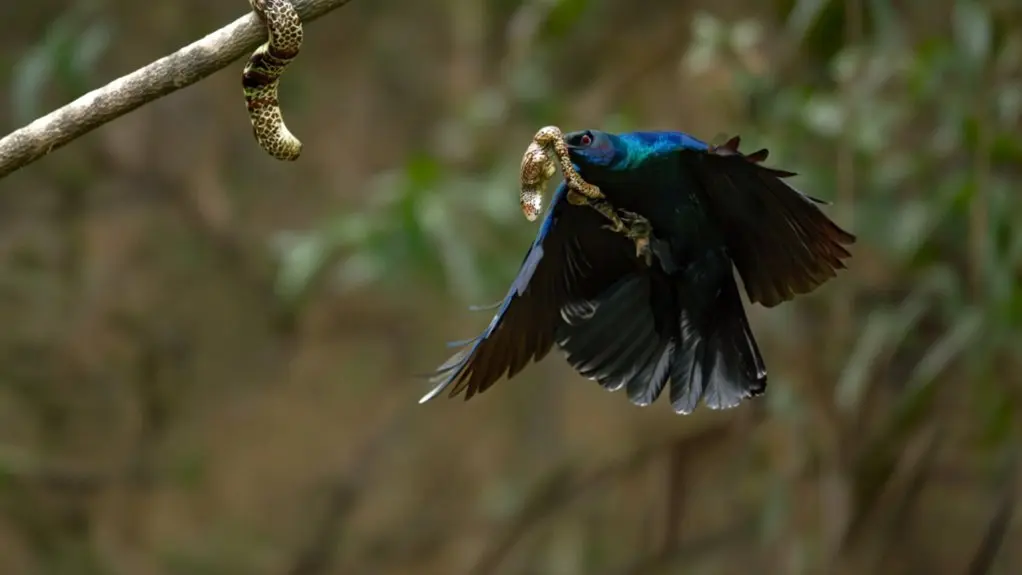
Yes, many bird species actively eat snakes. They use specialized traits like strong beaks, thick feathers, and keen eyesight to hunt safely. Birds like secretary birds stomp snakes from a distance, which helps minimize bite risks.
Other birds use quick strikes to avoid venom. But non-specialist and domesticated birds don’t have these defenses and face greater danger. These adaptations help birds control snake populations effectively.
This benefits ecosystems in many ways. It’s pretty fascinating how these strategies work and why they matter ecologically. Want to learn more about it? Just keep exploring!
Why and How Birds Hunt Snakes
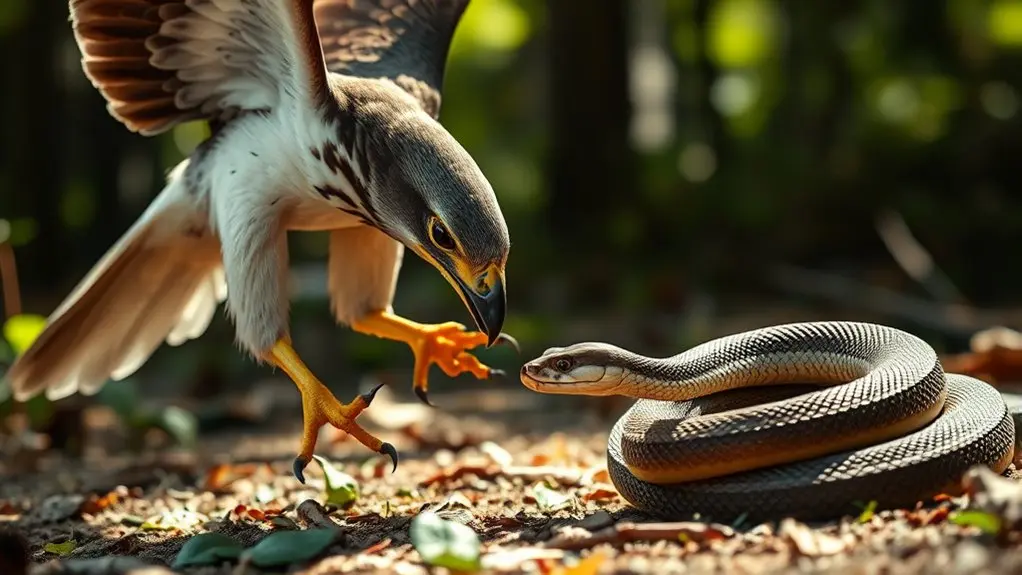
Although snakes can be dangerous prey, many bird species actively hunt them because of their high protein content. You’ll notice that birds with specific feather coloration, like the brown snake eagle’s muted tones, often use camouflage to sneak up on snakes. It helps them get close without being noticed.
Their nesting behaviors also influence how they hunt. For example, birds nesting near snake habitats tend to develop special tactics to protect their babies while still finding food. You might see secretary birds using their long legs to stomp venomous snakes from a safe distance. This way, they minimize the risk to themselves.
Other birds, like laughing falcons, pounce from the air or wait by water edges, showing just how diverse their hunting strategies can be. Many of these birds are even immune to venom, which lets them eat snakes safely.
This immunity is a cool evolutionary adaptation that helps them survive and raise their young successfully.
Birds That Specialize in Eating Snakes
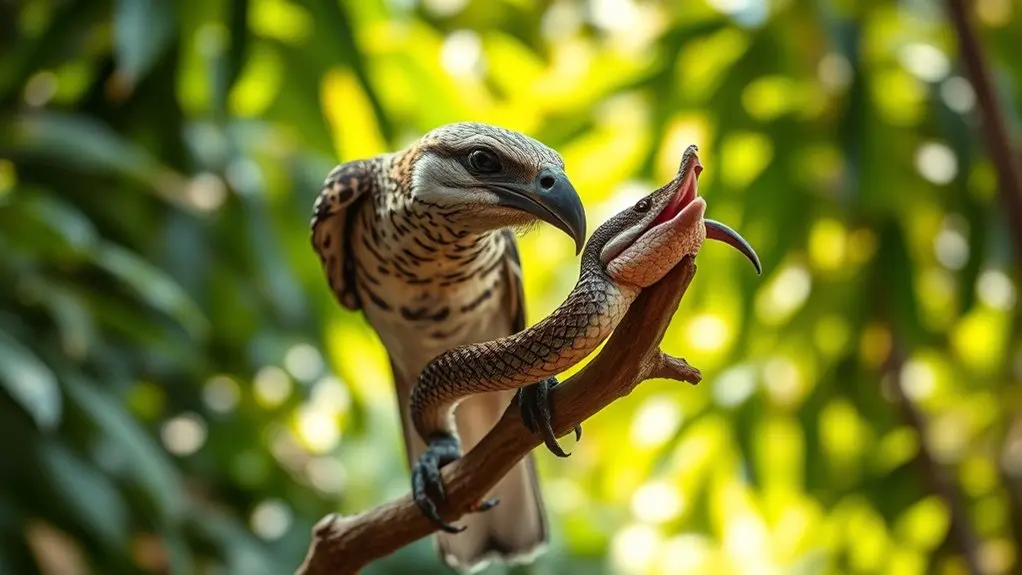
Many bird species have evolved specialized hunting techniques and physical adaptations that enable them to target snakes effectively. For example, the Secretary Bird uses its long legs to stomp snakes, while the Brown Snake Eagle employs powerful beaks to subdue prey. Feather coloration often aids in camouflage during hunting, allowing these birds to approach snakes unnoticed.
Birds like the Secretary Bird and Brown Snake Eagle use unique adaptations to hunt snakes with precision.
The Laughing Falcon exhibits precise aerial attacks, biting snake heads to ensure swift kills.
Nesting behaviors also reflect their dietary specialization. Birds like the Great Horned Owl choose concealed, elevated sites to protect offspring from snake encounters.
Great Blue Herons stand motionless near water, relying on patience and stealth to catch snakes.
These adaptations optimize efficiency and survival, highlighting how morphology and behavior co-evolve in snake-specialist birds. It’s pretty amazing how these traits come together to help them thrive.
How Birds Avoid Getting Hurt by Venomous Snakes
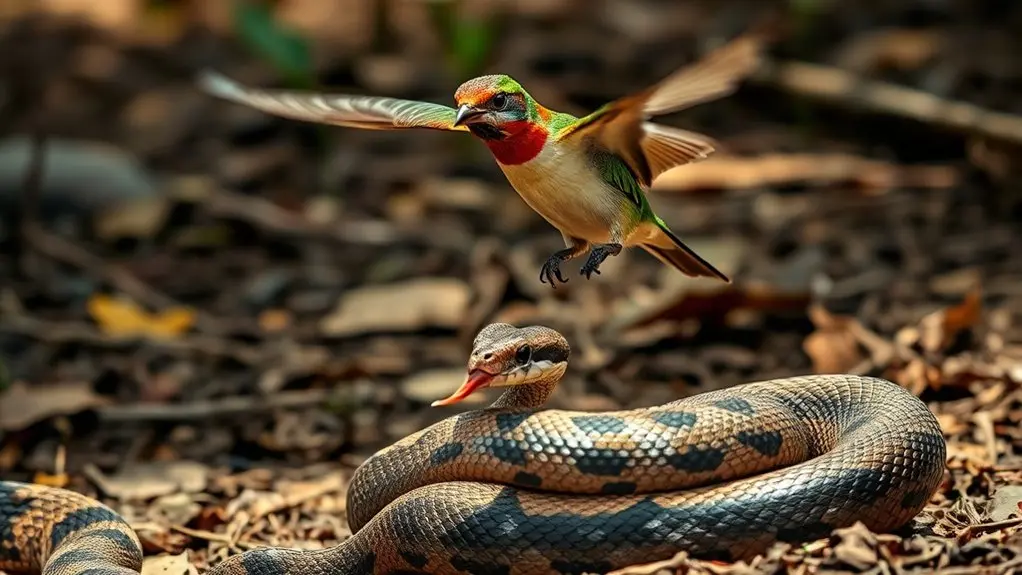
You’ll notice that birds hunting venomous snakes have thick, protective scales or feathers that help shield them from bites.
Plus, they use some clever hunting techniques, like going straight for the snake’s head or striking quickly from a distance.
These adaptations work together to keep them safe while they capture such dangerous prey.
Protective Physical Adaptations
How do birds manage to hunt venomous snakes without getting seriously injured? They rely on protective physical adaptations like feather camouflage and beak strength.
Feather camouflage helps birds blend into their environment, allowing them to approach snakes stealthily and reduce the risk of provoking defensive strikes.
Beak strength is essential. Many snake-eating birds have thick, tough beaks designed to deliver lethal bites while resisting penetration from snake fangs.
Additionally, strong neck muscles and sturdy skulls enable birds to withstand potential bites during prey handling.
These adaptations work together to minimize injury risk, enabling birds to safely subdue venomous snakes.
Specialized Hunting Techniques
Although hunting venomous snakes presents significant risks, birds have evolved specialized techniques to minimize injury and venom exposure. You’ll notice species like the Laughing Falcon use pouncing from the air, while the Secretary Bird employs stomping to dispatch snakes safely. Some birds, such as the Great Blue Heron, assess snake size and venom potential before swallowing whole, reducing risk.
Adaptations also include thick beaks and strong neck muscles, as seen in the Brown Snake Eagle. These hunting strategies often coincide with migration patterns and plumage coloration that aid stealth and camouflage. Pretty clever, right?
| Bird Species | Hunting Technique |
|---|---|
| Laughing Falcon | Aerial pounce |
| Secretary Bird | Stomping |
| Great Blue Heron | Whole swallowing |
| Brown Snake Eagle | Beak tearing |
Risks for Birds That Aren’t Specialized Snake Hunters
When you come across venomous snakes, birds that aren’t specialized hunters face some serious risks. Venom exposure can cause a lot of harm or even be fatal.
Plus, you’ve got to think about physical injuries too—these birds usually don’t have the strong beaks or sharp talons needed to safely take down snakes.
Without the right tactics, trying to hunt snakes can really backfire. It ups the chances of getting bitten or ending up with nasty wounds.
Venom Exposure Hazards
Why do birds that aren’t specialized snake hunters face significant risks when attempting to consume venomous snakes? These birds generally lack venom immunity, making them highly susceptible to toxins that can cause paralysis, tissue damage, or even death.
Without physiological adaptations or protective gear like thick skin, they can’t effectively neutralize venom if bitten during predation.
Venomous snakes deliver potent toxins through bites, posing a severe envenomation hazard to non-specialist birds. This exposure can lead to rapid health deterioration or mortality, which really highlights the dangers involved.
While some birds handle small, non-venomous snakes safely, venomous species present significant risks.
Physical Injury Risks
Because birds that aren’t specialized snake hunters lack the necessary physical adaptations and hunting techniques, they face considerable risks of injury when attempting to capture or consume snakes. These birds typically don’t have strong talons or beak structures designed for handling snakes, which makes it harder for them to manage predator defense effectively.
When they confront large or venomous snakes, non-specialized birds risk bites, constriction, or other physical trauma. Their inexperience often leads to misjudging snake movements, which increases the likelihood of injury.
Injury prevention is really important because improper handling can cause severe harm or even death. So, many birds, like chickens, tend to stick to small snakes and avoid larger or more aggressive species to reduce the chances of getting hurt during predation attempts.
Are Domesticated Birds Like Chickens Safe Eating Snakes?
Although domesticated birds like chickens instinctively peck at and can kill small snakes, their safety depends on the size and venom status of the snake involved. Chickens, with their varied feather coloration, may use visual cues to detect potential threats, including snakes near nesting behaviors such as egg incubation.
Small, non-venomous snakes generally pose minimal risk and can be consumed safely, supporting chickens as natural pest controllers. However, larger or venomous snakes increase the risk of bites and envenomation, which can cause injury or death.
You should monitor interactions closely, especially near nesting sites, where chickens are more vulnerable. Overall, while domesticated chickens can safely eat small snakes, caution is essential to prevent harm from larger or venomous species.
Adaptations That Help Birds Catch and Eat Snakes
When you watch birds that specialize in hunting snakes, you’ll notice they’ve all sorts of physical and behavioral adaptations that make them really good at it. These adaptations help them catch and eat snakes efficiently, even when the snakes are venomous.
Sometimes, their colorful feathers act like camouflage or help during migration, which keeps them safe in different environments.
Some key adaptations include sharp talons and long legs for grabbing or stomping on snakes. For example, Secretary Birds and Brown Snake Eagles use these traits to their advantage.
Then, there are birds like the Great Blue Heron that have special beaks and flexible necks, letting them swallow snakes whole.
Plus, birds like Laughing Falcons and Great Horned Owls have super keen eyesight and use sneaky ambush tactics. This helps them target and overpower snakes with precision.
All these traits together really boost their success as predators.
How Eating Snakes Benefits Birds and Their Ecosystems
While eating snakes poses challenges because of their venom and agility, birds gain significant nutritional benefits that support their growth and energy needs. Their feeding habits include a diverse range of snake species, both venomous and non-venomous. This shows their dietary flexibility and advanced hunting skills.
By preying on snakes, birds help regulate snake populations, which directly affects habitat impact by maintaining ecological balance. This predation also reduces the spread of snake-borne diseases and toxins within ecosystems. So, it contributes to overall environmental health.
Understanding these feeding habits gives us insight into the mutual benefits between birds and their habitats. It highlights the critical role these birds play in controlling potentially harmful snake populations. Plus, they help sustain ecosystem stability.
Frequently Asked Questions
Do Snakes Ever Prey on Birds in Return?
Yes, snakes prey on birds during bird migration when they’re vulnerable. They use stealth and sometimes snake venom to immobilize birds.
Snakes especially target eggs, nestlings, or adult birds in nests located on the ground or in trees. It’s a pretty strategic way for them to get a meal. Birds don’t always see the danger coming!
Can Bird Droppings Indicate if They Ate Snakes?
You can detect snake venom traces or scale fragments in bird droppings, revealing snake consumption. Bird defenses often neutralize venom, allowing digestion. However, thorough digestion sometimes leaves no visible snake evidence in their excrement.
Are There Seasonal Patterns in Birds Eating Snakes?
Yes, you’ll notice seasonal prey availability affects birds eating snakes, with bird migration altering exposure to snakes. Warmer months increase snake activity, boosting predation, while colder seasons shift diets.
This shows clear seasonal hunting patterns scientifically. It’s pretty interesting how the change in weather and movement of birds really impacts what they eat throughout the year.
How Do Young Birds Learn to Hunt Snakes?
You’d think young birds master snake predation overnight, but they actually learn bird hunting gradually by watching adults.
They practice on smaller snakes first and keep refining their patience and striking skills.
It’s all about developing expertise through careful, step-by-step experience over time.
Do Birds Use Tools to Catch or Kill Snakes?
You won’t find birds using external tools for snake predation. Instead, bird hunting relies on physical adaptations like sharp beaks or long legs to catch and kill snakes efficiently.
These specialized, tool-free predatory strategies show how birds have evolved to handle their prey without needing extra help. It’s pretty fascinating how nature works, right?
Conclusion
When you watch a bird skillfully hunting a snake, you’re witnessing nature’s balance in action. It’s like a finely tuned clock where each gear plays an essential role. Birds that eat snakes aren’t just predators; they’re guardians maintaining ecosystem harmony.
Not all birds are equipped for this task, though. Those adapted to it show remarkable evolutionary precision. Understanding this interaction helps you appreciate the intricate web of survival.
It also highlights the risks involved for less specialized birds. Nature really is full of surprises when it comes to who eats what.