
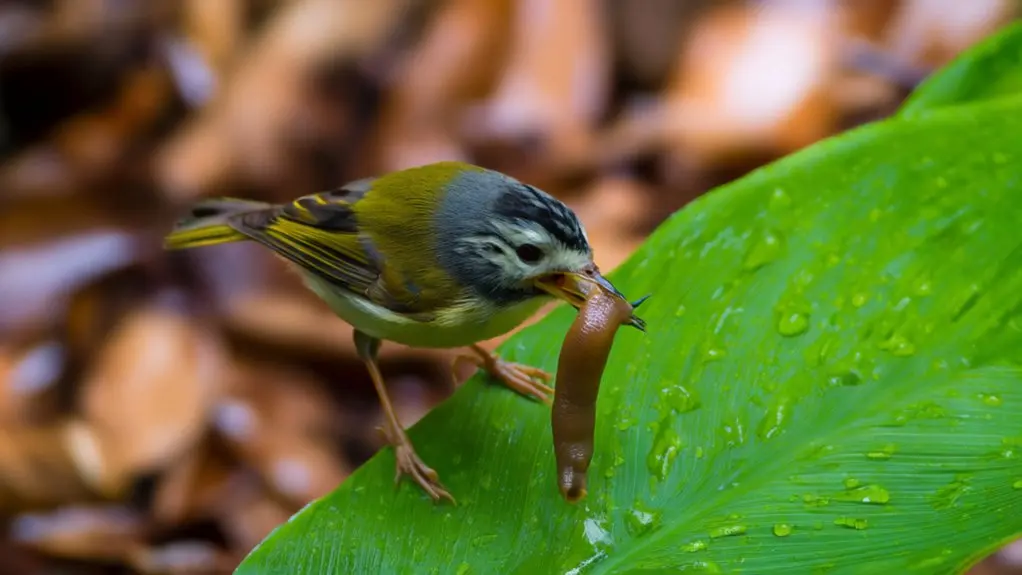
Yes, birds like thrushes, blackbirds, and robins actively eat slugs. They use them as an essential protein source that helps control garden pests naturally. Larger birds even target bigger slugs, which helps keep the ecosystem balanced.
But if you use heavy slug control methods or chemical poisons, it can reduce this food supply. Plus, those toxins can harm birds directly. So, encouraging safe and natural slug predation supports both bird health and your garden’s biodiversity.
It’s pretty interesting to explore this relationship more. You’ll find ways to balance pest control with bird conservation that actually work well together.
How Birds Eat Slugs and Help Control Garden Pests
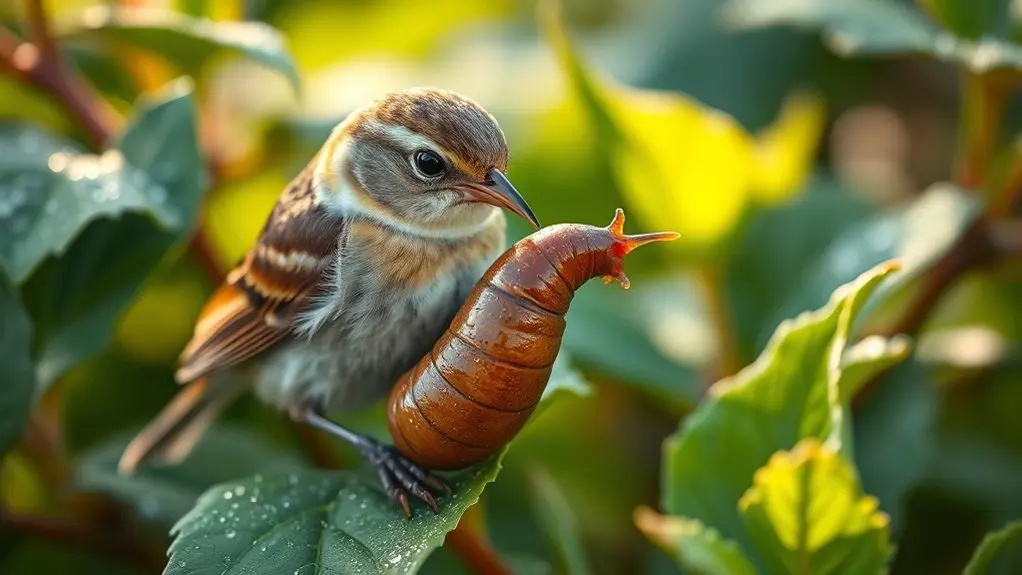
Although slugs often hide under leaves and debris, many bird species actively seek them out as a protein-rich food source. You’ll notice that birds like thrushes, blackbirds, and robins carefully peck at slugs despite their effective slug camouflage, which helps slugs blend into their environment.
By targeting slugs on the ground or in low shrubs, these birds reduce slug populations and naturally control garden pests.
Curiously, larger birds such as starlings and gulls can handle bigger slugs, including invasive types like *Arion vulgaris*.
When it comes to bird nesting, you won’t see birds attacking eggs or nestlings with slugs nearby, showing a clear distinction between pest control and reproductive care.
This balance benefits both bird survival and garden health.
Birds That Love to Eat Slugs
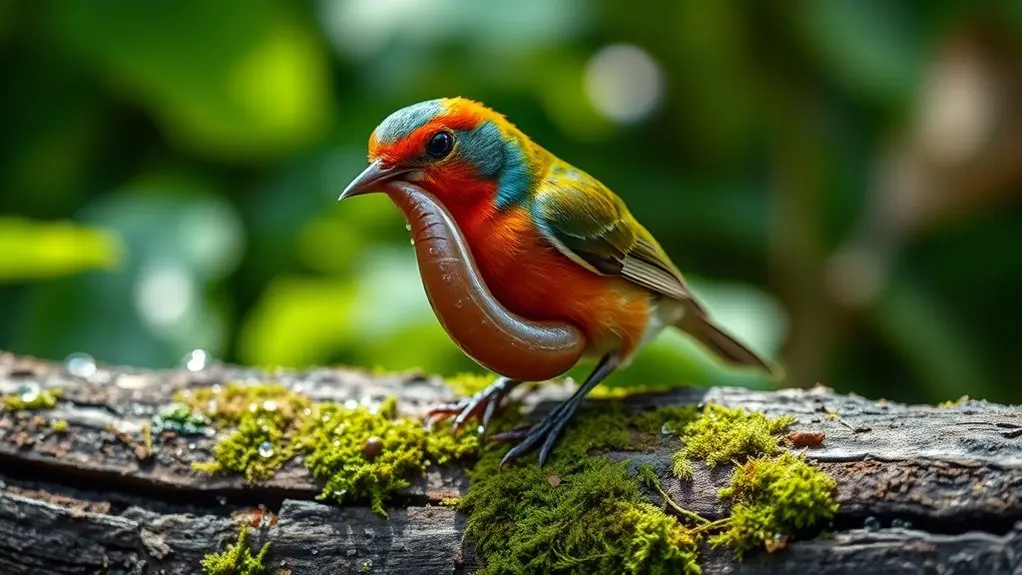
When you observe gardens rich in water sources and dense vegetation, you’re likely to spot birds such as thrushes, blackbirds, and robins actively hunting for slugs. These species rely on slugs as an essential protein source, especially during nesting behaviors when energy demands increase.
Larger birds like starlings, gulls, and jays also target bigger slugs, including invasive *Arion vulgaris*. During bird migration, many species adjust their diets to include slugs, taking advantage of abundant food in suitable stopover habitats.
Providing water and shelter encourages these birds to frequent your garden, naturally controlling slug populations. Understanding these feeding patterns highlights the integral role slug-eating birds play in ecosystem balance, particularly during critical life stages such as nesting and migration.
How Slug Control Impacts Birds’ Food Sources
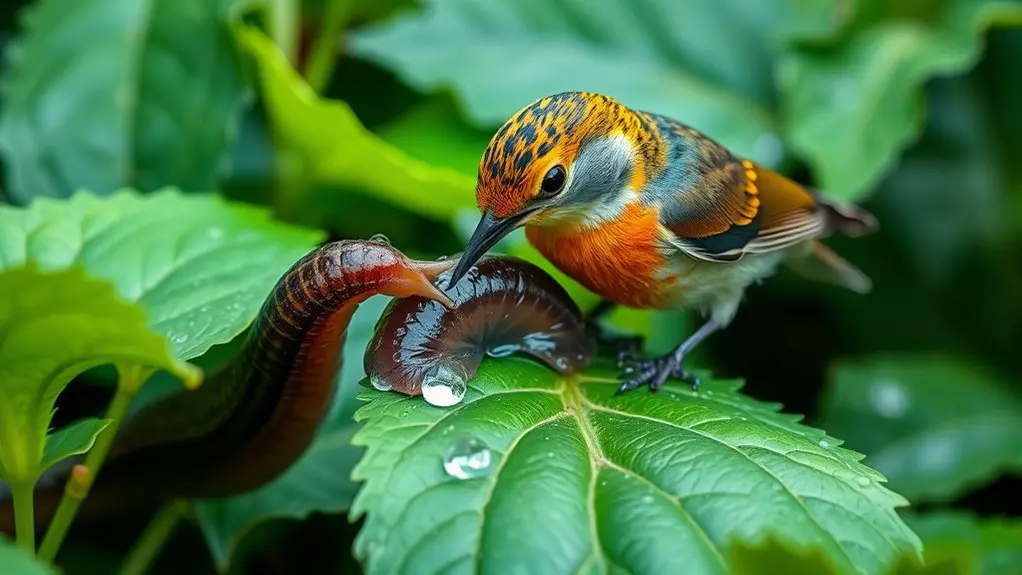
You’ll notice that controlling slug populations directly affects the variety of food available to birds. This is especially true for species that rely on slugs as a key protein source.
When slug numbers drop, it disrupts the natural predator-prey balance. That can reduce bird diet diversity and impact their nutritional intake.
Bird Diet Diversity
How do slug control measures affect the variety of food available to garden birds? When you reduce slug populations, you directly impact the protein-rich diet many insectivorous birds rely on, especially thrushes, blackbirds, and starlings.
These species often engage in urban foraging, adapting to food availability in human-dominated environments.
With fewer slugs, birds have to adjust their feeding behavior. They start seeking alternative prey or other food sources to meet their nutritional needs. This dietary shift can stress birds, especially during breeding season when their energy demands peak.
Migratory patterns might also be influenced if birds find local food resources insufficient. Keeping slug populations balanced supports bird diet diversity and overall health.
It helps ensure that garden ecosystems stay vibrant and can support a variety of avian communities throughout the year.
Slug Availability Effects
Reducing slug populations in gardens directly affects the availability of a key protein source for many insectivorous birds such as thrushes and blackbirds. When you alter slug habitat through aggressive control, you decrease a crucial food supply.
This forces birds to seek alternative prey that may be less nutritious or scarce. This nutritional gap can impair their health, reduce reproductive success, and disrupt normal bird migration patterns. Birds struggle to build energy reserves when their food is limited.
You should consider that total slug elimination disturbs local food webs and impacts the ecological roles of these birds. Instead, try adopting slug control methods that reduce but don’t eradicate slug populations.
This helps maintain a balanced slug habitat. It supports sustained bird populations and meets their migratory demands.
Natural Predator Balance
Although controlling slug populations can protect your garden plants, it directly influences the food availability for bird species like thrushes, blackbirds, and starlings that depend on slugs as an essential protein source. In urban habitats, these birds rely heavily on slugs, especially during breeding seasons when nutritional demands peak.
When you reduce slug numbers through control methods, you inadvertently decrease natural prey, potentially impacting bird nutrition and survival. This shift can alter local predator-prey dynamics, leading to declines in slug-dependent bird populations.
Additionally, chemical slug repellents may pose poisoning risks if birds consume contaminated slugs. Maintaining a balanced slug population within urban habitats supports a stable food supply for insectivorous birds and preserves the natural predator balance critical to ecosystem health.
It’s all about finding that sweet spot where your garden stays healthy, and the birds have enough to eat.
How Slug Poisons Can Harm Birds and Wildlife
When you apply chemical slug poisons like metaldehyde or methiocarb, you inadvertently expose birds and other wildlife to serious toxic risks. These chemicals cause chemical toxicity in birds, leading to seizures, paralysis, and organ failure when ingested directly or via poisoned slugs.
Applying slug poisons like metaldehyde risks poisoning birds through direct or secondary exposure.
Secondary poisoning happens as toxins move through the food chain, making the harm much worse than just for the pests you’re targeting.
Because these poisons don’t discriminate between species, they end up killing beneficial insects and mammals too. This messes up the natural balance of predator and prey in the ecosystem.
Plus, chemical residues get into the soil and water, which can cause long-term health problems for birds and other wildlife.
Knowing all this shows just how much damage indiscriminate slug poison use can do to ecosystems. It’s a good reminder to be more careful with pest control methods if we want to protect biodiversity and keep our ecosystems healthy.
Encouraging Birds to Eat Slugs Safely
If you want to encourage birds to eat slugs safely, start by creating a habitat that attracts their natural predators. Providing water, a variety of food sources, and plenty of shelter can make your garden a bird-friendly place.
It’s also important to avoid using chemical treatments. These can be harmful because birds might get poisoned by eating slugs or coming into contact with contaminated surfaces.
Try to manage where slugs hang out by keeping certain areas pesticide-free. This way, birds like thrushes and blackbirds can forage naturally and help keep the slug population under control without any risks.
Safe Feeding Setup
How can you create an environment that encourages birds to eat slugs safely and effectively? Focus on habitat restoration by providing natural bird feeding techniques that attract birds without risk. Use shallow, shaded water sources like birdbaths to prevent slug drowning and allow safe foraging.
Placing invasive slugs on a brick island inside birdbaths increases accessibility while minimizing hazards. Avoid salt or poison to guarantee ecological safety. This way, you support the birds and protect the environment.
| Setup Element | Purpose | Implementation Tip |
|---|---|---|
| Shallow Water Source | Prevents slug drowning | Use shaded birdbaths |
| Brick Island | Makes slugs accessible | Place slugs on brick in birdbath |
| Natural Habitat | Safe hunting environment | Maintain dense shrubs, leaf litter |
| Food Relocation | Attracts birds naturally | Regularly move and replenish slug food |
| Chemical Avoidance | Ensures safe consumption | Avoid salt and poisons |
Attracting Natural Predators
Although slugs can damage gardens, encouraging natural predators like birds is a great, eco-friendly way to control them. You can help by planting dense shrubbery and hedges, which give birds safe spots to perch and search for food.
Putting up bird feeders filled with mealworms, sunflower seeds, and nuts attracts slug-eating birds like thrushes and blackbirds. Also, providing clean birdbaths and cozy nesting sites encourages robins and starlings to stick around and hunt nearby.
Try to avoid using chemical molluscicides so insect-eating birds can thrive and naturally keep slug numbers down. Keeping a variety of bird-friendly plants and water sources will help maintain their presence in your garden.
Managing Slug Placement
When you position birdbaths and feeding stations near shaded, sheltered areas, you increase the chances of attracting natural slug predators like thrushes and blackbirds.
Managing slug placement involves situating invasive slugs on accessible surfaces such as brick islands within these bird-friendly slug habitats. This strategy aligns with predator behavior, encouraging birds to forage efficiently.
Keeping water shallow in baths makes slugs visible without risking drowning, which helps make predation safer.
Also, regularly replenishing slugs at consistent sites establishes reliable feeding zones. This way, birds get used to where their food is, which reinforces their foraging patterns.
Incorporating nearby shrubs and hedges further enhances the habitat. These plants attract insectivorous species and improve their access to slugs.
Balancing Slug Control and Bird Conservation in Your Garden
Since slug populations can impact both your garden’s health and local wildlife, you need to carefully balance control methods with bird conservation. Maintaining soil health is essential because it supports the diverse ecosystem that naturally regulates pests, including slugs.
Chemical slug repellents may increase pest resistance and inadvertently poison birds feeding on contaminated slugs, which disrupts ecological balance.
Instead, encourage natural predators like thrushes and blackbirds by providing bird baths, feeders, and native plants. These features not only attract beneficial species but also sustain birds’ nutritional needs by preserving slug availability as a food source.
By integrating eco-friendly practices, you promote pest resistance while ensuring bird populations thrive.
Ultimately, this approach fosters a resilient, balanced garden ecosystem that benefits both soil health and biodiversity. It’s all about working with nature to keep your garden healthy and full of life.
Frequently Asked Questions
Can Pet Birds Safely Eat Slugs at Home?
You shouldn’t let pet birds eat slugs at home since predator-prey dynamics don’t favor safely ingesting them.
Even though slugs might have some nutritional benefits, they often carry parasites and toxins. These health risks are pretty serious and definitely outweigh any advantage.
Do Birds Prefer Slugs Over Other Insects?
Imagine knights choosing armor; similarly, slug predators like thrushes select slugs over insects because birds tend to prefer protein-rich, moist prey.
You’ll notice birds go for slugs especially when those slugs are easy to find and catch. It’s all about what’s available and simple to get.
How Do Slugs Fit Into a Bird’s Overall Diet?
You’ll find slugs fit into a bird’s diet as a nutrient-rich protein source. Despite some slug toxicity, birds’ digestive systems efficiently neutralize toxins. This allows safe digestion and supports energy needs.
This is especially important during breeding or when food is scarce. Birds really rely on that extra boost to keep going. So, slugs play a pretty key role in their overall diet.
Are There Specific Seasons When Birds Eat More Slugs?
When slug consumption spikes like clockwork, you’ll notice birds eating more in spring and autumn. They balance slug poisoning risks while building energy for bird migration.
Their feeding adapts to slug availability and seasonal nutritional needs precisely. It’s pretty amazing how they manage it all so well. Birds really know when to eat what!
Can Slug-Eating Birds Transmit Diseases From Slugs?
Yes, slug-eating birds can transmit diseases from slugs, but their bird immunity often neutralizes slug toxins. Transmission risk depends on pathogen presence and infection levels.
This means that disease spread is rare but possible under specific environmental conditions. So, while it’s not very common, it can happen if the right factors come together.
Conclusion
By inviting birds to feast on slugs, you turn your garden into a living balance. Nature’s cleanup crew works quietly beneath the leaves. But beware, slug poisons can tip this delicate scale and harm the very allies you need.
When you watch these feathered gardeners, you’ll see how their natural diet supports your green space. Nurture this partnership carefully. You’ll cultivate a thriving ecosystem where both birds and plants flourish in harmony.