

You can observe many bird species flying across different countries every year; this is a well-documented fact, not a myth. Birds undertake long-distance migrations driven by genetic programming and environmental cues. They steer accurately using Earth’s magnetic field, visual landmarks, and celestial signals.
They cross international borders to access ideal breeding sites and food resources. Along the way, they face various natural and human-induced risks. Exploring these incredible journeys reveals deeper insights into migration challenges and conservation efforts.
What Exactly Is Bird Migration And Why Do Birds Migrate?
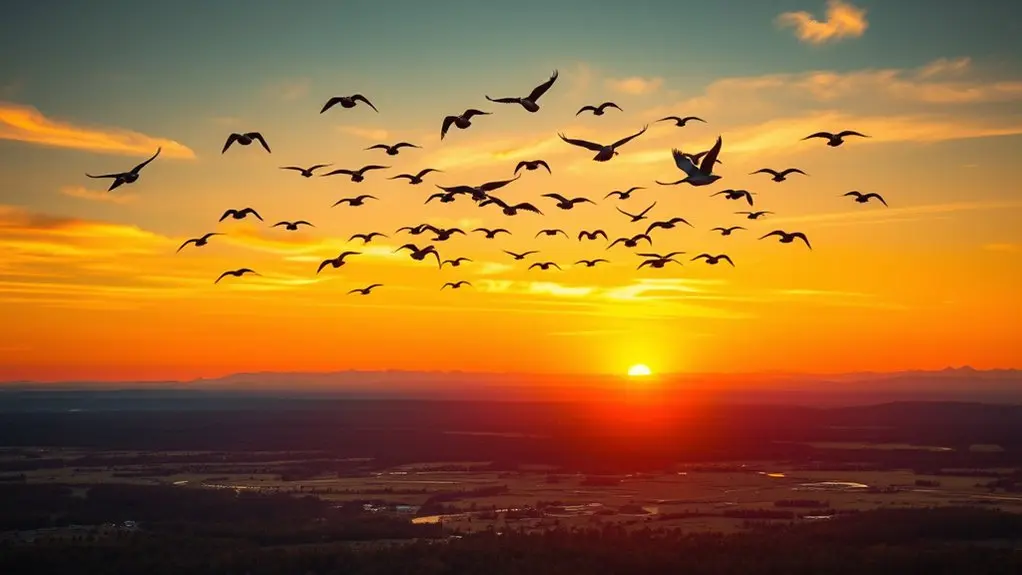
Although bird migration involves complex navigation and physiological changes, it fundamentally refers to the seasonal, long-distance movement of birds between their breeding and non-breeding areas.
You’ll find that birds migrate primarily to access abundant food, optimize breeding conditions, and avoid harsh winter climates.
These movements are genetically programmed, with hormonal changes triggered by daylight length guiding the process.
Feather coloration often plays a role in signaling breeding readiness during nesting behaviors at their destination.
As you observe, birds return to specific sites year after year, where their nesting behaviors are finely tuned to local environments.
Understanding these patterns helps you appreciate how migration supports survival by linking physiological adaptations with ecological demands.
Which Migratory Birds Cross International Borders?

Thousands of migratory birds cross international borders each year, steering complex routes that span multiple countries. Through bird banding, scientists track these journeys and study migration timing to understand patterns and challenges. You’ll find several notable species crossing borders regularly.
For example, Arctic Terns undertake epic migrations from the Arctic to the Antarctic, crossing numerous countries. Canada Geese travel from Canada through the United States down to Mexico, traversing multiple international boundaries. Swallows and Blackbirds frequently cross European and North American borders during seasonal migrations.
Approximately 20% of bird species are migratory, which really shows the global scale of these movements. These flyways highlight the need for international cooperation in conservation efforts to protect migratory habitats and facilitate safe passage across borders. It’s a big task, but working together makes a difference.
Why Do Birds Fly To Different Countries Seasonally?
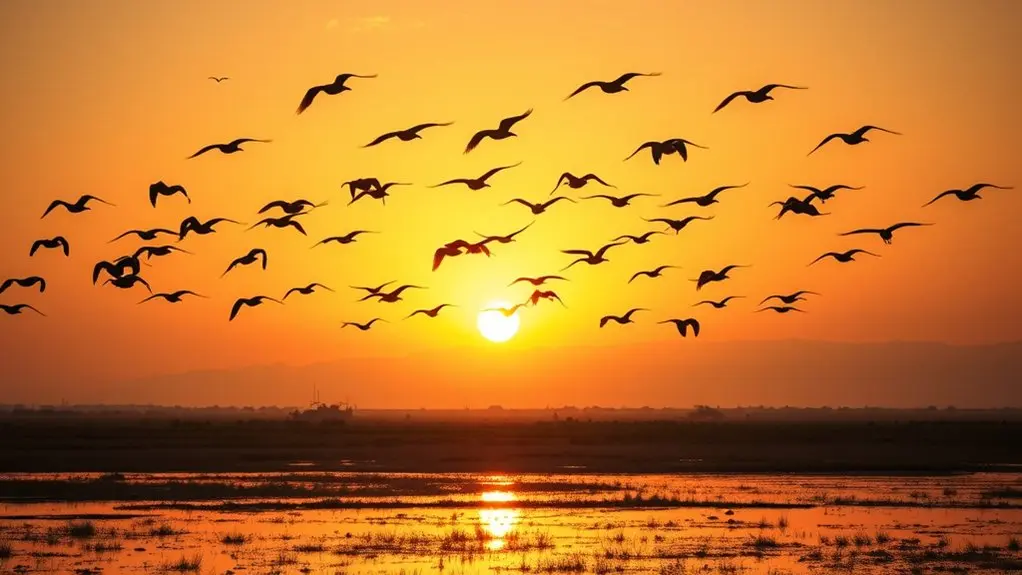
You’ll notice that birds migrate seasonally because they’re looking for resources that change with the environment, like food and places to breed.
When the days get longer or shorter and the temperature shifts, their hormones kick in and get their bodies ready for the trip.
Knowing how all this works helps us understand why birds time their migrations to match the best conditions in different countries.
Seasonal Resource Availability
Because food resources fluctuate with the seasons, birds migrate to different countries to exploit peak availability. You’ll notice their migration aligns with changes in climate and vegetation, creating ideal conditions for feeding and breeding.
Feather coloration often signals readiness for migration and mating, while nesting behaviors depend on resource abundance. You can understand this through three key points:
- Birds travel to regions where insects, nectar, or fruit peak seasonally, ensuring perfect nutrition.
- Many species move to tropical or subtropical areas during winter to avoid cold and scarcity.
- Migration timing corresponds to ecological cycles, maximizing survival and reproductive success.
This seasonal resource availability drives migration. It’s essential for birds’ life cycles and ecological adaptation.
Hormonal Migration Triggers
Although environmental factors like food availability influence bird migration, the process is fundamentally controlled by hormonal changes within the birds themselves. Hormonal triggers, such as increased gonadotropin levels, respond to environmental cues like changing day length and temperature.
These hormonal shifts regulate the internal biological clock through hormones like melatonin, precisely timing migration seasons.
As a result, birds undergo physiological adaptations, including fat deposition and muscle development, which are critical for sustaining long-distance flight. These internal changes guarantee birds migrate when conditions optimize survival and breeding success.
How Do Birds Navigate Across Countries And Continents?
When birds set out on long migrations across countries and continents, they rely on a combination of natural navigational tools to find their way. Their navigation involves complex mechanisms shaped by evolution, including altitudinal migration and genetic navigation. You can understand their process through these key elements:
Earth’s magnetic field acts as an internal compass, enabling birds to detect direction even when landmarks are absent. Visual landmarks such as mountain ranges, rivers, and coastlines provide spatial orientation during flight.
Celestial cues, including stars and the moon, guide nocturnal migrants through darkness.
This integrated system guarantees precise navigation over vast distances, allowing birds to complete their migratory journeys effectively and consistently.
Altitudinal migration further complements this by adjusting flight altitude according to environmental conditions. This helps optimize energy use and orientation, making their journey smoother.
How Far Can Migratory Birds Travel In A Single Journey?
Understanding how birds navigate across continents naturally leads to questions about the distances they cover in a single journey. Migration patterns vary greatly, with some species showing remarkable flight endurance.
Birds’ incredible navigation sparks curiosity about the vast distances they travel nonstop during migration.
For example, the Bar-tailed Godwit can fly non-stop for over 7,000 miles, which is pretty impressive.
Meanwhile, the Arctic Tern takes the longest annual migration, covering up to 44,000 miles between the Arctic and Antarctic regions.
Many songbirds travel several hundred to a few thousand miles depending on their specific routes.
These distances highlight adaptations in physiology and behavior that are essential for survival during migration.
Flight altitudes can reach up to 29,500 feet, helping birds travel long distances more efficiently.
Ultimately, how far a migratory bird flies in one journey depends on its species’ migration pattern and flight endurance capabilities.
It’s fascinating to see how different birds manage these incredible feats!
What Environmental Cues Trigger Migratory Bird Movement?
Since migratory birds rely on precise timing for successful journeys, they respond to specific environmental cues that trigger movement. These cues help ensure they reach ideal nesting sites and show off vibrant feather coloration for mating.
You can observe three primary triggers:
- Photoperiod changes: Increasing or decreasing day length initiates hormonal shifts that prompt migration.
- Temperature and weather patterns: Fluctuations affect food availability and flight conditions, which influences when birds decide to depart.
- Celestial cues and landmarks: Nocturnal migrants navigate using stars and the moon. Visual landmarks like rivers also help with orientation.
What Risks Do Migratory Birds Face During Migration?
As you follow migratory birds, you’ll notice they face some pretty tough environmental challenges, like severe weather and habitat loss.
On top of that, there are human-related dangers, such as collisions with buildings and light pollution, which really add to their risks during migration.
Plus, they’ve to watch out for predators and accidents when they stop to rest along the way.
All these factors make their journey quite hazardous.
Environmental Hazards Impact
Although migratory birds navigate vast distances with remarkable precision, they face many environmental hazards that threaten their survival during migration. Urban development and climate change have a big impact on their routes and stopover habitats. You need to understand these key risks.
First, habitat loss from urban development, agriculture, and deforestation reduces essential stopover sites. This means there are fewer places for birds to rest and refuel.
Next, weather events like storms, fog, and sudden temperature changes can disorient birds. This increases their exhaustion and chances of making navigational errors.
Also, artificial light pollution disrupts nocturnal navigation. It causes collisions and forces birds to land during critical nighttime flights.
All these hazards make it harder for migratory birds to endure their journeys and stay on course. Recognizing these environmental factors helps us understand the complexities of migration. It also highlights the urgent need to protect natural habitats as urban areas grow and climate conditions change.
Human-Induced Threats
How exactly do human activities increase the risks migratory birds face during their journeys? Urban noise disrupts communication and orientation. Artificial lighting causes disorientation, especially for nocturnal migrants.
Tall structures like skyscrapers and communication towers pose collision hazards. Habitat loss from urban development and agriculture reduces essential stopover and breeding sites. This critically impacts their survival.
| Human Factor | Impact on Birds | Example |
|---|---|---|
| Artificial Lighting | Causes disorientation and stranding | Nighttime urban areas |
| Urban Noise | Interferes with communication | Dense city centers |
| Tall Structures | Leads to fatal collisions | Wind turbines, skyscrapers |
These human-induced threats really increase mortality rates and make migratory success much harder for birds.
Predation And Accidents
When migratory birds set out on their long journeys, they face lots of risks from predation and accidents that threaten their survival. It’s important to know about these key challenges.
Bird collisions with tall structures like skyscrapers, wind turbines, and communication towers are a major cause of mortality. This problem often gets worse because of light pollution, which can disorient birds that migrate at night.
Predator risks go up during stopovers or resting periods. Cats, birds of prey, and other predators take advantage of vulnerable birds during these times.
Bad weather, like storms, fog, and sudden temperature drops, can cause birds to become disoriented or exhausted. Sometimes, they even drown in water bodies.
Knowing about these factors shows just how risky migration really is. It also highlights why conservation efforts are so important to help reduce these dangers.
How Do Human Activities Threaten Migratory Birds?
Because migratory birds rely on specific habitats along their routes, human activities like urbanization, agriculture, and deforestation directly reduce the availability of critical stopover sites. Urban expansion fragments habitats. Pollution also impacts food quality and bird health.
Collisions with skyscrapers, wind turbines, and power lines cause mortality. Light pollution disorients nocturnal migrants, which increases the risks of exhaustion or predation. Pesticides contaminate food sources. Illegal hunting further threatens populations.
| Human Activity | Threat Type | Effect on Birds |
|---|---|---|
| Urban expansion | Habitat loss | Reduces stopover site availability |
| Pollution impact | Contamination | Affects health and survival |
| Artificial lighting | Disorientation | Causes navigation errors |
You can see how your actions directly affect these migratory species’ survival.
What Conservation Efforts Protect Migratory Birds?
You rely on international treaties, like the Migratory Bird Treaty Act, along with cross-border agreements to protect migratory birds throughout their journeys. These agreements help ensure that birds are safe no matter where they travel.
Conservation efforts also focus on preserving critical habitats, such as wetlands and forests, which serve as essential stopover sites for the birds to rest and refuel. Protecting these areas is key to their survival.
On top of that, addressing human-induced hazards is really important. Through legislation and public engagement, risks like habitat loss and collisions can be reduced, giving migratory birds a better chance to thrive.
International Protection Treaties
Although migratory birds travel across multiple countries, international protection treaties work to safeguard their populations by coordinating conservation efforts. These agreements recognize the cultural significance and bird symbolism that migratory species hold worldwide.
To protect these birds, treaties focus on prohibiting illegal hunting, trapping, and destruction of habitats along migratory routes. They also coordinate conservation among countries like the US, Canada, Mexico, Japan, and former USSR regions.
Another important goal is safeguarding critical stopover sites, breeding grounds, and wintering habitats that are essential for the birds’ survival. This way, the birds get the protection they need throughout their entire journey.
Habitat Preservation Initiatives
Effective habitat preservation initiatives play a crucial role in protecting migratory birds by safeguarding essential stopover sites and breeding grounds. You’ll find that international agreements, such as the Migratory Bird Treaty, coordinate conservation efforts across countries along migration routes.
Restoration projects focus on wetlands, forests, and grasslands that serve as critical resting and feeding areas. These initiatives actively counter habitat loss from urban encroachment, agriculture, and logging, ensuring migration pathways remain viable.
By monitoring and protecting habitat corridors, conservationists maintain ecological connectivity essential for bird movement. Additionally, addressing impacts of climate change on these habitats helps preserve conditions necessary for successful migration.
You can see that these efforts collectively sustain the environments migratory birds depend on throughout their journeys.
Addressing Human-Induced Hazards
While migratory birds face numerous natural challenges, human-induced hazards pose significant threats that require targeted conservation efforts. Urban noise disrupts communication and navigation, while climate change alters migratory patterns and habitats.
To protect migratory birds, you should consider these key strategies:
International treaties like the 1918 Migratory Bird Treaty facilitate cross-border protection, ensuring coordinated conservation actions.
Habitat restoration and preservation projects focus on wetlands and forests, helping to mitigate damage from urbanization and agriculture.
Installing bird-friendly glass and regulating lighting on tall structures reduce collision risks, which are a major human-induced hazard.
Additionally, public education campaigns raise awareness about these dangers and encourage responsible behaviors that support migratory bird survival.
How Can We Help Migratory Birds During Their Journeys?
Because migratory birds depend on specific habitats during their long journeys, you can help by protecting and restoring critical stopover sites such as wetlands and forests. These areas support essential feather adaptation processes by providing safe environments for molting and energy replenishment.
Understanding birds’ nesting behavior also informs conservation efforts, ensuring breeding grounds remain undisturbed. You should implement bird-friendly building designs, like window decals and reduced light pollution, to prevent collisions and disorientation.
Supporting international conservation treaties preserves migratory routes, while reducing pesticide use protects food sources critical for feather maintenance and overall health.
Finally, raising public awareness helps curb illegal trapping and disturbance, safeguarding migratory birds throughout their journeys with scientifically informed, targeted actions.
Frequently Asked Questions
What Adaptations Help Birds Survive Long Migrations?
You rely on feather adaptations that reduce drag and conserve energy. These help you glide smoothly through the air with less effort. At the same time, you use clever navigation techniques to find your way.
For example, you can sense the Earth’s magnetic field, which acts like a natural compass. You also navigate by the stars and recognize landmarks along the route. This combination lets you stay on course with amazing precision.
All these adaptations work together to make long-distance migration possible. They help you survive the challenges of traveling thousands of miles. Pretty impressive, right?
Do All Bird Species Migrate Internationally?
Not all birds migrate internationally; you’ll find migration timing and bird navigation vary greatly. Some species stay local year-round, relying on stable resources, while others cross borders driven by genetic cues and environmental changes.
It’s pretty fascinating how different birds have their own travel plans. Some just hang around because their food and habitat stay consistent. Others get the urge to move as seasons shift or their instincts kick in.
How Do Young Birds Learn Migration Routes?
You observe juvenile navigation as young birds develop their instincts by following parents and environmental cues. Instinct development guides initial routes, while experience and landmarks refine their migration skills over time. This process ensures precise navigation.
It’s pretty fascinating how they start out just copying the adults around them. Then, as they get more experience, they learn to recognize important landmarks. That’s how they get better and better at finding their way on these long journeys.
Can Migratory Birds Change Their Routes Over Time?
You’ll see migratory birds rewrite their routes like shifting tides, adjusting migration timing despite genetic influence. Environmental changes and learned navigation prompt flexible pathways.
This proves their migration patterns evolve scientifically over time. They respond to climate and habitat dynamics in ways that are pretty remarkable.
What Role Do Stopover Sites Play in Migration?
Stopover sites play a vital role in migration corridors by providing essential rest, food, and shelter. You’ll find their stopover importance directly impacts birds’ survival and successful navigation across vast migration routes.
Basically, these spots are like pit stops on a long road trip. Without them, birds would struggle to make it to their destinations safely and on time. So, next time you think about migration, remember how crucial these sites really are.
Conclusion
You can clearly see that birds bravely brave borders, crossing continents with calculated care. Their seasonal sojourns showcase survival skills shaped by evolution, navigation, and necessity. Yet, human hazards hinder their harmonious flights, highlighting the need for heightened help and habitat protection.
By understanding their incredible journeys and supporting conservation strategies, you contribute to safeguarding these spectacular species. Remember, every effort echoes in ensuring migratory marvels continue to soar safely across skies and sovereign states. It’s pretty amazing when you think about it!