
Yes, birds can get arthritis, especially as they age or if they’re overweight, stressed, or injured. Arthritis causes joint inflammation, stiffness, and pain that often leads to changes in movement and behavior. You might notice reluctance to perch or fly.
Since parrots instinctively hide pain, spotting subtle signs early is key to helping them stay comfortable. You’ll also want to know safe treatments and how to adjust care to support your bird’s joint health and overall quality of life. It’s all about keeping them happy and moving well.
What Is Arthritis in Birds and How Does It Develop?
Although arthritis is often linked to aging, birds can develop it for several reasons like repetitive stress, obesity, or past injuries. Arthritis is a joint condition where inflammation and cartilage breakdown cause pain and make movement tough.
Arthritis in birds stems from aging, stress, obesity, or injuries, causing painful joint inflammation and movement difficulties.
It usually shows up in older parrots, affecting joints like knees, hips, or wings.
To help lower your bird’s risk, focus on a balanced diet that supports joint health and keeps feathers in good shape. A proper diet gives essential nutrients that strengthen cartilage and help reduce inflammation.
Overweight birds put extra strain on their joints, which speeds up arthritis.
Knowing how arthritis develops lets you take steps to prevent it. You can help your bird stay active and comfortable longer by managing their weight, avoiding repetitive joint stress, and promoting overall wellness through good diet and care.
Recognizing Common Arthritis Signs in Parrots
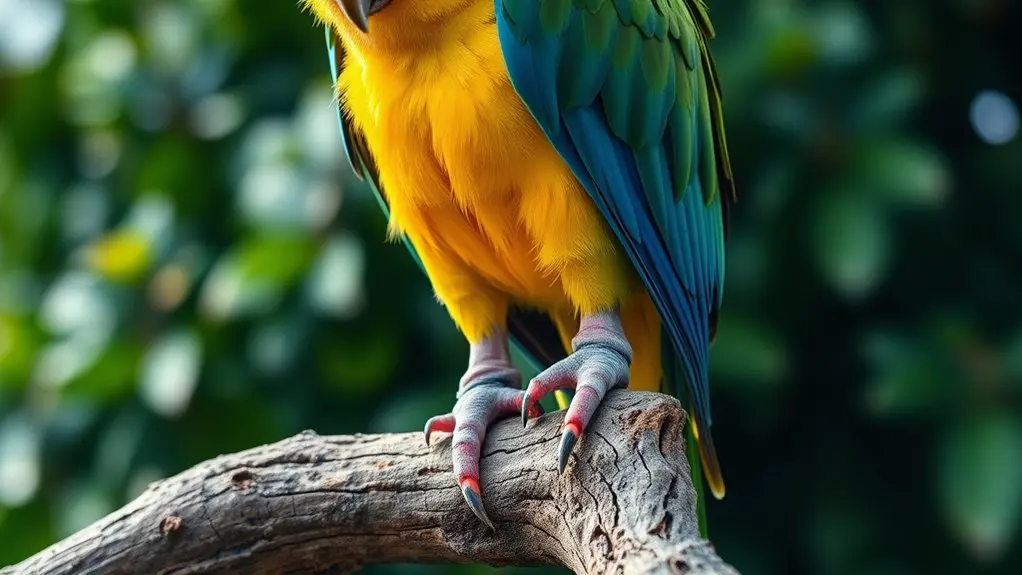
When your parrot starts favoring lower or softer perches, it could be a sign of arthritis making joint movement painful. You’ll want to watch closely for other indicators that suggest joint discomfort.
Common signs include swollen, reddened, or thickened joints, especially in the feet and legs.
You might also notice decreased activity or reluctance to climb and move around. Lameness, stiffness, or difficulty walking are other clues.
Changes in feather maintenance, like feather plucking or over-preening near painful joints, can happen too.
Beak health might also be indirectly affected since discomfort can reduce grooming efficiency.
Recognizing these signs early helps you provide timely care and improve your parrot’s quality of life.
Always keep an eye on your bird and check with a vet if you notice any of these symptoms.
Why Parrots Hide Arthritis Pain and How to Spot It Early
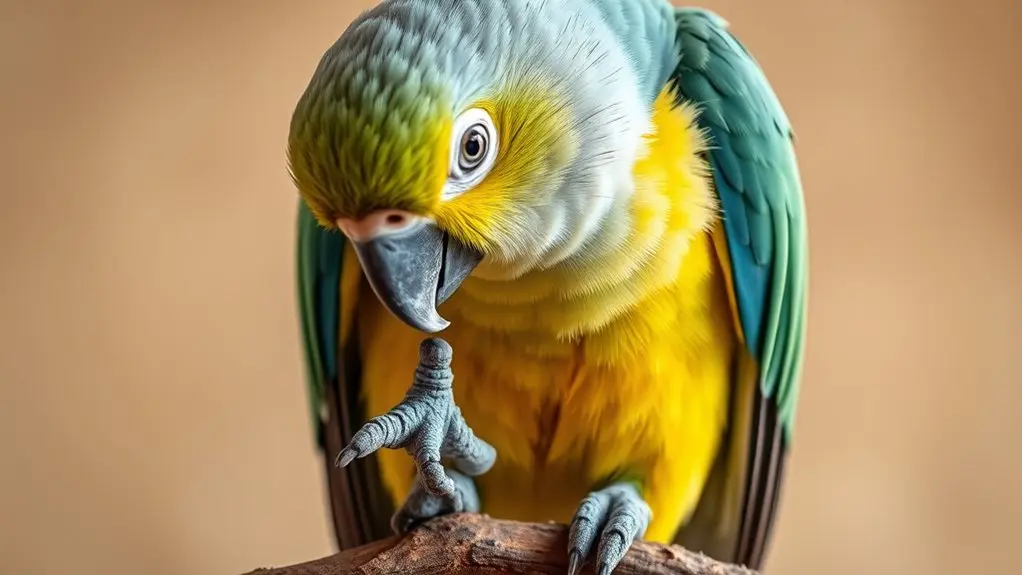
Parrots instinctively hide arthritis pain because they don’t want to show any weakness. So, you really need to keep a close eye out for subtle changes.
For example, you might notice your bird being less active than usual or favoring one leg over the other. Sometimes, they might even seem reluctant to perch like they used to.
If you catch signs like stiffness, swollen joints, or even feather damage early on, it can make a big difference. That way, you can step in before the arthritis gets worse and helps your parrot feel more comfortable.
Instincts Behind Pain Concealment
Because they face natural threats, these birds instinctively conceal pain like arthritis to avoid showing vulnerability to predators. This survival tactic means you have to watch closely for subtle signs instead of obvious symptoms.
Changes in their diet and nesting habits can give you early clues. You might notice your parrot is reluctant to perch or climb, favors one foot, or fluffs its feathers more than usual. Keep an eye out for these key indicators:
- Decreased activity levels even though they used to be active and had a regular diet routine
- Altered nesting habits, like less frequent nest building or rearranging materials
- Changes in vocalization or less interest in toys and social interaction
- Irregular posture or movement patterns that could signal joint discomfort
Early Arthritis Warning Signs
Recognizing arthritis in birds can be challenging since they instinctively mask pain to stay safe from predators. You might notice subtle signs like reluctance to perch, decreased flight or play, and stiffness or limping.
Pay close attention to changes in foot use. If your parrot hesitates to grip perches or shows swelling, joint discomfort may be developing. Behavioral shifts such as less interest in toys or food, or increased hiding, also warrant concern.
To support your bird, consider diet modifications rich in anti-inflammatory nutrients and guarantee environmental enrichment to encourage gentle activity without strain.
Regularly observe your parrot’s posture, movement, and foot health to spot early warning signs, enabling timely intervention and improved quality of life.
How Arthritis Affects Your Bird’s Movement and Behavior
You’ll probably notice that arthritis affects your bird’s movement by causing stiffness. They might be reluctant to perch up high and fly or climb less than usual.
Along with these changes, you might see your bird acting a bit grumpier than normal, interacting less, or having trouble grooming themselves.
Spotting these signs early is really important because it means you can help ease their pain and make their life more comfortable.
Mobility Changes And Signs
While arthritis can silently develop in parrots, you’ll often notice clear changes in their movement and behavior. Stiffness in hips, knees, and feet can make perching or climbing difficult, affecting your bird’s usual activity level.
You might see decreased feather grooming as mobility declines, along with altered vocalization patterns due to discomfort.
Key signs to watch for include limping or favoring one leg, reluctance to fly or move to higher perches, shuffling gait or dragging a foot, and a less stable grip on perches.
Recognizing these mobility changes early helps you address your bird’s arthritis effectively and improves their quality of life.
Stay observant, as these subtle shifts often come before more obvious discomfort.
Behavioral Indicators Of Discomfort
As arthritis progresses, your bird’s behavior often shifts noticeably due to joint pain and discomfort. You may see reluctance to perch or move, with your bird spending more time on lower perches or the cage floor.
Stiffness, limping, or favoring one leg signals joint issues.
Fluffed feathers and sluggish movement indicate discomfort affecting feather condition. Arthritis can also lessen your bird’s interest in toys or social interaction.
Increased vocalizations or irritability when handled often point to pain.
Adjusting the cage setup by providing lower perches and easy access to food and water helps accommodate limited mobility.
Monitoring these behavioral indicators ensures timely intervention to ease your bird’s discomfort and maintain its well-being.
Common Causes of Arthritis in Parrots
Because parrots experience various physical and environmental stresses, several factors commonly contribute to arthritis in these birds. You should recognize that feather grooming and the cage environment play significant roles in joint health. Poor cage setup can cause repetitive injuries or falls, leading to joint trauma.
Additionally, age-related wear and tear gradually inflames the joints.
Common causes include:
- Repetitive trauma from cage accidents or falls
- Age-related degeneration of joint cartilage
- Obesity, which increases joint stress
- Chronic infections or systemic illnesses causing inflammation
Understanding these factors helps you identify risks early.
Genetic predispositions and congenital joint issues may also influence arthritis development, but environmental and physical stresses often have the greatest impact.
Maintaining a safe cage environment and monitoring feather grooming habits can reduce injury risks that lead to arthritis.
How to Support Your Parrot Living With Arthritis
When your parrot develops arthritis, you need to adjust its environment and care routine to ease joint pain and maintain mobility. Prioritize perch selection by offering low, wide, and well-padded perches to reduce joint strain. Use soft bedding or padding on cage floors to cushion arthritic joints further.
Maintain feather grooming carefully, as arthritis can limit your bird’s ability to preen effectively. Assist gently to prevent stress or injury.
Encouraging regular, gentle exercise like supervised flying or climbing helps sustain joint flexibility without causing overexertion.
Supplementing your parrot’s diet with omega-3 fatty acids and anti-inflammatory nutrients supports joint health naturally. And don’t forget, always consult an avian veterinarian to develop a tailored care plan that includes appropriate pain management and monitoring.
This way, you can ensure your parrot’s comfort and quality of life.
Safe Arthritis Treatments and Medications for Parrots
Adjusting your parrot’s environment and care routine lays the foundation for managing arthritis. But addressing pain and inflammation often requires targeted treatments. Safe arthritis treatments and medications for parrots include veterinarian-prescribed drugs formulated specifically for birds.
Never use human medications like ibuprofen or aspirin, as they’re toxic to birds. Supporting your parrot’s joint health also involves optimizing bird nutrition and cage enrichment. It’s all about creating the best conditions for them to feel comfortable.
Key approaches include administering NSAIDs such as meloxicam under veterinary supervision to reduce inflammation and pain. You can also provide supplements like glucosamine and chondroitin, but only after consulting an avian vet.
Managing your bird’s weight and offering low-perch cage enrichment helps reduce joint stress. Just avoid harmful human medications altogether. These strategies ensure your parrot gets safe, effective care tailored to their arthritis needs.
When to Seek Veterinary Care for Your Parrot’s Arthritis
If your parrot starts showing signs like stiffness, difficulty perching, or reluctance to move, you should seek veterinary care promptly. These symptoms often signal arthritis, which needs a professional evaluation.
Watch closely for persistent swelling, redness, or pain in the joints.
You might also notice changes in perching preferences or that your bird grooms its feathers less near the affected areas. Favoring one leg or showing discomfort during movement is another red flag.
If you see any of these signs, it’s best to get your parrot checked out right away.
Early diagnosis through physical exams and imaging helps manage arthritis effectively. This can prevent joint deterioration and reduce chronic pain.
For aging parrots, regular veterinary check-ups are especially important since arthritis becomes more common as they get older.
Addressing arthritis early makes a big difference for your bird’s quality of life. It helps maintain normal behaviors like comfortable perching and feather grooming.
Frequently Asked Questions
Can Arthritis in Birds Be Prevented Through Diet or Exercise?
You can prevent arthritis in birds by maintaining a balanced diet and encouraging regular exercise. This supports bird mobility and feather health, reduces joint strain, and helps keep your bird active and comfortable throughout its life.
Keeping your bird moving is key. Regular activity not only strengthens muscles but also keeps joints flexible. Plus, a good diet fuels all this activity and supports overall health.
Are Certain Bird Species More Prone to Arthritis?
Yes, certain bird species are more prone to arthritis, especially larger ones with heavy joints. Bird migration and feather grooming habits influence their activity levels, which in turn affects joint health.
You should keep a close eye on species with sedentary lifestyles. They tend to be at higher risk for joint issues because they move less. So, regular monitoring can help catch problems early.
How Does Arthritis in Birds Compare to Arthritis in Mammals?
You’ll find arthritis impacts avian biomechanics differently, affecting perching and flight, while mammals show joint swelling.
In birds, arthritis also compromises feather health, making early detection tricky since symptoms are subtle compared to mammals. It’s a bit harder to spot at first because birds don’t show the usual signs like swelling.
Can Arthritis Affect a Bird’s Lifespan?
Yes, arthritis can shorten your bird’s lifespan by causing flight limitations and poor feather condition. These issues reduce activity and foraging ability. So, early treatment is essential to preserve mobility and overall health.
Are There Natural Remedies Safe for Bird Arthritis Relief?
Like a gentle breeze easing pain, you can use herbal supplements and alternative therapies such as turmeric and omega-3s for bird arthritis relief.
But always consult your avian vet to guarantee safety and proper dosing.
Conclusion
Arthritis affects up to 30% of pet parrots, making it a common concern you shouldn’t overlook. By recognizing early signs and understanding how arthritis impacts your bird’s behavior and movement, you can provide timely support and improve their quality of life.
With safe treatments and attentive care, you’ll help your parrot stay comfortable and active. Always consult your vet promptly if you notice symptoms, ensuring your feathered friend gets the best care possible.