
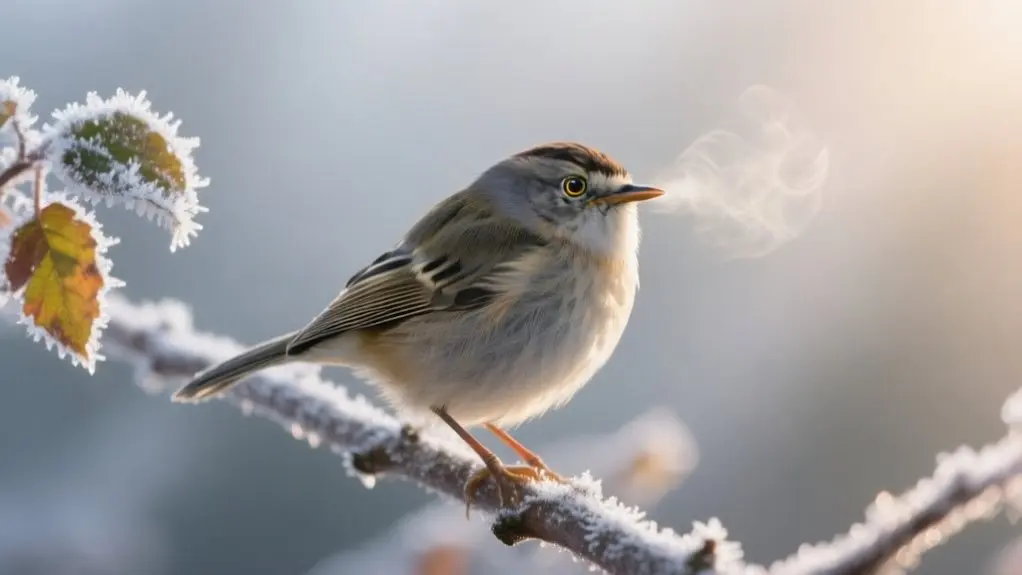
You can’t catch a human-style viral cold from your bird because birds rarely get viral infections like that. When birds show cold-like symptoms such as sneezing, nasal discharge, or labored breathing, it usually means they’re battling bacterial or Mycoplasma infections affecting their respiratory system.
Environmental factors like poor ventilation or stress can increase their risk. Proper care, hygiene, and nutrition strengthen their defenses.
Learn more about spotting symptoms, causes, and prevention to better protect your feathered friend.
What Does It Mean When Birds Show Cold-Like Symptoms?
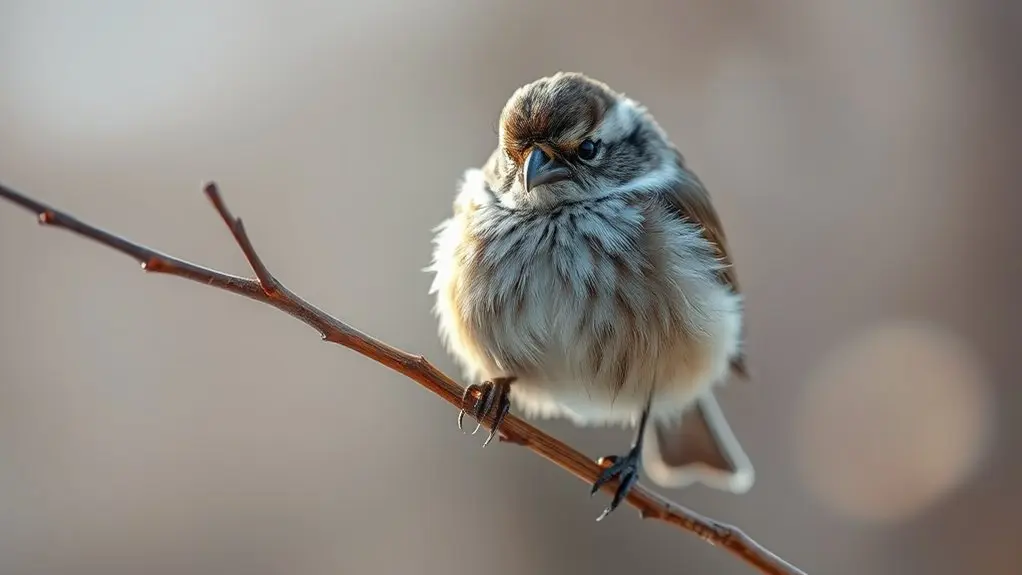
Although birds may display symptoms that resemble a human cold, they don’t actually catch colds caused by common viruses. When you notice sinus congestion, nasal discharge, or labored breathing in birds, these signs typically indicate infections from pathogens like *Chlamydia psittaci* or Mycoplasma, not a viral cold.
Such infections can obstruct airways, impacting breathing and feeding.
You should understand that compromised feather health often accompanies these infections, as respiratory distress affects preening behavior. Additionally, poor nesting habits due to illness may increase stress and exposure to pathogens, further deteriorating the bird’s condition.
Since these symptoms point to underlying infections, you must seek veterinary diagnosis promptly to identify and treat the specific cause. This will help ensure the bird’s recovery and maintain its overall health.
How Can You Spot Cold Symptoms in Finches and Other Birds?
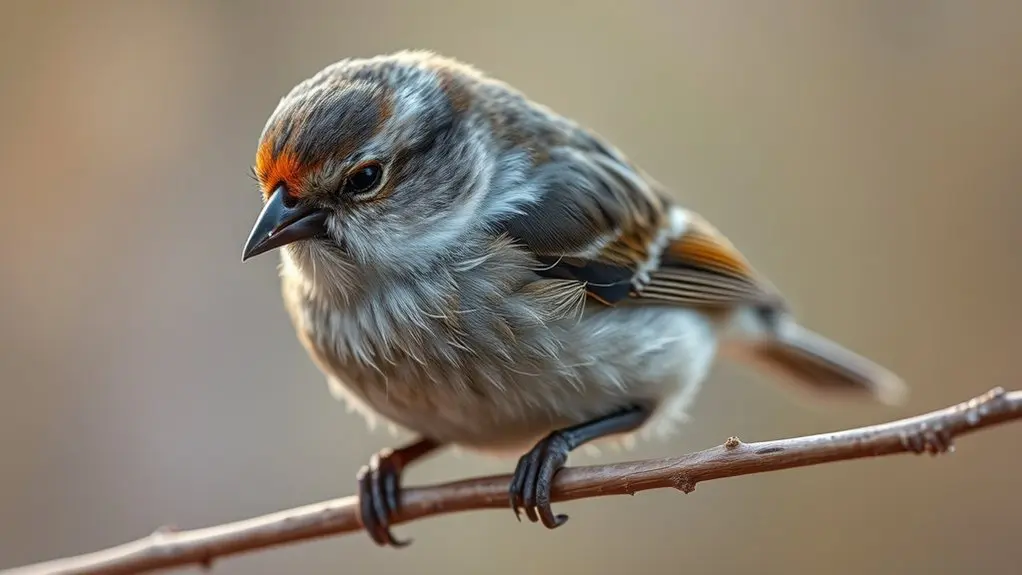
You can usually tell if finches and other birds have a cold by watching for respiratory signs like sneezing, nasal discharge, or labored breathing. It’s also important to notice any changes in their behavior, such as lethargy or less activity than usual.
Plus, keep an eye out for physical signs like puffed-up feathers. Catching these symptoms early means you can get them to a vet for assessment and treatment sooner rather than later.
Recognizing Respiratory Signs
When finches and other birds catch respiratory infections, they often show clear signs such as sneezing, nasal discharge, and labored breathing. You should closely observe changes in feather condition and beak appearance, as these can indicate underlying illness. Sinus congestion may cause open-mouth breathing and tail bobbing, signaling respiratory distress.
Persistent sneezing or discharge means it’s time to get a vet involved. Don’t wait too long, because these symptoms usually don’t go away on their own.
| Symptom | Description |
|---|---|
| Sneezing | Frequent, forceful expulsion of air |
| Nasal Discharge | Clear or colored mucus around nostrils |
| Labored Breathing | Difficulty breathing; open-mouth breathing |
| Feather Condition | Fluffed, ruffled feathers indicating discomfort |
| Beak Appearance | Crusting or discoloration near nostrils |
Keeping an eye on these signs helps you catch respiratory illness early. That way, you can make sure your bird gets the right care as soon as possible.
Behavioral Changes Noted
Because birds can’t tell us when they feel uncomfortable, watching their behavior is super important to spot cold symptoms in finches and other birds. One thing you might see is feather fluffing, which helps them keep warm when they’re not feeling well. Another sign is beak tapping, which can mean their nose is irritated or congested.
Here are three main behavioral signs to keep an eye on:
- Less activity and a drop in appetite. This usually means they’re feeling generally unwell, often due to sinus congestion or an upper respiratory infection.
- Lots of scratching or shaking their head. This often shows that their nose is irritated from an infection.
- Pulling away from the flock. Sick birds might isolate themselves, which is a sign of respiratory trouble.
Keeping a close watch on these behaviors lets you catch cold symptoms early and get your bird the care it needs quickly.
Physical Appearance Indicators
Although behavioral changes often provide the earliest clues, observing physical appearance indicators is essential for accurately identifying cold symptoms in finches and other birds.
You should closely examine the feather condition; ruffled or fluffed feathers may indicate discomfort or fever. Swelling around the eyes and beak area often signals sinus congestion linked to respiratory infections.
Beak discoloration or an open-mouth breathing posture can indicate labored respiration. Additionally, nasal discharge and sneezing are visible signs of sinus blockage or irritation.
Birds struggling to breathe may hold their beaks open, a clear sign of respiratory distress.
Monitoring these physical signs alongside behavioral changes will help you detect cold symptoms promptly. This way, you can provide timely care and minimize illness progression in your birds.
What Germs Cause Bird “Colds”?
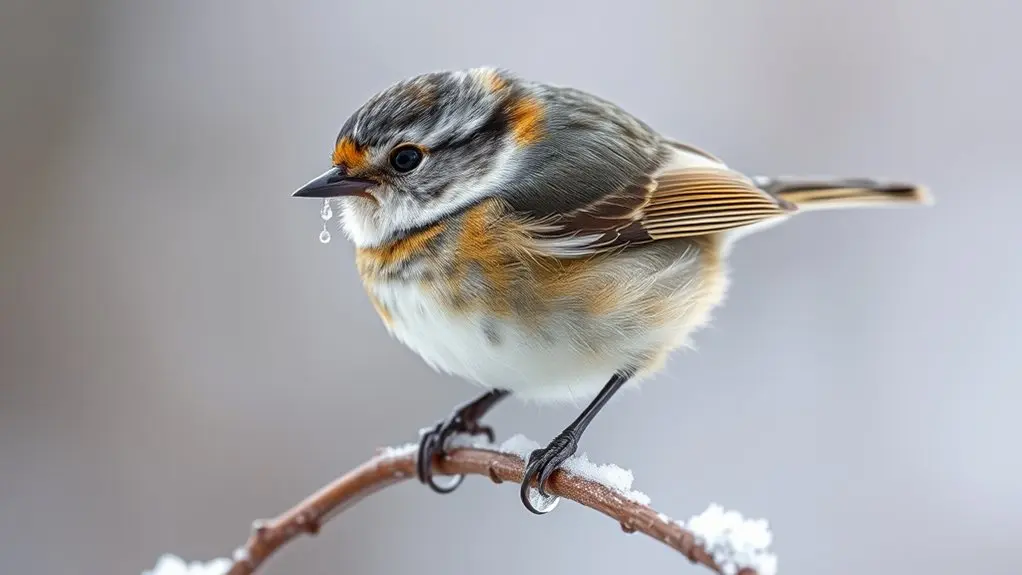
Since birds don’t contract viral colds like humans, the respiratory symptoms you see usually come from bacterial infections or Mycoplasma. These germs can become a problem especially during bird migration or feather molt, times when birds are under physiological stress.
The main germs causing bird “colds” include *Chlamydia psittaci*, which is often carried by wild finches and causes sinus congestion and respiratory distress.
Then, there are various bacterial infections that target the upper respiratory tract, leading to inflammation and discharge.
Mycoplasma species also affect respiratory tissues and can weaken the immune system.
Knowing this helps you understand that respiratory symptoms in birds come from bacteria or Mycoplasma, not viruses.
It’s important to keep an eye on birds during vulnerable times like migration and molt, so you can spot issues early and manage them effectively.
What Environmental Factors Increase Bird Susceptibility?
When environmental conditions deteriorate, birds become more vulnerable to respiratory infections because their immune defenses get compromised. Factors like poor ventilation and high ammonia levels in enclosures weaken their respiratory barriers. This makes it easier for infections to take hold.
Poor ventilation and high ammonia weaken birds’ defenses, increasing their risk of respiratory infections.
Environmental stressors such as extreme temperatures or sudden weather changes also mess with their immune function. This is especially true during critical times like bird migration or feather molting when their energy needs are higher.
Overcrowded or unsanitary living spaces make it easier for pathogens to spread, which increases the chances of birds getting sick. On top of that, not getting enough nutrition, especially vitamin A, harms the mucous membranes. This reduces their resistance to respiratory infections.
Exposure to wild birds or contaminated environments can introduce infectious agents, making things worse. By knowing how these environmental factors affect birds, you can manage conditions better. This helps support their respiratory health and lowers the risk of infections.
When Should You Seek Veterinary Care for Bird Colds?
If your bird shows persistent respiratory symptoms such as sneezing, nasal discharge, or labored breathing lasting more than a few days, you should seek veterinary care promptly. Timely intervention is essential to prevent complications and secondary infections.
Consider these key indicators for immediate veterinary attention:
- Lethargy, loss of appetite, or noticeable weight loss despite maintaining a proper bird diet.
- Open-mouth breathing or visible distress, which may indicate severe respiratory compromise.
- Worsening symptoms or no improvement despite maintaining ideal cage cleanliness and environmental conditions.
Prompt veterinary examination will allow for accurate diagnosis and effective treatment. Maintaining a balanced bird diet and clean cage environment supports recovery but can’t replace professional care when symptoms persist or intensify.
Early veterinary care really boosts your bird’s chances of a full recovery from respiratory illnesses. So, don’t wait too long to get help if things aren’t improving!
How Can You Prevent Bird “Colds”?
You can help lower the chances of your bird catching a cold by keeping their living space well-ventilated and clean. It’s also really important to practice good hygiene around their environment.
On top of that, making sure your bird gets a balanced diet packed with essential vitamins—especially Vitamin A—can give their immune system a nice boost.
All these little steps work together to keep respiratory infections at bay and support your bird’s overall health.
Maintain Proper Ventilation
How does proper ventilation play a role in preventing bird “colds”? Proper ventilation reduces humidity and airborne bacteria, which directly lowers the risk of respiratory infections.
You should focus on these key actions:
- Monitor airflow patterns to ensure consistent air exchange. This helps prevent the buildup of harmful gases like ammonia that irritate the respiratory tracts.
- Regularly maintain and adjust ventilation systems to optimize air quality. Doing this minimizes environmental stressors that can weaken birds’ immune defenses.
- Avoid overcrowding and poor air circulation because they increase the spread of respiratory pathogens among birds.
Keeping the air fresh and clean is really important to keep birds healthy.
Practice Good Hygiene
Where should you start to effectively prevent bird “colds”? Begin with rigorous cage hygiene by regularly cleaning and disinfecting cages, feeders, and water dishes to eliminate respiratory pathogens. Proper ventilation also reduces airborne bacteria and fungi, lowering infection risks.
Encourage consistent bird grooming since it helps birds maintain feather health and reduces microbial load. Avoid contact with wild birds and their droppings, which can carry infectious agents like *Chlamydia psittaci*.
Additionally, quarantine new or sick birds to prevent disease transmission within your flock.
By integrating these practices, you minimize exposure to infectious agents and support your birds’ respiratory health through a clean environment and proper self-maintenance behaviors.
These measures collectively form the foundation for preventing respiratory illnesses in birds without relying solely on nutrition or medical intervention. It’s really about creating a clean, safe space and encouraging good habits for your birds.
Ensure Balanced Nutrition
Maintaining a clean environment and good hygiene forms a solid base for preventing respiratory illnesses, but supporting your bird’s immune defenses through balanced nutrition is equally important.
To guarantee this, you should provide a diet rich in vitamins, especially Vitamin A, by including fresh fruits, vegetables, and high-quality poultry feed. This supports immune function and reduces susceptibility to infections.
Also, use nutritional supplements and make dietary adjustments tailored to your bird’s age and health status. Doing this helps optimize the immune response and prevent deficiencies.
Finally, monitor and adjust the diet regularly to minimize stress and environmental vulnerability.
This way, you lower the risk of bacterial and Mycoplasma infections that cause cold-like symptoms.
How Proper Care Helps Birds Fight Illness
Although birds have natural defenses against illness, proper care really boosts their ability to fight off infections. Keeping up with bird grooming routines is super important because it helps get rid of pathogens and keeps them healthy overall.
Keeping the cage clean is another big one. It cuts down exposure to harmful bacteria and viruses, which means fewer chances of respiratory infections.
Good ventilation is key too—it stops airborne pathogens from building up and helps keep their breathing easy.
You’ll want to give your bird a balanced diet packed with vitamins, especially Vitamin A, to keep their immune system strong.
Also, try to minimize stress by avoiding drafts and overcrowding. Less stress means they’re less likely to get sick.
Keep an eye on your bird’s health regularly. Spotting respiratory symptoms early means you can get treatment started quickly, which helps them recover faster.
When you put all these care tips together, you’re really helping your bird’s natural defenses and cutting down the chances of respiratory infections.
How Can Wild Finches Spread Bird Colds to Pet Birds?
Proper care and hygiene substantially reduce the risk of respiratory infections in pet birds, but external factors still pose threats. Wild finches can spread bird colds through several key mechanisms.
First, feeder contamination is a big one. Wild finches often carry pathogens like *Chlamydia psittaci*, which can contaminate shared feeders and water sources. Pet birds then come into contact with these and can get infected.
Another way is through wild bird migration. Seasonal movements bring infected wild finches near domestic flocks, which increases the risk of exposure.
Direct contact also plays a role. When wild and pet birds interact, pathogens can spread even before symptoms show up.
To reduce these risks, you should take biosecurity measures like covering feeders and cleaning bird areas regularly.
Understanding how wild finches transmit respiratory pathogens helps you protect your pet birds effectively from infections linked to wild bird populations.
Frequently Asked Questions
Can Bird Colds Be Transmitted to Humans?
You won’t experience viral transmission of bird colds since they lack zoonotic potential. The viruses causing avian respiratory issues differ from human cold viruses, so bird colds don’t infect or spread to people.
Basically, bird colds and human colds are caused by completely different viruses. So, even if your pet bird is sneezing or coughing, you don’t have to worry about catching a cold from them. It’s just not something that happens.
Do All Bird Species Get Colds Equally?
Imagine a migrating finch with compromised feather health. It’s more vulnerable to respiratory infections.
You’ll notice that not all bird species get colds equally. Migration effects and immune defenses play a big role in how likely they are to catch cold-like illnesses.
How Long Do Bird Cold Symptoms Usually Last?
You’ll find bird cold symptom duration varies based on bird immune strength. Mild symptoms usually last 3-7 days, but severe infections can stick around for weeks.
This is especially true for young or immunocompromised birds. They often need prompt veterinary care to help them recover. So, it’s important to keep an eye on your bird and get help if things don’t improve.
Are Bird Colds Seasonal Like Human Colds?
You might not know bird immune systems lack typical seasonal patterns. Unlike humans, birds don’t experience seasonal colds; their respiratory infections occur year-round. These infections are influenced more by environment and health than by seasonal changes in immunity.
Can Nutrition Affect a Bird’s Cold Recovery Time?
Yes, your bird’s diet impacts its immune response considerably. Providing balanced nutrition rich in vitamins and antioxidants strengthens immunity, speeds tissue repair, and reduces recovery time from colds.
On the other hand, a poor diet weakens defenses and can prolong illness. So, making sure your bird eats well really helps it bounce back faster.
Conclusion
You might think birds catch colds just like we do, but their symptoms and causes are quite different. By watching for signs early and keeping their environment clean and stable, you can help your finches stay healthy and avoid infections.
Remember, if illnesses go untreated, they can get worse fast. So don’t hesitate to check with a vet when something seems off.
Taking care of your birds is like tuning a delicate instrument. Small changes can make a big difference in keeping them vibrant and well.