
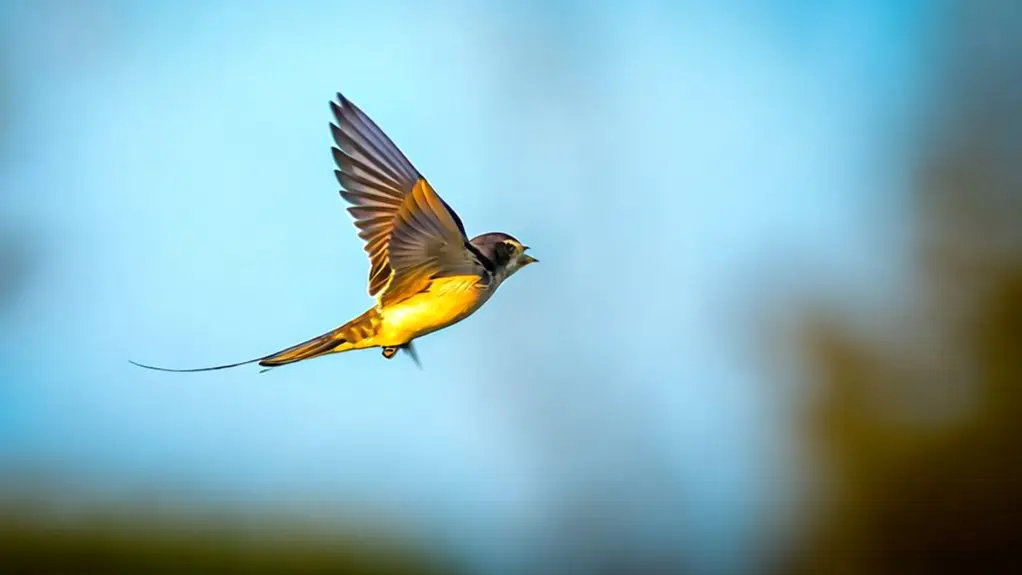
You might assume birds need wind to stay airborne, but they don’t. Their lightweight skeletons, layered feathers, and powerful muscles allow them to push air downward, generating lift even in still air. By adjusting wing shape and angles, birds glide efficiently, conserving energy without constant flapping.
This mastery of aerodynamics lets them maintain flight independently of external wind. It’s pretty amazing when you think about it! Explore how these precise physical traits and air displacement work together to keep birds soaring effortlessly.
How Do Birds Stay Airborne Without Wind?
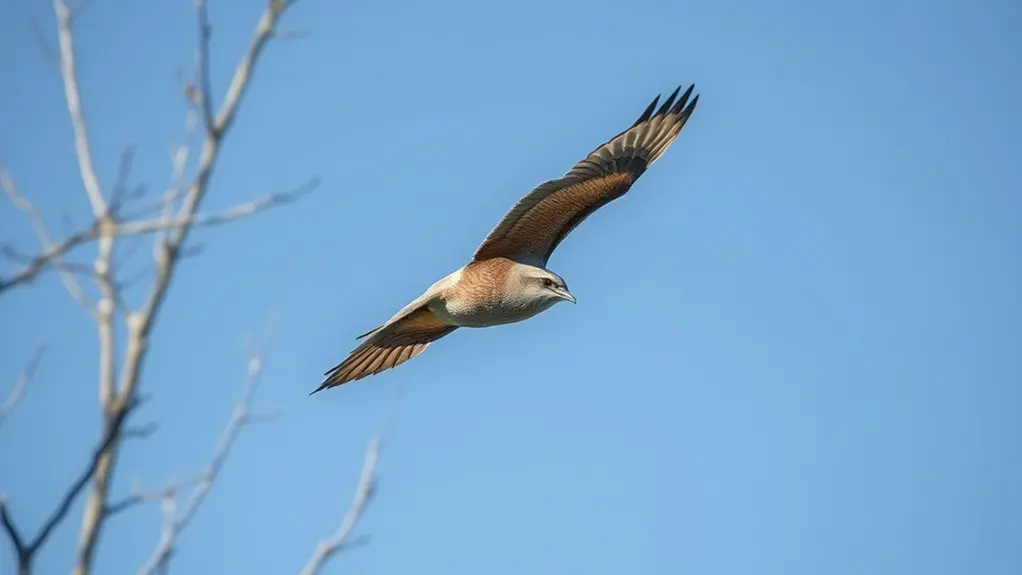
Although you might assume birds need wind to stay aloft, they actually use their wing shape and aerodynamic design to glide through still air. By adjusting their wings precisely, birds create lift through air displacement, maintaining altitude without relying on external wind.
This ability plays a vital role during migration patterns, allowing birds to conserve energy over long distances even when wind conditions are calm.
Plus, during nesting behaviors, when birds often make short flights around their territory, this gliding skill reduces fatigue and enables efficient movement. Their hollow, lightweight bones and feathers trap air, optimizing lift and control. It’s pretty amazing how these features work together.
Understanding these mechanisms reveals how birds master flight in varied environments. They balance energy use and maneuverability regardless of wind presence.
What Physical Traits Help Birds Fly and Glide?
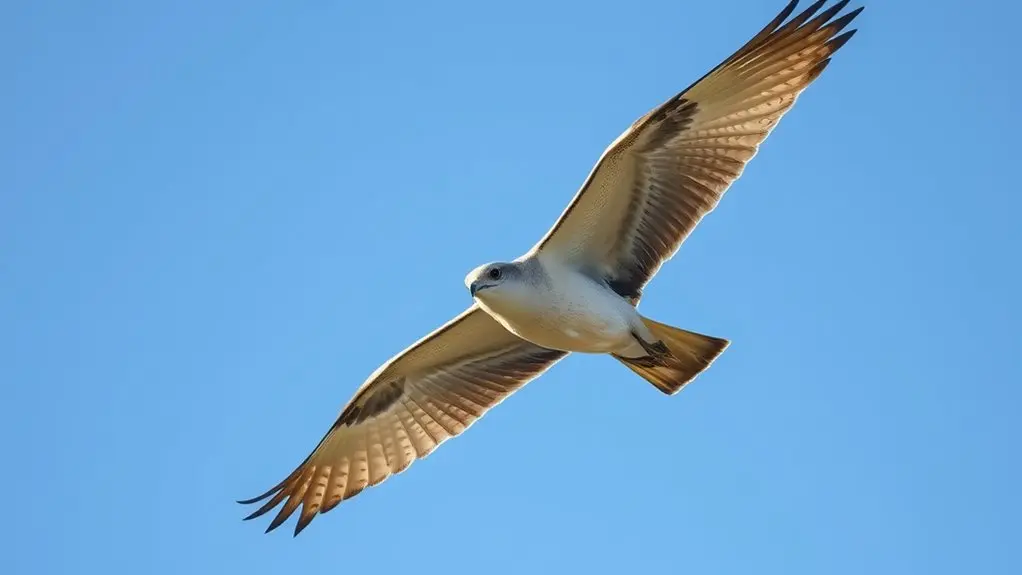
When you observe birds in flight, you might notice how their lightweight skeletons and hollow bones play an essential role in reducing body mass. This allows them to stay airborne with less effort. Feather flexibility also helps by trapping air, which enhances lift and stability.
Low bone density minimizes weight without sacrificing strength. Plus, the wing’s shape creates aerodynamic forces necessary for gliding and controlled flight.
| Trait | Function | Benefit |
|---|---|---|
| Hollow Bones | Reduce weight | Easier lift and sustained flight |
| Feather Flexibility | Air trapping and surface control | Improved stability and maneuverability |
| Wing Structure | Generate lift and control airflow | Smooth gliding and precise flight |
All these physical traits work together, so birds can fly and glide efficiently, even without wind. It’s pretty amazing how nature designs them for the skies!
How Does Air Displacement Support Bird Flight?
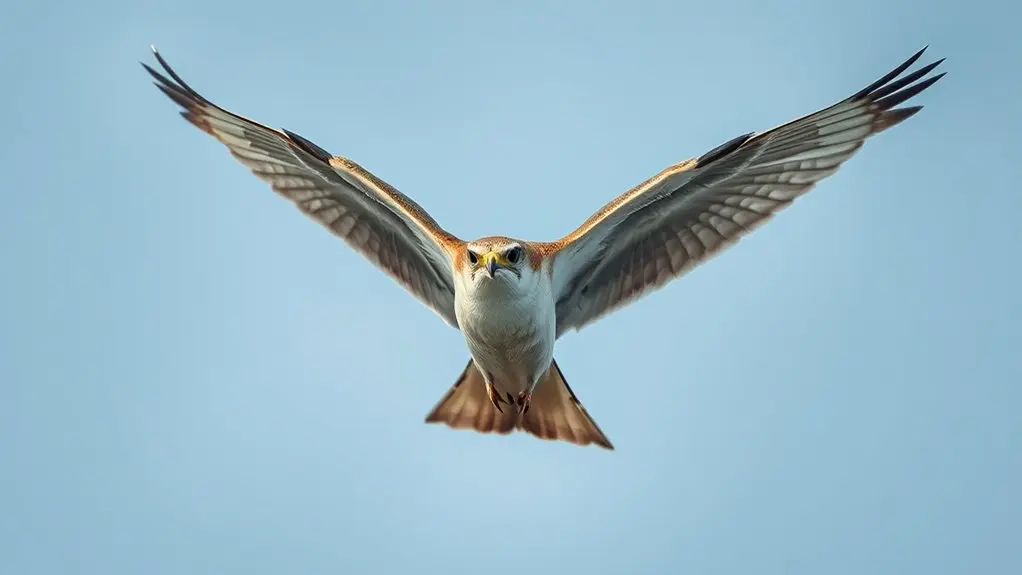
When you watch a bird in flight, you’ll notice its wings push air downward. This action creates lift, thanks to Newton’s third law. The feathers aren’t just for show—they shape the airflow and help maximize the amount of air displaced.
This is key to supporting the bird’s weight.
It’s pretty fascinating when you think about the physics behind it. By displacing air efficiently, birds can keep themselves up in the sky and stay stable, even when there’s no wind around.
Air Displacement And Lift
How exactly do birds stay airborne without constant wind beneath their wings? They rely on air displacement and lift generated by their wing morphology, which is finely tuned for aerodynamic efficiency.
As birds flap or glide, their wings push air downward, creating an equal and opposite force that lifts their bodies upward, according to Newton’s third law.
The shape and structure of their wings produce a pressure difference: lower pressure above and higher pressure below, sustaining lift. This displacement of air matches the bird’s weight, enabling sustained flight.
Even during gliding, birds maintain altitude by adjusting wing angles to optimize airflow and maximize lift.
Hollow bones and air-filled feathers further enhance this process by trapping air, increasing displacement, and supporting flight without needing external wind. It’s pretty amazing how all these features work together to keep birds up in the air!
Feather Role In Displacement
Because feathers trap air within their layered structure, they create an aerodynamic surface that substantially enhances air displacement during flight. This feather structure is vital for generating lift and maintaining stability.
When you observe a bird, you’ll notice how air trapping between feathers increases buoyancy, allowing the bird to stay airborne with minimal effort.
The design optimizes air displacement, enabling gliding and altitude control without constant wing flapping. Layered feathers increase surface area for greater air displacement.
Trapped air cushions and stabilizes the bird mid-flight.
Feather arrangement maximizes aerodynamic efficiency. Air displacement supports the bird’s weight against gravity.
Efficient air trapping reduces energy needed for sustained flight.
This intricate interplay between feather structure and air trapping underpins the bird’s remarkable ability to navigate air smoothly. It’s pretty amazing how nature designed this system for effortless flight.
Physics Behind Air Support
Why does a bird stay aloft without constant wing flapping? It’s all about air displacement and the physics behind air support. When a bird moves its wings, it pushes air downward, generating lift according to the law of floatation, where the bird’s weight balances the mass of displaced air.
Wing curvature plays an essential role by shaping airflow to maximize lift. Air density affects how much lift can be produced because denser air provides stronger support. Birds also benefit from hollow bones and lightweight feathers, which enhance air displacement efficiency.
When gliding, the initial lift sustains flight, and passive air displacement continues to support the bird’s weight.
| Factor | Effect on Flight |
|---|---|
| Wing curvature | Optimizes lift via airflow |
| Air density | Influences lift magnitude |
| Hollow bones | Reduces weight, aids displacement |
| Feather structure | Enhances aerodynamic efficiency |
How Does Gliding Help Birds Save Energy in Flight?
Although flying demands significant energy, birds save considerable effort by gliding. This lets them maintain altitude without flapping their wings. Gliding is a passive flight mode that enhances energy efficiency by reducing muscular exertion.
Because of this, birds can cover long distances with less fatigue. Their wingspan plays a critical role here. Broader wings generate more lift, which supports sustained gliding.
Gliding also exploits air currents and thermals to extend flight duration with minimal effort. Passive wing positioning reduces metabolic costs compared to active flapping.
Birds optimize wingspan and shape to maximize lift and minimize drag. Reduced muscle fatigue results from the decreased need for continuous flapping.
All this energy saved during gliding enables longer migratory journeys and efficient foraging.
How Do Birds Adjust Their Wings to Maintain Flight?
How exactly do birds control their wings to stay aloft and maneuver in the air? They constantly adjust wing morphology, altering wing angles and shape to generate lift and maintain altitude.
By changing the tilt of their wings, you’ll see them controlling speed and direction with precision.
They also fine-tune wing position, spreading or folding feathers to modify wing surface area, which directly impacts flight stability. These subtle adjustments let birds glide smoothly, hover briefly, or ascend without constant flapping.
Observing this, you realize that flight stability depends heavily on how effectively birds manipulate their wing structure in real time.
They balance aerodynamic forces to stay airborne and agile, even in still air conditions. It’s pretty amazing how such small changes make such a big difference in flight.
Which Common Myths About Bird Flight Should We Bust?
You might think birds have to flap their wings all the time just to stay up in the air. But actually, they rely a lot on air displacement and making really precise adjustments with their wings to glide smoothly. It’s kind of amazing how they do it.
And here’s another thing people often get wrong: they assume birds need wind to fly. That’s not true either! Birds have special physical adaptations that let them control lift and stay stable even when the air is perfectly still. Pretty cool, right?
Constant Flapping Misconception
When observing birds in flight, you might assume they must flap their wings constantly to stay airborne, but this isn’t the case. Birds use wing synchronization and subtle adjustments in wing angles to glide efficiently, conserving energy. Flight acoustics also reveal moments of silent gliding between flaps, disproving the idea of relentless wing movement.
Here’s what you should know:
- Birds alternate flapping with gliding phases to maintain lift.
- Wing synchronization optimizes aerodynamic efficiency, reducing flapping frequency.
- Lightweight skeletons and feathers minimize energy expenditure during passive flight.
- Flight acoustics detect quieter gliding intervals, confirming non-flapping flight.
- Aerodynamics allow birds to exploit air currents, lessening the need for constant flapping.
Role Of Air Displacement
Why do many people assume birds need wind to stay airborne? It’s a common misconception. Birds actually generate lift by displacing air equal to their weight, independent of external wind.
The wing shape plays a vital role here. Its curved upper surface accelerates airflow, reducing air pressure above the wing while keeping higher pressure beneath. This pressure difference creates lift, supporting the bird’s weight according to the law of floatation.
Even when gliding without flapping, birds rely on this air displacement and gravity, not wind, to stay aloft.
Plus, air trapped in feathers enhances aerodynamic efficiency, which further helps with lift.
Importance Of Physical Adaptations
Understanding how birds stay airborne without relying on wind leads us to examine their physical adaptations, which make this feat possible. You’ll find that specific traits in birds optimize lift and maneuverability, enabling flight in still air.
Key adaptations include:
- High feather density traps air, enhancing lift and stability.
- Lightweight skeletons with hollow bones increase bone strength without adding weight.
- Aerodynamic body shapes reduce drag and streamline airflow.
- Wing structure allows precise adjustments for gliding and energy conservation.
- Muscle composition supports powerful flapping independent of wind.
These features debunk the myth that birds depend solely on wind to fly. Instead, their physical design actively generates lift by displacing air, allowing sustained flight even when the air is calm.
You can appreciate how evolution fine-tuned these adaptations for efficient flight. It’s pretty amazing how nature figured this out!
Frequently Asked Questions
Do All Bird Species Fly Equally Well Without Wind?
No, you won’t find all birds flying equally well without wind. Feather adaptation and flight muscle strength differ, which influences their glide and flap efficiency. Some species are specialized for calm air, while others rely on wind currents.
It really depends on the bird and how they’ve evolved to handle different flying conditions. So, flying without wind isn’t a one-size-fits-all scenario for birds. Each species has its own way of managing the air around them.
How Do Birds Take off From a Standstill Without Wind?
You rely on your bird’s wingspan and muscle strength to take off from a standstill without wind. The bird rapidly flaps its wings and pushes off the ground to generate enough lift and thrust. This helps it overcome gravity and inertia effectively.
It’s all about building up power quickly. The stronger and faster the wing beats, the better the takeoff. Birds basically give themselves a good push to get airborne right from zero speed.
Can Birds Fly in Completely Still Air Indoors?
Yes, you can observe birds flying indoors in completely still air because their feather adaptations optimize lift and reduce drag.
This allows controlled flight at varying flight speeds without relying on external wind currents.
What Role Does Bird Weight Play in Windless Flight?
You’ll find that a bird’s weight, often just grams, directly impacts aerodynamic lift. Lighter birds with optimized feather design generate sufficient lift to glide in still air. Heavier ones struggle without wind to sustain flight.
It’s pretty interesting how such small differences can make a big impact. Basically, being light helps birds take advantage of their wing shape and feather arrangement to stay up even when the air is calm. So, next time you see a bird effortlessly floating, remember it’s not just luck—it’s physics and design working together!
How Do Migratory Birds Manage Long Flights Without Constant Wind?
You’ll see migratory birds optimize flight speed and exploit wind assisted lift by adjusting altitude, timing their journeys, and alternating flapping with gliding.
This helps them conserve energy during long flights even when constant wind isn’t available. It’s pretty clever how they manage it by making small changes throughout their trip.
That way, they don’t have to rely on steady wind all the time to keep going strong.
Conclusion
You might think birds need wind to soar, but they’re masters of their own air currents. Their wings, like finely tuned machines, manipulate air displacement and adjust angles to glide effortlessly. This helps them save precious energy.
Understanding these intricate adaptations busts common myths and reveals the science behind their flight. So next time you see a bird hovering steadily, remember, it’s not just the wind carrying them. It’s a complex dance of physics and biology at play.