
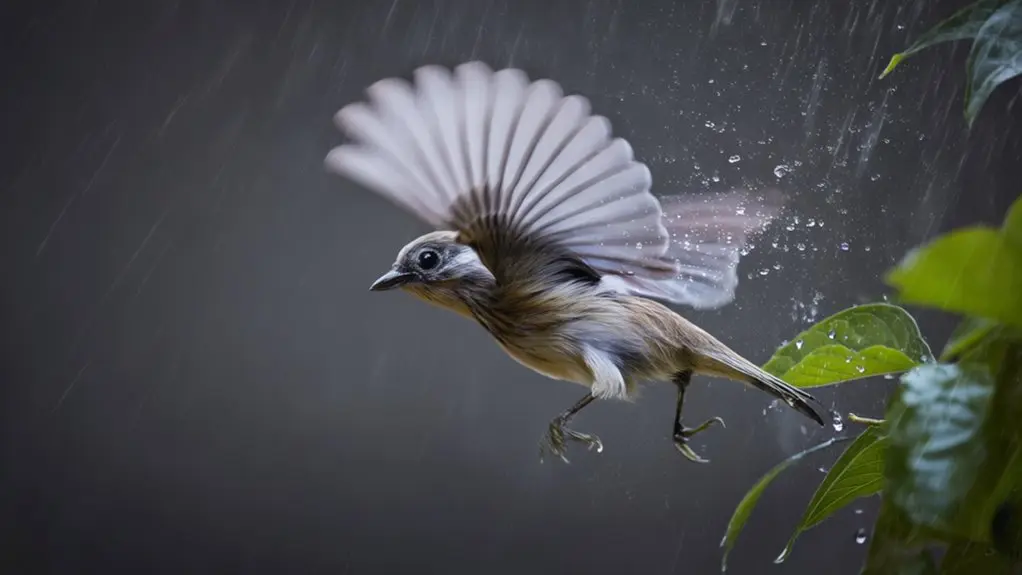
You might notice birds struggle to fly in heavy rain because lowered air density, higher humidity, and turbulence reduce their lift and increase energy demands. Their feathers get weighed down despite waterproofing oils, making sustained flight difficult.
Many seek shelter to conserve energy and avoid hypothermia. Some species handle light rain better, but heavy downpours consistently limit flight ability.
Understanding these effects reveals how birds adapt and survive harsh weather conditions. It’s pretty amazing how they manage to cope with such challenges, isn’t it?
How Rain Affects a Bird’s Ability to Fly
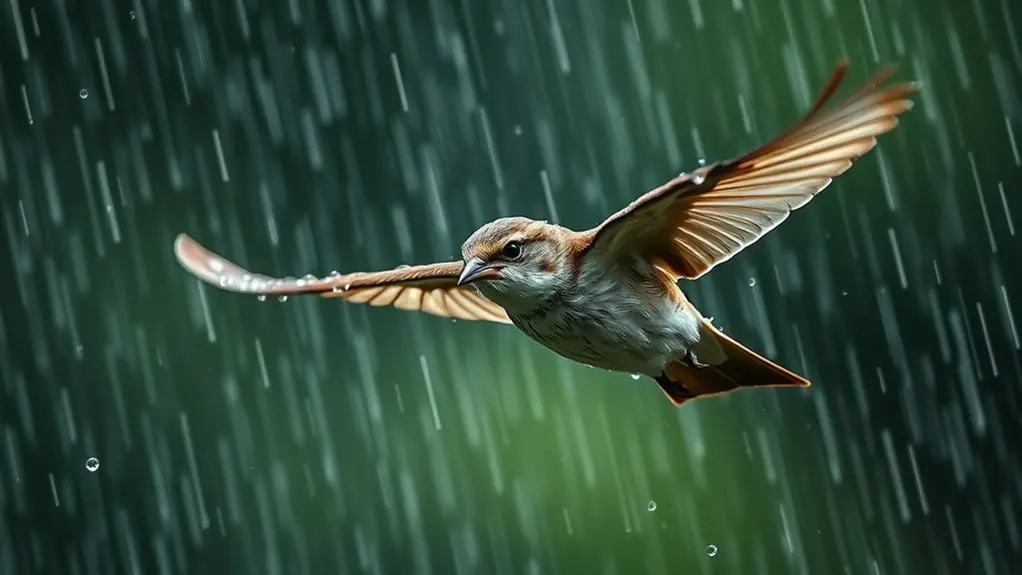
Although bird feathers repel water to some extent, heavy rain markedly impairs a bird’s ability to fly by lowering air density and increasing humidity, which together reduce the lift force necessary for flight.
Heavy rain hampers flight by reducing lift through lower air density and higher humidity.
You’ll notice aerodynamic challenges arise as the moist air becomes denser with water molecules, decreasing the air’s capacity to support lift. This means you’ll have to expend more energy to generate the same amount of lift during takeoff and sustained flight.
Turbulence further complicates stability, forcing you to adjust constantly to maintain control. Despite feathers’ water-resistant properties, the surrounding humid conditions exacerbate these challenges, raising your overall energy expenditure.
Consequently, flying in heavy rain demands considerably more effort, reducing your flight efficiency and often discouraging movement until conditions improve.
Why Birds Seek Shelter in Heavy Rain
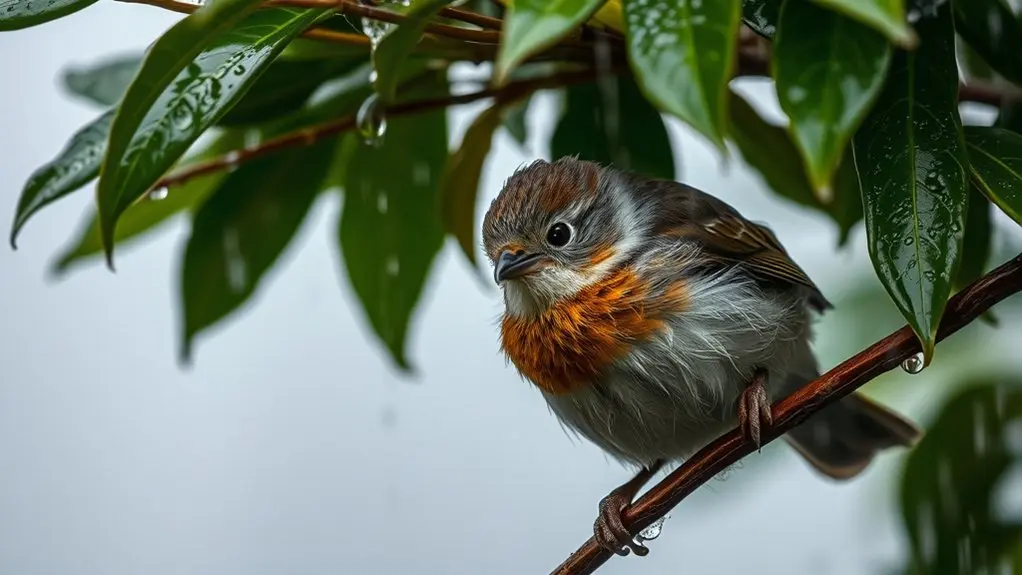
When heavy rain limits a bird’s ability to fly efficiently, the urge to find shelter becomes a matter of survival. Despite feather waterproofing from preen gland oils, intense rain compromises insulation, increasing heat loss and the risk of hypothermia. Birds seek shelter in dense foliage, bushes, or tree canopies. Their shelter preferences are driven by the need to stay dry and reduce physical stress.
Heavy rain also creates turbulent, energetically costly flying conditions. This prompts birds to conserve energy by resting in protected areas.
| Factor | Impact on Birds | Shelter Preference |
|---|---|---|
| Feather Waterproofing | Reduces but doesn’t eliminate wetness | Dense foliage, tree canopies |
| Flight Difficulty | Increased energy use, unstable flight | Ground-level bushes |
| Hypothermia Risk | Elevated without shelter | Dry, insulated locations |
How Birds Stay Dry and Warm in Wet Weather
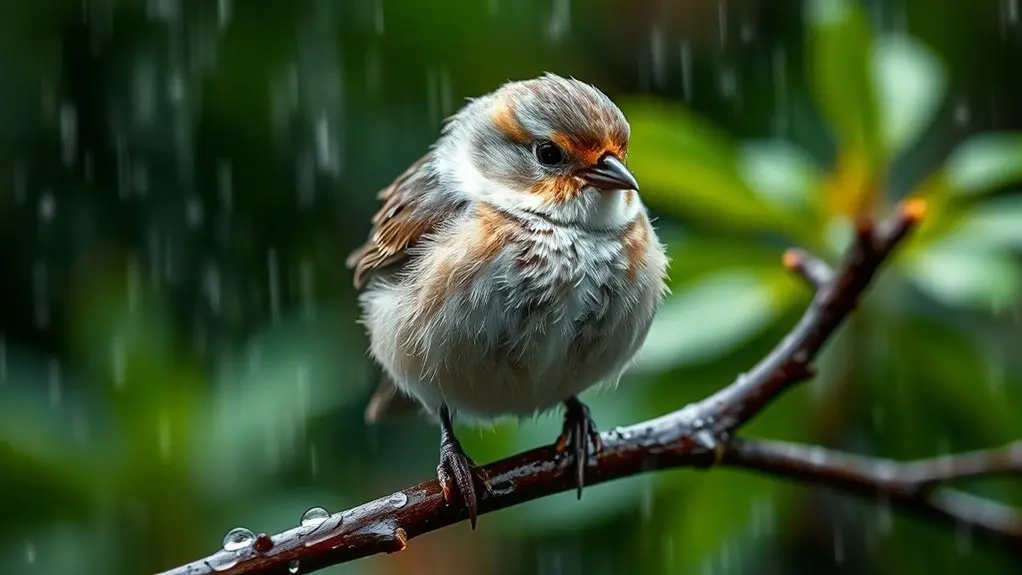
How do birds manage to stay dry and warm during heavy rain? They rely on several adaptations linked to feather maintenance and the preen gland. Here’s how they do it:
Birds secrete oil from the preen gland, coating their feathers to create a water-resistant barrier. The tightly spaced barbs of feathers shed rainwater effectively, preventing water penetration.
During rain, birds fluff their feathers to trap insulating air, maintaining body heat despite wet conditions.
Most birds seek shelter under natural covers like trees or bushes, reducing exposure to rain and conserving warmth. These mechanisms work together scientifically to help birds stay dry and warm, enabling them to survive and remain functional in wet weather.
How Different Birds React to Rain
Why do birds change their behavior during rainstorms? Heavy rain reduces lift and increases energy use, so many species change what they do.
Birds with good feather waterproofing, like waterfowl, sometimes fly in light to moderate rain. But they avoid heavy downpours to save energy.
Waterfowl with waterproof feathers may fly in light rain but avoid heavy downpours to conserve energy.
Smaller land birds usually look for shelter in dense foliage to stay dry.
Seabirds such as gulls and pelicans might ride out storms at sea or fly away from land. They often signal that bad weather is coming.
These behaviors also affect migration patterns. Birds might delay or change their migration routes to avoid bad weather.
Understanding these reactions helps us see how birds balance survival and energy needs during rain. It also shows how important feather waterproofing and environmental cues are in their decisions.
How Birds Resume Activity After Rain
Although heavy rain limits flight activity, birds quickly resume movement once conditions improve. You’ll notice that their migration patterns and nesting behaviors depend on timely recovery after rain.
Here’s how birds resume activity:
- They wait for atmospheric conditions to improve. Air density increases and humidity drops.
- Birds perch in sheltered spots, spreading and fluffing feathers to dry efficiently and regain energy.
- Once the storm passes, clearer skies and favorable wind conditions prompt birds to take flight.
- Activity levels surge as birds return to normal foraging and migration routines.
Ways to Support Birds During Rainy Weather
After heavy rain subsides and birds begin to resume their activities, their ability to recover quickly often depends on the support they receive during adverse weather. You can help by providing sheltered areas like dense bushes or birdhouses. These spots aid feather waterproofing and help birds conserve energy.
Offering high-energy foods is another great way to support them. It meets their metabolic needs, especially when rain limits their natural foraging and migration patterns.
Heated birdbaths with moving water encourage hydration, which is critical for their physiological balance. Birds need water to stay healthy, and keeping it warm makes it easier for them to drink even in cooler, wet conditions.
| Support Method | Purpose | Benefit to Birds |
|---|---|---|
| Sheltered Areas | Protect from rain and wind | Maintains feather waterproofing |
| High-Energy Food | Energy supply during rain | Supports metabolism |
| Heated Birdbaths | Hydration | Aids thermoregulation |
Frequently Asked Questions
Can Heavy Rain Impact Bird Migration Patterns?
Yes, heavy rain impacts bird migration patterns by challenging your weather resilience and testing flight adaptations. You often delay or alter flights, conserving energy and seeking shelter, as rain reduces visibility and air density during migration.
It’s like nature’s way of making you rethink your journey. When the skies open up, birds tend to hold back or take a different path to stay safe and efficient.
Do Birds Get Sick From Flying in Heavy Rain?
You won’t usually see birds getting sick from flying in heavy rain because their waterproof feathers protect bird health.
However, prolonged exposure might cause feather loss and weaken immunity. This is especially true for vulnerable or injured birds.
How Does Rain Affect Bird Feeding Habits?
You’ll notice birds reduce feeding, seek shelter, and avoid rainwater absorption during heavy rain. Their bird sheltering behavior conserves energy. Washed-away food and wet conditions limit foraging, altering feeding patterns scientifically and objectively.
Basically, when it rains hard, birds tend to keep low and wait it out. It makes sense because finding food becomes tougher and they don’t want to waste energy getting soaked. So, their usual feeding habits shift quite a bit during these wet times.
Are Nocturnal Birds Affected Differently by Rain?
Yes, you’ll notice rain’s impact is stronger on nocturnal flight. Nocturnal birds reduce activity and seek shelter when it rains. They also face impaired visibility and communication.
All these factors together make it harder for them to forage and coordinate during heavy rain. So, rain really changes how nocturnal birds behave at night.
Can Heavy Rain Cause Birds to Lose Their Feathers?
Think of your raincoat. Despite heavy showers, it stays intact. Similarly, birds’ feathers are pretty rain-resistant.
Heavy rain doesn’t cause feathers to break down. But it might stress feathers that are already weak. So, you won’t see birds suddenly losing feathers just because of rain.
Conclusion
Just like a skilled sailor adjusting sails to stormy seas, birds navigate the challenges of heavy rain with instinct and resilience. While they can fly in rain, they often seek shelter to protect their feathers and conserve energy. Understanding their adaptations and behaviors helps you appreciate how they survive wet weather.
By supporting birds with safe habitats and food, you play an essential role in their survival. This way, you help ensure they can take flight again when skies clear. It’s pretty amazing how they manage, right?