
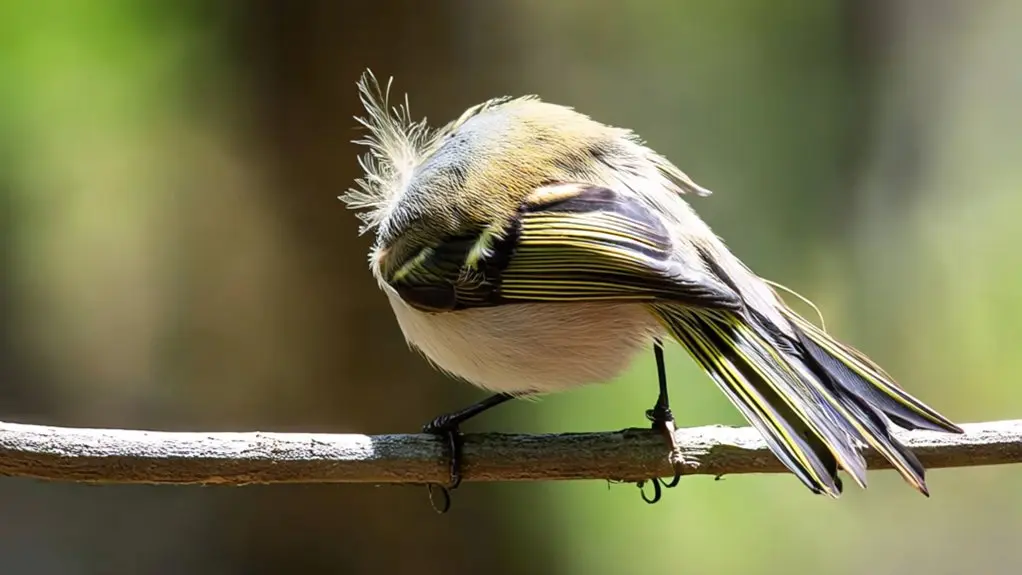
You can trust that birds’ feathers do grow back naturally through a biological molting process. This regrowth depends on factors like nutrition, lighting, humidity, and stress levels. Although feathers initially emerge softer and less vibrant, they gradually mature to restore flight and insulation.
However, abnormalities from disease, poor diet, or environmental stress can hinder this process. Understanding these dynamics will help you support healthy regrowth and recognize when professional care might be necessary. It’s all about keeping your bird’s environment and health in check to see those feathers come back strong.
Common Causes of Feather Loss in Birds
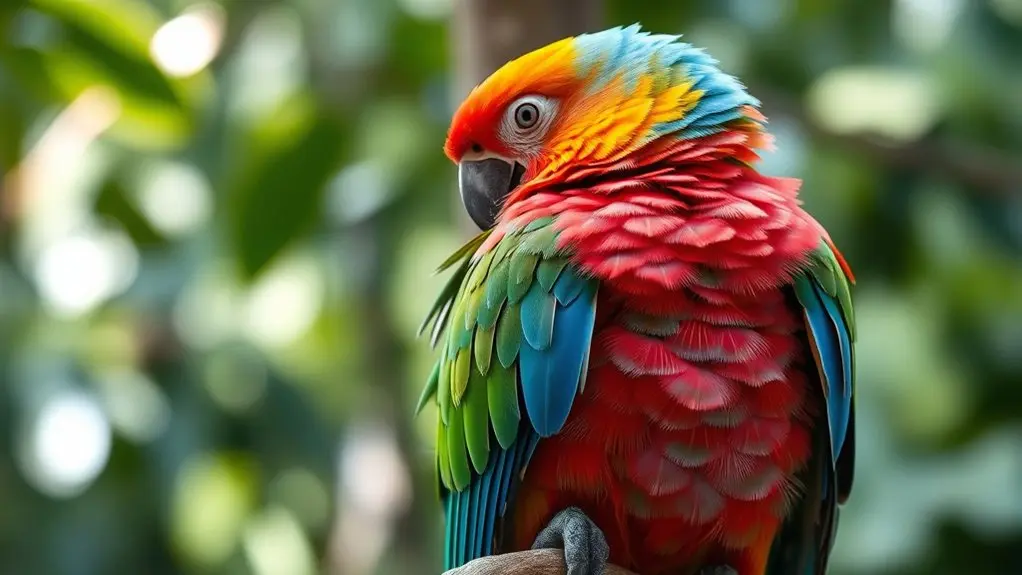
Although feather loss can occur naturally through molting, you should know that several factors might cause abnormal feather loss in birds.
Feather loss can be natural or indicate underlying health issues in birds.
Molt patterns, which dictate the timing and sequence of feather replacement, usually keep feather coloration and integrity consistent. But disruptions like stress or psychological distress can cause birds to pluck feathers irregularly. This results in patchy loss and changes in feather coloration.
Nutritional deficiencies, especially in vitamins A, D, E, and B-complex, can impair feather quality and lead to premature shedding.
Infections such as Psittacine Beak and Feather Disease or fungal pathogens directly damage feathers and stop normal regrowth.
Environmental factors like poor cage hygiene, parasites, or exposure to toxins also play a role in feather damage.
Understanding these causes helps you tell the difference between natural molting and abnormal feather loss. That way, you can make sure your bird gets the right care at the right time.
How Birds Naturally Regrow Feathers
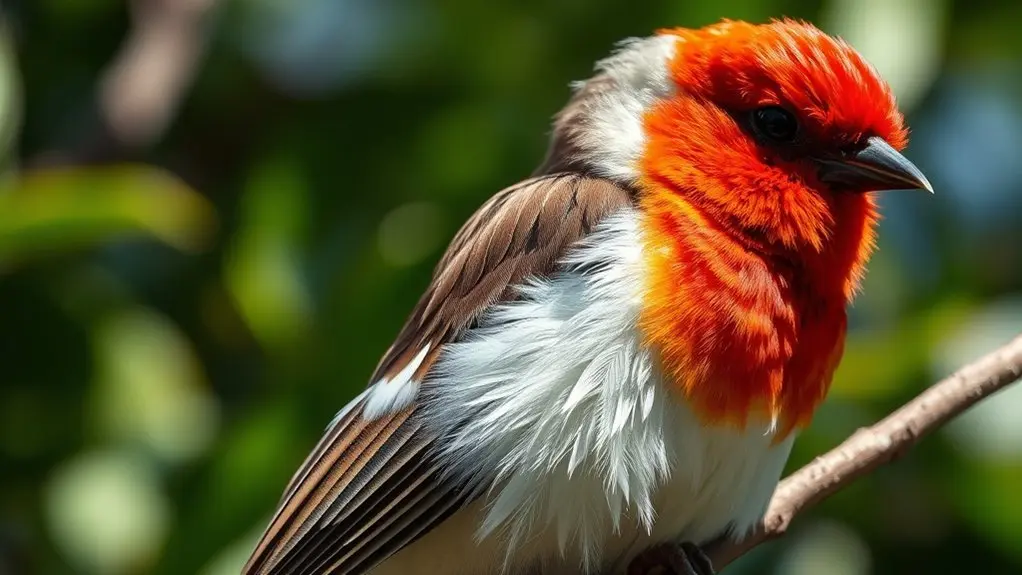
Feather loss can signal underlying issues, but birds also undergo a natural cycle to replace old or damaged feathers through molting. During this process, specialized follicles in the skin generate new feathers, following species-specific molting patterns.
These cycles vary in timing and frequency depending on the bird’s age, health, and environmental conditions.
As new feathers emerge, their initial coloration may differ from mature feathers, appearing softer and less vibrant until fully developed. This precise regeneration guarantees the bird maintains essential functions like insulation and flight readiness.
Understanding these molting patterns helps you recognize normal feather regrowth versus abnormal loss. It also provides insight into avian health and the dynamic nature of feather maintenance.
How Feather Loss Impacts Flight and Regrowth
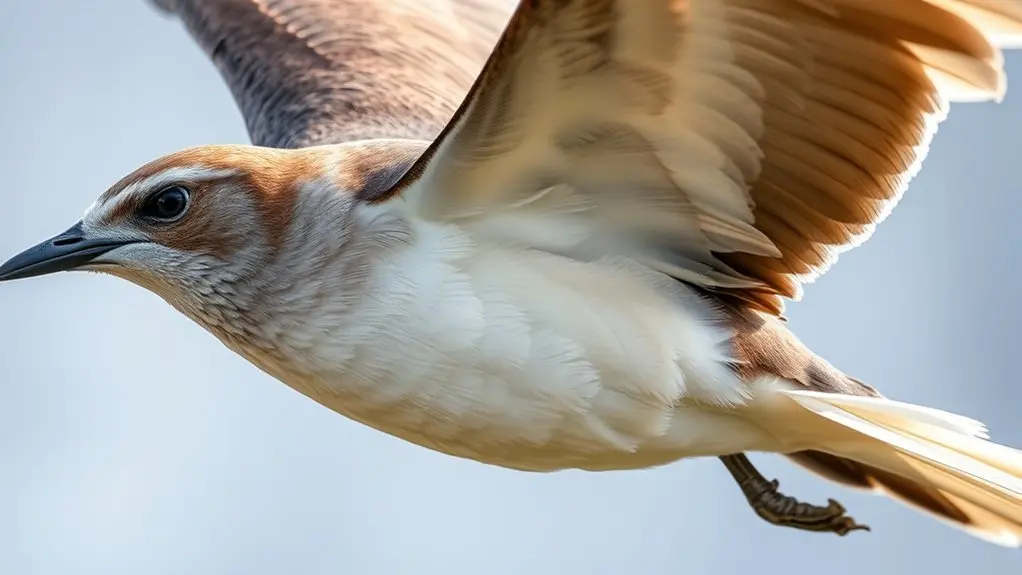
Losing tail feathers really affects your bird’s ability to steer and keep its balance while flying. It’s a big deal because those feathers play a key role in controlling flight.
Now, when it comes to getting those feathers back, the regrowth happens during a molting cycle. This process can take several months and varies depending on the species.
Knowing how long it takes is important since having impaired flight not only makes flying less efficient but also puts the bird at greater risk from predators.
Flight Impairment Effects
Since flight feathers play a crucial role in balance and navigation, losing them can severely impair a bird’s ability to fly. You’ll notice that feather coloration and molting patterns influence how quickly and efficiently feathers regrow, which directly affects flight restoration.
Here’s how flight impairment unfolds during feather loss:
- Balance Disruption: Missing flight feathers compromise aerodynamic stability, making precise navigation difficult.
- Reduced Flight Efficiency: Birds often experience awkward or weakened flight until new feathers fully develop.
- Gradual Recovery: Feather regrowth spans several months, depending on age and health, restoring full flight capability over time.
Understanding these effects highlights the essential importance of proper molting. You’ll see how feather coloration signals healthy regrowth phases, which are necessary for regaining peak flight performance after feather loss.
Tail Feather Importance
Although tail feathers may seem less prominent than flight feathers, they play a critical role in maintaining stability, steering, and balance during flight. When you observe a bird losing tail feathers, you’ll notice its maneuverability suffers. This affects control and escape capabilities.
Tail feather loss disrupts aerodynamic balance, making flight inefficient and risky. You should also consider how preening behavior keeps these feathers in ideal condition. It preserves their structure and vibrant coloration, which can signal health and vitality.
Damage to tail feather follicles can prevent regrowth, causing permanent deficits that heighten vulnerability to predators. Understanding this importance highlights why birds invest energy in molting cycles to replace these essential feathers. This ensures flight precision and survival.
Regrowth Timeline
Because feather regrowth rates differ across species and individual birds, you should expect the process to range from several weeks to multiple months before full restoration occurs. Feather loss directly impacts flight capability, especially when tail and flight feathers are involved. These can take 4 to 6 months to regrow fully.
Molting patterns, which typically happen annually, govern this cycle but vary among species. So, it’s not a one-size-fits-all situation when it comes to regrowth timing.
- Initial regrowth produces soft, often lighter feathers with altered feather coloration, indicating immature plumage.
- Flight efficiency is compromised until feathers fully mature, affecting balance and lift.
- Complete regrowth in some species can extend beyond a year, reflecting complex molting schedules.
Understanding these factors helps you anticipate how feather replacement influences avian flight and appearance. It’s pretty fascinating how much goes into something that seems as simple as feathers growing back!
Key Factors That Support Healthy Feather Regrowth
To support healthy feather regrowth, it’s important to provide precise nutritional support. This means including vitamins like A, D, E, and the B-complex, along with essential nutraceuticals such as Omega-3 fatty acids and biotin.
On top of that, keeping the environment just right plays a big role. Proper lighting, humidity, and enrichment help reduce stress and stop behaviors that can damage feathers.
When you control stress and create a balanced habitat, you’re setting the stage for efficient feather renewal and overall better health for your bird. It all works together to keep those feathers looking their best.
Nutritional Support Essentials
When you provide your bird with a balanced diet rich in vitamins A, D, E, and B-complex, you actively support the cellular processes essential for healthy feather regrowth. These nutrients influence feather coloration and optimize molting patterns, making sure feathers develop with proper pigmentation and structure.
To enhance feather quality, focus on including Omega-3 fatty acids and biotin. These help strengthen feather resilience during regrowth.
Also, preventing nutritional deficiencies is key because they can cause feather loss or degrade feather integrity.
It’s a good idea to consult a veterinarian before introducing supplements, so you can tailor nutrient intake safely.
Consistent nutrient-rich feeding speeds up natural feather regeneration. This keeps your bird’s plumage healthy and vibrant throughout molting cycles.
Optimal Environmental Conditions
Supporting your bird’s feather regrowth goes beyond nutrition; the environment plays a significant role in feather health. Proper lighting, especially natural sunlight or full-spectrum bulbs, regulates circadian rhythms essential for molting patterns and feather coloration.
Maintaining humidity between 40-60% prevents brittleness and supports skin integrity. Regular cage cleaning reduces parasites and infections that impair feather regrowth. Plus, varied perches and enrichment help create a stable environment, which is vital for consistent molting cycles.
| Factor | Ideal Range/Type | Impact on Feather Regrowth |
|---|---|---|
| Lighting | Natural sunlight/full-spectrum | Regulates molting, enhances coloration |
| Humidity | 40-60% | Prevents dry feathers, supports skin |
| Hygiene | Frequent cage cleaning | Reduces parasites, prevents feather damage |
| Environmental Enrichment | Diverse perches, toys | Encourages stable molting patterns |
Stress Reduction Techniques
Although feather regrowth depends heavily on nutrition and environment, managing stress plays an equally critical role in your bird’s recovery. Stress triggers hormonal imbalances that can delay feather development or cause feather plucking.
You can support healthy regrowth with these key techniques:
- Maintain a consistent routine and minimize sudden changes to reduce stress. This helps support your bird’s natural grooming behaviors.
- Create a calm habitat by ensuring proper lighting, humidity, and cleanliness. Also, try to reduce noise to avoid loud, abrupt disruptions.
- Provide enrichment like toys and puzzle feeders to prevent boredom-induced feather damage and keep your bird mentally stimulated.
Regular gentle interaction builds trust and lowers anxiety, which promotes overall well-being.
Tips to Support Feather Regrowth in a Stress-Free Environment
Creating a calm and stable environment plays an essential role in promoting healthy feather regrowth in birds. You should minimize disruptions and maintain consistent lighting that mimics natural daylight. This supports the molting cycle and ideal feather coloration.
Proper humidity levels also help with feather development.
Enrich your bird’s surroundings with toys and perches to prevent boredom and reduce stress-related feather plucking. Try to avoid sudden routine changes so your bird feels secure. This encourages natural preening habits, which are critical for feather maintenance.
Regular, gentle handling combined with positive reinforcement lowers anxiety and builds trust. This can improve overall feather recovery.
Recognizing When Veterinary Help Is Needed for Feather Issues
When your bird shows persistent feather loss, bald patches, or signs of infection, it’s important to seek veterinary help right away. These symptoms often point to underlying health issues. Keep an eye on your bird’s preening habits and molting patterns—they can give you early clues about feather problems.
Here are three key signs that mean it’s time for a vet check:
- Feathers don’t grow back after normal molting or show unusual damage and breakage.
- You notice feather plucking or odd behaviors that affect feather condition.
- There are signs of infection, inflammation, or bald spots that don’t get better with regular care.
An avian vet can run tests like blood work and feather biopsies to check for nutritional gaps, parasites, or diseases. Getting professional help early means your bird gets the right diagnosis and treatment, which helps avoid long-term health problems.
Frequently Asked Questions
Can Clipped Feathers Grow Back Faster With Supplements?
You can’t reliably accelerate clipped feather regrowth with nutrition supplements alone. Growth acceleration depends mainly on natural molting cycles.
Proper nutrition supports healthy feathers, which is important. But supplements don’t guarantee faster regrowth. Plus, they should only be used with veterinary guidance.
Do All Bird Species Molt at the Same Rate?
Do all birds molt at the same rate? No, molt duration varies widely, influenced by species, age, and environment.
Feather color changes during molt can indicate timing, so you’ll notice different rates and patterns across birds. It’s pretty interesting how each bird has its own molting schedule.
Can Feather Regrowth Cause Itching or Discomfort for Birds?
Yes, feather regrowth can cause itching and discomfort. This often prompts your bird to preen more, which helps soothe irritated skin.
Preening during this time is actually a good thing. It supports feather health by removing debris and promoting circulation. This is especially important during the sensitive stages of feather follicle development.
Are There Specific Seasons When Feather Regrowth Is Optimal?
Imagine a robin molting in late summer. You’ll see seasonal cycles dictate molt timing, optimizing feather regrowth.
Species’ molt timing aligns with environmental cues, ensuring feathers renew efficiently during specific seasons. This helps with survival and breeding success.
Can Environmental Toxins Permanently Affect Feather Regrowth?
Yes, environmental damage can permanently affect feather regrowth. Toxic effects from heavy metals or pesticides damage feather follicles and keratin synthesis. This causes cellular harm that impairs or stops feather regeneration.
This is especially true if the toxins are not removed promptly. So, the sooner the toxins are dealt with, the better the chances for feather regrowth. Otherwise, the damage can be long-lasting or even permanent.
Conclusion
Feathers may fall like autumn leaves, but they can regrow with the right care and conditions. Understanding the causes of feather loss and supporting your bird’s health creates a perfect environment for regrowth.
Remember, feathers are essential for flight and insulation, so keeping an eye on any changes is really important. If you notice persistent feather issues, don’t hesitate to seek veterinary advice.
With a little attention and patience, you can help your bird’s feathers come back strong and vibrant. It’s all about giving them the best chance to heal and grow.