
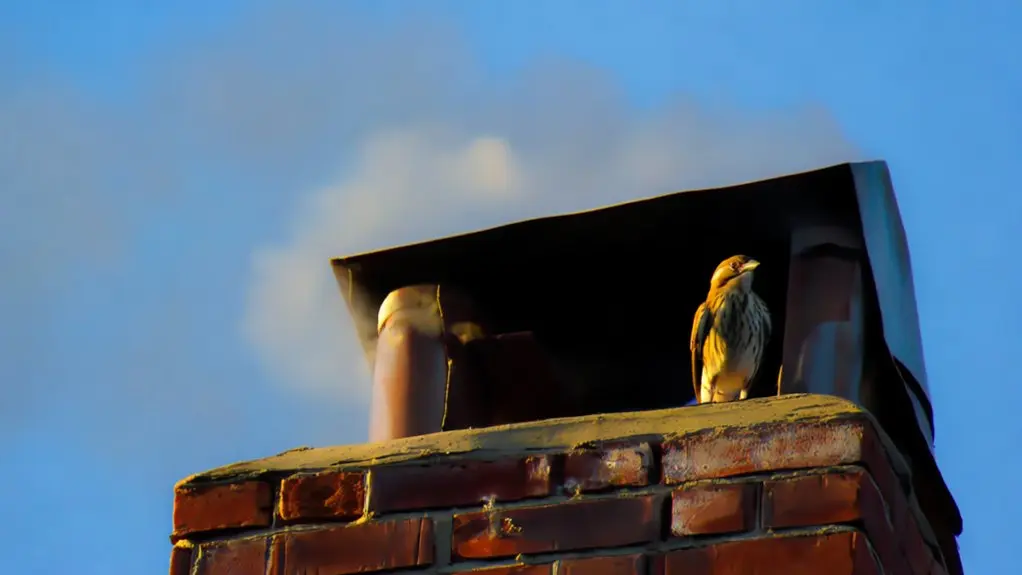
Yes, birds can get into your chimney through gaps, damaged caps, or open dampers. They’re drawn to chimneys because they offer safe, sheltered nesting sites that mimic natural cavities. These spots also provide protection from predators.
Common species like chimney swifts, sparrows, and pigeons often roost or nest inside. But having birds in your chimney can cause problems. They can create blockages, increase fire risks, and even cause structural damage.
Knowing how and why birds enter your chimney can help you take the right steps to prevent or remove them. It’s all about understanding their behavior and making your chimney less inviting.
How Do Birds Get Into Your Chimney?
How exactly do birds manage to enter your chimney? They exploit small gaps or openings in the chimney cap or flue, especially if the cap is damaged or poorly fitted. Open or unsealed dampers also provide easy access to your chimney’s interior.
Birds are naturally drawn to chimneys because these structures mimic natural tree surfaces and offer sheltered nesting sites. If your chimney insulation is inadequate, it may contribute to structural weaknesses, increasing entry points for birds.
Manufactured chimney caps with insufficient mesh sizes can allow small birds to squeeze inside. To prevent this, you can install proper bird deterrents such as tight-fitting caps with fine mesh.
Regularly inspecting and maintaining chimney insulation and seals helps minimize access, keeping your chimney secure from unwanted avian visitors.
Which Birds Commonly Nest in Your Chimney?
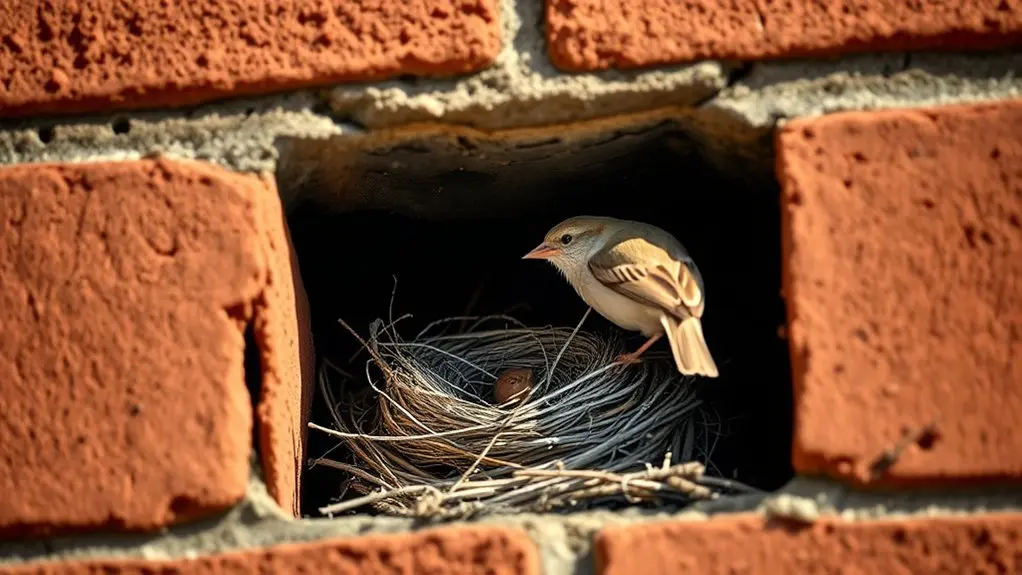
You’ll often find chimney swifts, starlings, sparrows, and pigeons nesting inside your chimney. These birds like chimneys because the structure reminds them of natural nesting spots or gives them a safe, enclosed place to settle.
Knowing which birds commonly nest there can really help you manage and prevent any unwanted visitors.
Common Chimney Nesters
Which birds are most likely to nest inside your chimney? Several bird species exhibit nesting behaviors that lead them to choose chimneys as safe, vertical shelters. Chimney swifts are common nesters, often forming large colonies in these enclosed spaces.
House sparrows also frequently invade chimneys, particularly in urban areas where openings are accessible.
Pigeons are known to roost and build nests inside chimneys, contributing to debris accumulation.
Purple martins may utilize chimneys, especially those with a history of nesting activity.
Additionally, starlings are attracted to chimneys due to their preference for sheltered vertical cavities.
Understanding these bird species and their nesting behaviors helps explain why chimneys often become unintended nesting sites. This can potentially cause blockages or safety concerns.
Nesting Bird Species
Although chimneys provide unique vertical cavities that attract various bird species, certain birds are more likely to nest inside them than others. During bird migration, species with adaptable nesting habits often exploit chimneys for shelter or breeding.
Here’s a concise overview:
| Bird Species | Nesting Location | Nesting Habits |
|---|---|---|
| Chimney Swift | Inside unlined flues | Forms large colonies, prefers vertical cavities |
| European Starling | Chimney caps, ledges | Builds nests on exterior ledges |
| House Sparrow | Inside chimneys | Invades urban chimneys for nesting |
| Pigeon | Chimney caps, ledges | Prefers exterior ledges |
| Barn Owl / Osprey | Suitable chimney habitat | Rare, protected species nesting opportunistically |
Knowing these patterns helps you understand the risks and behaviors linked to birds nesting in your chimney. It’s good to be aware so you can take appropriate action if needed.
Why Do Birds Choose Chimneys for Nesting?
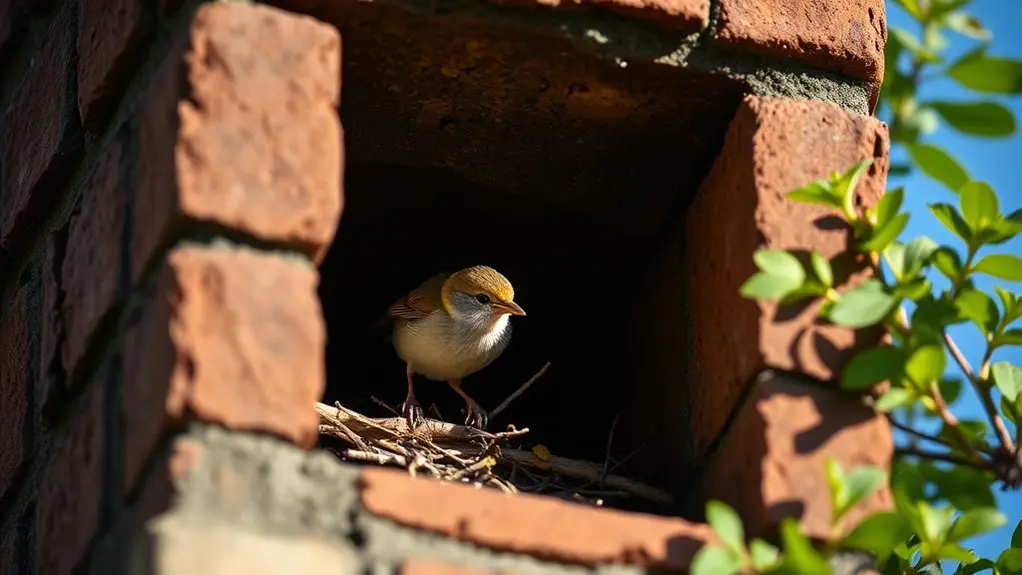
Because chimneys offer a safe, sheltered space away from predators, many birds select them for nesting. During bird migration, species that nest in cavities often look for secure spots to raise their young. Chimneys fit the bill perfectly because they provide several benefits.
For one, chimneys retain heat and have crevices that remind birds of natural tree cavities. They’re also elevated, which means fewer ground-based predators can get to the nests. Plus, chimneys are dark and quiet, making them great for incubating eggs and helping chicks grow.
Another reason is that the structure of chimneys looks a lot like natural roosting sites. Birds may mistake them for safe cavities without even realizing it. All these factors match up with birds’ natural nesting instincts, giving their babies protection and warmth during important breeding times.
Knowing this makes it easier to see why chimneys often turn into popular nesting spots, especially for birds that need secure, sheltered places during migration and breeding seasons.
What Are the Signs of Birds in Your Chimney?
You might start hearing scratching, chirping, or rustling sounds coming from your chimney—that’s usually a good sign that birds are hanging out in there.
If you take a closer look, you might spot some nesting materials or bird droppings around the chimney cap or on the roof.
These clues can help you figure out if birds have actually made a nest inside your chimney.
Audible Bird Noises
When you hear persistent chirping, wing fluttering, or scratching sounds inside your chimney, these noises often indicate the presence of birds. Bird song and fluttering during early morning or late evening commonly signal nest building or roosting activity.
To identify audible signs of birds in your chimney, watch for:
- Continuous chirping or scratching behind the damper or flue, suggesting nesting or trapped birds.
- Sudden loud pecking or chirping, indicating active nest building or escape attempts.
- Repetitive wing-flapping sounds during daylight hours, showing birds flying inside or near the chimney cap.
- Persistent rustling noises, often linked to movement within a bird’s nest.
Recognizing these specific sounds helps confirm bird presence and lets you know when it’s time to take action. It’s always good to be aware of what your chimney is trying to tell you!
Visible Nesting Signs
Although audible signs can alert you to birds in your chimney, visible evidence gives you clear confirmation of nesting activity. You might notice nesting materials like twigs, leaves, and feather patterns near the chimney cap or inside the fireplace. These materials show that birds have made a nest within the chimney structure.
You might also see bird droppings around the chimney area, which suggest recent activity. If you spot baby birds or fledglings near the chimney, that confirms active nesting is happening.
Bird-related debris, like nesting fluff or feathers near the damper, also signals that birds are occupying the space.
Keeping an eye out for these visible nesting signs helps you identify and deal with bird presence quickly. This way, you can ensure chimney safety and prevent any blockages or hazards caused by nesting birds.
What Risks Do Birds in Chimneys Pose to Your Home?
Because birds often seek shelter in chimneys, they can introduce several risks to your home’s safety and health. During bird migration, many species look for secure sites to build nests, and chimneys offer a protected environment.
But having birds in your chimney comes with some real hazards.
For one, their droppings can carry histoplasmosis, which is a serious respiratory disease. Plus, nest materials and debris can block your chimney, raising the risk of fire.
If birds get trapped or die inside, they can cause foul odors and attract pests like mites and ticks.
Bird activity might also damage the chimney lining and the exterior structure, which can compromise its integrity.
Knowing these risks makes it clear why preventing birds from nesting in your chimney is so important for keeping your home safe and healthy.
How Can You Safely Remove Birds From Your Chimney?
If you discover birds nesting in your chimney, you should prioritize their safe removal to protect both the animals and your home. Different bird species have different nesting habits, so knowing this can help you decide the best time and way to remove them.
Avoid trying to do it yourself. Instead, use a flashlight to check if birds are present and then call professional wildlife control experts. These pros use special tools to carefully open the damper or flue, helping the birds leave with minimal stress or harm.
It’s really important to follow humane procedures and respect legal protections since many birds, like swifts and pigeons, are protected by law.
After the birds are safely removed, you can install a critter-proof chimney cap. This stops future bird visits and keeps your chimney safe and clear from nests.
Why Wait for Birds to Migrate Before Removing Them?
When you wait for birds to migrate before removing them from your chimney, you make sure to follow legal protections like the Migratory Bird Treaty Act. Plus, you avoid disturbing protected species during their nesting period. It’s really important to understand bird behavior and migration timing for this.
Here’s why waiting matters: Chimney swifts and other migratory birds usually leave their nesting sites within 2 to 3 weeks, so they get to leave naturally. If you try removing birds while they’re nesting, you might break laws that protect young birds and their nests.
Migration happens according to seasonal cues, which means the birds will vacate on their own without any human interference.
Also, cleaning up after migration is safer and more effective. And importantly, it keeps everything legal once the birds have left.
How Do Chimney Caps Prevent Birds From Getting In?
You count on chimney caps to serve as a physical barrier, keeping birds from getting inside your chimney flue.
When you pick caps made from durable materials like copper or stainless steel, you’re making sure they’ll hold up over time and keep those feathered intruders out.
Plus, a properly fitted and secure cap means there aren’t any gaps for birds to squeeze through.
Physical Barrier Protection
Although chimneys provide convenient shelter for birds, chimney caps serve as effective physical barriers that block their entry. By securely covering the chimney opening, they prevent birds from accessing the flue or nesting inside.
Proper chimney maintenance includes installing a well-fitted cap, a vital bird deterrent.
Here’s how physical barrier protection works:
- Caps eliminate gaps or holes, denying birds entry points.
- Durable materials guarantee the barrier withstands bird activity.
- Custom-sized caps fit non-standard chimneys, providing tailored protection.
- High-quality caps considerably reduce the risk of birds nesting or getting trapped.
Durable Material Benefits
Building on the role of physical barriers, the materials used in chimney caps greatly influence their effectiveness in preventing bird intrusion. Durable materials such as copper, stainless steel, and black coated metal offer superior weather resistance, ensuring the cap withstands environmental stressors over time. These materials resist corrosion and damage from hot gases, preserving the integrity of the protective barrier.
Caps constructed with tightly fitted mesh screens block small openings, preventing birds from nesting or entering.
Plus, custom-sized chimney caps provide a snug fit, eliminating gaps that birds or other critters could exploit.
Who Can Help With Bird Removal and Chimney Cleaning?
When dealing with birds nesting in chimneys, relying on professional services like Animal Pros guarantees safe and effective removal. Experts check out the bird species and chimney materials so they can use the right techniques without damaging your chimney or breaking any wildlife laws.
Licensed specialists will inspect your chimney for nests and blockages. They remove birds and nests humanely, keeping in mind protected species under the Migratory Bird Treaty Act.
They also clean and sanitize chimneys from droppings and debris to restore safety and function. Plus, they install critter-proof caps that fit your chimney materials perfectly to keep birds from coming back.
How Can You Prevent Birds From Nesting in Your Chimney?
Since chimneys provide sheltered spaces that appeal to birds, taking proactive measures is essential to prevent nesting. Effective bird deterrent strategies start with installing a high-quality, critter-proof chimney cap sized correctly to block entry.
Regular chimney maintenance, including inspections and repairs, helps identify and seal cracks or openings that birds could exploit.
You can also apply deterrent devices such as spike strips or bird-off gels around the chimney opening to discourage birds from settling.
Scheduling professional chimney inspections and cleanings ensures early detection of potential nesting sites and helps maintain a bird-free environment.
Frequently Asked Questions
Can Birds Cause Damage to My Fireplace or Stove?
Yes, birds can damage your fireplace or stove by nesting and blocking airflow. This can lead to corrosion and create fire hazards.
It’s important to prioritize bird removal and nesting prevention. Doing so helps keep your chimney system safe and working efficiently.
Are There Legal Protections for Birds Nesting in Chimneys?
Like a guardian shield, wildlife regulations enforce strict nesting protections for birds in chimneys. You can’t disturb or remove active nests without permits, ensuring compliance with laws that protect these species during their vulnerable breeding season.
These rules are in place to keep the birds safe and help their populations thrive. So, if you spot a nest in your chimney, it’s best to let it be until the season is over. That way, you’re doing your part to respect and protect wildlife.
How Often Should Chimney Inspections Be Done for Bird Activity?
You should schedule chimney inspections at least once a year to perform bird exclusion and nest removal.
During migration seasons, increase inspections to promptly identify and address bird activity. This helps prevent structural damage and fire hazards effectively.
Regular checks keep your chimney safe and working well. It’s a small effort that can save you a lot of trouble down the road.
Can Bird Droppings Inside Chimneys Affect Indoor Air Quality?
You might not see it, but avian droppings inside chimneys act like invisible pollutants, degrading your indoor air quality. They release mold spores and bacteria, which can trigger respiratory issues.
What Materials Are Best for Critter-Proof Chimney Caps?
You should choose chimney cap materials like copper or stainless steel for critter-proof designs, as they resist corrosion and damage. These materials are durable and provide long-lasting protection against wildlife trying to get in.
Black powder-coated metal offers a budget option but requires regular inspection to maintain effectiveness. It’s a good choice if you’re watching costs, but you’ll want to keep an eye on it to make sure it holds up over time.
Conclusion
Birds can slip into your chimney like unwelcome guests through an open door, seeking shelter and safety. Their presence can pose serious risks, from blockages to fire hazards.
Waiting for migration guarantees humane removal. Chimney caps act as sturdy gates, keeping your home secure.
By understanding these dynamics and taking preventive steps, you protect your chimney’s integrity. This helps maintain a clear, safe passage for smoke and peace of mind throughout the seasons.