
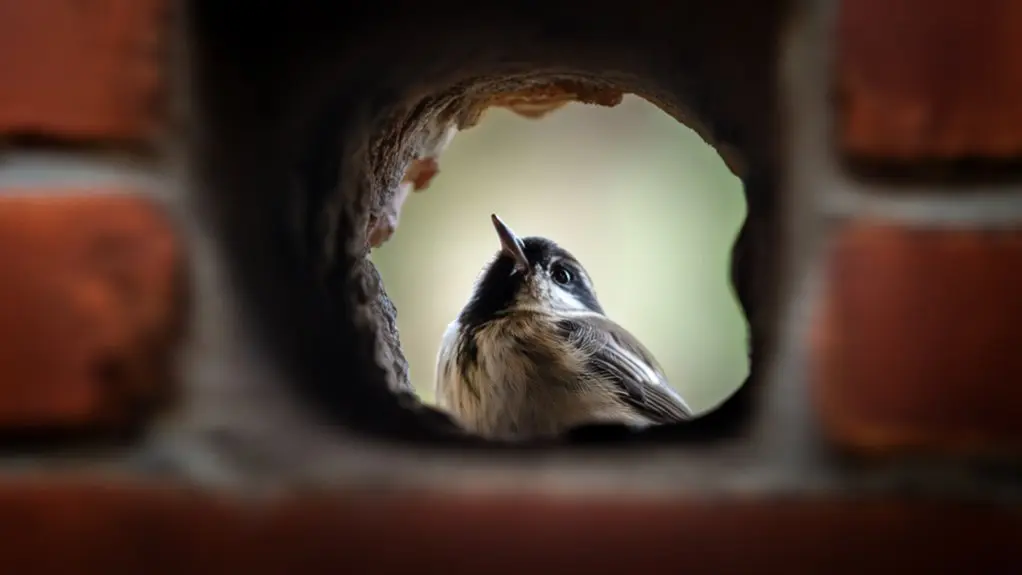
Yes, birds can get stuck in your chimney because slippery metal flues and narrow liners prevent their escape. They often enter through gaps or damaged caps while seeking nesting sites during migration.
You might notice signs like unusual noises, droppings near the hearth, or fluttering inside. Trapped birds can cause fire and health risks by blocking airflow and spreading diseases.
You can safely help them escape or keep them out with proper maintenance. Keep reading to find effective steps for safe removal and prevention.
Why Birds Get Stuck in Chimneys
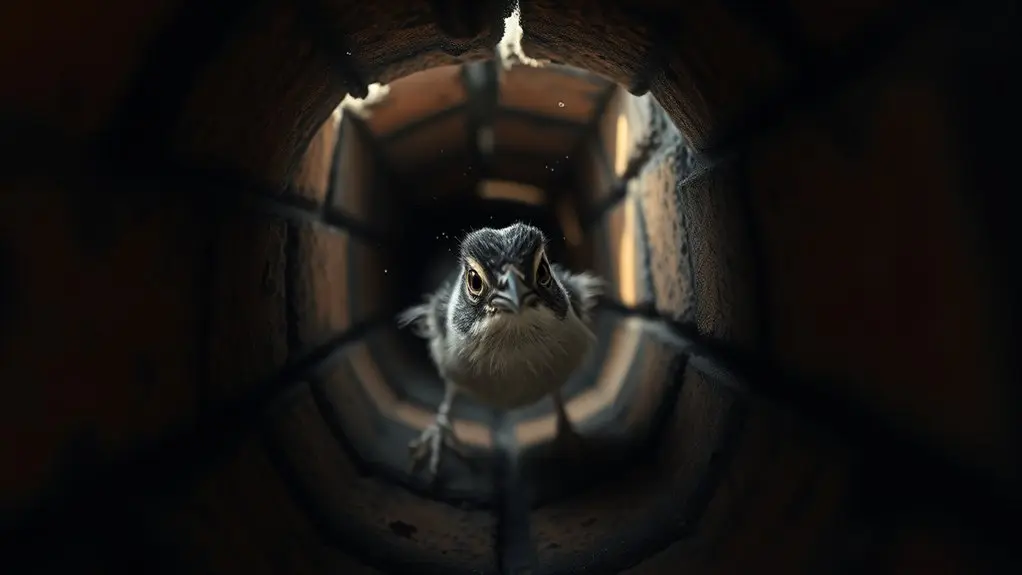
Although chimneys provide appealing shelter for some birds, their design often causes these animals to become trapped. You’ll find that slippery metal flues prevent birds from gaining traction, making escape difficult.
Small gaps or damaged chimney caps create entry points, especially during bird migration when species like chimney swifts seek nesting sites.
During spring nesting season, young birds may fall into chimneys while learning to fly or exploring. Narrow or obstructed chimney liners further hinder their ability to exit, immobilizing them within the structure.
Proper chimney maintenance is essential to prevent such occurrences.
Regular inspections can identify damaged caps and obstructions, reducing risks to birds during migration and nesting periods by limiting their access and ensuring safe, functional chimneys.
Taking these steps helps keep both your chimney and the birds safe.
Signs a Bird Is Trapped in Your Chimney
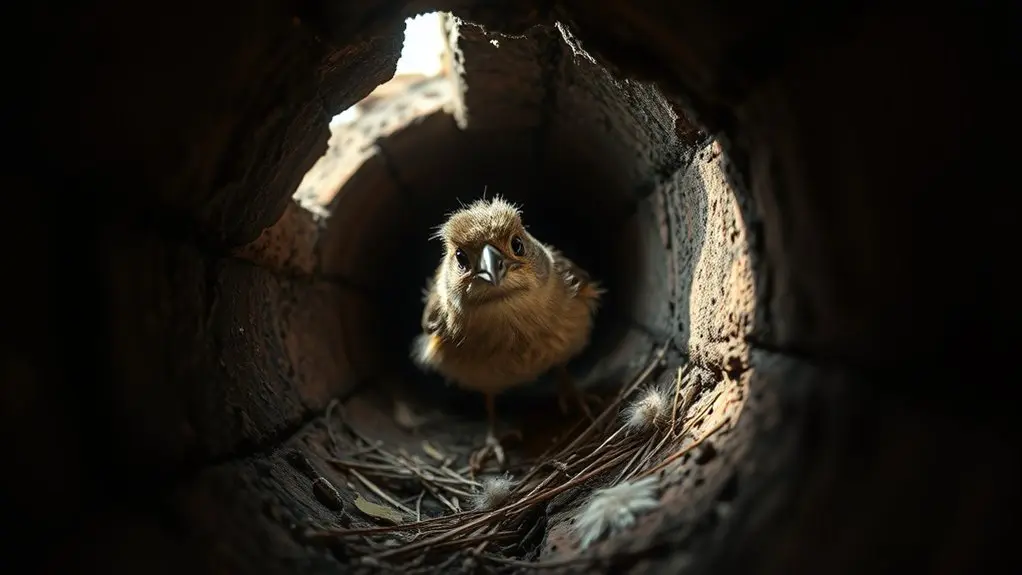
You might start to hear some unusual noises, like scratching or wing-flapping, coming from your chimney. That’s often a sign that a bird could be trapped inside.
If you notice droppings or feathers near your fireplace, that’s another clue pointing to a bird being stuck in there.
Also, keep an eye out for subtle movements or if you see birds repeatedly flying around your chimney. That behavior can confirm there’s a distressed bird inside.
Unusual Chimney Noises
When unusual noises like scratching, flapping, or faint chirping come from your chimney, these sounds often signal that a bird is trapped inside. Such noises, like coating sounds, squeaking, or fluttering, show the bird’s attempts to escape or its distress.
Persistent, irregular sounds, especially during nesting season, further suggest a trapped or nesting bird.
Sudden loud thuds or continuous noise without any other sources also point to this issue. Regular chimney cleaning can help prevent bird entry by removing nests and debris.
Plus, installing effective bird deterrents reduces the risk of birds becoming trapped.
Keeping an ear out for these unusual noises lets you spot the problem early. That way, you can take quick action to protect both the bird’s welfare and your chimney’s structure.
Presence Of Droppings
Unusual noises inside your chimney often come with physical signs that confirm a trapped bird. One key indicator is droppings inside the fireplace or on the hearth.
Unlike droppings from birds outside, those found inside suggest the animal is nesting or trapped within the chimney structure. Accumulated droppings near the damper or inside the chimney show the bird can’t get out. This signals an urgent need for chimney repairs and bird deterrents.
| Sign | Location | Implication |
|---|---|---|
| Droppings in fireplace | Hearth or damper | Bird trapped inside chimney |
| Nesting debris | Chimney interior | Ongoing habitation |
| Consistent droppings | Chimney vicinity | Need for immediate action |
| No droppings | None | No trapped bird detected |
Visual Bird Movements
How can you determine if a bird is trapped inside your chimney through visual cues? Look for visible bird movements such as rustling or fluttering, which often indicate distress. You might notice distinctive feather patterns caught near the chimney opening or inside the flue, suggesting a bird’s attempts to escape.
Bird vocalizations, including persistent chirping or wing flapping sounds, are strong indicators of a live bird stuck above the damper or flue. Additionally, frequent scratching noises or fluttering movements within the chimney are clear signs of entrapment.
Observing a bird unable to fly out when the chimney is opened confirms its trapped condition. These detailed visual and auditory observations help accurately identify a bird stuck in your chimney for prompt intervention.
Why Birds Stuck in Chimneys Are Dangerous
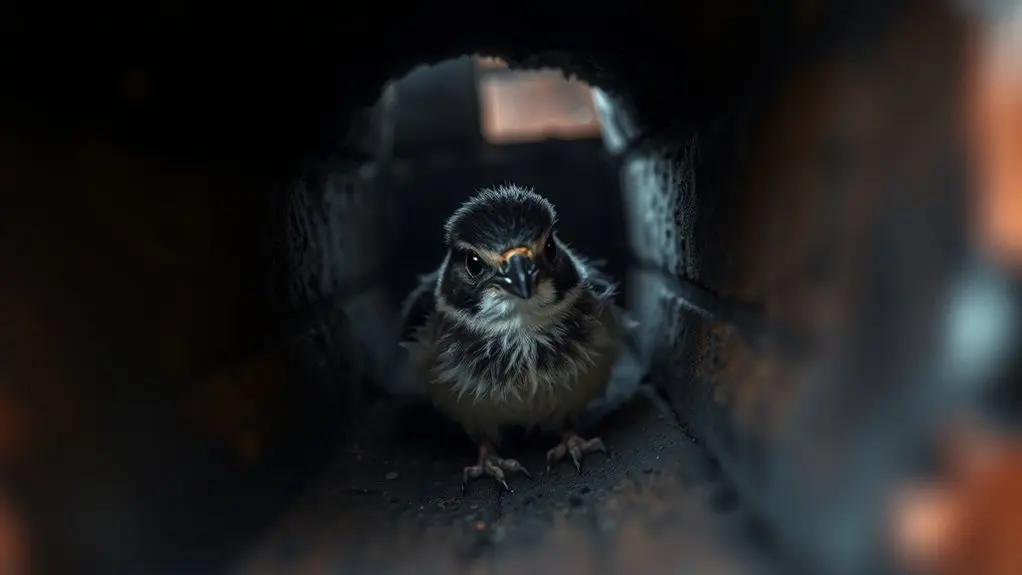
You need to understand that birds trapped in chimneys can cause some serious health risks. When birds get stuck and eventually die, their decomposing remains attract bacteria and pests. This can lead to the spread of diseases like salmonella, which is definitely something you want to avoid.
On top of that, these dead birds can block the chimney, causing more problems. The blockage can trap heat and flammable debris, which increases the risk of a fire.
Health Risks And Hazards
When birds become trapped in chimneys, they can quickly face starvation or dehydration. This often leads to decomposition inside the confined space. During bird migration, many species rely on nesting habits that may bring them close to chimneys, increasing the risk of entrapment.
Decomposing remains create unpleasant odors and promote mold growth. This attracts flies and fosters bacteria and airborne pathogens. Live trapped birds experience stress and injuries, which can increase the chance of transmitting diseases such as avian flu or salmonella.
Additionally, droppings and nesting materials can contaminate indoor air quality. This can potentially cause respiratory problems for you. Other animals like raccoons or bats may also enter chimneys, introducing additional health hazards such as rabies.
Understanding these risks helps emphasize the importance of chimney maintenance and prevention measures. It’s really worth staying on top of this to keep your home safe and healthy.
Fire And Smoke Danger
Why does a bird trapped in your chimney pose a serious fire and smoke hazard? During bird migration or nest building, birds may enter and become stuck, blocking the flue. This obstruction prevents toxic smoke and fumes from venting properly, causing dangerous indoor smoke buildup.
When nests or dead birds block your chimney, smoke backdrafts can occur, risking carbon monoxide poisoning. Plus, trapped birds increase the chance of creosote ignition, which may lead to chimney fires as heat and smoke build up inside the home.
You need to remove birds promptly because their presence or carcasses cause smoke to re-enter living spaces, posing significant fire and health dangers. So, understanding this hazard really shows why chimney maintenance is important during bird migration and nesting seasons.
How to Safely Help a Bird Escape Your Chimney
Although birds can become disoriented when trapped in chimneys, you can help them escape safely by creating an environment that encourages their natural exit behavior. Proper chimney venting reduces the risk of birds nesting, but if a bird does get stuck, it’s important to follow these steps carefully.
First, keep the area quiet and dark. Then, open a window to provide natural light, which guides the bird toward an exit. Use a flashlight to locate the bird and gently direct it, but avoid sudden movements.
Next, wedge a small ramp or stick inside the chimney to offer a clear path for the bird to climb out. You can also cover the fireplace opening with a cloth to prevent the bird from flying deeper inside.
Stay calm throughout the process because remaining calm minimizes stress and improves the bird’s chances of escaping safely on its own.
What Not to Do If a Bird Is Stuck in Your Chimney
If you encounter a bird stuck in your chimney, it’s crucial to avoid actions that might worsen the situation or harm the animal. Don’t attempt to smoke the bird out using fire or burning materials, as this poses fire hazards and endangers the bird’s well-being.
Avoid smoking birds out of chimneys to prevent fire risks and protect their safety.
Avoid blindly pushing sticks or brushes into the chimney; this can injure the bird or push it deeper, complicating rescue efforts.
You should also refrain from sealing the chimney completely, since trapped birds can die, producing odors and attracting pests.
Don’t rely on chemical repellents or loud noises, as these disrupt the bird habitat and cause stress.
Finally, avoid extracting the bird without proper tools or professional help. Chimney design varies, and improper handling can lead to injury or damage.
How to Prevent Birds From Entering Your Chimney
Preventing birds from entering your chimney requires proactive measures that focus on physical barriers and regular maintenance. Effective chimney maintenance is vital to minimize bird intrusion risks.
You can employ several bird deterrents to safeguard your chimney. For example, install a properly fitted chimney cap with a bird guard to block access to the flue. Using ventilated terminal caps on unused chimneys helps prevent nesting while still allowing airflow.
It’s also important to regularly inspect and maintain chimney cowls to detect and seal any gaps that birds might exploit. You might also consider installing spike strips around the chimney opening to discourage perching.
Scheduling annual chimney inspections can help ensure early detection of vulnerabilities. These scientific, objective strategies help maintain chimney integrity and reduce the chances of birds becoming trapped or nesting inside.
This approach promotes both safety and proper chimney functionality.
When to Call a Pro for Bird Removal
Taking steps to keep birds out of your chimney can reduce the likelihood of entrapment, but sometimes professional help is necessary. You should call a pro if the bird is stuck deep within the chimney or hard to reach, especially if your first removal attempts don’t work.
If the bird is injured or distressed, or if you notice nesting activity, it’s best to get expert help. This prevents harm to the bird and protects your chimney’s structure.
Sometimes debris or structural problems can block removal. In those cases, a chimney specialist can safely extract the bird.
Because bird habitats and nesting behaviors vary, licensed wildlife removal experts are the ones who can properly assess and handle the risks.
And if there are multiple birds involved, or if you’re just not sure how to remove them safely, calling a professional is the safest choice.
Frequently Asked Questions
What Types of Birds Most Commonly Get Stuck in Chimneys?
You’ll find chimney swifts, starlings, doves, pigeons, sparrows, and finches most commonly stuck in chimneys. Using nest prevention and bird deterrents helps you reduce these incidents effectively, protecting both birds and your chimney structure.
It’s pretty important to take these steps not just for your chimney, but for the birds too. Keeping them safe means fewer problems for everyone involved. So, a little prevention goes a long way!
Can Birds Cause Structural Damage Inside Chimneys?
Imagine twigs and droppings clogging your chimney insulation. Bird entry can cause this, leading to moisture buildup and corrosion. This compromises structural integrity.
It also speeds up creosote accumulation, which can damage bricks, liners, and the overall stability of your chimney over time. Birds might seem harmless, but their presence inside chimneys can create serious problems if not addressed.
Are There Legal Protections for Birds Found in Chimneys?
You must follow legal protections and bird rescue regulations when dealing with birds in chimneys. The Migratory Bird Treaty Act restricts harm or removal without permits.
This means you need to comply with federal and local wildlife laws to avoid penalties. It’s important to know the rules before you try to help. That way, you can protect the birds and stay on the right side of the law.
How Long Can a Bird Survive Trapped in a Chimney?
A bird trapped in a chimney can survive 24 to 48 hours without fresh air or water. You should act quickly for bird rescue and chimney cleanup to prevent suffocation, dehydration, and health hazards.
Time is really of the essence here. The longer the bird stays trapped, the greater the risk to its health. So, if you find yourself in this situation, don’t wait to get help.
Do Chimneys Attract Birds Only During Certain Seasons?
You’ll find that 70% of chimney bird entries happen during spring and early summer, tied to seasonal migration and nesting behaviors.
Birds are less attracted during fall and winter when nesting activity declines markedly.
Conclusion
You might wonder if birds really get stuck in chimneys. It’s true, especially during nesting season. Birds enter seeking shelter but can become trapped due to narrow shafts or obstacles.
Signs like unusual noises or debris indicate their presence. Safely aiding their escape requires caution to avoid harm to both you and the bird. Preventive measures, such as chimney caps, are essential.
When in doubt, calling a professional guarantees safe and effective removal. It’s always better to be safe and let experts handle it. That way, both you and the bird stay protected.