
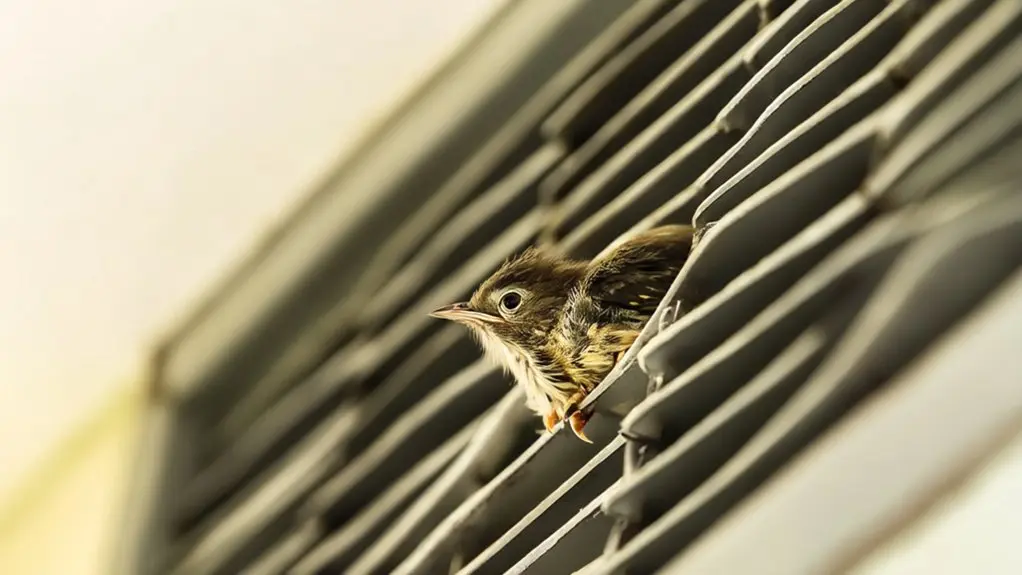
Yes, birds can get stuck in your vents, especially dryer vents that offer warmth and shelter. They often enter through damaged or loose vent flaps and may build nests inside. This can cause fire hazards, blocked airflow, and health risks from droppings and parasites.
Removing them requires care to follow legal protections for wildlife. Proper maintenance and professional help are essential to prevent and address these issues. Keep exploring to understand safety, removal, and prevention strategies.
How Do Birds Get Stuck in Dryer Vents?
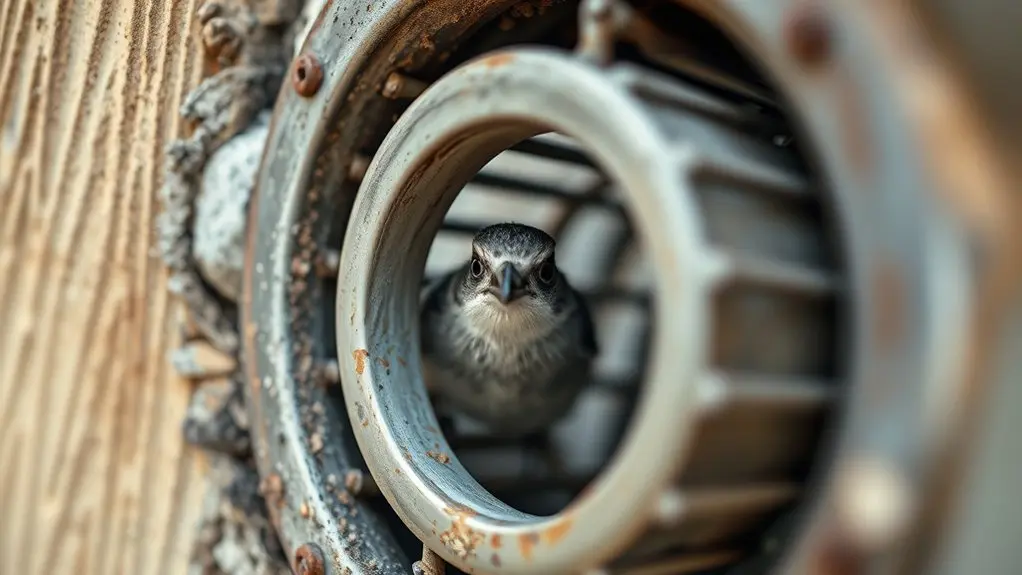
Although dryer vents are designed to keep out debris and pests, birds often get stuck inside because these vents provide both warmth and elevated entry points that attract them.
Bird behavior plays a big role here. Many species look for sheltered, warm spots to nest, and dryer vents can seem perfect because of their height and heat. Birds might even carry nesting materials into the vent, trying to build a home inside.
Birds seek warm, elevated spots like dryer vents to nest, sometimes bringing materials inside to build a home.
Sometimes, the vent flap covers, which are meant to close when the dryer is off, can get loose or damaged. This makes it easier for birds to get in.
Once inside, birds might have a hard time getting out, especially if the flap is broken or not properly secured.
Understanding this behavior really helps explain why birds get trapped in dryer vents, even though these vents were originally designed to keep them out.
What Are the Signs a Bird Is Stuck in Your Vent?
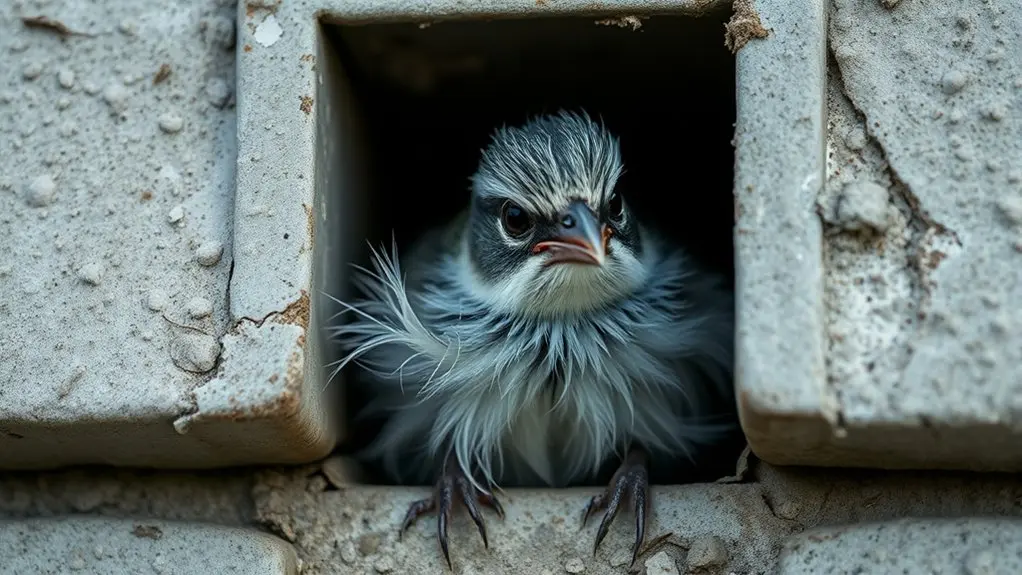
You might hear scratching, chirping, or rustling sounds coming from your vent. These noises often mean there’s a bird inside.
Also, check around the vent opening for nesting materials, feathers, or droppings—these are clear signs that a bird could be stuck.
Paying attention to both the sounds and what you see can help you figure out if there’s a bird trapped in your vent.
Audible Bird Noises
When you hear chirping, scratching, or rustling sounds coming from your vent, these noises often indicate a bird is trapped inside. Birds may enter vents seeking habitat or carrying nesting materials, which can lead to them getting stuck.
Key audible signs include persistent chirping or calls signaling distress or attempts to escape. You might also hear scratching or fluttering sounds, especially when the vent is active. Sometimes, there are sudden thumps or banging noises as the bird struggles.
The noise might get louder or happen more often during or after your appliance runs. These sounds are different from typical vent noise and usually mean a bird is stuck inside the ductwork.
This can disrupt airflow and needs immediate attention to keep the bird safe and protect your ventilation system.
Visible Nesting Signs
If you notice twigs, feathers, or other nesting materials around your vent openings, these are strong indicators of bird activity or entrapment. Feather accumulation near vents often signals that birds are using the area for nesting or may be trapped inside.
Additionally, bird droppings close to the vent can further confirm their presence. You might also detect an increase in odors caused by waste buildup from a trapped bird.
Observing a bird trying to enter or exit the vent, especially if it appears distressed, reinforces the likelihood of entrapment. Recognizing these visible nesting signs is essential for timely intervention, helping prevent damage to your ventilation system and ensuring the bird’s safety.
Keep an eye out for these objective indicators to address potential bird intrusions promptly. It’s always better to catch these signs early!
Why Are Birds in Vents a Safety and Health Concern?
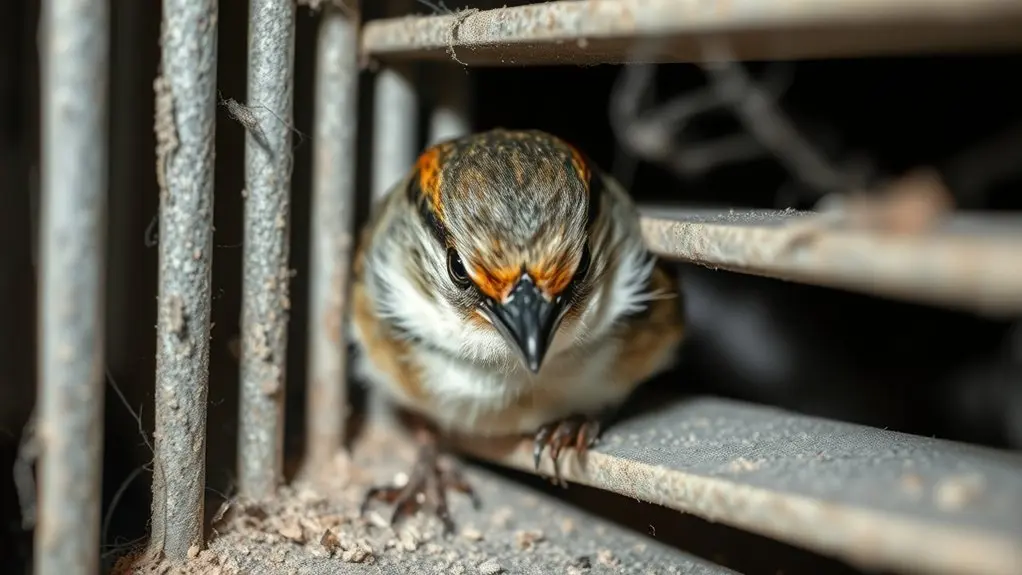
Because birds often build nests in vents filled with lint and debris, they create significant fire hazards that demand immediate attention. Their bird migration and nesting habits lead them to seek sheltered spaces like vents, which may accumulate flammable materials. This poses multiple risks you should be aware of.
First, there’s the fire hazard due to flammable lint and nesting materials that can easily ignite. Then, blocked vents can cause carbon monoxide to build up, which is really dangerous for everyone inside.
Plus, birds bring along parasites and diseases like histoplasmosis through their droppings and feathers.
On top of that, their droppings and moisture-retaining nesting materials can cause mold growth and even structural damage.
All these factors make birds in vents a serious safety and health concern. So, it’s important to spot the problem early and take action to protect your home and well-being.
How Can You Safely Remove Birds and Bird Nests From Your Vent?
Recognizing the dangers birds and their nests pose in vents is the first step toward effective removal. To safely address this, avoid DIY attempts that risk injuring birds or damaging your vent system. Instead, contact professional wildlife removal services who employ humane nest removal methods.
It’s important to wait until fledglings have left the nest, typically once they can fly, before proceeding. When removing nests, use gloves and proper tools to carefully extract nesting materials without harming yourself or the birds.
After removal, install bird deterrents such as bird-proof vent guards or covers to prevent future intrusions. These measures guarantee both safety and long-term protection of your vent system while respecting wildlife.
What Wildlife Protection Laws Affect Bird and Nest Removal?
While addressing birds and their nests in vents, you need to keep several wildlife protection laws in mind. These laws are designed to safeguard native species and support habitat preservation. They also respect bird migration patterns, which are vital for ecological balance.
Protecting native birds and their habitats is essential for maintaining ecological balance and supporting migration patterns.
Here are some key points to remember:
- The Migratory Bird Treaty Act of 1918 prohibits possession, killing, or removal of most native birds and their nests without permits.
- Removing eggs or young birds before they can fly is illegal because it protects their reproductive success.
- Federal, state, and local laws usually require humane, professional removal methods.
- Unauthorized actions can lead to substantial fines and legal penalties.
How Can You Prevent Birds From Entering Your Vents Again?
You can keep birds from getting into your vents by installing durable vent guards. These guards block their access but still let air flow through.
It’s also important to maintain and quickly repair any vent covers that are damaged, as this cuts down on possible entry points.
Plus, scheduling regular professional inspections can help spot and fix any weak spots before birds decide to make a nest.
Install Vent Guards
How can you effectively prevent birds from re-entering your vents? Installing vent guards is a proven bird deterrent method that physically blocks access points.
To optimize vent sealing and minimize bird intrusion, consider these steps:
- Use heavy-gauge metal vent guards to cover openings securely.
- Apply bird-proof screens that allow airflow but prevent nesting.
- Ensure vent covers are tightly sealed with no loose flaps or gaps.
- Schedule regular inspections and promptly repair any damage.
These measures reduce the risk of birds nesting or getting trapped inside vents.
For complex vent systems, professional installation of custom barriers offers tailored, long-term protection.
Implementing these strategies creates an effective physical barrier, maintaining vent functionality while preventing avian access. It’s a smart way to keep your vents bird-free and working smoothly.
Maintain Vent Covers
Installing vent guards forms a reliable barrier against bird entry, but maintaining those covers guarantees ongoing protection. To prevent birds from entering your vents again, focus on vent cover compatibility by selecting guards that fit securely and allow adequate airflow. Choose durable vent covers with fine mesh screens to block birds and nesting materials effectively.
Establish a maintenance schedule to regularly inspect and repair any damaged or loose covers, ensuring all vent flaps remain secure and functional. This proactive approach reduces risks of birds pushing through or becoming trapped.
Consistent upkeep not only preserves the physical barrier but also sustains ventilation efficiency. Following these measures helps protect your vents from bird intrusion over the long term.
Keeping an eye on your vent covers and giving them a little TLC goes a long way in keeping unwanted guests out. It’s all about staying ahead and making sure your vents do their job right.
Schedule Regular Inspections
Although vent covers provide a strong barrier against bird entry, regular inspections are essential to keep them working well. Scheduling routine vent inspections helps you spot and fix damaged or loose covers before birds find a way in.
To keep your vents bird-proof, consider this maintenance checklist:
- Conduct vent inspections at least twice a year, especially before and after breeding seasons.
- Look for signs of nests, debris buildup, or damaged vent flaps.
- Repair or replace any compromised barriers promptly.
- Consider professional inspections to detect subtle vulnerabilities.
Consistent maintenance really cuts down the risk of bird nesting because it keeps all protective barriers intact and functional. Following this inspection schedule helps prevent re-entry and keeps your home safe.
When Should You Call a Professional for Bird Vent Problems?
If you spot a bird trapped in your vent, you should contact a professional immediately to guarantee safe and humane removal. Professionals skilled in bird rescue can prevent injury to both you and the animal during extraction.
Contact a professional immediately for safe and humane removal of birds trapped in your vent.
You should also call experts if birds are nesting inside vents and you can’t remove them safely yourself.
When a bird blocks your dryer vent, causing airflow issues or unpleasant odors, a professional service is essential for thorough vent cleaning and inspection.
Additionally, signs of bird droppings or nests indicate health risks and potential fire hazards, so prompt expert intervention is warranted.
If vent covers are damaged or loose, scheduling professional repair and bird-proofing services will help prevent future intrusions effectively.
What Are the Best Practices for Dryer Vent Care and Maintenance?
Addressing bird-related issues in your dryer vent goes hand in hand with maintaining the vent’s overall condition. Proper care ensures safety, efficiency, and prevents blockages caused by birds or debris.
Follow these best practices for cleaning tips and vent installation:
- Regularly inspect and clean your dryer vent to remove lint buildup, reducing fire risk by up to 40%.
- Install a vent guard or mesh screen during vent installation to block birds and debris from entering.
- Schedule professional dryer vent cleaning at least once a year to optimize airflow and energy use.
- Check vent flaps frequently, repairing or replacing damaged covers promptly to maintain proper function.
Also, try to avoid overloading your dryer. Overloading increases lint accumulation and strains the vent system, so keeping loads manageable helps safeguard overall vent performance.
Frequently Asked Questions
Can Small Birds Survive Inside Vents for Long Periods?
You can’t rely on small birds surviving long inside vents, especially during bird migration. Without proper ventilation, water, or food, they face dehydration.
Regular vent cleaning helps prevent trapping and supports safe bird migration. It’s a simple step that makes a big difference for these little travelers. Keeping vents clear means giving birds a better chance to stay safe and keep moving.
Do Certain Bird Species Prefer Dryer Vents Over Other Vents?
Yes, certain bird species prefer dryer vents for bird nesting due to their warmth and accessibility. This increases the risk of vent blockage.
You’ll find smaller birds like starlings favor these vents over attic or chimney vents. It’s interesting how they pick spots that keep them cozy and safe.
How Do Birds Typically Find Vent Openings to Enter?
You’d think birds use GPS, but they rely on instincts shaped by bird migration and nesting behaviors. They detect airflow, warmth, and visual cues, guiding them to vent openings that mimic natural crevices ideal for shelter or nests.
It’s pretty clever when you think about it. Instead of high-tech tools, they use simple, natural signals to find their way. This helps them stay safe and find cozy spots to rest or raise their young.
Are There Eco-Friendly Vent Covers That Deter Birds?
Yes, you can use eco-friendly solutions like bird deterrent vent covers made from non-toxic, biodegradable materials. These designs prevent entry while maintaining airflow. They protect birds and the environment without causing harm or disruption to local ecosystems.
It’s a great way to keep your vents clear and your feathered friends safe. Plus, using these materials means you’re making a choice that’s kind to the planet. So, it’s a win-win all around!
Can Trapped Birds Cause Damage to Household Wiring or Insulation?
About 70% of bird nesting in vents leads to vent obstruction, causing insulation damage and electrical issues.
You’ll find trapped birds chew wiring for nests, increasing fire risks and compromising your household’s safety.
It’s a real problem that many don’t think about until it’s too late. So, keeping vents clear is super important to avoid these issues.
Conclusion
Now that you know how birds can get stuck in your vents and the risks involved, it’s clear that prevention and prompt action are key. Remember, “an ounce of prevention is worth a pound of cure.” Regular maintenance, proper vent screening, and timely professional help can keep your vents clear and safe for both you and wildlife.
Taking these steps guarantees efficient vent function and protects your home’s health and safety. So, don’t wait until a problem arises—stay proactive and keep those vents in check!