
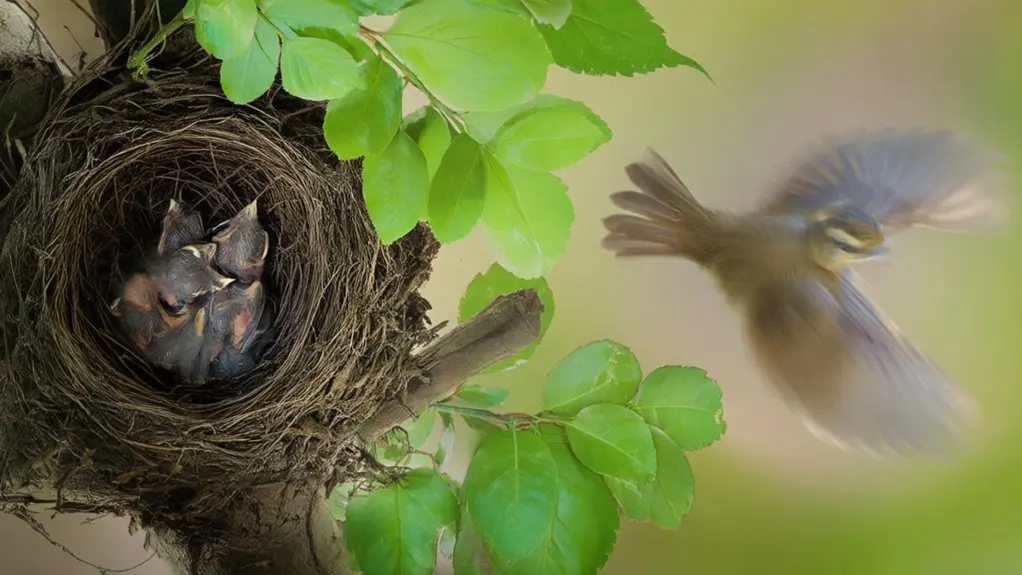
You can often return fallen baby birds to their nests if they’re healthy, warm, and partially feathered. Parent birds recognize chicks by sight, sound, and scent, so they usually accept them back. Distress calls play a key role in prompting parents to locate and care for their fallen offspring.
However, parents may sometimes feed chicks near the nest instead of placing them back. This behavior helps avoid attracting predators to the nest area. To increase acceptance, make certain the substitute nest is secure and nearby.
There are more details that explain when and how to safely intervene. It’s good to know these before trying to help, so you don’t accidentally cause harm.
How To Tell If A Baby Bird Needs Help
Although it can be tempting to intervene, you should only help a baby bird if it shows clear signs of injury, hypothermia, or an inability to move or stand properly.
During bird migration, young birds may become separated from their nests, but nests are usually built to keep them safe until they’re ready to fledge. If you find a featherless or small nestling on the ground, it’s best to return it to its nest, as long as you can do so safely.
Young birds may get separated during migration, but returning featherless nestlings to their nests helps keep them safe.
Fully feathered, healthy fledglings that can hop or fly usually don’t need rescuing because they’re naturally exploring outside the nest. Signs like coldness to the touch or distress calls might mean hypothermia or danger, so that’s when you should step in.
Always check carefully before assuming a bird is abandoned. Most young birds spend time on the ground while fledging, which is normal behavior and not a sign of trouble.
Why Parent Birds Usually Don’t Bring Babies Back
When a baby bird falls from the nest, parent birds rarely try to return it. They usually focus on protecting the other eggs and nestlings from potential predators. Birds pick secure spots for their nests to keep them safe.
Trying to bring a fallen chick back can actually put the whole nest at risk. It might attract predators, which is something parents want to avoid. Instead, they tend to feed the fallen chick nearby rather than putting it back in the nest.
This behavior also fits with how birds naturally encourage their babies to become independent.
Plus, during migration times, parents need to save energy. So, they avoid taking unnecessary risks that could hurt their chances of successfully raising their young.
All in all, parents balance protecting the nest with helping their babies grow up. That’s why they usually don’t bring the babies back into the nest.
Can Parent Birds Recognize And Return Fallen Baby Birds?
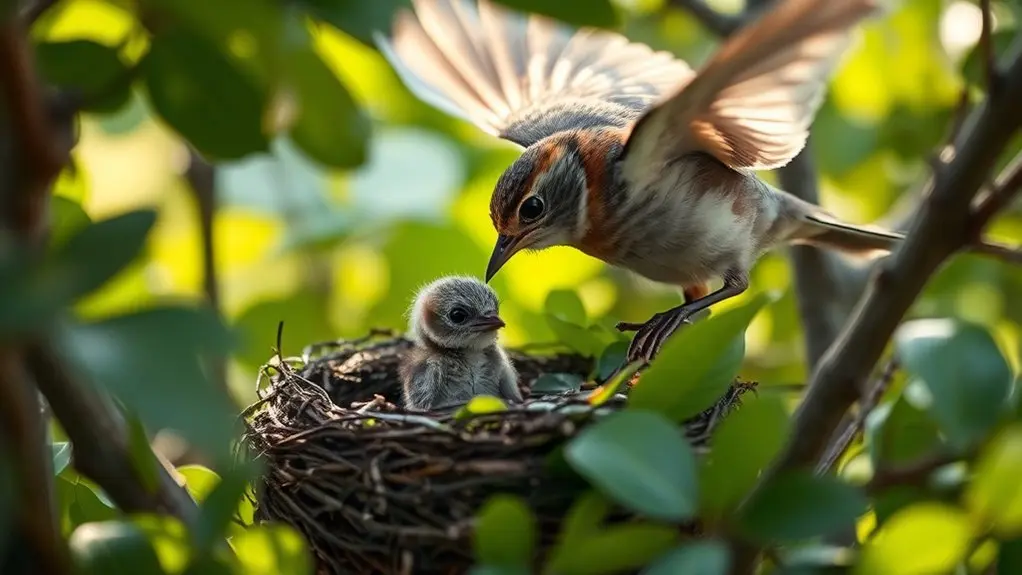
You can see that many parent birds recognize their fallen chicks by sight, sound, and sometimes even smell. This helps them find and bring their babies back to the nest.
But be careful—if you handle the chick too much, you might leave a human scent on it, which could make the parents reject it if you don’t return it quickly.
Knowing these things can help you figure out the best way and time to safely put fallen birds back in their nests.
Parent Birds’ Recognition Ability
Because parent birds rely heavily on vocal and olfactory cues, they can accurately recognize their chicks even after they fall from the nest. Bird vocalizations, particularly distress calls, serve as critical auditory signals that prompt parents to locate and return to fallen offspring.
In addition, scent recognition allows parents to identify their chicks through unique olfactory markers, reinforcing individual recognition beyond visual cues.
If a fallen chick remains warm, healthy, and continues vocalizing, parents are more likely to accept and care for it upon return.
This recognition extends beyond the nest, as parents often feed fledglings after they leave. Understanding these mechanisms highlights how parent birds maintain strong offspring bonds, ensuring continued care even when chicks are temporarily displaced.
Human Scent Impact
Although human scent is often thought to deter parent birds from caring for their young, research shows birds have a limited sense of smell and rarely respond negatively to human contact. Scent detection plays a minimal role in parental recognition because birds mainly rely on visual cues and sounds to identify their offspring.
Studies confirm that putting human scent on nestlings doesn’t stop parents from feeding or returning to them. When a fallen chick is placed back near its original spot, parent birds keep caring for it. This tells us that scent alone doesn’t cause abandonment.
Returning Fallen Birds
While human scent plays a minimal role in parental recognition, parent birds primarily rely on visual and auditory cues to identify their young.
When a chick falls from the nest, parents often recognize and continue to feed it if returned promptly.
Successful nest construction guarantees chicks remain secure, but during bird migration seasons, nests may be less accessible.
If you find a healthy, warm, uninjured fledgling, placing it back in the original or a substitute nest nearby increases the chance parents will accept it.
However, if the chick appears injured, cold, or carries unfamiliar scents, parents might reject it.
Understanding these factors helps you support fallen birds without disrupting natural behaviors or migration patterns.
It also boosts the chances of the chick being reunited with its parents.
When And How To Safely Return A Baby Bird To Its Nest
First, you’ll want to figure out if the bird is a hatchling or a nestling by checking out its feathers and how warm it feels. Once you know that, try to find the original nest carefully.
But if you can’t get to it, don’t worry—you can make a substitute nest using a small container lined with natural materials and place it close to where the original nest was.
Just make sure the bird is warm and has some feathers before you put it back, because that helps the parents recognize and accept it.
Identifying Bird Age
When determining whether to return a baby bird to its nest, you first need to accurately assess its age and development stage. Take a close look at how its feathers are developing. Hatchlings and early nestlings have little to no feathers and can’t regulate their body temperature. These little ones are the best candidates for being returned to the nest.
On the other hand, fully feathered fledglings are usually around two weeks old and show signs they’re ready to fly. These birds should generally stay where they’re because they’re getting ready to leave the nest soon. Also, make sure the bird feels warm before you put it back. Cold nestlings might get rejected or even die.
If the original nest is damaged or you can’t reach it, you can make a substitute nest nearby. But do this only for nestlings that aren’t fully fledged yet. Avoid putting birds that can already fly back in the nest since they need their parents to care for them outside the nest.
Locating The Nest
Before attempting to return a baby bird to its nest, carefully locate the nest within nearby trees or bushes to guarantee it remains undamaged and accessible.
Observe the nest construction for stability and signs of occupancy. Listen for bird vocalizations, which indicate parental presence and activity.
If the nest is intact and the bird is warm, gently place it back without prolonged handling. Afterward, watch discreetly to confirm parents resume care, avoiding disturbance that might cause abandonment.
Note that cold or injured birds shouldn’t be returned, as parents may reject them.
If the original nest is destroyed or unreachable, you’ll need to build a substitute nest mimicking natural nest construction. Use appropriate materials and position it nearby to encourage parental recognition.
Creating Substitute Nests
Although reuniting a baby bird with its original nest is ideal, constructing a substitute nest becomes necessary if the original is destroyed or inaccessible. You can create a safe environment by replicating natural nest materials and considering parental behavior to guarantee acceptance.
Use a small, shallow container with drainage holes and line it with soft materials like grass, leaves, or feathers.
Position the substitute nest securely in a tree or shrub near the original site. Make sure the bird is warm and partially feathered before placement.
Use appropriate nest materials mimicking the natural environment. Place the nest high and close to the original location.
Ensure the baby bird is warm and partially feathered. Observe from a distance for parental behavior and feeding.
This method increases the likelihood of parental care resuming safely.
Making And Placing Substitute Nests For Baby Birds
Since baby birds depend heavily on their nests for safety and warmth, creating and placing a well-constructed substitute nest is crucial if the original is lost or damaged. Use a small container, such as a basket or deli tub with drainage holes, to mimic natural nest conditions. Line it with soft nest materials like grass, leaves, or feathers to ensure comfort.
Attach the substitute nest securely high in a nearby tree or shrub close to the original site. This encourages parental instincts to resume care.
Before transferring the hatchlings, make sure they’re partially feathered and capable of regulating their body temperature.
Position the nest in a sheltered, safe location to protect against predators and harsh weather. Following these steps increases the likelihood that parents will accept and continue nurturing their young.
It’s all about giving these little ones the best chance to thrive.
Protecting Fledglings During Their First Flights
Once baby birds leave the nest, their vulnerability shifts from the safety of the nest to the challenges of their initial flights. During this period, fledglings rely heavily on parental care, which is often guided by birdsong patterns that help parents locate and protect their young.
Understanding nest construction helps you appreciate why fledglings must progress carefully to flying.
To protect fledglings during these critical days, consider the following:
Avoid handling fledglings unless injured, to prevent disrupting natural learning. Create a sheltered area nearby for safety during flight attempts. Also, keep an eye out for predators like cats and dogs, which can pose high risks.
What Happens When Baby Birds Leave The Nest Early
When baby birds leave the nest before they’re fully developed, they often lack the necessary flight skills and survival instincts to navigate their environment safely. Early fledglings may be pushed out by parents as a natural behavior linked to nest construction and predator avoidance.
Despite this, parents typically continue feeding and protecting their young on the ground. If you find a fledgling, avoid returning it to the nest, as this can lead to rejection or abandonment.
During bird migration periods, young birds still developing flight skills face additional challenges. Unless the fledgling is injured or in immediate danger, it’s best to leave it undisturbed.
This way, parental care can proceed naturally, helping the bird gradually adapt to independent survival outside the nest.
When To Contact Wildlife Rehabilitators For Baby Birds
If you find a baby bird that’s injured, orphaned, or in a hazardous location and can’t be safely returned to its nest, you should contact a wildlife rehabilitator immediately. These professionals have the expertise to care for vulnerable birds, especially during critical periods such as bird migration and nest building.
You should also seek help if parent birds don’t return within half a day after you place the chick back in the nest or a substitute. Avoid attempting to raise baby birds yourself, as improper care can harm their development.
Key indicators to contact a rehabilitator include:
- Injured or orphaned baby birds
- Nest destruction or inaccessibility
- Prolonged absence of parent birds
- Unsafe or hazardous locations
Always keep the bird warm and quiet until assistance arrives.
Frequently Asked Questions
How Long Do Baby Birds Typically Stay in the Nest?
You’ll find baby birds typically stay in the nest 9 to 28 days, depending on the species. Nest building timing links closely to bird migration patterns, ensuring fledglings develop fully before parents guide them during migration.
It’s pretty fascinating how nature times everything so perfectly. Birds make sure their little ones are ready to fly just when it’s time to travel. This way, the babies don’t get left behind during those long journeys.
What Do Baby Birds Eat Once They Leave the Nest?
Once fledglings leave the nest, their feeding habits shift toward dietary preferences like insects, seeds, or small fish. You’ll notice they gradually rely less on parental feeding, learning to forage and hunt independently through observation.
It’s pretty cool to see how they start figuring things out on their own. They watch and mimic what adult birds do, which helps them survive outside the nest. Over time, they become more skilled at finding their own food without any help.
How Do Parent Birds Communicate With Their Fledglings?
You’ll notice parent birds use bird song and visual signals to communicate with fledglings, conveying hunger, safety, and location. These calls and cues help young birds recognize and follow their parents effectively for survival.
It’s pretty amazing how these simple sounds and movements keep the family connected. The fledglings learn quickly what each call means, which is super important as they grow and explore. So, bird communication is really all about keeping the little ones safe and fed.
Can Human Scent on a Baby Bird Affect Parental Care?
You won’t cause nest abandonment by adding human scent to a baby bird. Birds mainly rely on visual and auditory cues, so human scent has little effect on how parents care for or recognize their young.
This means parents usually keep nurturing their babies even if you handle them. So, don’t worry too much about leaving your scent on a baby bird. The parents are more tuned into what they see and hear than what they smell.
What Predators Are Most Dangerous to Fledgling Birds?
You’ll find feral cats, raccoons, and crows most dangerous to fledgling birds. They exploit weaknesses in avian camouflage and increase nest predation by targeting ground-bound or low-flying young during their vulnerable fledgling stage.
These predators know exactly when and where to strike, making it tough for young birds to survive. It’s a risky time for fledglings, and these animals take full advantage of that.
Conclusion
In nature’s delicate dance, baby birds often face challenges beyond their control. While parent birds usually won’t return fallen chicks to the nest, understanding when and how to intervene can make a critical difference.
By carefully evaluating each situation, safely returning birds when possible, and knowing when to seek expert help, you become an essential link in their survival chain. Remember, your informed actions can turn the tide for these fragile fledglings.