
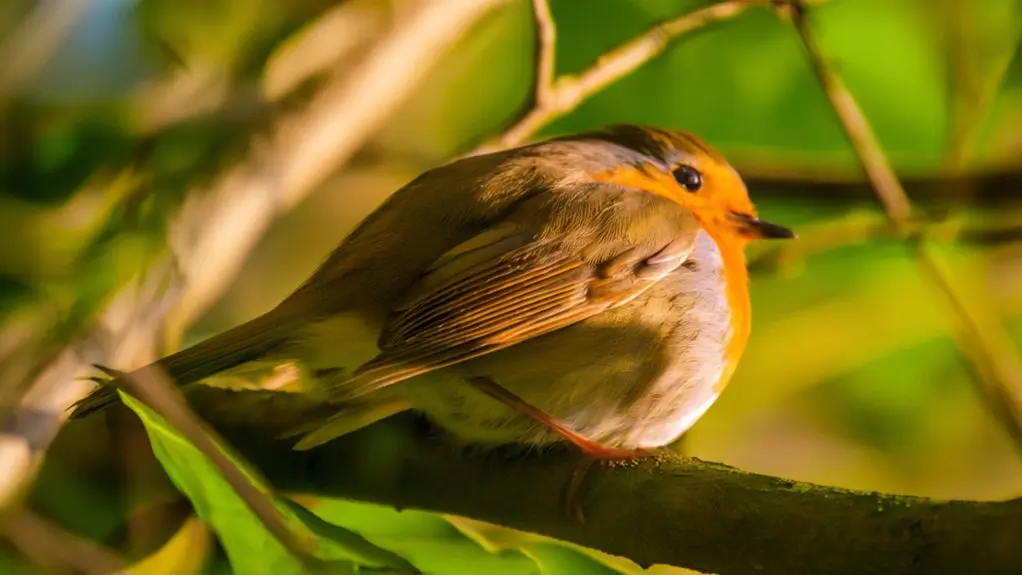
Yes, birds can get sunburned, especially on exposed skin areas like combs, wattles, or bare patches where feathers are thin or absent. Species with light-colored or sparse plumage are more vulnerable. Newly molted feathers also offer less protection.
Birds naturally use behaviors like seeking shade and grooming with natural oils to shield themselves. They balance the benefits of essential vitamin D synthesis with the risks of UV damage. Knowing this can help you better protect your birds’ health and wellbeing.
How Do Birds Get Sunburned?
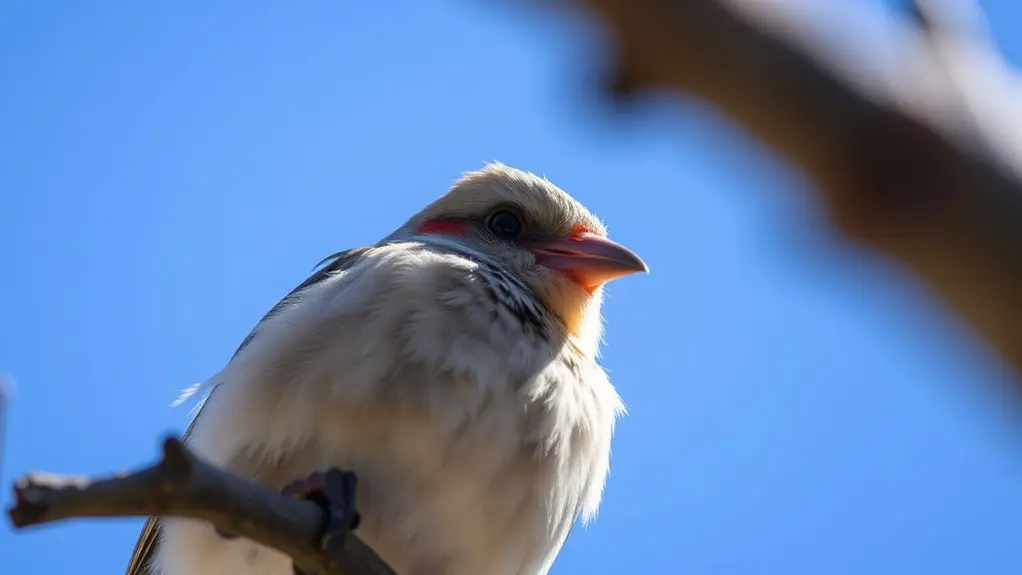
How exactly do birds get sunburned? Sunburn in birds happens when ultraviolet (UV) radiation penetrates their skin, damaging cells in exposed areas like combs, wattles, or bare patches without feathers.
Birds get sunburned when UV rays reach exposed skin areas like combs and bare patches.
Feather growth plays a big role in protecting their skin. Newly molted or sparse feathers don’t block UV rays as well, so birds are more vulnerable then.
Birds with incomplete plumage or slower feather regeneration have a higher risk of sunburn. Migration patterns also matter. Birds traveling through regions with intense sunlight or spending lots of time outdoors during peak UV hours expose their bare skin to harmful rays.
Some species naturally have less feather coverage or pigmentation, which means they’ve less protection and are more susceptible to sunburn.
Understanding these factors helps explain how sunburn develops and shows why feather growth and behavior are important for protecting bird skin from UV damage.
Bird Species Most Prone to Sunburn
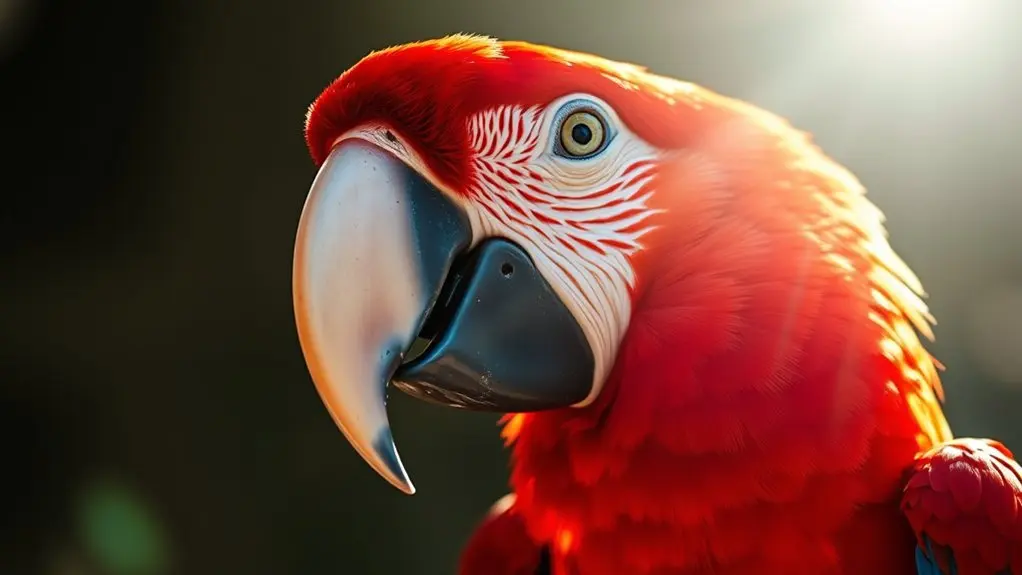
Because feather coverage and pigmentation vary widely among birds, certain species face a greater risk of sunburn. Birds with low feather density, such as partially featherless or bald species, expose more skin to ultraviolet radiation. Additionally, light-colored or albino birds lack sufficient pigmentation for natural UV protection, which increases their vulnerability.
Beak coloration also plays a role in sun exposure. Pale beaks tend to absorb more UV rays compared to darker ones. Birds that live in open, sunny environments often have adaptations to help reduce sun damage.
On the other hand, sensitive species like some parrots and finches have thin skin that makes them more prone to sunburn. So, while some birds are naturally equipped to handle the sun, others need to be a bit more careful.
| Bird Type | Key Risk Factor |
|---|---|
| Partially featherless | Low feather density |
| Albino or light-colored | Lack of pigmentation |
| Parrots and finches | Thin, sensitive skin |
Recognizing Bird Sunburn Symptoms
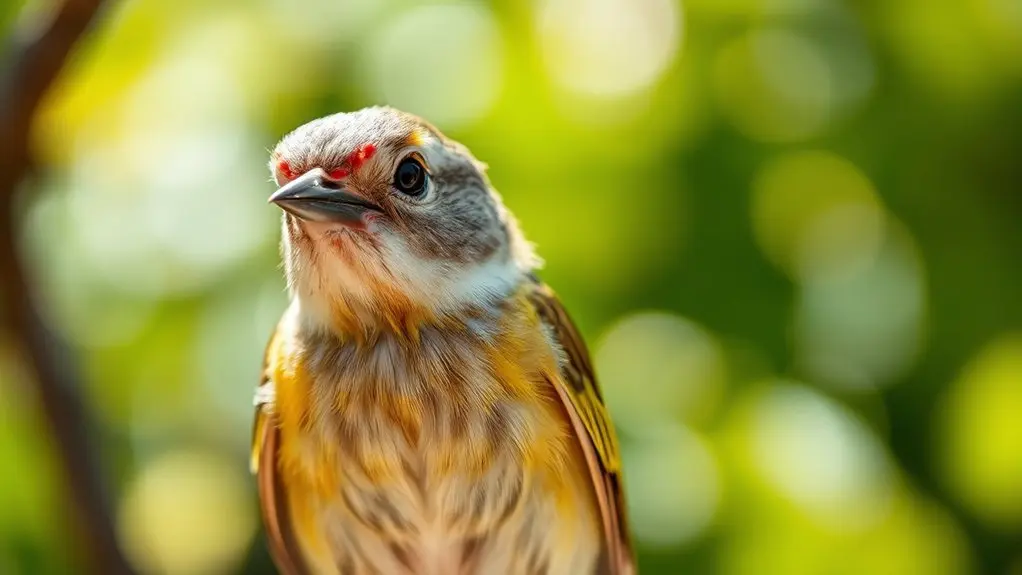
When birds spend extended time in direct sunlight without enough feather coverage or shade, they often develop visible signs of sunburn on exposed areas like the comb, wattles, and bare skin patches. You’ll notice redness, swelling, and in severe cases, blistering or peeling of these sensitive skin regions.
Birds with reduced feather coverage have higher skin sensitivity, which makes them more vulnerable to damage from ultraviolet radiation.
Behaviorally, sunburned birds might hide more often, show less activity, or seem uncomfortable when touched near the affected areas.
It’s really important to recognize these symptoms quickly, especially in breeds that naturally have less feather coverage or bald patches.
Knowing what to look for helps you assess the bird’s condition better and tell sunburn apart from other skin problems related to sensitivity.
Treating and Preventing Bird Sunburn
Although sunburn in birds can cause discomfort and skin damage, you can effectively treat and prevent it by addressing both the symptoms and environmental factors.
To treat sunburn, apply soothing agents like Aloe Vera or provide oatmeal and Epsom salt baths, which reduce inflammation and promote skin healing.
For prevention, make sure birds have consistent access to shaded areas and limit their exposure to direct sunlight during peak hours.
Proper feather maintenance is vital, as healthy feathers offer natural protection against UV radiation.
Also, the nutritional impact on skin and feather health is significant; a balanced diet supports skin regeneration and resilience.
Keep an eye out for signs of reddened or swollen skin so you can start treatment early and help your bird recover faster.
Sunlight: Benefits and Risks for Birds
While sunlight plays a vital role in a bird’s health by enabling vitamin D synthesis necessary for calcium absorption and bone strength, it also presents risks if exposure is excessive. UV rays support ideal feather condition and overall physiology, but prolonged exposure, especially near midday, can cause overheating and sunburn in sensitive or featherless areas.
Birds exhibit behavioral adaptations, such as seeking shade or altering activity patterns, to mitigate these risks.
Indoor environments with filtered light often limit UV access, reducing vitamin D production and potentially affecting calcium metabolism.
Providing true sunlight exposure of at least 20 minutes several times a week supports health. Yet, balancing direct sunlight with shade and hydration is essential to prevent damage.
Understanding these benefits and risks helps maintain your bird’s well-being effectively. It’s all about finding the right balance to keep your feathered friend happy and healthy.
Providing Safe Sunlight to Birds
Because birds need sunlight for vitamin D synthesis, you must provide access to natural light while minimizing risks like sunburn and overheating.
Focus on areas with less feather coverage, such as around the eyes and legs, since these spots are more prone to UV damage.
Offer shaded zones using outdoor shelters, trees, or shade cloths so birds can choose how much sun they get.
Avoid direct sunlight during peak UV hours, which are from 10 am to 4 pm, to cut down on heat stress and skin damage.
Pay attention to bird behavior. If they seem uncomfortable or restless, it usually means they need some shade.
Also, keep in mind species-specific migration patterns because these affect how much sunlight birds can handle and their feather density throughout the year.
Natural Behaviors Birds Use to Protect Themselves
You’ll notice that birds often look for shaded spots or perch under objects to avoid direct sunlight.
They also tuck their heads into their feathers or change their posture to protect their sensitive skin from UV rays.
These natural habits are really important because they help birds stay cool and prevent sun damage.
Shade Seeking Behavior
When exposed to intense sunlight, birds instinctively seek shade to regulate their body temperature and reduce the risk of overheating. This behavior involves retreating under leaves, tree canopies, or other shaded structures. It helps prevent dehydration and sunburn, especially on vulnerable areas like the head and neck.
Feather coloration plays a role in how much sunlight a bird tolerates. Darker feathers absorb more heat, so birds with them tend to seek shade more often.
Nesting habits also influence this behavior. Birds often choose shaded nesting sites to protect themselves and their offspring from too much sun.
Many species adjust their activity patterns, foraging during cooler dawn or dusk periods to avoid direct sunlight. Shade seeking varies among species, but it’s always a critical natural strategy. It helps birds maintain their physiological balance and protects them from solar damage.
Protective Body Positioning
Although birds can’t apply sunscreen like humans, they use precise body positioning to shield themselves from harmful solar radiation. You’ll notice that birds often fluff their feathers to enhance feather insulation, which reduces heat absorption.
They adjust their wing posture by slightly spreading their wings away from the body to minimize direct sun exposure.
You’ll also see them tilt or turn their heads and bodies, protecting sensitive areas such as the face and bare skin.
During peak sunlight, birds reduce activity and seek shaded microhabitats, further limiting UV exposure.
Additionally, self-grooming behaviors like preening distribute natural oils that form a protective barrier.
These natural behaviors collectively help birds regulate temperature and mitigate the risk of sunburn effectively without external aids.
It’s pretty fascinating how they manage all this just by using their bodies. Nature really has its own clever ways to keep creatures safe under the sun.
Frequently Asked Questions
Can Bird Sunburn Cause Permanent Feather Damage?
Yes, bird sunburn can cause permanent feather damage by harming skin sensitivity and feather pigmentation. When the skin and follicles get injured, feather regrowth can really suffer. This might lead to lasting discoloration.
You could also see patchy or thin feather coverage as a result. So, it’s not just a temporary thing; the damage can stick around for a while. Taking care to protect birds from too much sun is important to keep their feathers healthy.
Do Indoor Birds Need Sun Protection?
Yes, indoor birds need sun protection when exposed to natural sunlight through windows, as indoor lighting lacks UV rays.
You can use UV-filtering films or coverings to prevent skin damage from UVA rays that glass doesn’t block. It’s important to keep your bird safe while still letting them enjoy some sunshine.
Are Certain Bird Colors More Susceptible to Sunburn?
Yes, you’ll find birds with lighter feather pigmentation have less UV resistance and are more prone to sunburn.
In contrast, darker feathers contain more melanin. This provides increased protection against harmful UV rays on their skin. So, darker birds tend to handle sun exposure better than lighter ones.
Can Sunburn Affect a Bird’s Ability to Fly?
You know what they say, “An ounce of prevention is worth a pound of cure.” UV exposure can damage feather pigmentation and skin. This kind of damage can cause pain that limits wing movement.
Is Sunscreen Safe for Use on Birds?
You shouldn’t use regular sunscreen on birds because their skin is super sensitive and can react badly to harmful chemicals.
Usually, their feathers offer enough natural protection from the sun. So, in most cases, they don’t really need sunscreen at all.
That said, it’s always a good idea to check with an avian vet before putting any kind of topical product on your bird. Better safe than sorry!
Conclusion
You might assume birds, with their feathers, are naturally shielded from sunburn. But it turns out, just like you, some are more vulnerable than others. Coincidentally, the very sunlight that helps them synthesize vitamin D can also harm their skin without proper protection.
By understanding which species are at risk and recognizing symptoms early, you can guarantee your feathered friends enjoy the sun safely. It’s all about balancing the benefits of sunlight with necessary precautions to prevent painful sunburn.