
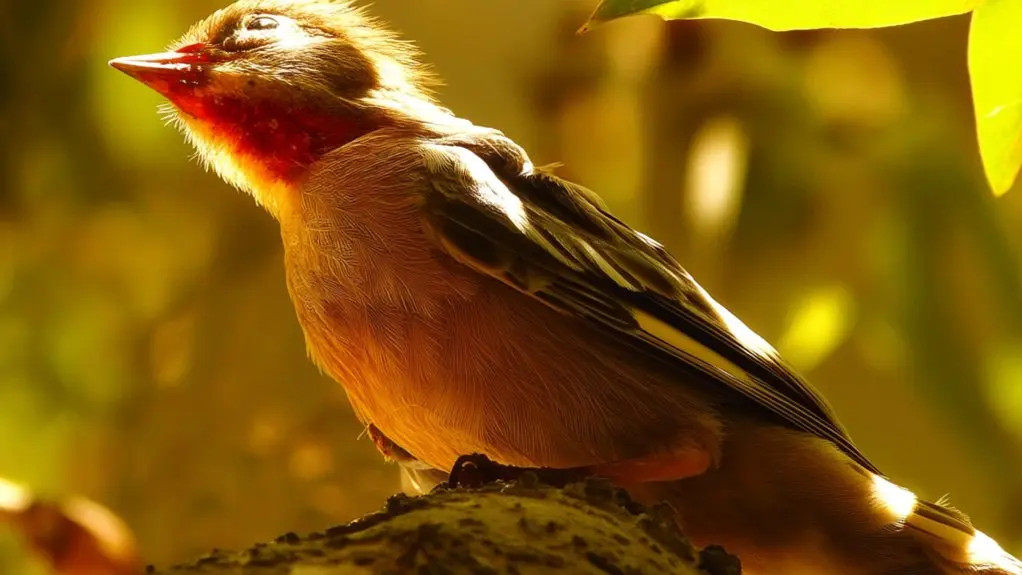
Yes, birds can get sunburnt when exposed to prolonged ultraviolet (UV) radiation. This kind of exposure damages their feathers and any unprotected skin. The harm weakens the feather structure, which reduces both insulation and protection.
Sunburn can also cause inflammation, redness, and peeling, especially on thin or unfeathered areas. It raises the risk of infections and causes discomfort. This can potentially affect their overall health and behavior.
Controlled exposure to sunlight does have benefits, like helping birds synthesize vitamin D. But it’s important to understand how to prevent sunburn, recognize the signs, and provide proper care. That way, you can keep your bird safe and healthy.
What Sunlight Does to Your Bird’s Skin and Feathers
Although sunlight provides essential benefits, it can also cause significant damage to your bird’s skin and feathers if exposure is excessive. Ultraviolet (UV) rays may degrade keratin in feathers, reducing feather pigmentation and causing dullness, brittleness, and breakage. This weakens the feathers’ insulating and protective functions.
Excessive sunlight can damage your bird’s feathers, causing dullness, brittleness, and loss of protective function.
Additionally, unfeathered or sparsely feathered skin is vulnerable to UV-induced inflammation and burns.
You should note that controlled sun exposure stimulates natural oils and vitamin D synthesis, which supports healthy feather pigmentation and skin condition.
Dietary influences also play a vital role. Adequate nutrients like vitamins A and E enhance feather resilience and repair mechanisms, helping counteract UV damage.
Managing sunlight exposure alongside proper nutrition ensures your bird maintains excellent skin and feather health without risking sun-related harm.
What Causes Sunburn and Which Bird Areas Are at Risk
When birds spend extended periods in direct sunlight without enough shade or protection, their skin can get damaged by ultraviolet (UV) rays. This causes sunburn, much like what humans experience. Sunburn happens because prolonged UV exposure overwhelms the bird’s natural UV protection.
Certain areas with thin or lightly pigmented skin, like around the eyes, beak, ear patches, head, neck, and vent, are especially at risk. These spots have less feather coverage and reduced feather pigmentation, which usually helps block harmful rays.
Birds with lighter plumage don’t have enough feather pigmentation to absorb UV radiation well, so they’re more vulnerable.
Without proper UV protection, these exposed areas can develop skin irritation and increase the chance of infection. That’s why it’s so important to keep an eye on birds during intense sun exposure.
Recognizing Sunburn and Overheating in Birds
You’ll want to keep an eye out for redness, swelling, or peeling skin, especially on spots where the feathers are thin. These are signs your bird might’ve a sunburn.
Now, if your bird starts panting, spreading its wings, or seems unusually tired, it’s more likely dealing with overheating rather than a sunburn.
Signs Of Sunburn
Since birds can’t sweat like mammals, recognizing signs of sunburn and overheating is essential for their health. You should watch for reddening or inflammation on thin, bare, or unfeathered skin areas, such as the face or combs, especially in birds with light or sparse feather coloration.
Persistent redness, swelling, or blistering after sun exposure indicates sunburn that needs veterinary care. Behavioral changes like hiding, rapid breathing, wing flapping, or altered bird grooming routines may signal discomfort or skin damage.
Additionally, feathers held away from the body can reflect attempts to cool down. Monitoring these signs closely helps you prevent further injury and keep your bird feeling well under sun exposure.
Symptoms Of Overheating
How can you tell if a bird is overheating? Look for open-mouth panting, drooping wings, and lethargy. Redness, swelling, or blistering on unfeathered areas like the face or legs often indicate sunburn.
Rapid breathing and increased heart rate are physiological responses to excessive heat. Behavioral signs include hiding or avoiding sunlight. Overheating disrupts normal feather coloration and can affect migration patterns.
Weakened birds may delay or alter their routes.
| Symptom | Description |
|---|---|
| Physical Signs | Panting, redness, blistering |
| Behavioral Signs | Hiding, retreating from sunlight |
| Physiological Signs | Increased heart rate, lethargy, dehydration |
Recognizing these symptoms helps you protect birds from heat-related harm effectively.
How Sunburn Can Impact Your Bird’s Health and Mood
Although birds naturally enjoy basking in sunlight, too much exposure can lead to serious health problems. This is especially true for birds with sparse or light-colored feathers. Feather pigmentation plays a big role in protecting against UV rays, so lighter or less dense feathers don’t offer much defense.
When your bird gets sunburnt, you might notice red, inflamed skin and peeling, which means the skin is damaged. It can also be painful for your bird when you touch those areas. On top of that, the damaged skin makes infections more likely.
You may also see changes in your bird’s behavior, like irritability or being less active than usual. Prolonged sun exposure can even cause heat stress. These symptoms don’t just affect your bird’s body—they impact its mood and overall well-being too.
Benefits of Sunlight for Birds Despite Sunburn Risks
You’ll find that sunlight plays a vital role in your bird’s production of vitamin D, which supports calcium absorption and overall health.
Plus, natural light helps with feather maintenance and gives their immune system a boost.
Just be sure to manage the timing and how long they’re in the sun so your bird can enjoy these benefits without getting sunburned.
Essential Vitamin D Production
Because birds rely on sunlight to produce vitamin D3, they need controlled exposure to UVB rays that penetrate their skin or feathers to trigger this essential synthesis. Vitamin D3 supports vital physiological processes, including calcium absorption and bone integrity.
When you provide moderate sunlight exposure, birds benefit in several ways: enhanced bone health due to optimal calcium metabolism, improved immune system function for disease resistance, and support for reproductive success through hormonal regulation.
It also influences feather coloration, which is important for mating and camouflage, and helps align migratory patterns driven by physiological rhythms. However, balancing exposure is key, as areas with sparse feathers remain vulnerable to sunburn.
Understanding this helps you provide conditions that maximize vitamin D3 production while minimizing risks. This way, you promote overall avian well-being.
Feather Health Improvement
How does sunlight contribute to feather health despite the risk of sunburn? Sunlight stimulates keratin production, which makes feathers stronger and less brittle. This results in feathers that have a nicer sheen, so birds end up with healthier, shinier plumage.
Also, UV exposure helps the body make vitamin D3, which is essential for keeping feathers well-structured. Regular, controlled sun exposure supports the natural molting cycle by encouraging good feather growth and replacement.
When birds sunbathe properly, their feathers get stronger without a big increase in sunburn risk. By helping feathers develop robustly and reducing dullness, sunlight plays a key role in keeping feathers in great shape.
Behavioral And Immune Benefits
Although sunlight poses a risk of sunburn, it plays a vital role in enhancing a bird’s immune system by stimulating vitamin D3 production, which is indispensable for immune function. You’ll find that natural sunlight encourages behaviors essential for well-being, including promoting feather coloration by supporting pigment synthesis essential for mating and camouflage.
It also stimulates nesting behaviors, as sunlight cues breeding cycles and increases reproductive success. Birds enjoy wing stretching and sunbathing, which help maintain muscle tone and overall physical health.
Sunlight helps regulate circadian rhythms, improving sleep quality and reducing stress-related activities. Plus, it enhances mental stimulation by enabling instinctive activities like foraging and bathing.
When you monitor sun exposure time and provide shade, the immune and behavioral benefits clearly outweigh the minimal risk of sunburn in birds. So, a little sun goes a long way for your feathered friends!
How to Safely Introduce Your Bird to Outdoor Sunlight
When introducing your bird to outdoor sunlight, start with brief sessions of 5 to 10 minutes during early morning or late afternoon to minimize exposure to intense UV rays. This gradual approach supports feather health by reducing the risk of damage caused by sudden, prolonged UV exposure.
You should supervise your bird closely in a secure, predator-free setting, such as a covered cage or harness, to guarantee safety. Provide accessible shaded areas to allow retreat if signs of overheating or stress, like panting, wing spreading, or hiding, occur.
Observing your bird’s behavior helps you adjust exposure duration based on comfort and tolerance. It’s a good idea to consult an avian veterinarian to tailor sunlight sessions according to your bird’s species and health status.
This way, you can optimize benefits while minimizing risks.
How to Prevent Sunburn When Your Bird Is Outdoors
You’ll want to keep an eye out for early signs of sunburn, like redness or peeling on exposed skin areas such as the beak or legs. It’s a good idea to limit your bird’s outdoor time to when the UV rays aren’t as strong—usually early morning or late afternoon—and make sure there’s plenty of shade available.
Also, staying attentive to your bird’s behavior can help you catch any signs of overheating or discomfort early on, so you can take action right away.
Recognizing Sunburn Signs
Since birds with bare or lightly feathered skin are more vulnerable to sunburn, you should closely monitor areas like their heads and around the eyes for early signs of redness, swelling, peeling, or blistering. These symptoms indicate tissue damage from UV exposure, which can lead to pain and infection.
Your bird’s preening habits might change due to discomfort, and alterations in feather coloration could signal underlying skin issues.
To recognize sunburn promptly, watch for redness or inflammation on exposed skin. Also, peeling or flaking around featherless patches is a common sign. Swelling or blister formation can occur too.
Changes in feather coloration near affected areas are another clue. Plus, if your bird starts preening differently, that might mean irritation.
Regular inspections help you catch sunburn early. This prevents severe damage and keeps your bird’s skin healthy. So, make it a habit to check your feathered friend often!
Safe Outdoor Exposure
How can you guarantee your bird enjoys outdoor time without risking sunburn? First, limit direct sun exposure to about 20 minutes, especially for birds with lighter feather coloration. They tend to absorb more UV radiation.
Make sure to provide ample shade or use UV-protected cages to shield sensitive, featherless areas like the beak and skin around the eyes. Keep a close eye on your bird’s flight behavior and body language for signs of overheating or discomfort, such as reduced activity or panting.
You can also apply pet-safe, bird-specific sunblock on vulnerable skin areas for an extra layer of protection. By combining these measures, you help maintain your bird’s health during outdoor sessions.
This way, you minimize UV damage while still letting natural sunlight support vitamin D synthesis and your bird’s overall well-being.
Providing Shade and Cooling Options for Birds Outside
Although birds naturally seek shade to regulate their body temperature, providing additional shade through natural trees, umbrellas, or shade cloths considerably reduces their risk of overheating and sunburn during outdoor exposure. Proper tree protection and strategic shade placement are essential to create safe environments.
Providing extra shade with trees or cloths helps protect birds from overheating and sunburn outdoors.
You should guarantee cool, shaded areas are accessible to allow birds to escape direct sunlight. It’s a good idea to regularly move or reposition shade structures to offer varied sun and shade options.
Also, provide water sources within shaded zones to promote hydration and cooling.
Keep an eye on birds for signs of heat stress, like panting or hiding, so you can adjust the shade accordingly. Using natural trees as the primary shade while supplementing with umbrellas or shade cloths can really enhance their protection.
When to Get Veterinary Help for Sunburn or Heat Stress
When should you seek veterinary help if your bird shows signs of sunburn or heat stress? If you notice lethargy, drooping wings, blistered skin, or excessive panting, it’s time to act promptly.
Severe symptoms like bleeding, difficulty breathing, weakness, collapse, or seizures require immediate veterinary intervention to prevent complications such as heat stroke. Don’t wait if you see these signs.
During critical periods like bird migration or feather molting, birds are more vulnerable to environmental stressors. This increases the risk of sunburn and heat-related issues.
So, keep a close eye on your bird during outdoor exposure, especially since molting feathers can reduce protection from UV rays. Early veterinary consultation helps ensure effective treatment and prevents your bird’s condition from getting worse.
Taking quick action safeguards your bird’s health through these physically demanding phases.
Balancing Sunlight Benefits With Sunburn Safety for Birds
Because sunlight provides essential benefits such as vitamin D synthesis and behavioral enrichment, it’s important to guarantee exposure while minimizing the risk of sunburn in birds. You should consider factors like feather coloration and bird hydration to optimize safety and health.
Try to provide shaded areas to limit direct sun exposure, especially during peak sunlight hours. Keep an eye on young, featherless, or light-colored birds since they tend to be more susceptible to sunburn.
Watching their behavior and body language can help catch early signs of discomfort or skin damage.
Make sure birds stay well-hydrated to support thermoregulation and reduce heat stress risks. It’s also a good idea to adjust outdoor time based on environmental conditions and how sensitive each bird is.
That way, you balance their need for sunlight with their safety.
Frequently Asked Questions
Can Indoor Lighting Cause Sunburn in Birds?
You won’t get sunburn from typical artificial light indoors because it lacks significant UV exposure.
However, specialized UV-emitting lights can cause sunburn if placed too close or used excessively. So, keep an eye on your bird’s environment to make sure it stays safe.
Do Different Bird Species Vary in Sunburn Sensitivity?
You might find it coincidental that feather protection and skin pigmentation directly influence sunburn sensitivity. Species with dense feathers and darker skin pigmentation typically resist UV damage.
On the other hand, those with sparse feathers and lighter skin remain more vulnerable to sunburn. It’s interesting how these traits vary across different bird species. Makes you wonder how they’ve adapted to their environments, right?
Are Baby Birds More Prone to Sunburn Than Adults?
Yes, baby birds are more prone to sunburn because they don’t have as much feather protection yet. Their skin is super delicate and extra sensitive to the sun. Plus, their feathers aren’t fully grown in, so more skin is exposed to those harmful UV rays.
That means they really need careful shade and protection from you. It’s important to keep them out of direct sunlight as much as possible. Otherwise, they can get sunburned pretty easily.
Can Sunburned Birds Recover Fully Without Treatment?
You can’t expect sunburned birds to recover fully without treatment, especially when UV protection is compromised during bird molt.
Untreated severe burns cause tissue damage and infection. This hinders natural healing and usually means the bird will need veterinary care to recover.
Does Bird Diet Influence Their Skin’s Sunburn Resistance?
Think of diet impact as a shield. Nutritional effects from carotenoids, vitamin E, omega-3s, and vitamin D strengthen birds’ skin. This boost enhances sunburn resistance by maintaining skin integrity and protecting against oxidative stress caused by UV exposure.
Conclusion
You might be surprised to learn that up to 30% of pet birds experience mild sunburn each year. While sunlight is essential for their vitamin D synthesis and overall health, it’s important to balance exposure to prevent skin damage and overheating.
By providing shade, monitoring your bird’s behavior, and knowing when to seek veterinary care, you can guarantee your feathered friend enjoys the benefits of sunlight safely and comfortably. It’s all about finding that sweet spot between too little and too much sun. Just keep an eye on them, and they’ll thank you with happy chirps and healthy feathers!