
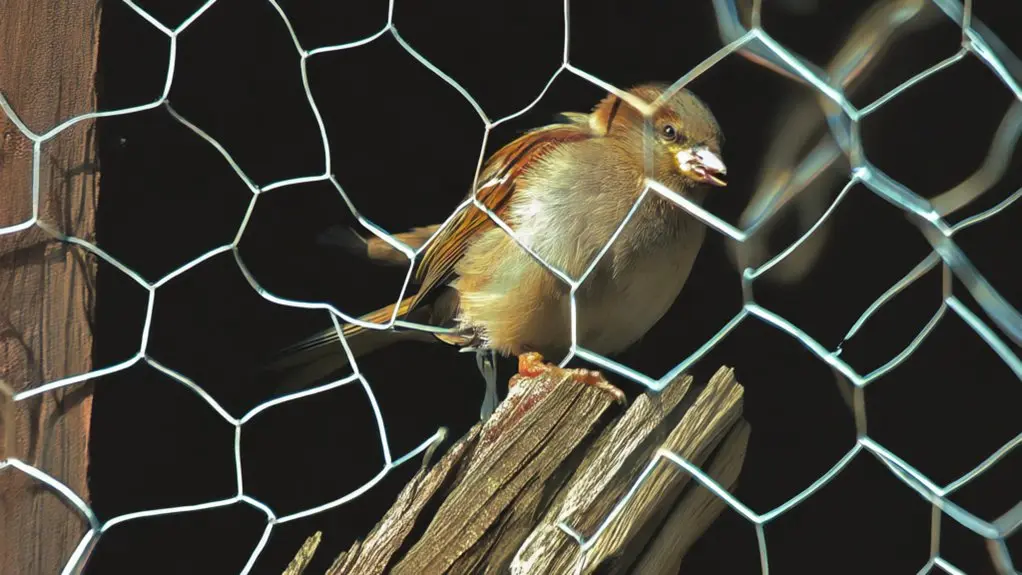
You can keep many birds out with chicken wire if you choose the right mesh size and secure it well. Smaller mesh openings block tiny birds like sparrows and finches, while larger gaps let them slip through or stretch their necks inside. Birds may also manipulate or enlarge holes over time.
Proper installation, including burying edges, reduces entry points effectively. If you want to understand bird behaviors and improve protection methods, there’s more detailed information ahead.
How Chicken Wire Keeps Birds Out
Although chicken wire is commonly used to deter birds, its effectiveness largely depends on the size of the hexagonal openings relative to the bird species you want to keep out.
When you consider bird migration and nesting habits, you’ll notice that many small birds seek tight, secure spaces for nesting. Chicken wire acts as a physical barrier, restricting access to potential nesting sites and deterring birds during migration when they explore new territories.
However, if the hexagonal mesh is too large, smaller birds can insert their heads or bodies through, bypassing the barrier.
To effectively prevent nesting and intrusion, you must choose chicken wire with sufficiently small openings and secure it properly. This approach reduces the likelihood of birds exploiting gaps and nesting within protected areas.
How Chicken Wire Mesh Size Affects Bird Prevention
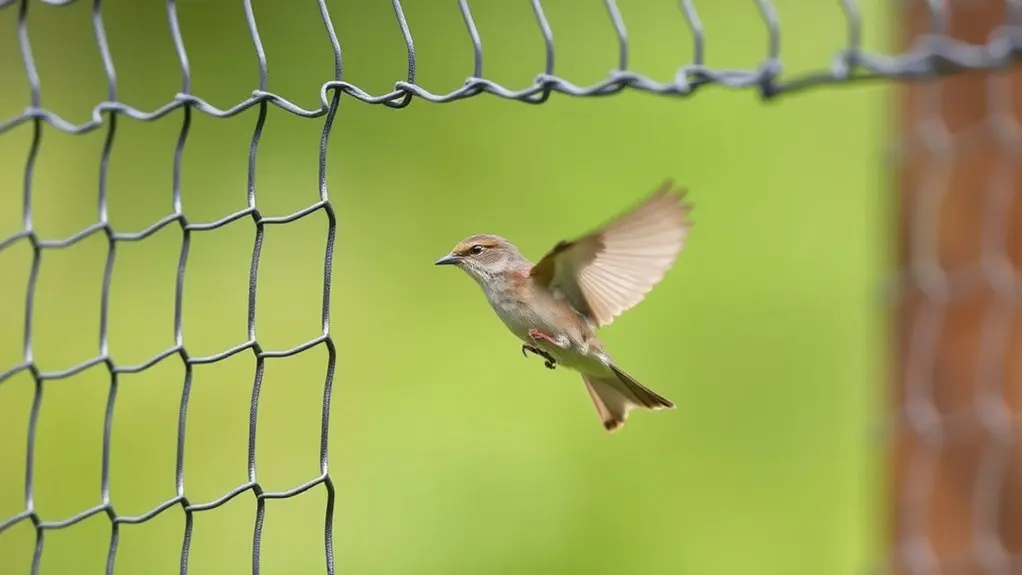
The size of the chicken wire mesh plays a significant role in determining its ability to prevent birds from entering a protected area. Smaller mesh sizes with tighter hexagonal gaps effectively block small birds, as the openings are too narrow for any part of their bodies to penetrate.
Conversely, larger mesh openings may allow smaller birds to stick their heads or bodies through, compromising protection. When selecting chicken wire, consider mesh durability alongside wire flexibility. A more durable mesh resists deformation that could enlarge gaps, while flexible wire adapts to shape without breaking.
For ideal bird prevention, ensure the mesh size is consistently smaller than the smallest bird parts you want to exclude. So, mesh size directly influences which birds can be kept out, making it a critical factor in effective bird control.
Birds That Can Get Through Chicken Wire
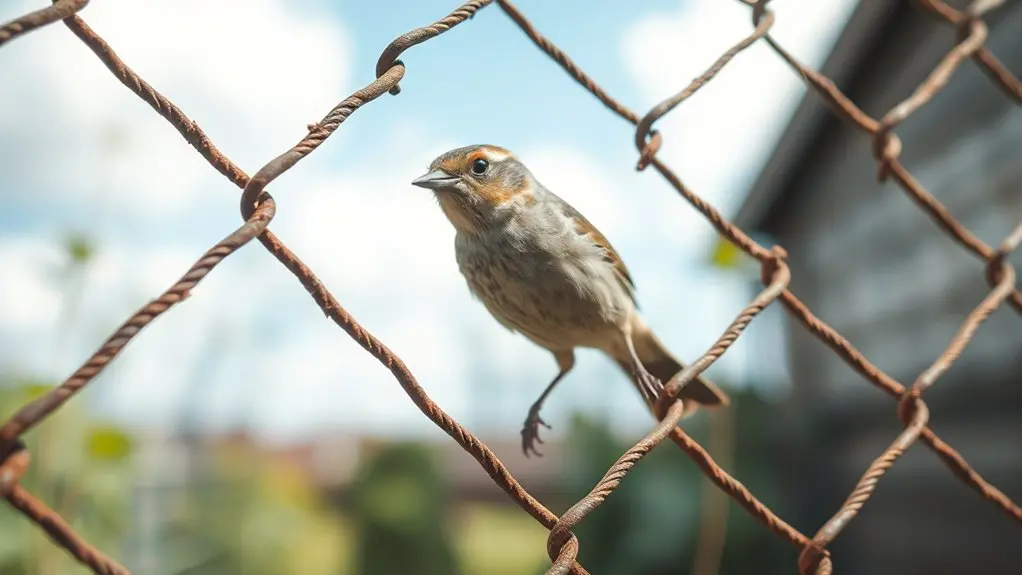
When you evaluate which birds can get through chicken wire, you’ll find that smaller species like sparrows, finches, and wrens often manage to fit their heads and sometimes their entire bodies through the standard hexagonal openings. This ability depends primarily on the mesh size and bird size.
During bird migration, these small birds may navigate through chicken wire, increasing risks like nest predation. Consider these points:
Small songbirds with slender bodies can squeeze through 1-inch mesh, potentially entering protected areas. Birds such as cedar waxwings may become entangled if the openings allow partial entry.
Larger birds like pigeons generally can’t pass through due to their body width.
Understanding these dynamics helps you mitigate nest predation risks when selecting chicken wire. It’s something to keep in mind if you want to protect certain birds or areas.
Why Birds Sometimes Get Through Chicken Wire
Why do some birds manage to get through chicken wire despite its intended barrier? The key lies in the mesh size relative to bird physiology.
Smaller birds, especially during bird migration, can squeeze their heads or bodies through hexagonal openings if the holes are large enough.
Smaller migrating birds can slip through chicken wire if the mesh openings are sufficiently large.
Birds with longer, flexible necks reach through smaller gaps to access food or nesting sites.
Over time, persistent birds may peck or manipulate the wire, enlarging openings.
During nest construction, birds exploit these weaknesses, creating or finding entry points.
Additionally, if the chicken wire’s mesh is too large, even bigger birds can force entry or damage it.
Understanding these factors helps explain why chicken wire isn’t always an impenetrable barrier to determined avian species.
How to Install Chicken Wire to Keep Birds Out
Although chicken wire can serve as an effective barrier, you must install it carefully to keep birds out reliably. Consider bird migration and nesting habits, which influence how birds approach barriers.
First, secure the wire tightly with sturdy stakes or posts to prevent sagging or gaps.
Second, choose a mesh size fitting the species you want to exclude. Smaller openings block smaller birds effectively.
Third, bury the bottom edge several inches underground or fold it outward to stop birds from digging beneath.
These steps form a physical barrier that respects avian behavior patterns while minimizing intrusion.
Proper installation, attentive to these details, guarantees chicken wire serves as a robust defense against birds exploiting weaknesses during migration or nesting periods.
Maintaining and Inspecting Chicken Wire for Bird Safety
How often do you inspect your chicken wire to guarantee it remains a reliable barrier against birds? Regular inspections help you identify holes, tears, or loose sections that compromise its security.
Pay close attention to wire corrosion, especially in humid environments, as it weakens the structure and creates entry points.
Check that the hexagonal openings remain small enough to prevent bird nesting or intrusion, particularly from smaller species.
Secure the edges tightly to the ground or surrounding structures to prevent birds from slipping underneath.
Promptly repair or replace any damaged sections to maintain effectiveness.
By conducting thorough, routine inspections and maintenance, you minimize risks of bird nesting in weakened spots.
This way, you make sure your chicken wire continues to serve as a strong, reliable barrier against unwanted bird access.
When to Use Bird Netting Instead of Chicken Wire
When small or medium-sized birds threaten your crops or berries, chicken wire often falls short because of its larger hexagonal openings. Bird netting offers clear advantages, especially when you think about mesh size. It lets you tailor protection to the size of the birds and how sensitive your crops are.
Small birds slip through chicken wire, but bird netting lets you customize protection perfectly for your crops.
You should choose bird netting instead of chicken wire when you need a finer mesh to block small birds that can slip through chicken wire openings. Also, if you want flexibility to drape netting directly over plants without hurting them, bird netting is the way to go.
Plus, it provides complete coverage since you can secure it tightly around plant bases to keep birds out.
Commercial bird netting is usually made from lightweight nylon or polyethylene. This makes it super adaptable and great for covering your crops. It works really well to minimize losses from birds that just won’t quit trying to get to your plants.
Using Chicken Wire With Other Bird Deterrents
To maximize the effectiveness of chicken wire in deterring birds, you should combine it with other deterrent methods. Securing bird netting over chicken wire forms a double barrier, preventing both small and large birds from entering. Properly sealing edges and anchoring the base eliminates gaps where birds might slip through.
Adding noisy scare devices, such as ultrasonic emitters or mechanical noisemakers, further discourages birds by creating an unpredictable environment. Incorporating bird-friendly plants around the perimeter can also reduce bird interest by providing alternative habitats, diverting them naturally.
Using reflective tape alongside these barriers enhances visual deterrence. Together, these integrated strategies create an all-encompassing defense, making it notably harder for birds to bypass chicken wire alone.
This multi-layered approach ensures more reliable bird exclusion and protection for your space. It’s definitely worth combining these methods to keep your area bird-free.
Frequently Asked Questions
Can Chicken Wire Harm Birds if They Try to Get Through It?
Yes, chicken wire can harm birds if they try to get through it. You risk bird safety by causing wire entanglement, which may lead to injuries like cuts, feather damage, or even internal harm if the mesh is too tight.
It’s important to keep this in mind if you’re using chicken wire where birds are likely to come into contact with it. Sometimes, they might get stuck or hurt themselves trying to squeeze through. So, being cautious about how and where you install it can help keep birds safe.
Is Chicken Wire Safe for Use Around Pets and Children?
You can use chicken wire safely around pets and children if you secure it tightly and smooth sharp edges.
It’s important to consider bird migration and nesting habits to avoid disturbing wildlife or causing injuries during their seasonal behaviors.
Taking these precautions helps keep everyone—and the local animals—safe and happy.
How Long Does Chicken Wire Typically Last Outdoors?
Wonder how long your chicken wire lasts outdoors amid bird migration? Typically, it endures 5 to 10 years, but wire corrosion speeds up with moisture and salt.
Regular checks can help you prevent early damage effectively. Just keep an eye out and you’ll catch any issues before they get worse. It’s all about staying ahead of the problem.
Can Chicken Wire Prevent Other Animals Besides Birds?
You’ll find chicken wire deters small animals during nest building but can’t stop larger creatures from breaching it.
Despite bird migration patterns, its mesh size limits effectiveness. So, reinforced fencing suits broader protection needs better.
What Materials Is Chicken Wire Usually Made From?
Chicken wire is usually made from galvanized steel or stainless steel, offering durability for agricultural uses and decorative fencing. Zinc coating prevents rust, which is super helpful if you’re using it outdoors. The wire comes in different gauges and hexagonal openings, so it can be strong yet flexible depending on what you need.
This makes it great for all sorts of environments, whether it’s keeping chickens safe or adding a rustic touch to your garden. Plus, the materials used mean it lasts a long time without much fuss.
Conclusion
You’ve seen how chicken wire’s mesh size and installation impact its effectiveness against birds. While it blocks many, some clever species still slip through, like a knight dodging arrows in a medieval battle. To truly secure your space, combine chicken wire with other deterrents and inspect regularly.
When precision is key, consider bird netting. Understanding these details helps you protect your area scientifically and efficiently. This way, you’ll see fewer avian intrusions over time.