

Yes, birds can transmit diseases to your dog through contact with contaminated droppings, feathers, or shared environments. Your dog may inhale airborne pathogens or ingest infectious material. This can lead to illnesses like avian influenza or salmonellosis, which affect respiratory and systemic health.
Outdoor dogs face higher risks because they’re exposed to more birds and their environments. So, it’s important to keep an eye on your dog’s behavior and health.
Recognizing symptoms early and seeking veterinary care is crucial. Understanding how these diseases spread, what symptoms to look for, and prevention strategies will help you protect your dog better from these infections.
How Do Birds Spread Diseases to Dogs?
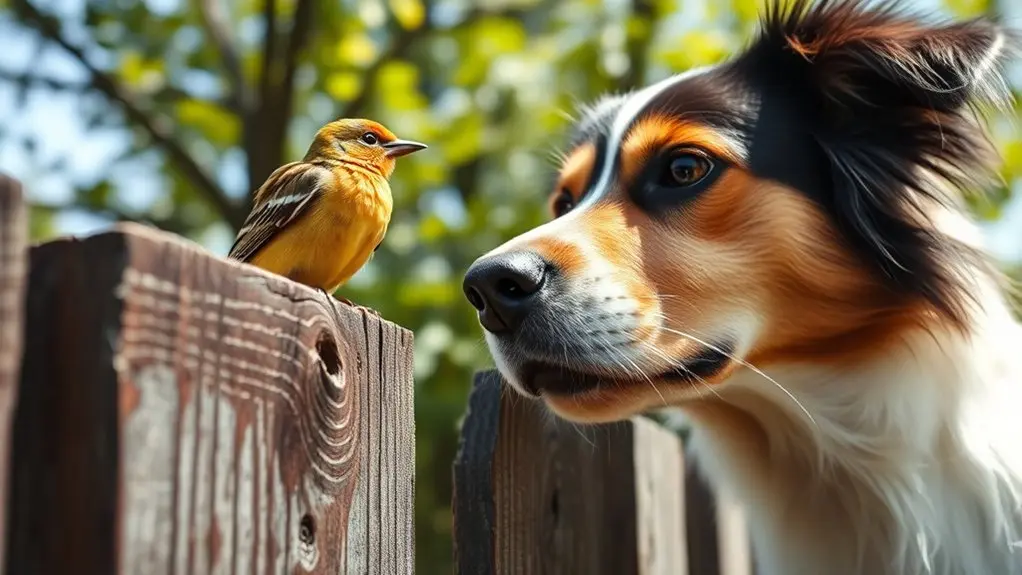
Although birds may seem harmless, they can spread diseases to dogs through various pathways. Bird migration plays a vital role in transmitting pathogens across regions, as infected birds carry viruses or bacteria over long distances.
Bird migration spreads viruses and bacteria, making birds potential carriers of diseases that can affect dogs.
As they travel, their feathers can become contaminated with infectious agents, which dogs may encounter in environments where birds rest or nest.
You mightn’t realize it, but your dog can contract diseases by coming into contact with these contaminated feathers or by exploring areas with infected bird secretions.
Additionally, indirect exposure through shared water sources or bird feeders increases the risk.
Understanding these transmission routes helps you minimize your dog’s exposure to potential infections associated with bird migration and feather contamination.
This way, you can promote better health and safety for your pet.
How Bird Droppings and Feathers Infect Dogs

Bird droppings and feathers play a big role in spreading diseases from birds to dogs. You should know that bird droppings can carry harmful germs like Salmonella and fungi such as Aspergillus.
Feathers can also be contaminated with avian influenza viruses.
Dogs can get infected in several ways. They might eat bird droppings or soil that’s been contaminated. Sometimes, they sniff or lick feathers that have infectious agents on them.
They can also come into contact with contaminated surfaces, known as fomites. Inhaling airborne pathogens from dried droppings or feathers is another way dogs can catch infections.
Plus, dogs love to play in areas where bird droppings and feathers pile up, which increases their risk.
Common Bird-Transmitted Diseases in Dogs
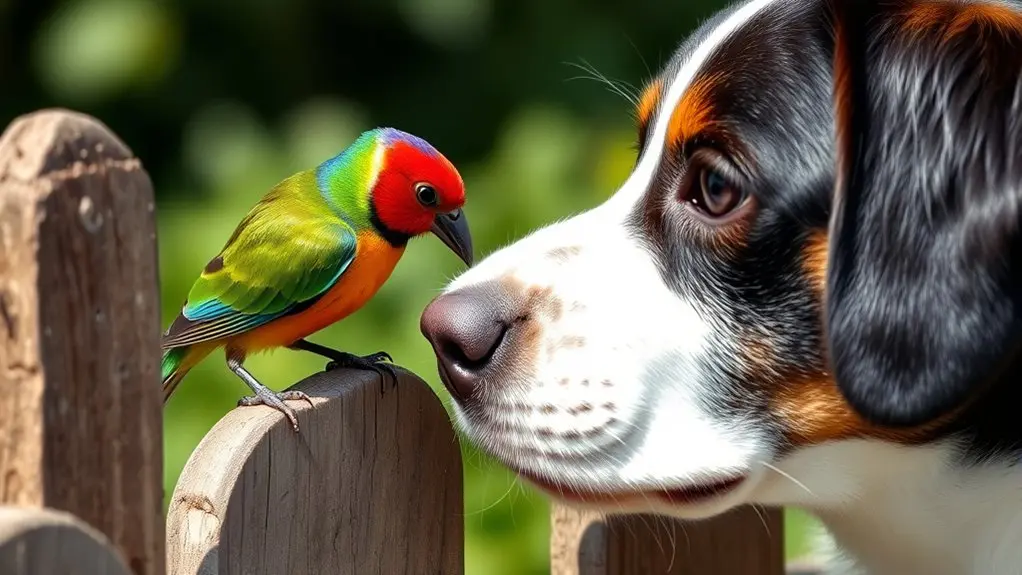
You should know that bird flu strains like H5N1 can actually infect dogs if they come into contact with infected birds or their secretions. This can cause respiratory problems as well as other symptoms throughout their body.
Besides bird flu, there are other diseases like psittacosis and salmonellosis that can be risky too. These often show up as breathing difficulties or stomach issues in your dog.
Bird Flu Transmission Risks
When dogs come into direct contact with infected wild birds, their droppings, or contaminated environments, they can contract avian influenza, commonly known as bird flu. This transmission risk goes up during bird migration, when infected birds spread the virus across regions. Feather contamination plays a big role because virus particles stick to feathers, saliva, and feces, contaminating areas dogs often visit.
You should know that dogs hunting or scavenging infected birds are at risk of exposure. Eating raw poultry can also transmit the virus. Plus, the virus can last in bird droppings, which contaminates soil and water.
Being around places where wild birds gather increases the chances of infection. But good hygiene can really help reduce those chances.
Though it’s rare, bird flu can be passed to dogs, so it’s important to stay cautious and take preventive steps.
Symptoms From Bird Diseases
Although not common, diseases transmitted from birds to dogs can cause a range of symptoms that affect respiratory, neurological, and systemic functions. You might notice coughing, sneezing, nasal discharge, or labored breathing if your dog contracts infections like avian influenza. This disease is often linked to bird migration patterns that introduce pathogens.
Neurological signs such as tremors, seizures, or disorientation may also appear, which usually means the infection is severe.
Systemic symptoms include lethargy, fever, and loss of appetite. These reflect your dog’s body responding to exposure.
Since birds’ avian diet influences their microbial flora, contact with contaminated droppings or carcasses during migration increases the risk of transmission.
To protect your dog, try to avoid letting it near wild birds. Also, keep strict hygiene to minimize exposure to these bird-borne diseases.
Recognizing symptoms early is really important because it allows for timely veterinary intervention. If you see anything unusual, don’t hesitate to get your dog checked out.
How Bird Flu (Avian Influenza) Affects Dogs
If your dog has been around infected birds or places where the virus might be, keep an eye out for signs like coughing or a runny nose.
It’s really important to try and keep your dog away from wild birds and their droppings to lower the chances of them catching bird flu.
And if you notice your dog acting sick, don’t wait—take them to the vet quickly so they can get the right care.
Symptoms In Dogs
If your dog contracts bird flu (avian influenza), you’ll likely notice respiratory symptoms such as coughing, sneezing, nasal discharge, and labored breathing.
Transmission often relates to bird behavior and feather contamination, where infected birds shed the virus onto surfaces or directly onto your dog.
Symptoms in dogs may include:
- Persistent coughing and sneezing due to respiratory tract irritation
- Nasal discharge that can be clear or purulent
- Fever accompanied by lethargy and reduced appetite
- Neurological signs like tremors, seizures, or lack of coordination
- Progressive respiratory distress indicating severe infection
Some dogs might remain asymptomatic despite exposure, but if symptoms appear, they often worsen rapidly.
Recognizing these signs early helps you understand how avian influenza affects your dog’s health. It’s always best to keep an eye out and consult your vet if you notice anything unusual.
Prevention And Care
Recognizing symptoms of bird flu in dogs marks the first step toward effective prevention and care. Since bird migration can introduce avian influenza to new regions, your dog’s exposure risk increases near wild bird gatherings. Bird flu transmits mainly through contact with infected birds or feather contamination in the environment.
To prevent risk, keep your dog away from areas where wild birds congregate, especially during migration seasons. Avoid feeding raw poultry or unpasteurized dairy products, which may harbor the virus. Maintain strict hygiene by disinfecting food and water bowls regularly and washing your hands after outdoor activities.
If your dog shows coughing, fever, or neurological signs following potential exposure, seek veterinary care immediately to ensure prompt diagnosis and treatment. Staying vigilant and taking preventive steps really helps minimize the risk of infection.
Signs of Bird Flu and Other Diseases in Dogs
Although some dogs infected with bird flu may show no symptoms, many exhibit respiratory signs like coughing, sneezing, nasal discharge, and labored breathing.
Some dogs with bird flu remain symptom-free, but many show respiratory issues like coughing and labored breathing.
Since bird migration can spread viruses over large areas, dogs exposed to wild birds or feather contamination are at risk.
You should watch for these signs in your dog:
- Persistent coughing and sneezing
- Nasal and ocular discharge
- Difficulty breathing or rapid respiration
- Neurological symptoms such as tremors or disorientation
- Lethargy and weakness
Neurological signs often indicate infection with highly pathogenic strains like H5N1.
While respiratory symptoms dominate, asymptomatic cases do occur.
Recognizing these signs early helps you understand potential infection and the severity of bird-related diseases in dogs.
When to Seek Veterinary Care for Bird-Related Illnesses
Whenever your dog shows respiratory distress, neurological symptoms, or unusual lethargy after exposure to birds or their droppings, you should seek veterinary care immediately.
Bird migration can introduce novel pathogens into local environments, increasing the risk of transmission. Dogs that encounter wild or domestic birds, especially during outbreaks, are vulnerable to infections transmitted via contaminated feathers or droppings.
Feather grooming behavior in birds spreads pathogens across plumage, creating exposure hazards. You should watch for cough, nasal discharge, eye redness, or breathing difficulty and inform your veterinarian about recent outdoor activities involving birds or contaminated areas.
Prompt diagnostic testing allows early intervention, improving treatment outcomes and preventing disease progression.
Don’t delay veterinary consultation if your dog exhibits unexplained illness after bird contact, as timely care is critical for effective management. It’s always better to be safe and get your pet checked out sooner rather than later.
What to Do If Your Dog Shows Symptoms After Bird Exposure
If your dog starts coughing, sneezing, or having trouble breathing after being around birds, don’t wait—take them to the vet right away. It’s important to get a proper diagnosis and the right treatment as soon as possible.
Keep an eye out for more serious signs too, like if your dog seems unusually tired, has a fever, or shows any changes in behavior or movement. These could be signs of something more serious, like avian flu.
Getting your dog to the vet quickly means they can start supportive care, such as fluids and oxygen, which can make a big difference in helping your dog recover.
Recognizing Critical Symptoms
When your dog shows signs such as coughing, nasal discharge, or labored breathing after contact with birds, you should seek veterinary care immediately.
Exposure during bird migration periods increases risk because of changes in avian behavior and how pathogens spread. Recognizing critical symptoms early can help prevent serious complications.
Watch closely for persistent fever or lethargy, loss of appetite, neurological signs like tremors or disorientation, seizures or unexplained shaking, and respiratory distress, including rapid or difficult breathing.
Even mild respiratory or neurological symptoms after bird exposure mean you should get your dog checked out by a vet right away. Early detection makes treatment more effective and lowers the chance of serious disease spreading from birds to dogs.
Immediate Veterinary Actions
Since symptoms following bird exposure can indicate serious illness, you should promptly schedule a veterinary appointment for a thorough evaluation and diagnosis. Vets often perform diagnostic tests like PCR or serology to identify pathogens such as avian influenza.
This virus can be transmitted during bird migration when wild birds interact with domestic animals.
Supportive care like hydration, oxygen therapy, and anti-inflammatory medications is tailored to symptom severity. Meanwhile, isolate your dog from other pets and avoid further contact with wild birds or areas contaminated by them.
Fluctuations in avian nutrition during migration can influence pathogen shedding, so it’s important to be cautious.
Make sure to strictly follow your veterinarian’s treatment and quarantine instructions to prevent disease spread and promote recovery.
Timely veterinary intervention is vital to manage risks linked to diseases arising from bird exposure. Don’t wait if you notice anything unusual in your pet after contact with birds.
Why Outdoor Dogs Are More at Risk From Birds
Although dogs that stay outdoors enjoy more freedom, they face greater exposure to wild birds and their droppings. This increases their risk of contracting bird-borne diseases. Bird nesting sites and territorial behavior attract birds to specific outdoor areas, where they may leave infectious droppings.
You should be aware that outdoor dogs often encounter bird feeders or open water sources that attract wild birds. They might sniff or dig in contaminated soil near nesting grounds. Sometimes, they even hunt or scavenge in bird habitats, which raises their chances of contact with infected birds.
Outdoor dogs can also come into contact with bird carcasses left in their environment. Plus, they usually experience limited supervision, which increases the chances of ingesting contaminated material.
All these factors combined mean outdoor dogs are more frequently exposed to pathogens like avian influenza. So, they’re definitely more vulnerable compared to indoor dogs.
Preventing Bird Flu and Other Diseases in Dogs
To reduce the risk of bird flu and other bird-borne diseases in dogs, you should minimize their contact with wild birds, contaminated droppings, and infected environments, especially during known outbreaks.
Bird migration can introduce pathogens into new areas, increasing exposure risk through feather contamination and environmental shedding.
Keep your dog on a leash and supervise outdoor activities to prevent contact with infected birds or their secretions.
Avoid feeding raw poultry or unpasteurized dairy products, as these may harbor avian influenza viruses.
Make sure to maintain strict hygiene by disinfecting food and water bowls and washing your hands after outdoor exposure.
Keep an eye on your dog for any respiratory or neurological symptoms after possible exposure.
If you notice anything unusual, seek prompt veterinary care to catch any issues early and get the right treatment.
Can Dogs Pass Bird Diseases to Humans or Pets?
When dogs come into contact with infected wild or domestic birds, they can catch bird diseases like avian influenza. They might even pass these germs on to other pets or humans.
It’s pretty rare for humans to get sick from dogs this way, but dogs can act as middlemen. They can spread viruses through their saliva, nasal secretions, or feces.
Bird migration and feathers can also increase the chances of exposure.
To keep things safe, try to avoid contact with wild or sick birds. Make sure to wash your hands properly after handling your dog.
Keep an eye on your dog for any signs of illness, and don’t let them scavenge bird carcasses.
Also, clean any areas where bird feathers or droppings might be. Taking these steps can help reduce the risk of spreading diseases.
Frequently Asked Questions
Can Certain Bird Species Be More Dangerous to Dogs Than Others?
Yes, certain bird species can be more dangerous to dogs, especially during bird migration when feather contamination increases.
You should watch out for wild waterfowl and pigeons. They tend to carry higher pathogen loads that can infect your dog. So, it’s a good idea to keep an eye on your furry friend around these birds.
Are Puppies More Susceptible to Bird-Related Diseases Than Adult Dogs?
Wondering why puppies are more vulnerable? Their immature immune systems can’t fight parasite transmission from bird droppings effectively. Since they explore more, you should limit their exposure to contaminated areas to protect them from bird-related diseases.
It’s really about keeping them safe while their bodies are still developing. Puppies are naturally curious, so they tend to sniff and lick more around places where birds hang out. That’s why being extra cautious helps a lot in preventing infections.
How Long Can Bird Diseases Survive on a Dog’s Fur or Paws?
Bird diseases can survive on your dog’s fur or paws for up to 48 hours, especially if they’ve come into contact with bird droppings or feathers.
Things like moisture, temperature, and UV exposure can change how long these germs stick around. So, it’s a good idea to clean your dog regularly to keep them safe.
Can Bird Vaccines Indirectly Protect Dogs From Diseases?
Imagine bird migration spreading avian flu. Vaccinating poultry helps maintain feather health and reduces the viral load. This means fewer birds carry the virus around.
You’ll find this indirect protection limits environmental contamination. That lowers your dog’s risk of catching bird-origin diseases from contaminated surfaces or feed. So, by protecting birds, we’re also looking out for our furry friends.
Do Indoor Birds Pose Any Risk of Disease Transmission to Dogs?
Indoor birds pose minimal risk if you maintain cage cleanliness and avoid contact with bird droppings. Regularly cleaning cages prevents disease transmission, ensuring your dog stays safe from potential pathogens carried by contaminated surfaces or droppings.
Keeping things clean is really the key here. Just make sure to tidy up after your bird often, and your dog should be just fine. It’s all about good habits and a little attention to detail.
Conclusion
Don’t panic if your dog makes friends with a bird. They’re not turning into a walking disease factory overnight! While birds can carry some illnesses that might affect your furry friend, the chances of a full-blown bird flu outbreak at your doorstep are slim.
Staying vigilant, keeping your dog’s environment clean, and watching for symptoms will practically arm you against any bird-related health risks. So, enjoy the outdoors without imagining your dog as patient zero in a bird-borne epidemic!