
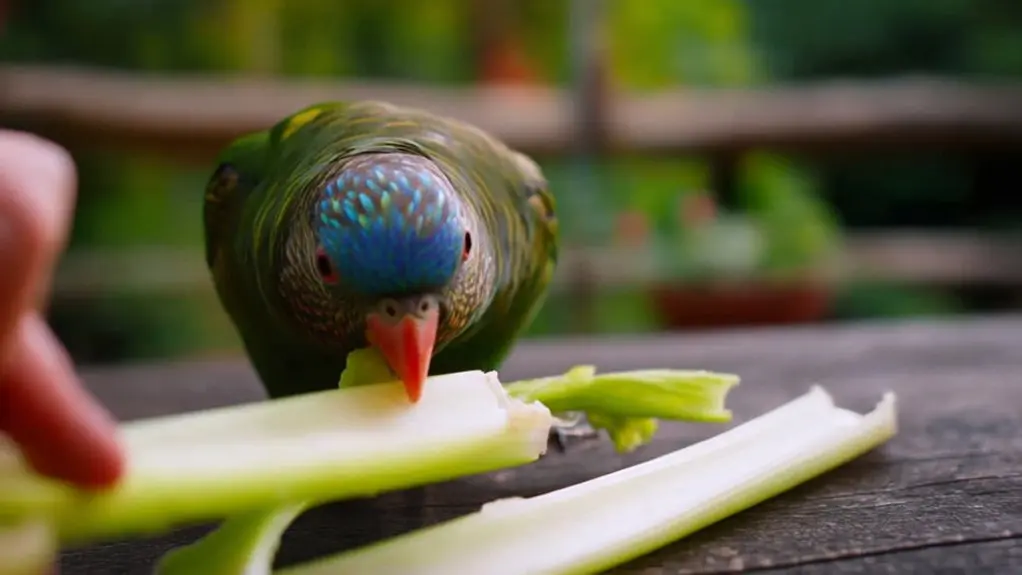
You can safely offer your bird small, raw pieces of celery a few times a week. Just make sure to wash and chop it finely to avoid choking.
Celery provides essential vitamins and hydration benefits that support immune and feather health. It’s a great little treat when given in moderation.
Introduce it gradually while watching for signs of sensitivity like digestive upset or respiratory issues. And remember to remove uneaten portions promptly to prevent spoilage.
If you want detailed guidance on preparation, portioning, and monitoring, consider exploring further information. It’s always good to be informed!
Is Celery Safe for Birds to Eat?
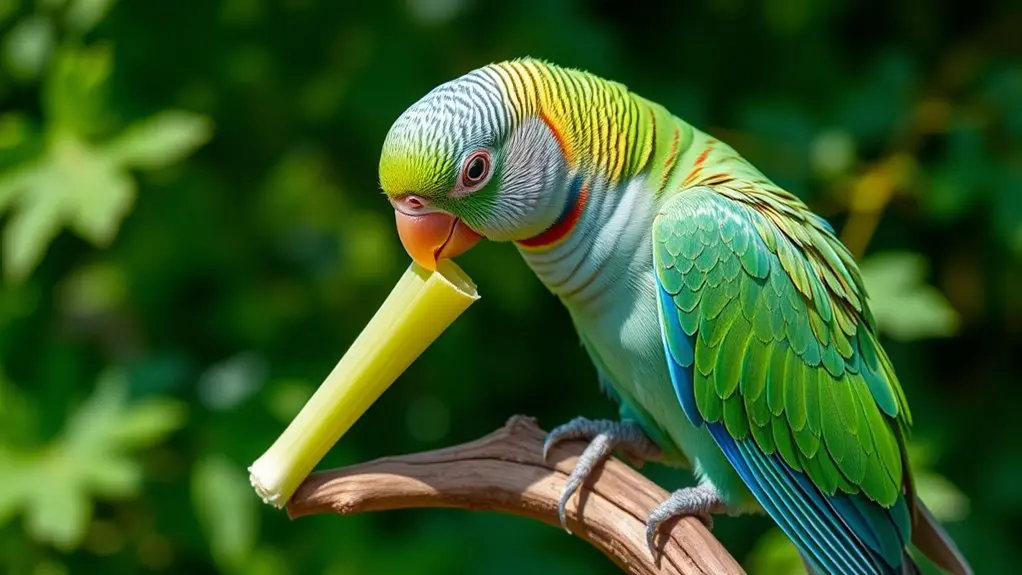
Although you might wonder whether celery is safe for your feathered friend, it’s indeed a healthy treat when offered properly.
Celery can be a nutritious and safe treat for your bird when served correctly.
In regards to bird nutrition, celery provides essential vitamins A, C, and K, along with dietary fiber, supporting overall health.
However, you must respect dietary restrictions by offering celery in moderation, ensuring it complements a balanced diet rather than replacing staple foods.
Always wash celery thoroughly to eliminate pesticides or contaminants, which could harm your bird.
To prevent choking or digestive issues, chop celery into small, manageable pieces tailored to your bird’s size.
Nutritional Benefits of Celery for Birds
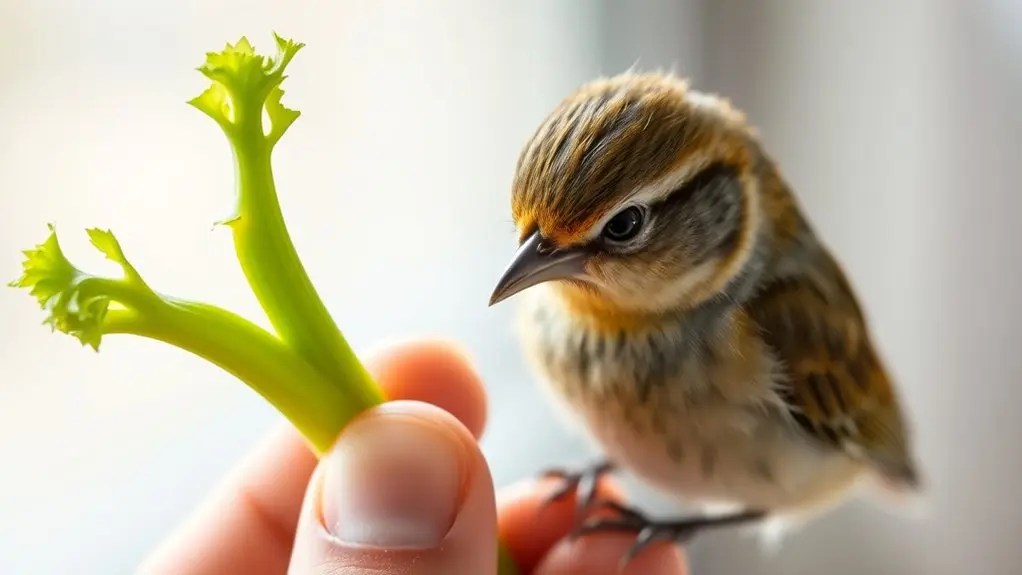
Understanding the safety of celery for birds sets the stage for appreciating its nutritional value. Celery offers essential vitamins like K, A, and C, along with antioxidants, minerals such as potassium and calcium, and dietary fiber. All of these support nutrient absorption and immune health.
Its high water content also helps with hydration. When you add celery to your bird’s diet, proper food storage is really important to preserve these nutrients and prevent spoilage.
| Nutrient | Benefit |
|---|---|
| Vitamin K | Blood clotting, bone health |
| Vitamin A | Vision, immune function |
| Vitamin C | Antioxidant, immune support |
| Potassium | Muscle function, hydration |
| Calcium | Bone strength, muscle health |
Feeding celery in moderation can boost your bird’s health through these specific nutritional benefits. It’s a simple way to add variety and nutrition to their meals.
Bird Species That Can Safely Eat Celery
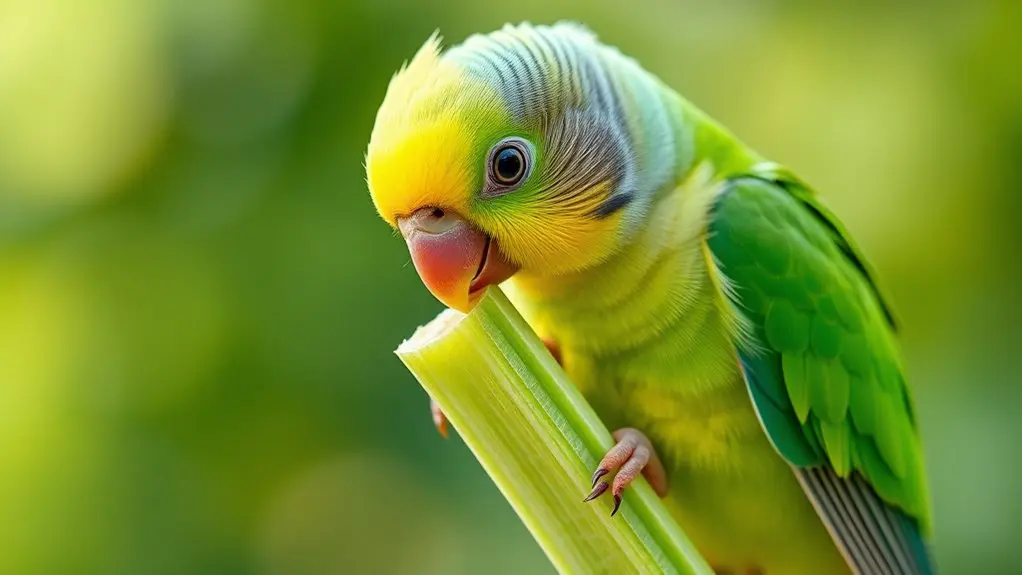
Which bird species can safely enjoy celery as part of their diet? Many species, including parrots, finches, and canaries, benefit from celery’s vitamins and minerals. These nutrients help with feather grooming and provide energy during bird migration.
Celery’s low-calorie, hydrating properties make it ideal for maintaining plumage condition and overall health.
Budgerigars relish celery’s crunchy texture, which promotes natural foraging. Lovebirds eat celery to support hydration and nutrient intake. Finches use celery pieces to supplement their diet with essential potassium and vitamin K.
Offer celery in small, manageable pieces to prevent choking and encourage natural feeding behaviors. It’s best to introduce celery gradually so you can monitor your bird’s tolerance and preference.
This way, you ensure it supports their health during active periods like migration and daily feather maintenance.
How Much Celery Should You Feed Your Bird?
You should offer your bird just a few thin stalks or some chopped pieces of celery each day. This helps make sure they get the benefits without any risk.
It’s important to feed celery in moderation because too much can cause digestive upset. Plus, keeping a good balance with other foods ensures your bird gets all the nutrients it needs.
Appropriate Portion Sizes
How much celery can you safely feed your bird without causing digestive issues? For most pet birds, a small portion, about one teaspoon of finely chopped celery daily, is enough. Overfeeding might lead to digestive upset or diarrhea, so it’s really important to keep it moderate.
Remember, celery should complement a varied diet, not replace staple foods.
Keep in mind these essential tips:
Avoid cooking celery because raw is best to preserve nutrients and texture.
Also, store celery properly in a sealed container in the refrigerator to keep it fresh and prevent bacterial growth.
Make sure to remove any uneaten celery within a few hours to avoid spoilage and potential health risks.
Frequency Of Feeding
Maintaining appropriate portion sizes sets the foundation for determining how often to offer celery to your bird. For most pet birds, providing a few thin, manageable slices of celery two to three times a week is sufficient.
This frequency supports bird hydration due to celery’s high water content but helps avoid overconsumption, which can cause digestive upset.
Excessive celery intake may also raise concerns about celery toxicity, as certain compounds in large amounts could be harmful. Be sure to chop celery into small pieces to prevent choking and remove any uneaten portions promptly to minimize bacterial growth.
Balancing With Other Foods
When balancing your bird’s diet, why should celery be treated as a supplementary treat rather than a staple? Celery’s high water content and low calories mean it provides hydration but lacks essential nutrients. You should integrate it thoughtfully within feeding schedules, guaranteeing it complements rather than dominates.
Offer celery alongside diverse vegetables, fruits, and formulated bird foods to maintain nutritional balance. This also helps explore flavor combinations that stimulate appetite.
Consider these key points when feeding celery:
- Limit celery to a few thin stalks per week to prevent digestive upset.
- Combine celery with nutrient-rich foods to ensure complete nutrition.
- Monitor your bird’s response and adjust portions accordingly.
This careful balance supports ideal health while incorporating celery as a revitalizing, hydrating treat.
Preparing Celery Safely to Avoid Choking Hazards
Although celery offers nutritional benefits, you need to prepare it carefully to prevent choking hazards in your bird. First, thoroughly wash celery to remove pesticides and contaminants. This step helps address potential toxicity concerns.
Next, remove the leaves because their fibrous texture can increase the choking risk. Cut the stalks into small, manageable pieces that match your bird’s size. Avoid giving whole or large sections.
Proper storage is important too. Refrigerate celery in airtight containers to keep it fresh and reduce bacterial growth, which can affect safety.
Always keep an eye on your bird while feeding celery to catch any signs of choking or trouble swallowing quickly.
Digestive Effects of Celery in Birds
Because celery contains a high water content and dietary fiber, feeding it to your bird can support hydration and promote healthy digestion.
The fiber benefits in celery aid in regulating bowel movements and maintaining gut health, which is vital for nutrient absorption and overall well-being. However, moderation is key; excessive celery intake may lead to diarrhea due to its water content.
Keep these points in mind when offering celery to your bird:
- Chop celery into small pieces to ease chewing and prevent choking.
- Include celery as part of a balanced diet to avoid digestive upset.
- Monitor your bird’s stool consistency to ensure proper gut function.
Symptoms Indicating Celery Sensitivity in Birds
You might notice your bird experiencing some tummy troubles, like diarrhea or vomiting, soon after it eats celery.
Along with that, you may see changes in behavior—things like your bird becoming lethargic or losing its appetite.
There could also be physical signs to watch for, such as swelling or difficulty breathing.
Sometimes, skin irritation around the beak or feet shows up, which can be a sign of an allergic reaction.
Common Sensitivity Signs
When your bird eats celery and starts showing signs like vomiting, diarrhea, or lethargy, these symptoms might mean your bird is sensitive to this vegetable. It’s important to watch your bird’s behavior and physical condition closely. This helps keep their feathers healthy and the cage clean.
Common sensitivity signs include skin irritation or swelling around the face and eyes, which can affect feather health. You might also notice respiratory distress, like sneezing or trouble breathing, which could be an allergic reaction.
Behavioral changes such as more scratching or feather plucking can also happen, showing your bird is uncomfortable and their plumage might be at risk.
Catching these symptoms early is key. It helps you keep the cage environment clean and prevents infections.
If your bird shows serious symptoms like weakness or shock, you should get veterinary care right away.
Behavioral And Physical Reactions
Although celery offers nutritional benefits, birds sensitive to it may show distinct behavioral and physical reactions that signal adverse effects. You might notice changes in perching behavior, like reluctance to perch or unstable balance, which usually means discomfort or distress. Increased feather grooming beyond normal levels can also happen, often reflecting irritation or anxiety.
Physically, watch for gastrointestinal symptoms like diarrhea or vomiting, and signs of swelling around the beak or eyes. Respiratory issues such as sneezing or coughing might also suggest sensitivity.
Behavioral shifts like lethargy, decreased activity, loss of appetite, or sudden agitation after eating celery are key indicators. Keeping an eye on these symptoms helps you spot celery intolerance early and protect your bird’s health.
Introducing Celery Gradually to Your Bird’s Diet
Since birds can be sensitive to new foods, introducing celery gradually helps minimize digestive upset and encourages them to accept it. You should start by offering tiny slices or chopped pieces of celery alongside your bird’s preferred seeds and familiar foods.
Introduce celery to birds gradually with small pieces alongside their favorite seeds to prevent digestive upset.
This way, you’re supporting their seed preferences while adding some variety to their diet.
Carefully watch your bird’s behavior and droppings for any signs of discomfort or adverse reactions. If everything looks good and your bird shows no negative effects, you can slowly increase the celery portion over time.
Try mixing celery with other safe fruits and veggies to make it more appealing. Keep an eye on how well your bird tolerates it during the first few days.
And of course, adjust the amounts based on your bird’s interest and response.
This step-by-step approach makes sure the transition goes smoothly and helps keep your bird healthy overall.
Alternatives to Celery for Bird Treats and Snacks
Expanding your bird’s diet beyond celery can provide a broader range of nutrients and flavors that support overall health. Alternatives such as leafy greens like romaine, spinach, and kale offer essential vitamins and minerals that fit well with bird dietary guidelines.
Vegetables like carrots, bell peppers, and broccoli florets make for nutritious, crunchy treats.
Fresh fruits including apple slices, berries, and melons provide hydration and antioxidants but should be given in moderation.
Sprouted seeds such as alfalfa and mung beans add valuable protein and enzymes to your bird’s diet.
When feeding treats, always make sure they’re pesticide-free, non-toxic, and cut to an appropriate size to prevent choking hazards.
Following these bird dietary guidelines helps keep nutrition balanced and promotes your bird’s well-being.
Plus, it’s a great way to mix up snack options and keep things interesting for your feathered friend.
Frequently Asked Questions
Can Celery Seeds Be Harmful to Birds?
Celery seeds aren’t typically toxic to birds, but you shouldn’t overfeed them. Excessive intake might disrupt your bird’s digestive system, causing mild upset. Always watch for seed toxicity signs and introduce seeds gradually to avoid issues.
It’s better to be cautious and start with small amounts. That way, you can see how your bird reacts before giving more. Birds can be sensitive, so a little goes a long way!
Does Celery Affect a Bird’s Feather Color or Health?
Celery doesn’t negatively affect your bird’s feather color. In fact, it can actually enhance feather nutrition when used as a dietary supplement.
Feeding celery in moderation supports immune function without causing discoloration or health issues in feathers. So, go ahead and add a little celery to your bird’s diet—it’s good for them and won’t harm their beautiful feathers.
Can Celery Cause Allergies in Birds?
Yes, celery can cause allergies in birds due to specific compounds that affect bird digestion. While celery is nutritious and offers benefits, it’s important to keep an eye on your bird for any signs of allergic reactions.
This is especially true if your bird has a history of food sensitivities. Watching closely helps you catch any issues early and keep your feathered friend safe.
Is Celery Safe for Baby Birds or Chicks?
Yes, celery is safe for baby birds when introduced gradually. You’ll support bird digestion by offering small, fresh pieces, providing hydration and nutritional benefits without overwhelming their immature digestive systems.
Just make sure to keep an eye on them and watch for any adverse reactions. It’s always better to be cautious and adjust their diet if needed. Baby birds can be a bit sensitive, so taking it slow is key.
How Long Can Cut Celery Be Stored Before Feeding Birds?
You’d think cut celery lasts forever, but don’t be fooled. It’s best to feed birds within 3-4 days.
Use airtight containers, damp paper towels, and crisper drawers to preserve its nutritional benefits. This way, you can avoid spoilage and keep the celery fresh longer.
Conclusion
You can safely offer celery to many bird species, but remember to introduce it gradually to avoid digestive upset. Notably, celery contains about 95% water, which helps keep your bird hydrated but can cause diarrhea if fed excessively. Always prepare celery by chopping it finely to prevent choking.
Keep an eye on your bird for any signs of sensitivity. If you notice anything unusual, it might be best to try other veggies. That way, you can ensure your feathered friend has a balanced and safe diet.