
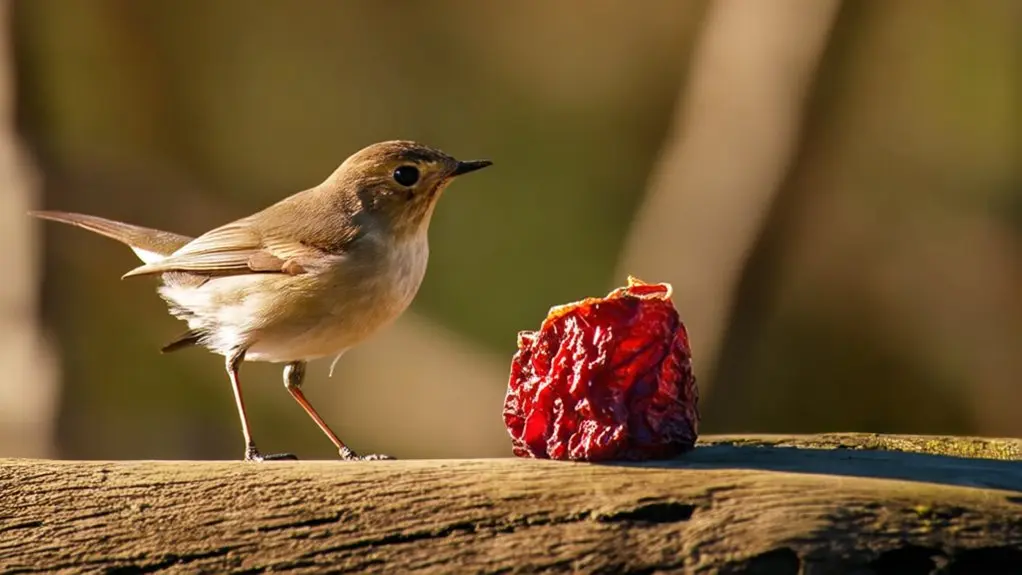
You can safely offer birds dried cranberries only if they’re unsweetened, additive-free, and given in moderation. Sweetened varieties contain high sugar levels that may cause obesity, digestive issues, and metabolic problems in birds. Properly prepared dried cranberries, rinsed and sourced from organic, pesticide-free berries, provide a nutrient-rich treat for certain species.
Overfeeding can disrupt natural diets, so portion control is essential. It’s a good idea to explore factors like species preferences and how fresh cranberries compare to dried ones for a balanced bird diet. Just remember, moderation is key to keeping your feathered friends healthy and happy.
Can Birds Safely Eat Dried Cranberries?
Although dried cranberries undergo a preservation process, they remain safe for birds to consume when unsweetened and free from additives like sugar or preservatives. You should rinse dried cranberries thoroughly to eliminate any residual chemicals or pesticides before offering them to birds.
In moderation, dried cranberries can serve as a supplemental treat, especially during bird migration when energy demands increase. However, you must avoid overfeeding, as reliance on such treats can disrupt natural foraging behaviors and negatively impact nesting habits.
Providing dried cranberries occasionally supports birds’ dietary diversity without compromising their health or ecological patterns.
How Do Sweetened Dried Cranberries Affect Bird Health?
You should know that sweetened dried cranberries have added sugars. If birds eat them too often, it can cause weight gain and metabolic problems.
Giving these treats once in a while is usually okay, but if birds eat them regularly, it might lead to digestive issues and fatty liver disease.
Health Risks Of Sweetened
Because sweetened dried cranberries contain added sugars, feeding them frequently to birds can lead to significant health risks such as unhealthy weight gain, metabolic disorders, and dental issues. These sugars disrupt the natural nutritional balance essential for bird migration and nesting behaviors, potentially impairing energy regulation and endurance during long flights.
Excess sugar intake may cause obesity and increase susceptibility to diabetes, which compromises overall physiological functions critical in breeding seasons. Additionally, dental problems from sugary residues can affect feeding efficiency and health maintenance.
Regular consumption of sweetened cranberries may also cause nutritional deficiencies, as birds might favor these treats over nutritionally complete foods. To support ideal health and natural behaviors, it’s best to limit or avoid sweetened dried cranberries in a bird’s diet.
Moderation In Treats
When given sparingly, sweetened dried cranberries can serve as an occasional treat without posing significant health risks to birds. Maintaining proper bird nutrition requires careful attention to feeding frequency, as excessive intake of sugary treats disrupts dietary balance.
Sweetened cranberries, classified as junk food, lack essential nutrients and can contribute to overfeeding if offered regularly. This may lead to unhealthy dietary habits and potential metabolic issues.
By limiting these treats, you help preserve the integrity of the bird’s natural diet, ensuring ideal health. Moderation is critical; providing sweetened dried cranberries infrequently minimizes negative impacts on bird nutrition and supports overall well-being.
Occasional Feeding Guidelines
Maintaining a balanced diet for birds involves careful regulation of treat frequency, especially with sweetened dried cranberries. You should limit these treats to occasional feedings to avoid disrupting natural bird migration and nesting habits, which rely on ideal nutrition.
Sweetened cranberries aren’t toxic, but frequent consumption can create unhealthy dietary patterns, potentially leading to obesity or nutritional imbalances.
Short-term feeding poses minimal health risks, but these cranberries shouldn’t replace essential foods. Overfeeding may mimic junk food effects, interfering with energy needs critical during migration or breeding seasons.
By controlling portions and preventing leftover accumulation, you help maintain bird health and support natural behaviors.
How to Prepare Dried Cranberries for Bird Treats
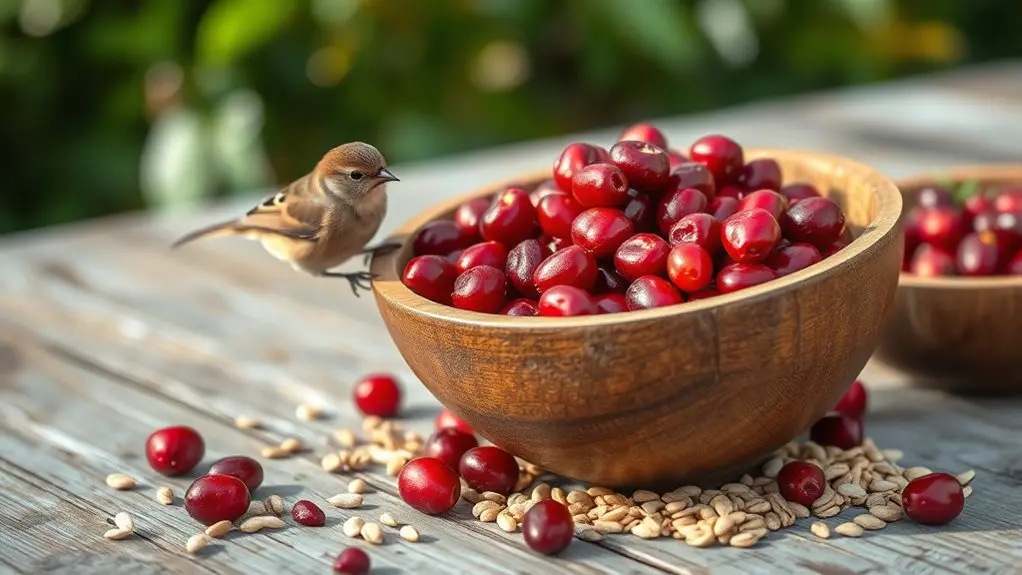
Although dried cranberries can make enjoyable treats for birds, you must guarantee they’re unsweetened and free from additives before offering them. During cranberry harvesting, berries are collected at peak ripeness to ensure ideal nutrient content.
Proper drying techniques, such as low-temperature dehydration, preserve the fruit’s natural sugars without introducing preservatives or added sugars harmful to birds.
Before feeding, rinse the dried cranberries thoroughly with fresh water to eliminate any pesticide residues from cultivation.
You can then string the rinsed berries onto bird-safe materials like cotton or wire, creating accessible treats that encourage natural foraging behaviors.
How Often Can You Safely Feed Birds Dried Cranberries?
Since dried cranberries contain high levels of natural sugars, you should offer them to birds only occasionally, like once a week or during special treats. Feeding them too often might disrupt a bird’s natural diet and contribute to obesity. That can really mess with their health, especially for important processes like migration.
Excess sugar intake can throw off a bird’s energy balance, which might reduce the stamina they need for those long migratory flights. Overfeeding dried cranberries can also cause nutritional imbalances.
This might affect their plumage coloration since feather quality depends on a varied diet rich in essential nutrients.
To keep birds safe, limit dried cranberry treats and watch for any signs of problems. Maintaining this balance helps support their overall health and natural behaviors. It also prevents them from becoming dependent on sugary foods while keeping their bodies in top shape for survival and reproduction.
Which Bird Species Enjoy Dried Cranberries Most?
When you offer dried cranberries, certain bird species show a clear preference because of their feeding behaviors and physical adaptations. Birds with strong beaks and frugivorous diets, especially those involved in bird migration and nesting habits that require high energy, tend to favor dried cranberries. These birds handle the chewy texture well and gain nutrients that are beneficial for their activities.
Jays and crows really like dried cranberries. They use their robust beaks and foraging skills to enjoy them easily.
Larger species like parrots and toucans also do well with dried cranberries thanks to their feeding adaptations.
Robins and thrushes will eat dried cranberries when they’re part of mixed treats. This helps support their energy needs during nesting.
Small songbirds, like finches, nibble on dried cranberries if the pieces are cut small or mixed with seeds. This matches their delicate feeding habits, especially during migration.
Signs Birds May Dislike or Not Tolerate Dried Cranberries
If you notice birds choking, gagging, or frequently spitting out dried cranberries, these behaviors signal they may not tolerate this food well. Such responses indicate negative bird taste preferences or behavioral rejection linked to texture or flavor.
Additionally, repeated avoidance or disinterest over multiple feeding attempts confirms a lack of acceptance. Monitor for signs of digestive upset, like excessive droppings, which suggest poor tolerance.
Birds showing decreased activity or distress after ingestion may be adversely affected physiologically, reinforcing behavioral rejection. These objective indicators help you assess whether dried cranberries suit particular bird species.
Understanding these signs allows you to respect individual bird taste preferences and avoid offering foods they dislike or can’t digest comfortably. This way, you ensure their health and well-being.
Avoid These Cranberry Feeding Mistakes
Although dried cranberries can provide occasional enjoyment for birds, you should avoid common feeding mistakes that compromise their health. Cranberry cultivation often involves adding sugars, which can disrupt bird dietary needs if fed excessively.
Sweetened dried cranberries should never become a staple, as this can lead to nutritional imbalances and unhealthy dietary habits.
To guarantee safe feeding practices, keep these points in mind:
- Limit dried cranberries to occasional treats, avoiding regular feeding
- Discard leftover sweetened cranberries to prevent overfeeding and digestive issues
- Avoid offering cranberries with added sugars or artificial ingredients
- Recognize that excessive sweetened cranberry consumption mimics junk food, harming overall bird health
Combining Dried Cranberries With Other Bird Treats
Since dried cranberries offer both nutritional benefits and visual appeal, combining them with other bird treats can really enhance your feeding strategy. You can mix dried cranberries with seeds, nuts, or popcorn to create colorful, nutritious offerings that attract a variety of bird species.
Dried cranberries add nutrition and color when mixed with seeds, nuts, or popcorn for diverse bird treats.
Pay close attention to flavor pairing to make sure the treats are palatable and varied. For example, pairing cranberries with sunflower seeds or peanuts gives complementary tastes and textures.
Maintaining nutritional balance is important. Avoid added sugars or artificial preservatives, and keep an eye on overall sugar content to prevent overfeeding.
You can also mix dried cranberries with other dried fruits like blueberries or cherries to further diversify flavor profiles.
Fresh vs. Dried Cranberries: Which Is Better for Birds?
When choosing between fresh and dried cranberries for bird feeding, it’s important to understand their differences in composition and how they affect bird health. Fresh cranberries come straight from the harvest and naturally meet many of a bird’s dietary needs without any additives. They also offer moisture, which helps birds digest the fruit and lowers the risk of choking.
On the other hand, dried cranberries often have added sugars and preservatives. These can be harmful to birds if they eat too many. So, it’s best to keep dried cranberries as an occasional treat rather than a regular snack.
Here are a few things to keep in mind: fresh cranberries don’t have added sweeteners or sulfur preservatives. Dried cranberries have more concentrated sugars and calories, so they should be given in moderation. The moisture in fresh cranberries supports safe eating and helps keep birds hydrated.
Both fresh and unsweetened dried cranberries are generally safe for birds, but fresh cranberries are usually the better choice. Picking fresh cranberries aligns more closely with what birds naturally eat and helps minimize any health risks.
Where to Find Safe Dried Cranberries and Bird Treat Tips
If you want to provide safe dried cranberries for birds, you should look for options that don’t have added sugars, preservatives, or artificial stuff. Try to find unsweetened, organic dried cranberries because they keep the natural nutrients that are good for birds.
Choose unsweetened, organic dried cranberries without additives to safely nourish your backyard birds.
You can often find these at health food stores or in the organic sections of regular stores. Birding specialty shops and online retailers might also have cranberry treats made just for birds.
Whenever you can, pick cranberries that come from sustainable harvesting practices to avoid pesticides. Or, you can make your own dried cranberries at home by rinsing fresh berries well and drying them with a dehydrator or by air drying. Just make sure no chemicals are left on them.
Giving birds cranberries that stay natural helps keep them healthy and cuts down on risks from additives or harmful stuff. It’s a simple way to treat your feathered friends right!
Frequently Asked Questions
Can Dried Cranberries Cause Allergies in Birds?
Yes, dried cranberries can cause allergies in birds because of additives that might affect their digestion. There’s also a chance of cranberry toxicity, which you want to avoid.
It’s a good idea to keep an eye on how your bird reacts when you give them dried cranberries. Try to avoid any preservatives whenever possible.
Choosing organic options can really help minimize the risk of allergic reactions. Being cautious is key to keeping your feathered friend healthy and happy!
Are Dried Cranberries Safe for Baby Birds?
Yes, dried cranberries are safe for baby birds if unsweetened and given in moderation. You’ll want to think about fruit alternatives with better nutritional value, though.
Also, it’s a good idea to rehydrate cranberries before offering them. This helps prevent any digestive issues. Just keep an eye on how the baby birds tolerate them.
How Do Dried Cranberries Benefit a Bird’s Immune System?
You’ll find cranberry antioxidants in dried cranberries provide significant nutritional benefits, boosting birds’ immune function by reducing oxidative stress. These antioxidants, combined with vitamin C and polyphenols, strengthen their defenses and promote overall immune health.
Can Dried Cranberries Be Used in Birdseed Mixes?
You can use dried cranberries as birdseed flavorings, which helps make the mix more appealing to fruit-eating birds. Just be sure the cranberries are unsweetened and free from mold.
It’s also important to consider how the cranberries were grown. Choosing ones cultivated without harmful additives is best for the birds’ health and nutrition.
That way, you’re giving your feathered friends a tasty and safe treat they’ll enjoy.
Do Dried Cranberries Affect a Bird’s Hydration Levels?
Yes, dried cranberries can affect bird hydration because their low water content and concentrated sugars may reduce hydration levels. You should offer fresh water alongside cranberry nutrition to maintain proper bird hydration and avoid dehydration risks.
It’s always a good idea to keep water available when feeding birds dried fruits. That way, they can stay hydrated while enjoying the treats. Birds need water just like we do, especially when eating something a bit dry or sugary.
Conclusion
You can safely offer dried cranberries to birds, but moderation is key. Studies show that birds consuming small amounts of dried fruit, like cranberries, benefit from antioxidants that support their immune systems. However, avoid sweetened varieties to prevent health issues.
Preparing cranberries by soaking them in water guarantees easier digestion. Remember, feeding dried cranberries no more than twice a week helps maintain a balanced diet. This promotes overall bird health without risking nutritional imbalance.